


Kyoto, Canadians, Energy and the Environment
Posted by Stoneleigh on February 22, 2007 - 11:13am in The Oil Drum: Canada

Last week, we learned that Canada’s record on greenhouse gas emissions reductions is the worst of the G8. Worse even than the non-signatory to the Kyoto Accord, the United States. This sets a realistic counterpoint to the much hyped greenwash announcements of the Canadian federal government in previous weeks. The Eco-Energy public relations events were primarily recycled hot air from the previous administration; wrapped in Tory blue paper and tied up with green ribbon. The appearance of action while committing to nothing was assailed by political partisans and pundits, but with no effective or constructive criticism. It was a clear victory of symbolism over substance.

While the average Canadian appears oblivious to the warning signs, and climate change deniers remain firmly in control of the federal governments in Canada and the U.S., the reality is becoming increasingly stark for those paying attention.
In summary, world peak oil production (conventional oil) is here. North American peak natural gas production is here. Mining the Canadian tar sands is a losing proposition, costing more in environmental impacts, natural gas and fresh water than it is worth. The concept of parking a couple of nuclear reactors in the oil patch to replace the natural gas being used is laughable on multiple levels, not least because we have no plan in place for dealing with the radioactive spent fuel.

Canadians, on the whole, don’t give a fig for our environment. We continue to despoil it unabated, assuming that when we make one area uninhabitable, we can simply move on to another. We pave over our productive farmland in order to build our future ghettoes, currently known as suburbia. As a species (homo hydrocarbonus), there can be no doubt that we will consume every drop of recoverable fossil oil we can before we are done, and all the natural gas. We can debate how long that will take, and whether we mitigate the effects to any perceptible extent, but that is petty stuff. More interesting are the questions of how we will accommodate the climate change refugees, and how much of our current economic and cultural practices we can sustain as oil and natural gas rise in price. The case of post-Katrina New Orleans is instructive on how we will deal with climate change refugees, as a best case outcome.
There are a small, but well-connected and vocal group who are working toward the creation of the “hydrogen economy” as the ubiquitous successor to today’s hydrocarbon energy paradigm. In my book, The Emperor’s New Hydrogen Economy, I argue that this is not going to work for a wide variety of reasons. (I don’t propose to repeat those here. If you are interested, there is a sampling that pre-dates the book available on my web site ). The hydrogen economy is currently the most popular of the never-quite-ready “silver bullet” solutions being proposed to our energy problems. Mirages will not solve the problems; only deflect us from searching for viable solutions.
How do we move forward from this point? First, we need to acknowledge and accept some realities.
- Fossil fuels are finite, and we are consuming them at an accelerating rate. The peak production precipice is upon us. There is little time to start making major adjustments that could avoid or mitigate major economic and societal collapses.
- Governments are unlikely to provide constructive leadership on these matters. The scale is beyond their conception, their track record is not encouraging, and politicians never want to be the bearers of bad news.
- The major multi-nationals in the energy sector have no reason to deliver viable alternatives until they have wrung every penny of profit they can from hydrocarbons, without regard to the consequences which they shed onto the residents of planet earth.
- The only force that can alter the course is the combined power of the consumers in the industrialized and industrializing world. The third world does not consumer enough hydrocarbons to be a factor. The oil companies extract, transport, refine, store and distribute their products because consumers buy them, both directly and indirectly. If the market stops buying, the producers will stop producing.
- There are no silver bullet solutions. The hydrogen economy is hype. Finding more hydrocarbon reserves (e.g., sub-sea methane clathrates) will simply result in more greenhouse gas emissions. Sustainable energy sources (solar, hydro, wind, tidal, geothermal, biomass, etc) are real and they work, but they generally cost more than fossil fuels at current prices, and take time to implement, especially on a scale to replace our current use of fossil hydrocarbons. Intelligent conservation and improved efficiency are the two biggest wins available to us, and the potential is huge, but not enough on their own.
- A personal energy plan will permit us to take the initiative to reduce our overall energy use, and related costs. It will permit us to substitute sustainable energy sources for finite sources. It will allow us to make the necessary adjustments in a controlled manner that is tailored to our personal circumstances. Collectively, these personal energy plans in aggregate will permit our communities to adjust to higher fossil energy costs while minimizing disruptions.
The real question is, do we have the foresight, fortitude and personal energy to develop a personal energy plan and follow through on it? Based on my personal experience, I think we do, but not if we sit on our hands and wait for someone else to deal with the matter. I speak to this in the second half of my book, The Emperor’s New Hydrogen Economy. There, I present many ideas there on how you can save on your energy bills with zero or minimal financial investment to get you started, and several ways to substitute sustainable energy into your consumption mix.
It’s time to get past the rhetoric that we can’t afford to save the environment. If we intend to survive as a species, we can’t afford to do otherwise. The good news is that we can do this while improving our own financial situations (though perhaps not that of Exxon-Mobil), and without devastating the economy (though there will be some changes, as is natural in our economy anyway). There are opportunities, if we are prepared to embrace them.
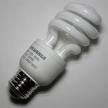
Many Canadians are still leery of compact fluorescent lights, although they will save the consumer money. We resist replacing old refrigerators and freezers, even though potential energy savings of 2/3’s or more make a compelling investment case. We can choose more fuel efficient vehicles at replacement time (although the current hybrids are not no-brainers – it depends on your typical driving missions). Low-tech solar energy collection is essentially unknown in Canada, but cost-effective if properly implemented (although anachronistic regulations still present some barriers). Electric-assist bicycles were finally legalized in Ontario in the fall of 2006 thanks to years of effort by committed activists. These vehicles provide an energy-efficient, cost-effective, low-noise, zero-emissions transportation solution that does not contribute to urban sprawl. They could help to reduce traffic congestion, especially if integrated into the public transit mix with free, secure lock-ups at transit stations and sufficient carry support (e.g., OC Transpo’s Rack’n’Roll equipment) for long journey’s where the bike is wanted at both ends of the transit network.
It’s time to stop wishing for miracles, and start making positive changes based on what we know today. It’s time to stop waiting for leadership and start providing it.
Darryl McMahon
Personnel
Archives
- December 2008 (1)
- October 2008 (1)
- July 2008 (2)
- June 2008 (2)
- May 2008 (6)
- January 2008 (2)
- December 2007 (8)
- November 2007 (9)
- October 2007 (11)
- September 2007 (14)
- August 2007 (14)
- July 2007 (10)
- June 2007 (9)
- May 2007 (11)
- April 2007 (9)
- March 2007 (11)
- February 2007 (11)
- January 2007 (11)
- December 2006 (12)
- November 2006 (16)
- October 2006 (13)
License

This work is licensed under a Creative Commons Attribution-Share Alike 3.0 United States License.
Folks, also consider this a reminder to positively rate these articles (using the icons under the tags in the story title) at reddit, digg, and del.icio.us if you are so inclined. Also, don't forget to submit them to your favorite link farms, such as metafilter, stumbleupon, slashdot, fark, boingboing, furl, or any of the others.
These posts are a lot of work, and the authors appreciate your helping them get more readers for their work however you can.
I replaced all the incandescent bulbs in my home and calculated a savings of 80% in electricity usage for lighting. Helping achieve that figure included only replacing 2 bulbs in a 3 bulb fixture, etc.
I've been to lazy to actually do any calculations, but I think the energy savings with compact flourescent bulbs may not be as simple as one might think.
Each incandescent bulb is a small radiant heater, deploying heat into your house. I agree that electric heat is 1)not the most efficient, 2) that the ceiling is not the best place to have a heat source, and 3) that in the summer heat is not required.
However, a radiant heater's placement in a room is not critical, more or less eliminating item 1).
If a house already has electric heat, I would venture to say that during the winter there would actually be a very slight negative savings with compact flourescent bulbs. I say this because of the "cost" of higher environmental impact and the higher cost of the bulbs.
If a house uses another heat source, then it is probably more efficient than electric heat, and hence there would be a savings with the compact flourescent bulbs. However, this would not be an outright savings, but merely transferring energy consuption from one source to another.
If a house requires cooling, then the compact bulbs would get a double payback - you won't be paying to dissipate the heat from the incandescent light/heaters in your house.
We use compact flourescent bulbs in our PV system - that choice is pretty obvious. However, in town we largely use encandescent - we don't see a clear reason why the CF bulbs are better. Our electricity comes from hydropower. Our furnace is natural gas, and we also have a wood stove. Most of the time we don't really heat the house anyhow, but the fewer incandescent bulbs we have, the more heat we will need.
Tyan in Seattle
I had some doubts regarding the significance of overhead incandescent bulbs on heating a room, and since my house has electric heat, and I decided to run an experiment.
The room I used is very well insulated and the heat control unit has a digit thermometer accurate to +/- .1 degree, located about 5' above the floor with the ceiling at 8'. I turned off the heat, and the room stabilized at 51.8 degrees for an hour. Turned on the overhead lights, which consist of three 60 watt bulbs within a frosted glass bowl. Left the lights on two hours, with no change in temperature. The bowl did get quite warm.
So as I suspected, the incremental heat from the overhead bulbs had no impact on the thermometer, and thus could save nothing in regards to electric heating. I doubt that heat from bulbs in lamps located closer to the floor would have any impact either, as heat rises.
Bottom line is that you would reduce your energy consumption by installing CFLs even if you have electric heat.
Tyan
To the extent that incandescent light goes out of your house via the windows as visible light, you are losing energy. This is not the case with a domestic heating system (which produces heat, not light).
It's also the case that the conversion efficiency of a coal fired power plant is as low as 35%, and there is transmission loss getting the power to your light socket. So it's a very inefficient way to heat your home vs. a modern gas boiler with a conversion efficiency of over 70% (90% is possible with a condensing unit).
If you heat your home electrically, this calculation doesn't apply.
You wouldn't though, just heat your home with lightbulbs. Because heat energy is wasted being turned into visible light.
There are other inefficiences:
- obviously in summer with air conditioning, compact fluorescents are an all-out winner-- a 5th or less of the heating (which has to be in turn cooled)
- incandescents have to be manufactured, transported and distributed to stores (where they occupy shelf space) and then to your house-- all of this takes fuel. CFs last up to 10 times as long, saving all that energy expenditure *plus* the extra volume of waste disposal.
In the end, from a personal point of view, the lifetime of a CF is the best answer. Yes they cost more, but not so much more, usually, that the don't offset the cost of replacing incandescent bulbs every couple of thousand hours.
If this kind of post would be representative of the average level of either posts or even comments at TOD, that would solve many problems, because it would get real quiet around here..
i see not one original idea, not even one thing that is not common knowledge, and to top it off, the author tries to fool me into thinking that different lightbulbs and electric bicycles are the brickroad that would allow me to feel good about myself? Where are we here?
Back to the drawing board. There's not even any air in this balloon.
We don't need any original ideas. Everyone knows the answer. This world needs a maximum population of 1-2 billion people. If we had that population, then every idea thrown out would be just fine, and creating a sustainable life would be simple.
The fact of the matter is that there is no way to drop the population before the house of cards collapses. We might as well be talking about sports or britney spears on this site for all the good that this will do us.
I've been concerned about energy efficiency, population and sustainability since the late 1960's when I was a process development manager in the chemical industry. I agree that population is the elephant in the room. However, I would argue that it is part of the business-as-usual (BAU) paradigm that includes issues of governance and economics.
During this 30+ years I have walked the walk of my beliefs and concerns. I'm a non-parent, have a highly energy efficient house, lots of AE stuff, grow quite a bit of our food, etc. While CFLs might not seem like much, they might plant the seed that people need to become concerned about these issues. And, isn't this what we are hoping for?
Since I'm in the dieoff crowd, I'm not too worried about population per se. The only thing that saddens me is that it could have been avoided.
Todd
I feel you missed the point of my article. We don't need original ideas; we're not using the 'common knowledge' we already have and could bring to bear on increasing efficiency, reducing greenhouse gas emissions, etc. I picked a few that are well known to make the point. There are many more - they take up most of the second half of my book, The Emperor's New Hydrogen Economy. That's also not the issue. If we want change, it's a DIY project, not something to delegate to elected officials.
Darryl, our politicians in Scotland are dead keen on hydrogen too - still supporting reserach into H fuel cells despite all the research done that shows this is a total waste of time. However....
We have one project over here, still waiting for government support, to convert a nat gas fired power station to run on hydrogen. CH4 + H2O is to be converted to H2 and CO2, the CO2 piped offshore and "sequestered" in an old oil field (in fact used as a miscible gas flood to boost recovery) while the H2 gets burned in the power station.
I also wonder if there may be a roll for H2 to play in stabilising output from wind farms - using surplus wind electricity to make H2 that could be mixed with Nat Gas and stored for combustion at time of need. With eroei of around 20, one could afford to lose energy doing these conversions in the interest of upgrading the quality of wind electricity - i.e. stablilising the output.
Problem is our politicians don't seem capable of distinguishing between these three very different aspects of using H2 and are intent on backing the one (fuel cells) that is destined to fail.
Euan, I posted an idea/opinion on another thread about "smoothing" wind power output. It was in response to a suggestion by Expat that offshore oil and gas rigs would be simply cleaned up and then sunk after fields are depleted.
It would seem to make a lot more sense to use the exisiting structures as platforms for huge wind turbines (say 10 MW??) and also as anchorage points for an array of wave generating devices (eg Pelamis by http://www.oceanpd.com/default.html, or other technologies by Aqua Energy Group http://finavera.com/wavetech/animation or http://www.oceanpowertechnologies.com/)
The intermittency of all these technologies could be solved by using the power generated to pump compressed air into the existing pipelines to shore and then released at peak or demand surge times by driving a turbine onshore.
It would also solve a huge decomissioning risk liability currently residing on the balance sheets of offshore E&P companies.
I would be more than happy for someone to explain to me why the above idea doesn't hold water.
Edit: my point being that there seem to be cheaper ways of "smoothing" wind intermittency than through utilising hydrogen, though clearly not as scaleable. We know that we do not need long term (ie seasonal) storage to improve the quality and utility of wind power.
Bunyonhead, thanks for the links - they fill a wee gap in my ken.
As for compressed air in oil and gas pipelines. It sounds a great idea - I don't think I've heard about that before!
So lets assume 100 windmills of 5 MW each, a load capacity factor of 30%, and a further 30% loss of energy compressing air and reconverting that to electricity on-shore (that's a wild guess).
100*5*0.3*0.3 = 45 MW, 24 hours / day = 1080 MW hrs per day
1 MWh = 1.834 bbls of oil (approximatlely)
So that would give a nominal energy production of 1,980 BOE pd.
If I've done my sums right (and there's less than 50% chance of that) I'd say this is too small to fund refurbishment and maintenance of large off shore facilities - but it could be worth looking into further.
The main problem with a lot of offshore infrastrucure is its age - but funding refurbishment may be preferable to decomissioning. I'm pretty sure that deferment of decomissioning lies behind Tallisman's wind farm on the Beatrice Field - and there in lies the TOD Canada link.
I have to wonder how air tight oil pipelines are likely to be. This problem is especially significant if the pipelines are old and have been immersed in salt water for long periods of time.
No idea on the compression and reconversion loss, although intuitively 30% seems high.
I would assume a higher load factor than 30% for far offshore wind. Near-shore wind sites in the UK (North Hoyle, Scrobie Sands, London Array, et al) are assumed to have average load factor of, I think, 38%. Further offshore I think the factor would be higher. I have made a few visits offshore and even on the most pleasant summer day there's still a stiff breeze 300 feet above sea level even just 20 miles out in the North Sea. The same is true of ocean swells for wave generation (bigger and more consistent offshore than nearshore). I'd guess a 30% average load factor is very conservative.
Remember that wind farms are not sited that far out due to the water depth (ditto wave farms where the problem is to anchor them) and the consequent negative economic effects of "planting" them - using an exisiting platform would resolve this.
Each offshore jacket would be unlikely to be able to accomodate more than one or two wind turbines, though the potential for wave farm anchoring is significantly higher in my opinion. I'd be more inclined to go with point absorbers (eg AquaEnergy or Ocean Power Technology) than the Pelamis which needs to face into oncomming waves to "ride" them (difficult to predict wave direction offshore). Out of the two, I'd be inclined to go with the OPT Power Buoy, as it has discrete centralised generation, whereas the Aqua Buoy has a Pelton Turbine within the buoy itself. Obviously an offshore platform can be used to house a central generator which otherwise OPT envisage placing either on the ocean floor or onshore.
Another thought that strikes me is the with lateral mooring to an offshore platform, as opposed to vertical mooring to the seabed, there is further opportunity to generate electricity from lateral movements in the same way as the technology is designed to benefit from vertical movements.
As to air compression within existing pipelines, I agree that there is a question of infrastructure age and the question of leaking. I assume that both oil and gas pipelines are designed to operate at relatively high pressure (presumably considerably higher for gas than for oil) which would be accomodative to the concept. The upside being, clearly, that an air-leak is not going to be at all environmentally damaging.
I came up with the idea of air compression within the pipelines to overcome what I saw as a potential issue of power transmission loss from far offshore platforms. The ability to store power as compressed air and generate at peak times was an additional benefit. However, if the energy loss through compression and reconversion were significantly higher than the simple transmisison loss, it would probably not be worth it.
Your last point is the most significant - decomissioning costs sit as a huge liability on E&P balance sheets. The present value of even simply deferring these costs for 10 years is of significant value to these companies. I am pretty sure that these companies would accept a breakeven on wind/wave projects just for the benefit of the deferred costs, so the question simply becomes one of how much wind/wave you can load on to each platform, and what is the most efficient way of transferrring that energy to shore.
As a side issue, I imagine that companies like http://www.excelerateenergy.com/ will also bein the frame for deferment of decomissiong costs in the future for similar reasons.
That's a great idea, Bunion.
But I've thought of a potential problem : Transmission of gas (whether NG or air) has an energy cost too, because of friction with the pipe.
This needs to be carefully modelled to see if compressed air is viable... The techniques of compression, transport and storage are mature, because they are applied to NG. Whether they remain viable with compressed air, which has a much lower energy content, is the question. Or would you need much greater pressure in order to obtain a viable energy medium? In which case, new types of infrastructure would be required.
I am not at all technically minded and wouldn't even know how to start modelling this.
Why would the energy content of compressed air be lower than the energy content of compressed NG? I would have thought that compressed air would have a higher energy content than compressed NG (at the same pressure) simply by virtue of being a heavier gas.
This site (http://www.doc.ic.ac.uk/~matti/ise2grp/energystorage_report/node7.html#S...) suggests that air is pressurised to about 75 bar. I know that the National Transmission System (onshore) in the UK operates at up to 85 bar, and a rudimentary Google search suggests that offshore NG pipelines operate at higher pressures, so I don't see any direct issues there.
It seems that there is already a company planning to work in this direction in Canada(http://www.energybulletin.net/11252.html) - interesting to note a direct reference to in-pipe storage.
I also know of a company in the UK that plans to install mini-turbines within the onshore system to decompress gas from the high pressure system to allow it to flow into lower pressure networks and indutrial facilities. Frustratingly I cannot remember the name of the company and am having difficulty finding it by Google search. Off the top of my head, they were suggesting something like 2000 MW of generation potential just in the onshore system alone, simply by using turbines to decompress the gas through deceleration, rather than decompressors which consume energy.
If anyone has the technical ability I would be very interested to see if this idea warrants further investigation.
Oil pipelines are usually not pressurized. There is no point because it is a liquid and is pretty well incompressible.
The gas pipelines probsbly date back to the 1980's with an expected life of 30 years ...
I was right - I got some bad news and some good news:
My 30% energy loss should of course lead to a factor of 0.7 (not 0.3)
I've also had some debate with Luis (which is on-going) about converting MWh to BOE
http://zfacts.com/metaPage/lib/zFacts-e-calculator.php
This link says 1MWh = 0.58833 boe, which is in line with what Luis says - different to the figure I used above which came from Heading Out.
I'm also happy to incorporate a higher laod factor of 0.35
So the new sum goes like this:
100 turbines * 5 MW * 0.35 load factor * 0.7 conversion efficiency * 24 hours * 0.58833 boe = 1729 BOE pd
It still seems a big number to me, and despite a myriad of potential difficulties (leaking pipes etc) is IMO worth exploring a bit further. Compressed air always sounded off the wall to me, but it seems to make more sense compressing it in a long steel pipe than in a cavern.
WRT to wave power, there was a big splash on the front of yesterday's Press and Journal with the go ahead for a wave farm in Orkney - 3MW - this will be the world's biggest.
That was Pelamis I guess? OPD based in Edinburgh (sort of your neck of the woods, I believe)
Pelamis is one of several companies to receive funding from the Scottish government for innovative ocean power development work described here.
A new 500 MW wind farm in the outer Thames estuary was approved on Monday as part of the second round of proposals for offshore wind power in England. The first round of approvals should produce 1,100 MW and the second round an additional 5,000-7,000 MW. More information here.
I don't see any mention in these two news articles of using abandoned O&G platforms, which does seem like a good idea. I have this recollection that undersea power transmission lines are pretty expensive to install, but no idea how much of a consideration that might be.
Euan, I have serious concerns about any of the industrial CO2 sequestration initiatives I have seen to date. I address this in my book (starting p. 42). Just a couple of questions to get started. How do we make sure the stuff stays sequestered? (We're generally using holes to pump the stuff in, what if the hole lets the stuff out again?) How long is an acceptable sequestration period, and how do we guarantee it? The experiments at Weyburn SK and in the North Sea are pretty recent, so I don't think they constitute a reliable track record.
I tend to agree - its easy to say "lets bury it", and equally easy to come up with a handful of flagship projects applied to ideal cases. Much more difficult to scale this up to the real world.
Euen I think BP's project at Petershead has been ditched, they couldn't get the government support they needed to make it economic.
Oh fudge, we are all going to die...especially us Canadians if our answer to 'all of this' (AOT) is compact light bulbs and Tom Swifts electric bicycle. If Daryle had mentioned rail (streetcars,light rail, rapid transit,heavy rail diesel,heavy rail electrified) I wouldn't post this. To expect people to use the bicycle (even electric) in the numbers, that would make much difference is inconceivable. I regularly bike and have been for 30 years. I have lived with my wife even longer and there is no way, and I have tried till blue in the face, to get her to bicycle (and she is a vegetarian and recycles and composts but by damn won't just plain cycle). I have come to the conclusion that that bit of energy is better spent pestering my local, provincial and federal politicians with letters about issues, which to answer they have to at least think a little about the problem.
If there is a politician who ignores GW and PO there is another who out of self interest, if nothing else, will be happy to hop on that vehicle to personal power. Use your politician before he uses you.
I haven't read Darryles book but if it sheds light on the fallacy in hydrogen as a vehicle for energy transmission I would give it a yes.
Black Bald.
Yes, we are all going to die, at least based on all historical evidence available to me. There are lots of solutions available to us, but I didn't see the value in trying to list dozens in the article - I thought a few were sufficient to make the point that we are not embracing what we already know works. I think we ought to ignore our politicians on issues of such importance, and solve the problems ourselves.
Approximately the first half of the book deals with the hydrogen economy, and reviewers to date think it does a pretty good job of listing the issues with the paradigm.
Stoneleigh, thanks for posting this.
Below is an open letter I just sent this week to my local MP as well as the cc list attached. I hope ASPO Canada can lead a non-partisan movement on PO and that everyone gets involved the same way with climate change. I have not had any acxknowledgment from any of the recipients yet.
Mr. David Tilson
MP Dufferin Caledon
711 Justice Building
House of Commons
Ottawa ON
K1A 0A6
(By e-mail)
Cc: John Tory MPP
David McGuinty MP (Liberal Party of Canada )
Nathan Cullen MP (New Democratic Party of Canada )
Bernard Bigras MP (Bloc Québécois)
Mike Nagy (Green Party of Canada )
Laurel C. Broten MPP (Minister of the Environment of Ontario )
Linda Jefferies MPP (Brampton-Centre)
Orangeville Banner
Dear Mr. Tilson,
It is encouraging that the Government of Canada is showing a greater understanding of the seriousness of human induced climate change. Your recently announced initiatives indicate that your government wants to take steps towards decreasing the rate at which Canada emits “green house gases”.
The first and most important thing you can do is to remove this issue from partisan politics. It would send a positive signal to Canadians and help to ensure success. One approach is to immediately form a Parliamentary caucus on climate change consisting of the Minister of the Environment and the environment critics from each of the other political parties represented in Ottawa . This group should be mandated to consult with the provinces, propose policy, create programmes and bring forward legislation to Parliament. In my view this would reflect the urgency that should be given to our response to climate change. Baring the above formal effort at least you could seek out MPs from all of the other federal parties, beginning informal discussions on solutions. Sadly, we have made the conservative, mainly symbolic, Kyoto targets a partisan issue. Embracing these and moving to meet them in a non-partisan way would be an encouraging beginning. It would be wonderful to be able to say to my grand children that “we started to fix what we broke”. However, this will require the vision and courage of politicians to make hard, sometimes unpopular decisions in order to provide real leadership. There is very little time left to make a change.
I would like to remind you of some widely accepted measures that would help to reduce green house gases.
The most cost effective measures are those leading to the reduction of fossil fuel consumption through conservation and efficiency, especially for individual Canadians. Your EcoEnergy programme is a step in this direction but it is narrowly focused upon business. The recently abandoned but effective Energuide programme was aimed at the broader target of the space heating of our homes. A similar effort should be started leading to much greater energy savings as well as stimulating retail sales and employment at the local level. I can not stress too strongly that the most effective efforts of all types will be locally focused, bottom up activities. This requires leadership from the federal government to stimulate and unify initiatives through provincial and local governments and citizen organizations. Coupled with this the standards of the National Building Code should be made law across Canada through negotiation with the provinces. No house should be built in Canada that doesn’t at least meet the R-2000 standard as a minimum.
In terms of electricity consumption there are many opportunities. A coordinated education programme should be created using the already excellent material compiled by Natural Resources Canada, Environment Canada, CMHC and other ministries, departments and private groups. Simply buying every Canadian household half a dozen mini-florescent light bulbs would be money well spent. Much of this could be delivered through our high schools yielding the four way impact of educating young people, allowing them to apply community service hours, educating the general population and achieving energy savings. In the public realm, working with the provinces and municipalities to require that all exterior lighting be of the “full cut off” type that requires less energy and reduces light pollution. The City of Calgary is a leader in this progressive approach although we see many examples right here in Dufferin County .
Enerstar appliances are readily available, thanks to American standards, but we should find ways to encourage people to choose these more efficient units. There are too many specifics to cover in this brief letter. In general there must be a combination of incentives on one hand and penalties on the other to encourage reduced consumption. To this end, multi-tiered pricing for electricity and natural gas should be implemented nation wide as well as a blended tax on home heating oil. These should be punitive above a reasonable level of consumption but set intelligently to give the average citizen achievable targets for savings.
This approach must be applied to our largest personal source of green house gases - transportation. Some ideas in this area involve applying added taxes above a certain level of consumption. For instance, all vehicles with 6L/100km or less consumption could be tax free and a sliding scale of tax could be applied to purchases of less efficient units. As well, business claims for expenses should be based upon a set efficiency standard for appropriate vehicle types and any fuel consumed above that standard would not be eligible to be written off. The present structure only encourages the use of large inefficient vehicles for business and also makes it practical for individuals to commute at excessive speeds in large heavy company supplied, taxpayer subsidized, work vans and trucks.
A very unpopular but most effective measure would be a carbon tax on motor fuel. In the past few years we have seen how sensitive we users are to fuel price. This is the strongest single initiative to reduce consumption and emissions. However, along with this measure it is necessary to improve transportation alternatives to the personal vehicle. The carbon tax could help pay for these improvements as well as encourage many of us to live closer to our workplaces. The communications infrastructure is already in place to support “telecommuting”. Measures should be taken to encourage employers and employees to take advantage of this.
Dufferin County, especially, has a major problem. We are a distant suburb of the GTA with the majority of residents commuting up to 100km to work. We are very vulnerable to increases in fuel costs as well as a weakening economy. If we are to hope to retain our population in tough economic times we need to improve transit alternatives to the GTA and adjoining municipalities. Even though the large cities have the greatest need for mass transportation improvements we are more vulnerable. Improving bus service, car pooling facilities, and perhaps upgrading the present rail connection to Mississauga would both help to reduce green house emissions and give us some local economic security. Stimulating local economic activity such as food production as well as renewable electric generation through wind and photo voltaic sources of all scales would also help to reduce fuel related emissions. There is also some potential for electricity generation and other energy recovery from biological sources.
This leads me to a part of your government action that is very disappointing and is taking Canada into a blind alley. Fuel ethanol is not the answer to either pending oil shortages or to reducing emissions in any great way. We can not grow enough corn to make more than a small percentage of our motor fuel. Even the best estimates show that for every unit of energy we use to make ethanol we only get about 1.2 units of energy back so there is only a marginal gain. Some studies suggest a loss of energy. Also ethanol only has about 60% of the energy of gasoline so if we burn 10L of gasoline now we need to burn 16 L of ethanol to go the same distance. Ethanol production requires diesel for farm equipment and trucking, natural gas for fertilizer and either natural gas or coal energy to process the product. Just making and delivering the ethanol creates a lot of green house gases and other pollution. Natural gas is a fast diminishing resource and we might want to use it more wisely than to make motor fuel. In 2005 Canada had eight years of natural gas reserves. Our production has been in decline since 2001 in spite of drilling just under 16,000 new gas wells in 2005. The recent lower price for natural gas has reduced drilling so we will probably have fewer reserves by the end of this year.
Another very serious effect of making ethanol is the increase in corn and other grain prices and the diversion of resources from food production. The world has about fifty seven days of grain reserves. This is a decline from 115 days over the past seven years. With drought devastating Australia and the USA diverting huge amounts of land to ethanol production there may well be a world wide food crisis in the near future. At the very least the increase in grain prices will cause a large increase in the price of meat and all grain based food. There is no alternative for reducing carbon emissions from vehicles other than to reduce the number of kilometers traveled. No technology will allow us to continue our happy motoring ways. Hybrid cars, hydrogen, bio-fuels or electric vehicles all have issues that make them non-solutions or so far into the future that they will have little impact. I know that most people want to be told that we can carry on as usual, but the hard truth is we must change how we behave.
This is where innovative brave leadership is required. I hope you and all of our other elected representatives will work together and meet the challenge.
Hi jografy ,
A+ for your letter, unfortunately any expectation of receiving an answer in under 3 months is unlikely. I once received a next day answer from the Prime Minister's office but that was unusual and was about Afghanistan at a time when he was very sensitive to that issue.
I think their staff usually piles and counts by issues and replies en mass. I keep my letters short so that I can 'vote' often.
For instance if everyone would write a short note about the need for public transport the individual letters may not be closley read but they would be influential.
I am sure you know that in Canada we can send mass quantities of letters 'On her Majesty's service' (marked OHMS) postage free.
On a cynical note I think politicians only work together when all their necks are on the same block.
Black Bald
Thanks Black Bald. Tilson probably never heard any of this in detail and I know it is unlikely he will ever see the letter but I decided to make it complete. The others are our local MPP and the enviro critics for the other parties. I do have a little credibility at the local paper and even tho this is long some of it might get published. I am at the stage where I want to be able to say "you can't say I didn't tell you". If the paper publishes it at least the local politicians might feel a little public interest and where do you start when 95% of your audience hasn't heard any of it? I am hoping ASPO on the PO side can get some pressure going but so far they aren't doing much. With climate change I am afraid we will have to wait fdor the next election before much happens, if anything.
Good letter. I hope someone in the office reads it, and it makes some impact.
I think the easiest way to make these issues non-partisan is to take them out of the hands of the politicians. Let's stop pretending they are relevant or part of the solution. For example, the feds are currently downsizing the group within CMHC that pertains to these matters. They have stopped funding the InfraGuide program (National Research Council and Federation of Canadian Municipalities) that addressed ways to improve things at the municipal level by sharing best practices. And so on.
As for giving every Canadian household compact fluorescent lights, such programs have been put in place, e.g., Project Porchlight in Ottawa, and expanding to other cities. Little or no government funding for that, AFAIK. Similarly, Hydro Ottawa and other utilities have initiated bounty programs on old refrigerators and freezers to help with reducing electrical demand. Minimal support from senior governments for this program. Ontario does have a feebate program to penalize gas guzzlers and reward fuel-sippers. However, the amounts involved are so trivial that almost no one knows the program exists.
Personally, I would support a carbon tax, but not just on motor fuel. If the issue is CO2 as a greenhouse gas, let's actually shoot at the target, not a subset or proxy. While we're at it, let's use it to replace the GST - one consumption tax for another, but with the advantages that it can be applied at source (not point of consumer sale), it will reduce a paperwork burden for every retail business in the country, and it encourages reducing consumption of fossil fuels.
Hi Darryl, part of the political game is to pressure politicians into a place where they can not ignore an issue. That is why I sent an open letter. Sending something to one politician just gets you an "atta boy" pat on the head from some flunky. I disagree that politicians are not part of the solution. Our political system is our reality and these folks can cause something to happen in a broad way. Unfortunately most of this is to serve vested interests. As you read, I do believe that bottom up solutions are going to be the real sustainable solutions. Unfortunately this wont happen ubntil the crisis is well upon us. We must, in the mean time try to make what progress we can.
I do understand the political game. I play it as necessary at municipal, provincial and federal levels. Recently I was part of a protracted effort to get the government of Ontario to legalize electric bicycles. I'm currently doing the research on a related subject that should be resolved at a technical level, but based on appearances to date, we'll have to go the political route to get action. It's a terrible process, skewed in favour of inertia and those with substantial resources. If the view of the political system I have is anyone's reality, we're in worse shape than I thought. Our governments do have the ability to do things in a broad way, frequently with unforeseen and undesired consequences.
Motor fuel tax is a bad idea from a greenhouse gas/ global warming point of view.
Motor fuel is the most price inelastic form of energy consumption: there are no real substitutes, there is not much the motorist can do about it, and people and businesses value transport highly.
Empirically, motorists don't respond much to increases in fuel prices. A 10% increase in price has about a 1% reduction of consumption in the short run, and a 3 to 5% reduction in the long run. this is why it is such a great way of increasing government revenue: like cigarettes, increases in taxes don't have a huge impact on consumption.
By contrast, CO2 emission in electric power generation and industrial applications is likely to be price *elastic*. There are lots of alternatives (eg gas, wind, nuclear over coal), increased energy efficiency is easy to achieve.
This is also true of household heating and cooling and commercial HVAC in general. There is lots consumers can do to reduce costs, and if costs go up, they will.
Now that's a tad negative.
Ok, so out of 30 houses on our street only 2 of us walk regularily (now 3 I believe) to the grocery store that is a 10 minute walk away and two other neighbours have some interest in efficiency (one family recent immigrants) but neither of those has done anything.
Sure I go into houses and can't find a CF lamp.
Sure I have relatives with a fridge that sucks 200W average (as much as my family of 4 during the 4 summer months when we can use a clothesline) and they rationalize that the cost of making a new fridge outweights the energy savings (reduction from 200W to 70W average).
Sure my employer can upgrade lights with payback as low as one year and I can't get anyone to even talk to me about it. Sure the electrician down the street runs into the same problem with big insurance companies (pay a little upfront to save a lot more in short order).
But energy is so blinkin cheap that nobody cares. We spend < $1k in energy for our house and over $3k in taxes per year. The car is almost as bad.
Tell people that every appliance in their house is a 5W vampire ($5 per year in electricity) and their eyes glaze over at the insanity of trying to save $5; except that they don't realize that they've likely got at least 20 such vampies.
Then there was our experience with our furnace upgrade. What a fiasco as everyone tried to get us to go from 42,000 btu (real heating power) to 60,000 btu but we opted for a 40,000 btu furnace. In hindsight the larger furnace would have used 12% more electricity and had around 10% lower efficiency because we would have had to open air registers in parts of the house that we didn't want to heat.
Anyways - I'm just getting too positive for myself here.
Even the engineers I work with all think that technology will provide; that there is nothing to worry about; that like having gone vegetarian for
the environment I'm just a wee bit left of being a liberal.
Even all of the hype about lighting.
CF lamps are around 50 W/lumen. T8 4' flourscent lamps are around 100W/lumen as are sodium and other street lights (amazingly!). LED lights are getting close to CF lamps and are likely to hit 100W/lumen in a few years. OLEDs and other such things may get up there too - but we're not going to see massive improvements beyond 100W/lumen any time soon.
What we've got to deal with is the #@$#@$#@$ high efficiency furances now. The #@$#@$#@ motors in our high-eff gas furnace represent 60% of our electricity use in the winter!! Nobody tells you that up front. They lie to you about how DC motors use 1/10 the electricity - but that's cherry picking data points and they only replace one, of two, motors with a DC motor so the savings of getting a DC motor are decades down the line ....
We need a CARBON TAX!
I see it as factual, not negative. Your statements appear to support my observations. To put a positive spin on it, look at the potential opportunity. How do we get people to internalize the message and act on it? I try to keep communicating that to the unconverted. (I expected the audience here was the converted.) That was the reason I wrote the book, keep experimenting with alternatives and do presentations.
Let's not take the man to task for suggesting things like compact flourescents and electric bikes as if he were suggesting them as total fixes. The point is that if the public isn't going to buy or use these things and start Somewhere, whining to the government isn't going to be very credible.
Personally, I haven't had much sucess with the 'improved' light bulb; I'd like to know if the problems were an anomaly or if the things do work reliably. Admonitions that they don't like to be turned on and off a lot don't give me much hope. In a cold climate, they only save net energy in the summer anyway, at which time I don't use much light anyway.
Governments are touted as leaders, but apart from war and profit, they seem to be mischaracterized.
Me, neither. I've tried several different brands. I don't like the fact that it takes so long for them to "warm up." Particularly in the kitchen, I find myself turning on extra lights because the PCFs are so dim at first.
But the worst is that they are very fragile. They burn out very quickly, and are so expensive to replace.
I know they are supposed to last longer than regular bulbs, but for me, they don't. I suspect it's because I live in an older building, with old wiring, that has a lot of voltage fluctuations. I suspect they are more vulnerable than incandescents if used under less than ideal conditions.
We have replaced almost all of the lamps in our house with CFs. I use a spread sheet to track their reliability. The only "natural" failure was one lamp after two years and I had one that the grand kids damaged.
Older designs are slow to ignite and I have a few of those but most of the newer ones come on instantly and go to full output within ten to fifteen seconds. Some lamps have now been in operation three years.
Of course the off switch is still the best energy saving device.
Here in nearby Massachusetts, we have several of the "old" CFLs in an unheated garage. They are about 10 years old and still work fine, but take about a minute to warm up to full brightness. In Oct 2000 our power rates increased 50% (after Katrina) so I replaced about 13 bulbs with CFLs and started paying a lot of attention to the woodstove. Summer electricity use decreased about 45%, year round 2006 was 33% below the 2005 usage burning about 1.5 cords oak more than usual.
Sure, the CFLs aren't as nice for reading as an old fashioned incandescent bulb; maybe LEDs will be better. Either way we need to adapt. As someone else said above, this is a painless starting point. Our local hardware store has imported 60W (well, 15W) CFLs for about $1.50 apiece. It won't break the bank to switch.
You know, I was very enthusiastic about the compact flourescents at first as well, but I've had more bad luck with them than good.
Plenty of early burn-outs -- after only a month or two, or a couple after only 10 months or so.
Given the whole lifecycle of manufacture, use, and proper disposal, does anyone know if we are really saving energy with these?
Experience has made me a skeptic.
I wonder if the main problem is that we keep looking for more products to buy and sell to solve our problems, when we need to look for ways to cut down on the number of products we buy and sell, and on overall percapita energy consumption.
These particular light bulbs are obviously making some people plenty of money. They are also giving the businesses that market them a greenwash that makes people feel as if the corporations really care -- or are capable of "care" or "love."
Again, experience has made me a skeptic regarding these light bulbs.
I've bought some that fail right away, too. Others perform as promised. If you buy them, keep the receipts and mark down where you got them.
For what it's worth I have had very poor life from the CF's from IKEA, I'd say no better than an incan. bulb, same with "Globe" brand. Now I just buy "Noma", and they seem to last me about 3 years or more .
A 3 pack of the ones that replace a 60W incan. is $10 at Canadian Tire
I did an experiment with a CFL a couple of years ago. I ran it (against the instructions) using a dimmer switch (which clips the AC waveform). I turned the dimmer switch up high, not to distort the waveform too much and not to provide too low an average voltage. It destroyed the CFL very quickly. My conclusion from this very rough test is that that particular brand of CFL was sensitive to power quality. Maybe this supports the experience Leanan and others have has with older wiring. I would repeat this experiment - but it is expensive!
Edit - I might further say that if an eletrical supply is under load, of relatively high resistance, or far away from the power station, the voltage drop will preferentially clip the sine waveform around the 0V crossing, making the supply a poor quality modified sine wave. I believe that repeater stations are sometimes necessary to "clean up" the waveform along long transmission lines.
Carbon - UK
"if an eletrical supply is under load, of relatively high resistance, or far away from the power station, the voltage drop will preferentially clip the sine waveform around the 0V crossing, making the supply a poor quality modified sine wave"
I don't see why - pure resistive loss would lower the voltage overall, without changing the waveform. Very long AC transmission lines (hundreds of miles) would change the waveform somewhat due to non-resistive effects (inductive and capacitive), but it would still be a smooth waveform. I would also guess that the electronic "ballast" in modern CFLs would not be sensitive to the exact waveform as long as it is fairly smooth, even if it does get damaged by very sharp cuts in the waveform that dimmers make.
FWIW, I've been using many, many CFLs over the last 20+ years, and most have lasted many years, some more than a decade. A few failed right away or after some months, but that's a small percentage. Stay away from the "lights of america" brand (which is imported, of course, but other imported brands seem to be OK).
I don't know why you are having problems with CF lights. I've installed about 10 of them since 2000. I dropped one from 12 feet up. It didn't survive. One other one burnt out after 3 years. I've still got 8 of them running.
It seems like typical incandescents last about a year or so if they are on a lot. I think they work just fine and are worth it to reduce the inconvenience of replacing bulbs all the time.
Canadians are not unlike Americans - we're part of the consumer culture rampant there, too, and our politicians are by and large keen on the growth at any cost mantra which has been prevalent since, well, modern times.
Alberta is not unlike Texas when it came into its ascendency - disproportionate power bestowed upon that province and its relatively small population (compared to Canada as a whole) because of the billions of dollars flowing in and out of that province.
No politician - not provincial nor federal - has been willing to step back and say "hey, wait a minute...".
At the same time to blame only Canada on our emissions growth would be wrong. A significant portion of Canada's increase in GHG emissions over the period of 1990-latest measurement is due to fact that as U.S. conventional domestic oil production has decreased, Canadian oil sands production took up the slack and with 3x the GHG emissions per barrel on average as compared to conventional oil.
The U.S., like many countries, is also heavily invested in "outsourcing" emissions in ways other than foreign oil imports. Every widget produced in China and other countries, imported into the U.S. (and Canada and...) is a widget which does not show up on the ultimate consumer's GHG emissions balance sheet.
If we were to do that, then our ("the west's") emissions growth profile would look considerably worse.
There have been several proposals on how to reduce GHG emissions related to tar sands extraction. Most recently, the Pembina Institute said something about meeting Kyoto targets at a premium of an extra dollar a barrel. However, until we provide the tar sands extractors with a serious incentive, there is no reason for them to make such an effort. Finding that will within our elected leaders, there's the rub, even if the remediation were to create additional jobs in the country.
Oh oh in Ontario...
http://www.cbc.ca/money/story/2007/02/21/gas-shortage.html
Anyone out east got some feedback?
I'm in Hamilton Ont. and, having done a fair bit of driving this week figured I'd refuel. I used my local station (Shell Oil) and there was no shortage, but it was VERY busy. The pump jockey said that a lot of drivers had found Imperial Oil stn's out of gas.
It took 5 liters (1.3 US Gal.) of 89 octane [semi-premium] to fill my scooters tank at $1.00 Canadian / L.
I think that works out to $3.34 USD / US Gal.
Gasoline has gone up about 15% in price here over the past week.
I live in Toronto, just a few km from Canada's busiest highway. Just took a stroll to check out all the gas stations in the area. 5 of them.
All were open, business as usual. No lineups. 92 cents a litre.
Follow up video
http://tinyurl.com/2zfove
Bigger story developing - apparently Husky is out of diesel.
Energy minister is asking people not to panic.
I think Mr. McMahon has a very valid point in the "we the people" must act. Looking at the ethanol debate makes me cringe - and we are expecting ? from our leaders. Leadership? No they will jump in front of the pack once it starts to move and not before. Telling a message similiar to ones posted here is a sure fire way to not get elected, they are just as stuck in this mess as we are.
My own personal energy plan is WIP and gets a little sobering. We use @1900 kwh per month with wood heat. My hydro project should provide 500 watts cont. or a mere 20% of that total. When you look at 500 watts then those little "dead loads" get important. Toaster lights, alarm clocks, night lights, electronic stuff like TV, VCR, DVD. I decided how to set up a test to see what these consume by turning off the all lights, heat, the refrig and water heater for 1 hr. and check my meter but I haven't done so yet.
Project list includes .5 kwh microhydro turbine, solar HW heating panels on the roof.
Solar panels are 47" x 79" homemade "concentrator" type "reverse return" flow. Materials cost per collector unit is $177.36 at this point. You could round up to $200.00 and you would catch all the smaller parts like screws and washers. Finishing unit #1, and looks very nice. I estimate $1,000 should do it not incl my labor. Will let you know how they turn out. Todd who posts here has some he made perhaps he would give a rundown on his.
Microhydro - So far $2500.00 into it, and not finished. The generation of small scale electricity is not a small undertaking. You need to be one part construction labor, engineer, and your own one person pep squad. AC vrs DC? Pond or river run? 1 ph or 3 ph? battery and converter or gridtie? Gridtie looks cost prohibitive, grid-less isn't an option either:(
I have a very good book called; "Micro-hydro Design Manual" by Adam Harvey, ITDG publishing UK ($66.95 USD). Very, very complete reference. It can get a bit technical but there is enough understandable material to give you a grounded and useful education on the topic, I highly recommend it. It does get sobering when you realize how un-easy it is to make enough and the right kind of electricity for power tools, welders, refrig/freezer.
Self sufficient with fire wood - have been for years.
Vechile use screws me as we live 15 miles from the nearest small town, so I haven't dealt with that just yet and I have plenty to do at this time.
IF PO is scary/sobering to you, and you want to do something about it, get ready for more soberness. imho personal use replacements are neither easy or cheap. But now might be the time to get setup before "peak awareness" hits the MSM.
My energy work in progress...yours?
D
I heat my home with an outdoor wood-burning furnace, which also heats my water in winter and could heat outbuildings or provide a radiant-heated floor for my greenhouse if I chose. In summer my hot water is entirely supplied by a solar domestic hot water system. As a back up for heating and cooling I have an old geothermal heat pump. I can cook with sun (solar cooker), propane (barbecue), liquid fuel (Coleman stove), wood (1928 kitchen range) or electricity (conventional oven or microwave).
My power demand has decreased by approximately three quarters since I replaced the appliances with the most efficient models. My essential loads run off a battery bank in my basement all the time. The batteries can be charged by my solar PV system, by a gas generator, by a diesel generator run by my tractor or by the mains. A few less essential loads are wired into a generator panel and everything else I could do without if I had to.
I have stand-alone solar powered LED lighting, wind-up radios, solar battery chargers, rechargeable batteries, and a human-powered generator and battery pack. I traded in my ten year old Mazda MPV and my family of five now gets around in a Toyota Yaris. The next project is upgrading the insulation in my hundred year old farm house.
Great! You are ahead of me. I may have questions down the road. The wife wants PV next. I just need to finish what I've started first.
D
A few things from the list to date.
Superinsulated attic. Upgraded windows, weathersealing, insulation.
Passive solar heating.
Active solar heating.
Solar water pre-heater.
Biodiesel brewing for vehicle use.
Electric vehicles, on and off-road.
Solar cookers.
Efficient lighting and appliances.
walking the talk...nice! Off road EV like a 36 v Cushman?
D
Off-road EVs in our household at this point include an electric tractor (used for tilling garden, plowing, blowing snow, and pulling trailer for small construction projects), and a small, solar-charged, electric boat. That does not include my son's fleet of radio-controlled model electric boats, including a functional hydrofoil.
All you can do with vehicle use is get a *very* efficient small car.
In Canada, I don't think you have access to the diesels we do in Europe: some get over 50mpg (small Citroens etc.)-- about the same as a Prius.
Another thing is to make sure that your engine is 'flexible' and can run E85 ethanol, if you can. Now ethanol is a crock, from an environmental point of view, but if there is a gasoline shortage, there will be more of it.
If you're really worried about a gasoline shortage, in WWII in Occupied Europe they ran charcoal-fueled cars. towing a trailer behind. If you did some research, you might find an old basher that is particularly suitable for conversion (my favourite North American car of all time is the Chrysler/Plymouth Dodge Dart/Plymouth Valiant, with a 6 cylinder 225 cubic inch engine, the famed 'slant 6'-- you will find them in many, many Stephen King novels).
Steam Cars were actually better than internal combustion engine cars for many decades-- they were squeezed out for market reasons, not technical ones. Google Stanley Steamer and Dobie steam car (Doble?).
They were also mechanically incredibly simple (you don't need the complex clutching, because the engine runs at a much lower rotating speed than an ICE) and could run on anything-- eg paraffin.
Someone may eventually bring them back to market.
Had Darryl been a long time reader of TOD comments, he would be aware of his own nudity.
He clearly associates the Hydrogen economy with 'Gaseious H2' rather than a more sophitocated understanding, but it is unforgivable not to read the material to which he provides links to support his argument.
i.e.
http://www.efcf.com/reports/hydrogen_economy.pdf
The Future of the Hydrogen Economy: Bright or Bleak.
(Bossel, Eliasson and Taylor 2003)
"Methanol can be directly converted to electricity either via heat engines or by Direct Methanol Fuel Cells (DMFC), Molten Carbonate Fuel Cells (MCFC) and Solid Oxide Fuel Cells (SOFC). It can also be reformed easily to hydrogen for use in Polymer Electrolyte Fuel Cells (PEFC or PEM) and Alkaline Fuel Cells (AFC).
Methanol could become a universal fuel for fuel cells and many other applications."
Just above the Section: 9. Conclusions.
(I don't share Bossel, Eliasson and Taylors, support for Bio-ethanol).
I would draw attention to George Olah, a chemist and Nobel laureate, in a new book, Beyond Oil and Gas: The Methanol Economy.
http://www.technologyreview.com/Energy/16629/
http://www.technologyreview.com/read_article.aspx?id=16466
http://mit.edu/canes/publications/abstracts/nes/mit-nes-006.html
"In conclusion, it is found that the concept of alternative liquid fuels produced from nuclear hydrogen and captured carbon dioxide is viable. There is abundant CO2 for use and the hydrogen can be produced with proven technology."
A more general application of the Hydrogen economy
http://www.ornl.gov/~webworks/cppr/y2001/rpt/125102.pdf
In fact contributors to this site have developed far more sophisticated solutions to peak oil than that proposed by Darryl
Darryl may want to start with this TOD Europe thread
http://www.theoildrum.com/story/2006/10/12/131035/37
I think I can propose a much more attractive solution than Darryl's (like Greenpeace's) hair shirt, conservation model.
As David Tomlinson points out, I am not a long-time reader of TOD.
I am certainly aware of hydrogen carriers other than simply pressurizing or liquefying H2. Methanol, ethanol, ammonia and other carriers have many characteristics that I think are superior to H2 (energy density, handling, infrastructure, etc.) I discuss the various types of fuel cells in the book.
I have reservations about the assumption we can rely on nuclear generated hydrogen as a long-term solution. That's also covered in the book.
I'm not convinced that more "sophisticated solutions" are the preferred way to go. Definitely more interesting for researchers, but not necessarily more attractive or economical for the consumer.
No real interest in hair shirts here. Conservation and efficiency do not equate to self-sacrifice. The hot water in my shower doesn't seem any different to me because it was heated by sunlight instead of oil or natural gas.
"Had Darryl been a long time reader of TOD comments, he would be aware of his own nudity."
Oh, dear, nudity on TOD???
What has happened to us? This used to be such a nice, clean website.
I did not see any nudity myself, but that could be because my hair shirt got stuck over my head when I was trying to take it off.
It took me three days!
Will we have a definite policy on nudity at TOD, or is one needed?
This is a modestly interesting post.
I think I have to respectfully disagree with point 4 which is:
The only force that can alter the course is the combined power of the consumers in the industrialized and industrializing world. The third world does not consumer enough hydrocarbons to be a factor. The oil companies extract, transport, refine, store and distribute their products because consumers buy them, both directly and indirectly. If the market stops buying, the producers will stop producing.
In particular, the statement that the third world does not consume enough hydrocarbons to be a factor is just plain incorrect unless you exclude countries such as China and India which are rapidly industializing. Currently China consumes about 6.7MBPD of petroleum products (ref:web.mit.edu/ipc/publications/pdf/06-002.pdf). India consumes about 2.3 MBPD (ref:http://www.cslforum.org/india.htm). Both of these countries use significant amounts of coal which is a significantly worse source of energy than petroleum in terms of the generation of greenhouse gases and global warming.
Further, both of these countries are rapidly increasing their use of all types of fossil fuels and should equal or surpass US usage within 10 years.
It doesn't matter where the greenhouse gases are produced. Given the rapidly increasing demand for fossil fuels in the third world it is naive in the extreme to think that it is possible to exclude the third world from any solution.
To a large extent any solution to global warming must involve turning the third world juggernaut around as well as reorienting the industrialized countries.
I do not include China or India in the third world any more. They are rapidly industrializing, as you point out, and will be critical to any planetary effort to resolve greenhouse gas emissions. My first sentence in point 4 says "consumers in the industrialized and industrializing world." IMO, pointing the finger at the (non-industrialized) third world nations is more stalling tactic than a valid point.
I wholeheartedly agree. [And kudos to you for speaking up whether to CERA or your own government folks. I hope they will notice.] What good would it do for us industrialized nations to reduce our emissions if the newcomers simply consume the freed-up oil and burn it themselves? From what I've read, China and India are well aware of the issues; it remains to be seen whether how they will act. Gee, I guess a lot of you Kyoto signatories don't know how we (the US) will act. (sigh) There's an awful lot of cheap coal out there...
Good point about the tense of 'industrializing'. I should have read a bit more carefully.
On the other hand, I still think you should clear up any confusion relating to the Kyoto Accords. They do not put any CO2 emissions regulation at all on industrializing nations including: China, India, Vietnam, Indonesia, Thailand, Brazil, Mexico Argentina etc. The US could reduce its GHG emissions to zero and within 10 years worldwide emissions would be higher than they are now if just China and India were to keep growing at the current pace.
The finger is not being pointed at the industrializing countries and they are using the fact that they have no emissions caps in the Kyoto Accord as cover to stall.
The US is also using the fact that the industrializing nations do not have caps under Kyoto as cover to stall.
Finally, I have never seen any justification that Kyoto emissions caps are sufficient to prevent Global Warming. The US is also using this lack to justify their stalling.
I think that one of the best things that TOD could do would be to hammer these points home again and again and again ...
I also have some reservations about the Kyoto Accord. I don't think any advocate suggests that the Kyoto standard is the end, but rather a beginning. Negotiations on post-2012 levels are already under way. The leaders are already talking about 2050 targets that are 50-60% below 1990 levels. Plus, there is a lot of misinformation about the Accord floating around.
I think we can point plenty of fingers in plenty of directions, but it's counter-productive and using precious time. How about we start seriously working toward reducing our emissions, see what we can accomplish, and save the finger-pointing for later, when the results are in?
So, IMO, Kyoto 2008-2012 is only a start, but it's considerable progress over where we are today (and have been going for the past 17 years). Pity we are not prepared to take even that step, or put ourselves on the moral high ground for discussions with the industrializing nations.
I object to this author speaking on behalf of all Canadians when he writes, 'Canadians, on the whole, don’t give a fig for our environment. We continue to despoil it unabated, assuming that when we make one area uninhabitable, we can simply move on to another. We pave over our productive farmland in order to build our future ghettoes, currently known as suburbia. As a species (homo hydrocarbonus), there can be no doubt that we will consume every drop of recoverable fossil oil we can before we are done.'
As a Canadian I care very much for the environment and I KNOW that we are far more evironmentally responsible than most other nations! We are one of the leading producers of ethanol despite having an oil production center in Alberta. Please read more about GreenField Ethanol at Fuel Ghoul. http://roberrific.typepad.com/drunkenmoose
However, Darryl is right when he says Canada has the worst record of the G8 in terms of a proportional increase in emissions since 1990, the base year for Kyoto. And that's without land use effects. Add those in and Canada has performed worse than any other Kyoto signatory. Confirmatory graphs available here at the website of the UN Framework Convention for Climate Change, the umbrella agreement for Kyoto.
As in any population, there are exceptions. I also think I am doing my bit for the environment on a personal level, but that does not change the facts observed for the population as a whole. Sadly, I don't agree that Canadians are far more environmentally responsible than most other nations. On the contrary, we use more fossil energy per capita than almost every other nation (maybe we have hit #1 by now). Ethanol is not without its environmental consequences, especially if produced from industrially produced corn. I think we take our resource wealth for granted, and therefore don't value it as highly as other nations would.
Maybe the Canadians, like the Brits, just have too many old people:
http://www.yorkshiretoday.co.uk/ViewArticle.aspx?SectionID=55&ArticleID=...
"Hey, old man, quit flying around to visit those grandbabies, and turn the heat down in your house, it ain't that cold....and get an electric bicycle....yeah, yeah, you can buy tires with ice cleats for it....toughen up, will ya...!" :-)
One cannot deny the global warming crowds ability to find fascinating new ways to make asses of themselves.....
RC
Remember, we are only one cubic mile from freedom
And finally, the Europeans try to prove that you can indeed run twelve ways at once:
http://www.euractiv.com/en/energy/eu-aims-oil-firms-way-low-carbon-futur...
The standards also aim to cut pollution from fuel burning with two additional measures due to take effect from 1 January 2009:
A cut in sulphur emissions from diesel from 15 parts per million (ppm) to no more than 10 ppm. This should help cut emissions of dust particles causing lung damage, although this will come at the expense of increased CO2 emissions from refineries as the processing needed to achieve requires more energy, and;
reducing PAHs (Poly Aromatic Hydrocarbons) emissions from diesel by a third, which should also lead to a reduction in emissions of particulate matter.
Finally, in order to make up for the expected increase in VOC (Volatile Organic Components) pollution resulting from increased ethanol use, the Commission will put forward a proposal later in the year to introduce compulsory vapour-recovery equipment at filling stations.
Sulpher goes down on Diesel (good that's green) but CO2 goes up (bad, that's not green) and the green fuel ethanol increases Volatile Organic Components (bad, that's not green) but one has wonder how much greenhouse gas and energy will go into making those "compulsory vapour-recovery equipment" sets for every ethanol sales outlet in Europe (can that be green.
Read the whole piece, it's like something out of Monty Python!
Some great lines:
"However, according to the oil industry, lower CO2 emissions from fuels can only be met with increased biofuels blending. The EU target "will never be achievable with products in the EU, Tjan said, adding: "This is good news for Brazil" (and it's rain forests?)
"However, they slammed the failure to announce a legally binding target for car fuel efficiency which they attributed to "a high-level intervention by the German car industry".
"What we are seeing is mindless scaremongering from the German car industry," said T&E director Jos Dings. "They are saying that makers of larger cars will have to close and thousands of jobs will be lost - it's absurd. The EU approach has always been that emissions should be cut across the whole fleet in order to reach an average target."
It's so nice to see that the Euro Community has it's normal sound logic in play on these environmental questions....:-)
Roger Conner
Remember, we are only one cubic mile from freedom