


New Liberal Leader - First Green PM?
Posted by Stoneleigh on December 3, 2006 - 2:19pm in The Oil Drum: Canada
In a stunning victory, Stephane Dion is the new Leader of the Liberal Party of Canada and has a good chance of being the next Prime Minister of Canada.
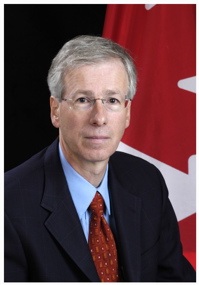
Todays Liberal Leadership Convension was truly something to behold. Not only was it full of odd twists and drama, it produced a result that I don't think anyone could have predicted. I believe what has happened here is the Political Establishment has been turned on its head, and in todays modern, mature, western Democracies, that is truly something to behold. I think this also signals a major shift to the Green side of the spectrum for the Liberal Party of Canada.
What appears to have happened, is that a sort of grass-roots, young, progressive force has taken over the Convention in Montreal. Both Gerard Kennedy and Stephane Dion claimed large numbers of young delegates, and after Kennedy dropped off the 3rd ballot and declared his support for Dion, it propelled Dion to victory over the other two more experienced and far-better-funded teams.
Normally this would be nothing more than a changing of the guard... and we could anticipate more of the same old stay-at-home politics. But with Dion, I expect something different. He is the first leader of the Liberal Party that will make the Environment as important in issue as it is to say, the NDP, or even the Green Party. If his speeches and past record as Environment Minister are anything to go by, Stephane Dion brings a level of young exuberance and political forward thinking that issues like Sustainability, Environmental Stewardship and Peak Oil need to really get the attention they deserve.
There will be one major issue that Mr. Dion will have to address when he trumpets his environmental record and that is Canada's inability to curb its CO2 emissions in the first years after ratifying Kyoto. However, if he can point to the concrete conservation plans (like the Millenium Plan) and other more ambitious plans that he hopefully has up his sleeve, then he should be able to deflect it very easily (especially coming from the Conservatives).
Basically though, what makes me excited is not the grand plans or the good words... ok it is... but really what it is is the possibility of change. The possibility that there will be an Official Opposition in the House of Commons who's first priority is the environment and sustainability. The possibility that the political party will have at it's head someone who understands the truly revolutionary times that are about to overtake this generation of voters.
Up until this day, I thought I'd have to continue to vote for a party that could only get it's way in a minority environment... or worse, a party who still had to wait for a complete change of the democratic system in order to even have a whiff at the halls of power. Today, there is the possibility that Canadians will have a real choice.
Today, the Liberal Party led by Stephane Dion has, hopefully, taken a step away from the Big Business, Big Establishment past towards a Down-To-Earth, Practical and Independant future. I only hope his actions live up to his words.
My first priority tomorrow will be to draft a letter to the new Leader of the Liberal Party to ask him his position on Peak Oil and Oil Depletion.
Personnel
Archives
- December 2008 (1)
- October 2008 (1)
- July 2008 (2)
- June 2008 (2)
- May 2008 (6)
- January 2008 (2)
- December 2007 (8)
- November 2007 (9)
- October 2007 (11)
- September 2007 (14)
- August 2007 (14)
- July 2007 (10)
- June 2007 (9)
- May 2007 (11)
- April 2007 (9)
- March 2007 (11)
- February 2007 (11)
- January 2007 (11)
- December 2006 (12)
- November 2006 (16)
- October 2006 (13)
License

This work is licensed under a Creative Commons Attribution-Share Alike 3.0 United States License.
He will have a problem because of Kyoto and the tar sands, of course. However, if he is able to present a credible position and plan to the world, everyone's relief over not having Rona Ambrose holding the wheel over hard right may cut him some slack. He has some difficult battles ahead if he proposes to cap or cut tar sands production, but if he plays his cards right he will be able to get public opinion running in his favour.
At least now we have a chance. Harper had better start looking over his shoulder - the majority government he was counting on in the spring may no longer be assured.
I loved Rick Mercer's comments in the Globe and Mail today:
Said differently, is he an important enough figure after this election to impact oil and gas companies planning?
How does the process to become Prime Minister work?
Canada has a parliamentary democracy, similar to the UK. This election (an internal affair open to party members only) made Dion the leader of the Liberal Party. That party currently holds 102 of the 308 seats in the House of Commons, compared to 124 for the governing Conservative Party. Dion gets to lead the country only if the Liberals gain enough seats in the next election to surpass the Conservatives. The date of the next election is unknown, but is likely to be relatively soon, since the Conservatives have only a minority government. That means they have less than an absolute majority of the seats in parliament, possible because we have 4 parties with seats in the House.
After the next election, if the Liberals win more seats than any other party they will form the government, and their leader becomes the Prime Minister. If they win at least 155 seats they will have a majority government, which can govern for up to 5 years. Less than that, and they will form a minority government, which can govern as long as they are not defeated by an ad hoc coalition of opposition parties in what is called a vote of non-confidence.
As for next elections, a good number of analyst predict that before the next budget, there could be a trigering of election.
Support for Dion is still unkown in the general population but he is sharp.
He knows about Peak Oil
Here is why :
He came this summer in our city and the journalist told him about me and my report about peak oil. He told the journalist (and then me thereafter) that he read the following books : Twilight, Beyond Oil, The Party is over and many other reports.
I personaly sent him a copy of the french report I made and he told me it was one of the few french document available in Canada at this time.
So I think he will steer the party and the politics toward the talking of this problem, which is yet to be done here in Canada, especialy in Quebec.
He his the kind of Chef I would run for office with (I'm thinking about it)
Have a good night!
As for running for election, if next election can wait 1 or 2 years, there is much chance that I will take the plunge. Before that I would need local support from opinion leaders, I'm getting there but it is much work.
I have to put forward our local currency first (more like purchase coupon) and then is I can a business incubator within the Chamber of commerce. Those two thing will enable me to get large local support.
I Stoneleigh want it, I can talk about the business incubator more thoroughly, it is planed with all kind of energy economy and new building principles. It's getting support within the local here.
However If I would need to do a quick decision, I'm involved in so much organisation here that I'm already known by many people.
...and then is I can a business...
should be
... and then if I can start a business incubator...
I would love to see your report Wolfric. (I can read french better than I can type it :) ).
Very encouraging information indeed.
Merci.
If I had know that Stephan Dion had read the three books I have, I might have stayed with the Liberal and helped him with his leadership campaign.
The likelihood of a business as usually candidate such as Ignatieff or Rae, was just turning me off.
anywho point is.. we "recognize the limits to growth argument"
and if your argument against us is that we dont see it as our number one concern.. well i dont believe we need a #1 concern, thats like having a car about to hit you at the same time as being in the path of a train. guess what i dont care which one i should be MORE worried about, there both about to kill me!
My number one concern is that people are too scared to take a chance, and elect a party with some real progressive policy!
Go ahead, vote Dion, because he did sooo much as the Liberals environment minister!
You keep your eye on the second and you will mis the first.
Global Warming is now, our actions in the next 10 years have a huge impact on the climate of the planet in the subsequent 100.
There is a wealth of scientific evidence that CO2 concentrations are rising faster than we thought, and that the effects of this (Greenland Ice Sheet melting, acidification of the oceans, release of methane from permafrost) is greater than our models indicated. There is a growing alarm amongst the scientific community that we are crossing a number of natural 'tipping points' where CO2 accumulation will become unstoppable, or at the very least the necessary abatement of our emissions will become unfeasible.
Moreover the choices we make now determine our CO2 output 20 to 50 years from now: a coal or nuclear fired plant built now, will still be running in 2050. A car bought now lasts for 14 years, a commercial vehicle potentially much longer. So there are enormous lead times to 'turn the supertanker'.
The Greens are absolutely right on this one.
(where I think they are wrong is on the question of nuclear power. Ontario, for example, would be one of the worst CO2 emitters in North America if it didn't have 12,000MW of nuclear power).
Peak Oil is a hypothesis, which remains unproven. We have one, unambiguous, signal about PO: the price of oil. The price of oil is the point at which
supply +/- changes in inventory = demand
That is tautologically true.
Right now the price of oil is saying there is demand for oil, and it is being met, at a price. It is not saying that there is an impending shortage of oil.
(It is trivially true that oil will run out, ie Peak, this is the definition of an exhaustible resource. The question is when?)
All data on oil reserves and future oil production is suspect to a greater or lesser extent: the key players, the large state-owned oil companies, do not submit themselves to outside audit.
I would be the first to argue that a current commodity price, nor a futures oil price, set by financial markets, is not an exact unbiased forecast of the future price of oil.
But it is the best piece of data we have, and it is not saying we are running out (yet).
If we do hit Peak Oil (and in some ways, Peak Gas will be worse), then the outlook for Global Warming is even more gloomy than if we do not, because we will burn more coal and coal is one of the key roots of world CO2 emission (about half of world electricity production, and about 30% of world CO2 production, currently-- I'd have to check the exact number).
Peak and running out are definitely not the same thing, that is fundamental to understanding PO. You put far too much faith in pricing, it's production figures that will indicate the peak. Anyway, doesn't a 300% increase in price indicate something?
For practical planning purposes both PO and GW are issues that need addressing now, as you put it.
You write lots of words, under your ironic "ValueThinker" tag, but still you seem completely clueless about the basics.
Valuethink means I like low PE stocks which I think are undervalued -- nothing more, nothing less.
You attack me personally, and in that, entirely devalue any criticism you make of the content my arguments.
Let's put this another way: you are a grade A plonker (or behaving like one, it may not be innate) who doesn't know how to structure an argument.
I shall treat your 'arguments' with a similar level of courtesy and attention to the principles of rhetoric ;-).
This will help. But the rate of energy descent will be outstripping the rate of ingenious technical fixes.
There seems to be need of a social rearrangement. If Elizabeth were to sell the need to accept a significant reduction in material conveniences, then I would be convinced that the Greens understood the limits to growth.
We need a revolution, not a violent one of course, but a revolution in thinking. I like the way Thomas Homer-Dixon describes it. We need to build resilience into our societies not stretching out further on a limb.
I think that the difference between the Greens and the Liberals could be that the Greens emphasize that building resilience is central to all other institutions where as Liberals (quoting Dion) wants to do a balancing act. A balancing act won't prevent a crash since everything is so out of balance. The analogy is going off a cliff. Either you crash, or you have prepared and you glide to a landing(possibly rough).
Minority governments typically last less than a full term, which means that there could be a federal election at any point in the next couple of years. If Harper were to win a majority he would get a full term. Alternatively, either he or the Liberals under Dion could win a minority, which would mean continued uncertainty.
For Dion to implement strong environmental policies, he would need either a majority, or the support of other parties in a minority situation. As the New Democratic Party (NDP) and the Bloc Quebecois are both left-leaning, he would probably have the support to push through legislation even if he were leading a minority government.
Dion will be hamstrung to some degree by Alberta politics, however even in Alberta there is growing awareness of climate change and environmental issues.
This weekend another election saw the far-right candidate to replace Alberta premier Ralph Klein... defeated. Ted Moron would have been in lock-step with Stephen Harper on "provincial rights" and energy policy (in other words, "leave us alone" and "what climate change"), only he didn't win.
Its an interesting time in Canadian politics. I'm a Conservative hailing from the old federal Progressive Conservatives and have always had an environmental bent despite working in the oil patch (software / systems) for some time. I think Dion's win will be good for Canada, good for my party, which currently hasn't got a legitimate environmental bone in its body, and certainly good for the Liberals.
As for what does Dion do to deal with climate change - I think part of his plan will have to focus on shaming other parts of the country into moving forward, faster, thus ratcheting up the pressure on Alberta itself.
If I still lived in Canada, I would be a Liberal, now. (or a Green). My Orange Order grandfather would be rolling in his grave.
The Conservatives have drunk the American Koolaid of religious extremism: there have been endless revelations about the influence of right wing religious groups on Prime Minister Harper. Doubtless a belief in the Second Coming informs his views on Global Warming (that it is a myth).
Personally I think the Alberta economy is heading for a bust, as I discussed in my recent article on income trusts. No economic party lasts forever and generally the more extreme the festivities, the worse the resulting hangover. If a future federal Liberal government were to do anything which could be construed as making that worse, it could conceivably launch a western separatist movement.
The only thing that makes people gather around Alberta is it's tar sands and oil derricks. Other than that, Calgary and Edmonton are the same Canadian Multicultural Havens as Vancouver, Winnipeg, Toronto and Montreal. Even more so now since the Boom. It's as easy to find a Sushi bar now in Calgary as it is in Vancouver.
No doubt there would be plenty of whining and griping from the usual suspects were an Energy Program enacted but in the end I think Albertans will always be Canadian.
Heck... if any oil-rich "province" is going to secede from it's mother nation, it'll be those wild Texans down south. And in that case, it's probably more likely that the Albertans try hook their wagon to that train instead of riding into the sunset alone. ;)
Grouping Ontario in 'the Rust Belt' certainly hurt Ontarian feelings (chic, sophisticated, 'world class city' that we consider Toronto to be ;-), but in light of the importance of the North American car industry (and its likely fate) was prescient.
At least Toyota and Honda are decent enough to assemble some cars there.
(Puerto Rico could do so, but it won't, the economic ties are too valuable)
If the NEP returned, then I think Albertan Separatism would have a whole second life. I could see Alberta and BC forming a nation of Western Canada.
I assume (but don't know) that under the shiny new Constitution, the Supreme Court would strike down a new NEP anyways.
The argument will be about Equalisation Payments and the Federal Contribution to Provincial Healthcare, etc.
Let me guess - you've never been to B.C. or Alberta, have you?
If you want to fantasize about new "nations" B.C. would be aligned with Washington state and Oregon, not Alberta.
Alan
however the culture of inland BC struck me much as much closer to Alberta than to that of East Vancouver.
I don't see BC joining the US of A, unless forced to by economic or political crisis. 'Cascadia' is a neat idea but: 1). no state can leave the Union (see 1865 and the US Constitution) 2). I don't think, given the differences between BC and the US as a whole that BC would want it.
Nor can I see Americans accepting a potentially more liberal state within their borders-- one or two more liberal senators etc.
however the Peak Oil argument is that 'this time, it's for real'. ie there will be no slump.
If we think Oil stays above $50/bl, then Alberta has a tar sands based boom locked in for at least the next 10 years (until costs rise to the point where new tar sands investment is no longer economic). New tar sands capacity is coming on stream at c. $40/bl cost, I believe.
Alberta's other problem is, of course, conventional oil and gas exhaustion. Which is proceeding apace.
There used to be a bumper sticker in the mid 80s slump in Alberta
'Please God, give me one more oil boom and I won't blow it this time'
which was nicer than the 1970s one
'Let those Eastern b*stards freeze in the dark'
I had a colleague, whose inheritance was invested by his family in an office building in Calgary in 1980. In 1991, that building was still unlet, sitting empty.
That said, due to the low taxes and a lot of lifestyle issues, a lot of large Canadian companies have relocated from Toronto/Montreal to Calgary, so hopefully the economy will be more stable in a future downturn.
Regionalism is paramount, and the national parties reflect the regional blocs.
This is partly due to a distorting factor that we use a British Parliamentary Constituency system (we call them 'Ridings' which is a very old English word: one Parliamentary Constituency in England is called the Yorkshire Riding, a reference to the idea that a man should be able to ride across his constituency in a day).
Basically it means the Liberal vote out West (which is a minority vote, spread thinly) gives them no MPs out West.
Conversely the conservative parties struggle in the East, for the same reason.
The net effect is the Election is decided in two places:
- the greater Toronto region (the telephone area code outside of Toronto, but directly adjacent). Whereas the population of Toronto has been static at about 2.3 million since the early 1970s, the population of the adjacent municipalities has gone from something like 500,000 to over 2 million in that time. The Greater Toronto Area (GTA) is a supercity nearing 5 million people, effectively 60 miles deep and 120 miles wide.
http://www.reference.com/browse/wiki/Golden_Horseshoe
http://en.wikipedia.org/wiki/Golden_Horseshoe
(GTA is the eastern end of the Golden Horseshoe, which is the Canadian half of the megalopolis stretching around the left hand (West) end of Lake Ontario, from Buffalo in America through to east of Toronto).
From space at night, the Golden Horseshoe is one lit up mass of light, accounting for nearly 8 million Canadians (out of 30m total).
It is in those 'new suburbs', which have large immigrant populations (traditionally aligned with Liberals), as well as large affluent 'white flight' middle class populations (traditionally aligned with the Conservatives), where the 'hearts and minds' battle for each election is fought. Think Orange County California, in its northern incarnation.
- in Quebec. Quebec votes for the 'Quebec' Party ie the Party which is most aligned with French Canadians. Normally this is the Liberals, but to the extent the Regionalist/Separatist Party (which would be the Conservatives in any other province) gains strength, it is at the expense of the Federal Liberals.
shows the Toronto 'Golden Horseshoe' effect before and during the 2003 Blackout.
I don't know how to post a JPEG or I could post you the Google Earth one (daylight only)-- can't seem to get historic images off GE.
The National Energy Policy, which was a cack-handed Federal Liberal bit of policymaking in 1980, for the Federal government to control the Alberta Oil Industry, is still a very bitter issue in Alberta.
As long as:
- there is a Federal government in Ottawa with significant Albertan representation (ie a Tory/Conservative one)
- the Federal government stays out of energy pricing and regulation (1)
Then I think this will be the normal Alberta grumpiness.(official French-English bilingualism, which is widely accepted in the rest of the country, is also a political issue out there, where the number of French speakers is tiny and other immigrant groups like Ukrainians have a long history and stake).
If either of those two factors change, the situation could become unstable quite quickly.
Alberta is now over 40% richer, per person, than the rest of the country, so the struggles over money are getting fiercer.
It's not simple either, because Alberta, BC and Ontario pay a lot into a Federal 'equalisation fund' to fund public services like healthcare in the poorer provinces. And in turn the Federal government subsidises a lot of activities in Alberta.
1. (the founding document of Canada, the British North America Act of 1867, in any case gives control of natural resources and revenues to the Provinces, not to the Federal Government. We never had a Civil War, so the rights of the provinces are in many senses much stronger than those of the US States.
Most people don't realise this, but if they find oil under your property (or any mineral) it does not belong to you. It belongs to the Province, who can auction the rights for exploitation to anyone it chooses.
You will be compensated (grudgingly) by the oil company for damage to your property, but you will not benefit if they strike oil on your property. This is not 'The Beverly Hillbillies'.)
The Liberal Party led for 13 years and was a failure. May i remind u that this is the same Liberal Party that a few months ago was Defeated on a non-Confidence Vote based on Corruption by the united Opposition Parties. They left in disgrace. And now u believe they have had an epiphany? Oh please.
The Conservative Party rose to power much on disgust with successive Quebec French Prime Ministers and their Agenda. Do u really believe that the West will change their vote for another frog? And during the leadership campaign, the Quebec Liberal organizing committee threatened to quit if Dion wins...
Canada had a chance last week to vote in the new leader of Green Party in a London By-Election. And she lost. Give your head a shake if u think Canada is ready to go Green Green or Liberal Green. Remember, Canada's sales of SUV's, trucks and vans far outpace the USA rate.
Let's watch next week's polls. My guess is that he's a dud. A gift to Steve Harper and his quest for a Majority.
Like you, I would be surprised if the Liberals could return to power so soon after a long run ending in a corruption scandal. Harper could indeed get his majority at the next election. However, I am expecting significant economic disruption in the coming year and that has the potential to cause or exacerbate political instability. We could see a string of ineffectual minorities, especially if regionalism becomes a more significant feature of Canadian politics. I would expect it to become more difficult for any party to command a national majority.
The new Clarity Act is not solely for the benefit of Quebec. It allows any Province or Region to secede. The West can take its marbles and go home. And we all know the value of those black "marbles".
As for future economic difficulties, these are not just my musings. I have spent many years studying the literature on financial crises. I agree that Canada in general and Alberta in particular are currently near an economic top - however I see it as the top of a large-scale bubble based on an excess of liquidity globally. My concern is that the bubble is already showing signs of strain and may begin to deflate in the not too distant future.
Dion's year or so as environment minister was strong on good intentions and weak on accomplishment. Canada professed to adhere to Kyoto but GH emissions went up, not down. But Dion was subordinate to a prime minister who had no environmental credentials and who barely tolerated Dion's presence at the cabinet table. Assuming the Liberals return to power, Dion will be in charge and will bear full responsibility for his environmental policy. Then we shall see what he can achieve. I am optimistic, but not naively so.
I think the Liberals could easily gain a minority government with Dion as leader. And that government could stick around for quite awhile if Dion used Environmentalism and the like to form a coalition with the Bloc or NDP.
Businesses, Oil companies, and the like would probably cringe at a Dion-led government at first... but it's not like they're going to pack up shop and hit the road. The Tar Sands are moving anywhere.
Recall that the people of Northern Alberta have been calling for a moratorium on further Tar Sands development, the fact that the required water supply may not be available and that the indigenous peoples downstream object to misuse of the resource, and that the future NG utilization would require the full capacity of the Mackenzie Pipeline.
The silver stake in the heart of the Tar Sands will be the looming continent wide shortage of NG. At some point folks will compare the market price they can realize on the straight sale of NG vs the CAPEX required to increase Tar Sands development and they will make the prudent economic choice.
This NG crunch will likely come after, rather than before, the next general election. But I suspect the majors are already gaming the economics hence recent announcements of firms seeking to sell off some or all of their Tar Sands lease holdings.
I happen to live in Port Alberni, which has a Deepwater port on the west coast of Vancouver Island. It is very comparable to Kitimat, the site of the one-and-only LNG terminal on the West Coast which is set to feed diluent and NG to the Tarsands in Alberta after 2008.
I'm trying to devise a workable plan to bring to City Council here that can simultaneously convince them to build an LNG plant in the City at the same time as they inevitably build Oil&Gas facilities to support exploration in the Queen Charlotte Basin. My hope is that I can get them to apply pressure to the Provincial and Federal government to use any royalties gained from exports to build a renewable energy based economy in the province and nationwide.
It's slated to be start up in 2010
I do not, though, that I was under the impression is was supposed to open by 2008. I'll have to check that... 2 years behind schedule is quite significant especially considering the state of NG production in NA
This LNG is to feed the tar sands production, for those unaware.
Kitimat had a "Methanex" facility there until a few years ago. It took cheap northern BC NG and made methanol from it. (Methanex is sited whereever it can find cheap NG and stable politics).
The syncrude export pipeline will have a parallel NG pipeline (or slightly heavier hydrocarbons) that will flow the other way. The northern BC gas pipelines that still feed Kitimat can feed this proposed pipeline as well. I think some of the northern BC NG was stranded otherwise.
Just to clarify,
Alan
And oil and gas prices tend to move in tandem.
So the Oil Sands will still be economic, even at radically higher gas prices. A $12.50/mcf gas price is still only going to cost the OS operator $10/bl.
If Dion has the wherewithall to drive his candidacy thus far, its only logical to believe he has more reserves to continue. I'm inclined to believe that Harper and his minions will be surprised by Dion if they choose to underestimate him.
And that would be a good thing. I don't support Harper, never have. It'll be good to see institutional change within my own party, too. My party doesn't even believe in climate change. The former Reform / Canadian Alliance wing of the party were always climate change deniers.
Public opinion can change electoral outcomes and I think we'll see - already have seen environmental issues at the fore of the next election. Witness the recent Alberta election, London by election -- its a drift back to the centre and environment as chief policy concerns of Canadians.
A bit of an exaggeration, Mr. Hutter. It would be more accurate to say that he was at most a loyal oarsman. The hand(s) on the tiller were Prime Ministers Chrétian and Martin. Most of his career in cabinet was as a Minister for Intergovernmental Affairs, only recently was he put in charge of the environmental file as Minister of the Environment. Dion has earned the respect of many critics for his sincere commitment to environmental issues.
As for the London by-election, yes, Elizabeth May lost. But she did it by coming a strong second, leaving her Conservative and NDP competitors a distant third and fourth. This despite the fact that the Conservative candidate had been a popular, if controversial, Mayor of London. May increased the Green vote by 500%.
Dion seems to have made a career of being underestimated. Rather like your own Stephen Harper, Mr. Hutter, and look where that got him.
When the media and public saw what was necessary as far as cars off the road and factorie shuttering, the plainly shit their pants. Those facts were REAL. Sending $7-Billion to Russia is smoke&mirrors. That it the NDP solution. That is the Liberal Party solution. The electorate is not prepared to jump on the environment band wagon when there are not distinct targets.
BTW, and off topic, that is why the Kelowna Accord died as well. Our Yukon Land Claim and Self-Governance Agreements are said to be the template of future aboriginal agreements. We have 23 of them and they average 75 to 397 pages. And involve seven to twenty-nine million dollars each. The fricken Kelowna fiasco was a back-of-the-napkin job: 4 and a half pages. For $5.2-Billion. A joke. It was a mere motherhood resolution like the six before it since 1975. The Conservatives didn't tear it up. There was nothing to tear up...
I don't know where you get the idea that the public has been presented with any sort of plan that made them "shit their pants". I do remember that there was a great deal of noise from the Alberta oil industry and auto manufactures about "job losses" at the time Chrétian was considering ratifying Kyoto. The public didn't buy it (maybe you did?) and on the whole supported ratification.
As for "peaksters" public cutback lists, you would have to read the local yahoo lists. I don't see how the fact that these discussion haven't yet reached the general public makes Rona Ambrose's "we'll start setting targets in 2020 and cut back by 2050 plan" look any better.
If anyone is likely to "shit their pants", its the Conservatives who have been plainly blind-sided by this issue. Recent polls have put the environment back at the top of the public's concerns, especially in Quebec, where the Conservatives hope to make their majority. They had obviously hoped to finesse the issue G W Bush style but that plan clearly seems to be failing.
It is easy for pundits on this forum to shoot their mouth off on global warming and jump on the bandwagon with motherhood statements. None, repeat none ... have ever given a list to Canadians of what we have to do to "get there". Why? First 'cuz they haven't done their homework and don't know. Second 'cuz they know that the average voter would shit their pants.
I am confident that 100% of the Green Greens % Green Liberals have not got a clue of how much economic activity must be eliminated to attain their goals. That is the reason the USA never joined in. The other is because fifteen years later the UN has still not identified the penalties for nations in infringement of their commitments. On that matter, i am confident that less than 1% of GG's & LG's have taken the time to read the Kyoto Protocol.
Until now, ridiculous statements by Greens, Dippers & Liberals wrt wrapping themselves in the green flag have not been challenged. Now that Dion wants to make this political, each Party will be held accountable and will face scrutiny of their vague "plans". I suggest that you google "Rona Ambrose" and see the overwhelming wall facing green x's in their quest.
I have been a proponent of nuclear since the 70's. It is with glee that i watch jurisdictions come to the conclusion that nuclear is their only way out of this carbon dilemma thirty years later. The green x's opposed nuclear for 30 years and promoted coal and gas for new generation plants. Now faced with the error of their ways, they blame the same sector that they are on the public record of promoting as the best of the alternatives.
What we need is traded CO2 permits (or conversely, a tax on CO2 emissions).
The good news is that every major air pollutant abatement in history the costs have been deemed 'unacceptable'-- CFCs and SO2 most recently.
Before the US Clean Air Act (1972) Los Angeles was having something like 180 smog alert days a year: now it has c. 30 I think, and the population has doubled (and so has GDP per head). Tokyo has made a similar transition.
In the end, the actual costs of abatement turned out to be fractions of what was estimated.
Technological and economic progress are wonderful things.
What you want is trading of restriction permits
or
taxation of CO2 emission
or
both. My sense is the cost of a tonne of CO2 has to be about $28 ($100/tonne of emitted carbon) as a starting point.
It's not a situation that can respond to half measures.
Regulation of energy efficiency is inefficient, but you can show that under certain circumstances, it is still not a bad bet(1).
On the Tories v. the Liberals, my sense is both sides are skirting the issue. My concern with the Tories (Harper, not Garth Turner) is that they don't even recognise there is a problem.
As I say, I grew up a dyed-in-the-wool Ontario Tory. I'd be a Liberal, now, probably.
(1) Basically conditions where:
- the seller of appliances, cars etc. can price discriminate (ie sell cheaper less energy efficient appliances to poorer people etc.)
- the user or buyer doesn't have full foresight of energy costs, or full control over them. The classic case would be the tenant of an apartment, who cannot specify the level of insulation, nor the efficiency of appliances.
- buyers of houses, cars, appliances etc. do not fully discount future energy costs due to uncertainty, limits on their visibility of time horizon, or sub rational decision making
There is a wealth of evidence, both in the case of consumers and of industry, that such conditions often hold.Here are the Canadian data for light truck sales (including SUV's) as a proportion of total new passenger vehicles sales for the first ten months of
2004 2005 2006
45.1% 44.9% 45.0%
Light truck sales in Canada didn't grow in this period - 0.1% is under 1,500 vehicles - though the sector obviously grew strongly in the last decade. The USA has likewise seen no recent growth, but the light truck market is closer to 50% of the total and the US market is about ten times the size of the Canadian one.
....
In his candidate speech before the first ballot on December 1st [Dion] said:
"In the 21st Century, the countries that will succeed - that will lead - will have the strongest, most sustainable economies. These countries will be rich because they use energy efficiently. Because they use their precious natural resources wisely. Because they recycle and conserve. Because they will export their solutions to the world, and they will earn megatonnes of money with it. I want Canada to be one of these leading countries, at the front of the line."
There will be one major issue that Mr. Dion will have to address when he trumpets his environmental record and that is Canada's inability to curb its CO2 emissions in the first years after ratifying Kyoto. However, if he can point to the concrete conservation plans (like the Millenium Plan) and other more ambitious plans that he hopefully has up his sleeve, then he should be able to deflect it very easily (especially coming from the Conservatives).
....
After reading this post and the discussion of Alberta and Quebec, I was curious as to the population (voters) or Canada. A cursory search gave me surprising results.
Canadas population in 2006 is around 33 million or so.
27% of Canadas entire population lives in TWO CITIES!!!. And over half of Canadas population is in 10 cities.
If future government policies follow the wills of voters, it almost seems that these population centers are too disparate and concentrated to have a strong interweb of interests.
(Note: Australia is even more bizarrely concentrated -40% of its 20 million live in Sydney and Melbourne and 65% of countries population lives in 5 cities.
Boy, oil sure goes a long way towards linking and homogenizing these places...
Tokyo has more people than Canada
and
Mexico City as many as Australia.
I just read these somewhere (Plan 2.0 I think)
Any speculation on the Liberals' policy on the Energy Trusts?
I suspect now that the Government has flipped and started collecting taxes from these trusts, I don't anticipate them flopping back and losing that easy revenue stream.
And with what I would assume to be a more left-leaning Dion leadership, it is even less likely that any tax breaks for anything to do with Big Oil are in the cards.
They have not started collecting taxes, they have announced the intention to introduce legislation that will result in collecting taxes in a little over 4 years' time. That's not the same. (Yes, the intention was to tax any new trusts starting in 2007, but there are and probably will be no new trusts as a result - that was the whole point).
It will be interesting to see what the Liberals do on this issue. The proposal from the current government is rather complicated, I would think there is plenty of room to do something different - not a reversion to existing legislation necessarily, but something to differentiate their approach.
http://www.fin.gc.ca/news06/06-061e.html
Half of the population of New Zealand lives in one of the three large urban areas: Auckland, Wellington, or Christchurch.
So despite the sheep farm stereotype, your 21st century Kiwi is as likely to be a big city dweller as not.
Kiwis are the Canadians of the Southern Hemisphere. This is a good thing ;-).
Oddly, I think it's always been the Canadian landscape, and the basic issue of the Environment that has always united Canadians. Starting way back when French settlers ventured into what is now Manitoba and continuing with establishment of Banff National Park as a haven for the Rich and Famous of the 18th and 19th Century
Whether you're a Cod fisherman in Newfoundland & Labrador, a Salmon fisherman in BC, a forestry worker in Northern Quebec or a miner in Ontario... what connects us all is the land we live on, and even as populations continue to move towards the urban centers, it is that common concern and pride in the Land that will keep Canada united.
(Anyone who grew up (or has small children) listening to Raffi should know what I mean. :) )
And, after feeding white men for 700 years (longer than that if you count the Vikings who settled in NFLD) and the red man for who knows how many thousands-- the richest fishery in the world but
there is no longer a North Atlantic Cod Fishery and there is no sign of it ever returning, despite the fishing embargo.
Which is a sign that man can and does change the environment, permanently, and not always for the better.
Ontario was once covered in old growth forest, so was BC. The pine floorboards of my house in London England are of a width that no longer exists: there aren't trees that old in the world (unless you get hold of a similarly old house that is being scrapped). Those Canadian forests are gone.
We are the classic resource-dependent peripheral economy. As Australia has become with Japan and China.
There is a whole township, SE of Huntsville Ontario, that is owned by a family from Chicago. A whole township-- you wouldn't know it was there, if you didn't look on a map (there are no roads).
Politically, as long as we do not threaten American access to our resources, and to our landmass for their air defence, then we are OK, and they indulge us our little liberal fantasies, our national healthcare, our welfare state, our tantrums about their nuclear submarines in our Arctic waters, our diplomatic relationships with Cuba.
It appears that the Northwest Passage will be ice free 365 days a year within 20 years, thus creating a fast shipping route from Europe to the Far East (and from the E coast of USA to China, for the largest ships). Explorers for centuries sought and died looking for a route to China, and one is opening up.
Other nations do not recognise Canada's claim to these as territorial waters. How Canadian pride will play out against the economic and military interests of the world's largest powers will be interesting, and educational.
However politians are the same the world over, lying liars, and if a green ticket will get them into power they are green. It has almost become pointless debating what they say on either side of politics, rhetoric and policy have never been further apart. Bring on the revolution.
But there is a lot of variation amongst politicians. The one featured here, Stephane Dion, is noted for putting forth his well-thought-out opinions in a consistent and forthright manner. The wonder is that he has risen as far as he has in politics. We Canadians should count ourselves lucky.
However, I reckon that now most people have seen the true colours of the Cons, and there will be a swing back to safer ground with the Liberals at the next general election, so I would bet on them getting at least a minority government.
Let's wait and see if Dion will put his money where his mouth is over the coming months, it will be very, very interesting to find out...
By the way, I voted Green last election (to no avail).
There are never clear solutions. In business you can just go for profit and your shareholders and booger everyone else.
But in politics it's never clear what the 'right' answer is.
Unfortunately, with a subject like global warming, there is a 'right' answer, and a clear and urgent need. But no end of complexities getting people to agree what to do and indeed to do anything about it.
What was it Aristotle said 'democracy is the worst of systems, excepting all the others'.
I genuinely believe a democratic nation gets the leaders it deserves. If we are brave, and stand up for what matters, then our leaders will, too.
America voted Al Gore President, but the Electoral System and some adroit chicanery (thank you, Ken Lay of Enron!) defeated him. Al Gore would have tried to tackle some of these urgent issues.
Instead we got George Bush, and we helped him invade Iraq, which is now a quagmire with untold future consequences for our security-- Blair's final legacy was a misplaced trust in GWB.
I don't understand why you think population being clustered in cities is unusual? In fact that is common of human society. Ancient Rome had a population of over a million people over 2000 years ago, and that was at the time an extremely disproportionate amount of the world's human population.
The death rate in London exceeded the birth rate, through much of the 19th century. Then the great London sewer was finally built, and the mortality rate plummeted.
The problem in pre modern times with cities was disease (fire was another common problem, hence the rules in many cities (Toronto, London) against wood buildings).
Crack that problem, and assume that you can bring enough food into the city, and there isn't really an obvious limit to the size of the city: as Mexico City, Shanghai, Mumbai, Lagos, Cairo, Istanbul etc. are proving.
Canada and Australia are urban countries: more formally, they are suburban countries. As they say in New York: 'who knew?'
There are power laws about the distribution of city sizes, that mean most North Americans crowd into a series of urban megalopoli:
New York- New Jersey, Washington Metro, Boston Metro, Chicago, Dallas-Fort Worth, Atlanta, Southern California (the biggest one), and Vancouver, Toronto-Hamilton (GTA), Montreal, Seattle.
I would bet 65% of Canadians live in the GTA, Vancouver, Ottawa-Carlton-Hull, Calgary, Edmonton, Montreal.
Canada, as a small country attached to a big one, with the bulk of the good agricultural land and benevolent climate along its southern border, and the economic ties running north south more than east to west, tends to hug the US border. 90% of Canadians live within 100 miles of the US border.
Remember 'living off the land' has always been a marginal activity in Australia or Canada. You need a big farm size to sustain yourself, and you need to be integrated into the international economy-- monoculture prevails. It's a harsh climate, the growing season is short, you get one crop in, and that is it. The average farm on the Prairies is more than 1000 acres, I think, and the average farm even in Ontario is several hundred (typically the farmer will rent land from several urban yuppies who own farms but do not farm them).
So there has always been that tie between farmer and food processing and distribution and transport. My great grandfather would make regular journeys to Toronto (60 miles south) to buy equipment and to sell cattle. Toronto got its nickname 'Hogtown' because of its food processing industry.
Neither Australia nor Canada had the 'frontier' in the American sense. As they say 'in Canada, first they built the police stations, then the railway, and then the settlers came'. This is different from the 'Wild West' of America.
Canada is always on the verge of breaking up. It never does. Doesn't mean it won't (when I grew up, there was a country called 'Czechoslovakia' and another called 'Yugoslavia' and a third called 'the USSR'). But Canadians often muddle through.
It's worth reading Jared Diamond on Australia by the way-- he is sobering on the environmental challenges. The aborigines, who survived there for 30,000 years, never had a population of more than 500,000. Yet we, hubristically, assume that we can sustain over 20 million there.
And post that book being written (Collapse), Australia now has what has been described as the 'one in a thousand year drought'.
What doesn't seem to have occurred to the person who wrote that line, is that this might be the norm, going forward, and the (relatively) wet period which Australia has experienced since the white man arrived is the anomaly.
In an almost classic sign of the problems of mental shift that our civilisation has yet to make, a Liberal Senator (ie the conservative party in Australia, whereas in Canada the Liberals are the centre-left party) went on to say that it might be necessary to abandon some farms in the interior that 'should never have been settled' and move them to the 'new frontiers in Queensland and the Northern Territory').
Oh boy. So the solution to environmental collapse is to rip up more of environment, and hope the problem doesn't reoccur.
Canada, by contrast, looks like a net winner in the early days of global warming: longer growing season (albeit worse for ski resorts). But southern Alberta is a semi-desert, fed by irrigation. If there is less snowcap to melt, there could be water shortages all over the place.
http://www.prosefights.org//coal/northanelope/oldtruck.jpg
About 6,000 rail hopper cars per day are loaded with coal with the successors of this.
Not green. Al Gore is very unhappy about this.
Dion himself ..."nothing on earth can stop them"
and hes right with out them Canada is soon a a non oil producer......we have passed the 50% sands oil production figure yet there are people still debating "if" it will happen what a silly uninformed bunch
The reality is this is going to be a problem for our children, and our children's children.
Geologic history shows that the world's climate is not stable, it 'flips' abruptly from one state to another.
We are conducting a one-way experiment with raising CO2 levels to the highest ever recorded in the history of the atmosphere, with no good idea about what the possible outcomes might be.
It starts with drowning polar bears and wars in the Sudan. Who knows where it might end?
http://www.ceocouncil.ca/en/
I think many of us have known this for some time. I suspect the same thing happens with "Socialist" governments, Schroeder in Germany, Jospin in France, I would have said Blair in Britain in 1997, but ...
Dan
In the case of Global Warming, smokestack industries are a big part of their political base -- CAW, mine workers, etc.
They were also hugely resistant to any kind of reform that improved productivity. But without improvements in productivity (yes, this includes Free Trade) there cannot be economic progress.
Pragmatically speaking, most of the public education on climate change has been accomplished, while much work remains to be done to get PO into the public consciousness. Given the fact that much of the work required to address Peak Oil can be accomplished equally well under the rubric of Climate Change, I don't see a need to identify policy decisions with Peak Oil so long as the policy makers clearly understand the issue. After all, why wait to climb yet another educational mountain when we can go directly to effective planning from the position we're already in? In this case, I have some degree of confidence that Dion understands both problems and the interactions between them. As a result I think any Climate Change policies he proposes will be well informed by PO concerns.
What remains to be seen is his ultimate effectiveness as a political leader, his ability to put Harper into a box he can't get out of, and his ability to face down the auto and oil sands interests. If he succeeds at that, and ends up with a majority government committed to addressing the fossil fuel question, I will applaud heartily, and might even switch my allegiance. While the NDP and the Greens are good political consciences, it's always better to have a party with both a conscience and power. If that comes about it will be a great day for Canada (until the power corrupts, which it always seems to do).
Now, that`s a resumé! I'm very pleased by Stéphane Dion's election, we need that kind of people to be put in charge. I hope he will be elected PM. I will certainly vote for him.
I agree with others that Dion's achievements as environment minister were not stellar, but he held that post only in the Martin government and for under three years. Canada acceded to Kyoto under the previous environment minister, David Anderson. The environment minister's has always been a junior portfolio and the minister's ability to get what (s)he wants in Cabinet has usually been limited. He may have done the best job anyone could have in that role in the Martin government.
The problem the federal government has in controlling GHG emissions is generally under-appreciated. The constitutional responsibility for controlling air pollution rests almost exclusively with the provinces (vehicle emissions and a few minor issues aside). The feds can set targets for CO2, methane, etc, but implementation requires massive consultation and agreement. There are only federal carrots, no federal sticks, to help achieve the broader goals. At least Dion will know this (and most other things) better than me.
I'll be looking for Dion's new plan to control GHG emissions. I hope we'll see it before the next election because it will surely influence my vote and the votes of others who recognise what we're up against. As Valuethinker said above, climate change is today's issue. The governmental responses needed to address PO are inextricably bound up in addressing climate change, like the two halves of an apple. As PM, he would have far more influence on the environmental agenda than he had as environment minister and his policies will set the context for environmental policy.
Trudeau was the last Canadian PM with a serious academic background. While that alone is no guarantee of wisdom, Dion does seem exceptionally well qualified. The big question now for watchers of Canadian politics is: Can he pirouette as well as Trudeau?
Trudeau was unique: it was a very special time in Canadian history, and he had a particular career of standing up to the Separatistes, and participating in the Quiet Revolution that brought French Canadians to be 'maitres de chez nous' (masters in our own house).
I would rate him an A+ as a politician, and a D as an economic leader: from wage&price controls through to the deficit (which took another 20 years to tame) through to the NEP (which alienated Alberta seemingly permanently). I would have preferred Stanfield as Prime Minister (and I liked Paul Martin very much).
Political leaders have to have charisma and to talk at the level of the common man.
This was my problem with Ignatieff (an interesting guy) and although I don't know Dion, I suspect the same set of problems.
I amy actually join the liberal party now as he and I share a lot of the same ideas regarding energy and global warming.
He is a big believer in carbon capture and sequestration and actually poses no threat to big oil here in Alberta in my opinion and I have worked for them all here so I know a fare bit about this.
The big secret with the Conservatives who could steal Dions thunder even though he was the guy behind this Tech. when the Liberals were in power, but what Harper and Bush are about to role out is a carbon tax to pay for oil Co.'s to capture carbon at the sites of Syncrude and Suncor and the likes and pipe it to the maturing wells across Alberta and sequester the CO2 in the formations, this big secret deal involves keeping a lid on in what Ambrose calls consultations with the oil industry that are supposed to be unveiled this coming spring.
"Here's the Rub"
Not only will they role out a cabon tax to pay oil Co.'s to capture and sequester the CO2 but when they do this process, the results are astounding for hydrocarbon recovery, up to 60%.
This is so huge that this platform is being rolled out across the world and I mean this like something that will make the race to the moon look like a turtle race.
Anyways I know a one of the senior guys at Petro Canada here in Edmonton and when I asked him if Petro Canada plans to do CCS , he said they all have to.
This is why Kinder Morgan recently announced that they are building a network of CO2 pipelines across North America.
Go to Suncors Website and they have a page on sequestration and are actually involved in a test pilot project right now with (ARC)the Alberta Research Council in the foothills of AB. putting CO2 into a depleted oil formation or gas they are perfecting both and CBM which the new terms ECBM(enhanced coal bed methane) EOR(enhanced oil recovery),ECMM(enhanced coal mine methane)
Unfortunately all this only speeds up Peak Oil but the Oil Co' will win/ the planet will win / and the politician that legislates this will win too.
These articles on Dion are from my "Green is Gold" blog
http://www.stockhouse.ca/blogs.asp?page=viewpost&blogID=228&postID=7335
or this one:
http://www.stockhouse.ca/blogs.asp?page=viewpost&blogID=228&postID=7355
Regards folks
PS watch for the next shoe to fall with regards to the Oilsands and that will be a Nuclear Plant in Saskatchewan to feed the plants.
When I referred to Bush I am talking about the FutureGen Initative in the U.S. where they are test piloting across the U.S and getting ready for the rollout like the EU has going.
China is moving bigtime on this too and a lot has to do with energy security.
Lots of info on my blog.
Again regards to this board, good dialogue here.
At the rate they are going, it will never get built.
FG is not about developing technology that we can start to implement in the next 5 years, but rather hydrogen based technology that will be of use, if ever, post 2015 (current completion date is 2013).
So it seems like it is a way of saying 'here we are doing something about the environment, but actually we are not'.
I agree with you that forward looking people in the oil and gas industry expect restriction on carbon emission. Your information on what was going in Alberta was very interesting-- thank you.
In the coal industry, and the big southern US utilities that burn that coal, they simply intend to fight it tooth and nail.
although American Electric Power has applied to build 3 IGCCs (integrated gasification combined cycle) coal plants in the Midwest-- the first step to efficient carbon sequestration. AEP, probably the largest single CO2 emitter on the planet outside of China, knows that change is coming.
and TXU (Texas) has applied to build 10 large conventional coal plants. The thinking being that TXU knows restrictions on carbon emission are coming, so they want to be 'grandfathered' when it happens.
As to Bush buying into this, GWB is not a guy who changes his mind. He met with Michael Crichton, told Crichton he agrees that Global Warming is a hoax. I cannot see movement on this issue from the White House in the next two years.
I found the Petromin home page.
There has been so much propaganda about this Liberal leadership thing in the mainstream Canadian media who are trying to say that this guy is the man who will restore the Liberals to their "rightful" role of running Canada.
It like a mirror of Fox News, but with the lefties as God's annointed. Do you buy what Fox says about Georgie boy? It's the same with the Canadian media and Dion.
I guess anything is possible in politics, but rest assured that to the silent majority in Canada, he is like the return of a nightmare that we thought we had gotten over. Seeing yet another man who fractures English, whose first official question in the House of Commons was about funding for the Status of Women organization, who was supported during his acceptance speech by the hated Jean Chretien and Paul Martin, and who is the consolation prize "winner" barfed up by a party that is split into factions, it's really difficult to see a Liberal government anytime soon.
People in Western Canada have had enough of pandering to Quebec (francophone) sensibilities, and guess what? Many people in Quebec have no use for him either.
So in all honesty, don't look at Canada to lead the way re Kyoto. Dion is only the reflexive last gasp of a bankrupt era.
Canada had one million men under arms in the Second World War, and in fact many Canadians are proud that we are becoming more right wing and starting to restore our conservative traditions. I guess we come out of the shadows slowly, but people are actually starting to have the courage to honor our troops and their sacrifice in Afghanistan by attending things like "Wear Red Fridays" rallies.
After a century of Eastern Liberal governments, the people of Western Canada (where the tar sands are) are NOT ABOUT to let the Liberals make any kind of comeback.
It's not so much that Stephen Harper is an evil troll. It's more that the time has come for Western Canada to run the show for a while. That's just politics. He's hardly going to alienate his constituency when he just got his foot in the door.
It't a bit ironic, isn't it? While it would seem that Canada's image as the kinder gentler country who does the right thing would be perfect for Kyoto, the political reality is that the opposite will happen.
Politicians in Canada won't be the ones leading. We'll have to deal with Peak Oil the hard way.
"the people of Western Canada" should be rephrased.... the people of "rural Western Canada".
As populations continue to grow and modernize in Winnipeg, Regina, Saskatoon, Calgary, Edmonton, Vancouver and Victoria, so to will the left, Liberal, vote.
That is why Dion will do just fine... and "Western Canada" (whatever definition of the day that might be) will never seperate.
Balance is a good thing.imo
While a move somewhat to the right was needed, frankly moving too far in that direction I find a little scary as I think do most Canadians.
We Canadians always manage to do the right thing eventually and I think the Canadian Oil Co.'s will manage the resources in a responsible and enviromentally conscientious fashion with the co-operation of federal Govt. whether it be Red or Blue.
Why? Because I think everyone now can see the writing on the wall including the major shareholders of these Oil Co's.
It is in everyones interest to manage our finite resources and be mindfull of global warming and to stimulate science innovation through education of our younger citizens to identify new solutions.