
 | DrumBeat: October 5, 2007 | The Oil Drum | An insight on US strategic thinking - why so much cowering fear? |  |
| UK Government Response to Peak Oil Petition | The Oil Drum: Europe | An insight on US strategic thinking - why so much cowering fear? | |
Poverty of Vision
Posted by Euan Mearns on October 5, 2007 - 10:00am in The Oil Drum: Europe
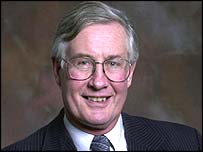
During the final panel debate at ASPO 6 in Cork, former Minister of State for the Environment, Privy Counsellor and UK Member of Parliament Michael Meacher gave a rousing reply to a question from the floor.
|
 |
Read the full text below the fold. Or download the 1 Mb wma audio file here. Thanks to Richard O'Rourke (ASPO Ireland) for sending me the audio file for this segment.
The question from the floor....
Michael, you know you're very eloquent, passionate and informed on this, you sat around the cabinet table in Downing Street and they supported the American invasion of Iraq to go after the oil. Why weren't more ministers around that table more convinced by what you had to say because you certainly had enough time to say it to them.
I'm not sure this provides full context, but its well worth reading how Mr Meacher replied.
Well why other people were not convinced is I suppose something that you’d have to ask them. But I think the answer to the question as to why politicians are unwilling to be courageous over this issue, not that I think it requires a great deal of courage, I think this is an up-coming issue which millions of people out there are increasingly responding to, and the extraordinary thing is that the politicians can’t see it. There is a large constituency out there which is actually going to carry them forward at election time, but they don’t see it.
I think there are three reasons. I agree, one is the centralisation of power, and I’m thinking in Britain that’s happened with spades. The fact is the cabinet is marginalised, parliament is not seriously listened to, the party is nowhere and the electorate, when it comes to the war over Iraq, 2 million people march and they were just ignored.
So it’s a very serious issue. I think the breakdown of accountability. The destruction of the mechanisms for holding to account of our leaders I think is a very, very big political issue in our country.
Can I just say very quickly two other points.
I think it’s a poverty of vision. I really do. I’m afraid I think we live far too much in the last two decades. We’re fighting issues about the role of the private market in public services. Of course, that’s an important issue. But far, far bigger issues are now permeating the landscape. And it’s as though the politicians have their heads down and just do not see the realities. The poverty of vision.
The other thing which I think is very important is vested interests. I mean who wants to keep the world the way it is?
The oil industry; the chemical industry; the food industry; the car industry; the airline industry; these are very powerful. Who rules Britain? Not parliament!
I’ll tell you who rules Britain. It is the Prime Minister with a small cabal around him of unelected advisors, not including members of the cabinet, meeting regularly with leaders of business, leaders of finance and I have to say with Mr Murdoch and leaders of the media, and taking the decisions over our heads which are then imposed upon us.
That’s the actual situation we face. It is a very serious breakdown of democracy. And until we deal with that, and until we regard that as an issue that is central to solving all our issues, including the environment and climate change, we’re not going to get very far.
There are maybe no big surprises here, but it puts into sharp focus how our democracy seems totally broken.
My emphasis on seems is because we are at the same time ruled more by referendum and poll than ever before. And our New Labour government is riding high in the polls.
Can democracy and the market economy address the momentous issues that Peak Oil, Energy Decline and Climate Change present?
Personnel
Editors
Contributors
Peak Oil Primers
Archives
- November 2010 (3)
- October 2010 (6)
- September 2010 (4)
- August 2010 (7)
- July 2010 (6)
- June 2010 (7)
- May 2010 (2)
- April 2010 (8)
- March 2010 (4)
- February 2010 (6)
- January 2010 (3)
- December 2009 (5)
- November 2009 (8)
- October 2009 (12)
- September 2009 (6)
- August 2009 (5)
- July 2009 (11)
- June 2009 (8)
- May 2009 (16)
- April 2009 (10)
- March 2009 (7)
- February 2009 (10)
- January 2009 (15)
- December 2008 (9)
- November 2008 (9)
- October 2008 (9)
- September 2008 (13)
- August 2008 (10)
- July 2008 (14)
- June 2008 (23)
- May 2008 (16)
- April 2008 (12)
- March 2008 (16)
- February 2008 (9)
- January 2008 (13)
- December 2007 (13)
- November 2007 (16)
- October 2007 (22)
- September 2007 (8)
- August 2007 (9)
- July 2007 (16)
- June 2007 (8)
- May 2007 (7)
- April 2007 (7)
- March 2007 (10)
- February 2007 (10)
- January 2007 (12)
- December 2006 (9)
- November 2006 (15)
- October 2006 (4)
- September 2006 (5)
- August 2006 (5)
- July 2006 (9)
- June 2006 (5)
- May 2006 (10)
- April 2006 (9)
- March 2006 (13)
Vital Trivia
License

This work is licensed under a Creative Commons Attribution-Share Alike 3.0 United States License.
You know you're in trouble when:
You have a Minister of the State who can be heard getting more desperate by
the year as he struggles to understand why he still has a job given that:
a) He is categorical in his views on 9/11 - (the USA did it)
b) He is categorical in his views on Peak Oil (it's real)
c) He is categorical in his views on Climate Change (it's also real)
d) He is categorical in his views on Permanent Government (it's real too)
I guess his colleagues generally agree with him, but just can't seem to get it
together to do something about it ... one way or another.
Front bench or backbench I wish they really did "hear, hear, hear" when they
say they do and then act, act, act as we all thought they were going to.
Well done Mr Meacher.
It's you guys I keep in mind when I tick the Labour box on the ballot paper.
I find it interesting that some still put on an appearance of denying b, c, and d when it's obvious to almost everyone else that they are real.
Kata Maran
Suggested reading: The Rise & Fall of the Third Reich, by Wm. L. Shirer.
Compare the "Reichstag Fire" and it's aftermath to the demolition of the WTC & it's aftermath in Amerika...
While digesting that, please let us know where you think the two "missing" airliners are...
When finished, please let us know the answer...
Kata
To quote Gustave Le Bon, "The Crowd":
Le Bon is referring to nothing more than universally accepted beliefs. I think one of the unquestioned beliefs upon which modern society today is based is that energy is forever cheap and abundant. Our rampant denial of anything to the contrary is an important protection mechanism of the herd that serves to keep society intact. Society is doomed once its constituents begin to question the fundamental belief of forever cheap and abundant energy. When the crunch begins to really be felt, and the techo-fix wonder replacements remain stubbornly around the corner, reality will be forced upon us.
To believe we can transition to a much lower-energy world while retaining our civilization of today is to bet that out of all of human history, this time will be different.
And isn't another fundamental belief to Civilization, as Daniel Quinn put it, that "Man was made to rule the world, and the world was made for Man to rule it"?
That we are are somehow separate from the rest of the life on this planet, and that we "own" the planet and can do whatever we want, is perhaps more fundamental belief than a belief of forever cheap and abundant energy.
Even if energy were forever cheap and abundant, we would still rely on the first belief to "own" that energy and do whatever we wanted with it.
Euan – thx for posting this!
AND KUDOS to former Minister of State for the Environment, Privy Counsellor and UK Member of Parliament Michael Meacher (well put)
It was scary and comforting at the same time – Scary because it aligns with my own sensations that “big biz” is running to much of world politics (…and in the US in particular… but also US international Co’s abroad) – but comforting to know that some in the political establishments are aware of the situation …
Now folks – ultimately it is still in your hands – BUT you have to become more interested in your own life amd the life of your kids… – and thus start to learn to separate important stuff from NOT SO important stuff… most countries are still “democratic” … and some kinds of political parties are headed for the historical dust-bin…
Euan Mearns,
Thank you for finding this and posting it for us. I was hoping things were a little better in the UK than in the US, but apparently not.
I think the root of the problem is the concentration of free information in a very few media companies, and the loss of reading as a source of info by the people who participate in the political process. The free press is declining precipitously in bothe number and readership, while the blogosphere is still so new thats its hard for a smart, committed person to get the info necessary to make decent choices. Its still such a vague process that I'm not sure that the "Iron Triangle" is even aware of their own methods, what they do in the united states is band together in various interest groups or caucuses within the Republican party. The problem is that the economy is changing so rapidly that the coaltions cannot hold, but the members of the caucus can't see quickly enough how their own limb is breaking and they may even need to get in touch with their Inner Democrat (sarcanol alert).
Here's a good example of that. The automobile industry is a charter member of the Iron Triangle. The big three US auto makers are broke, and they may be forced to liquidate rather than take Chapter 11 Bankruptcy because of their liabilities to the Pension guarantee Board. They looted the pension funds of the companies under George H.W. Bush and gave out the money as high officer's bonuses based on the new efficency of their fabulous new buisness models.
Their only hope for getting off the hook and being forced to liquidate is the Government assuming the medical insurace that they promised as part of the pensions-at least 40% of their unfunded liability. So they are breaking with the other conservative republicrats on Public Health care and joining with the Unions to call for National Health Care. And it goes on and on. Bob Ebersole
I think the root of the problem is the concentration of free information in a very few media companies
Who Owns the Media:
http://la.indymedia.og/news/2003/04/47530.php
One Example;
GENERAL ELECTRIC
Television Holdings:
* NBC: includes 13 stations, 28% of US households.
* NBC Network News:
The Today Show,
Nightly News with Tom Brokaw,
Meet the Press,
Dateline NBC,
NBC News at Sunrise.
* CNBC business television; MSNBC 24-hour cable and Internet news service (co-owned by NBC and Microsoft); Court TV (co-owned with Time Warner), Bravo (50%), A&E (25%), History Channel (25%) (The CORRECT History that is). The "MS" in MSNBC means microsoft
That's just one company. Hit the link for others.
Euan...reading this all reminded me of westexas' "iron triangle" discourse over here in the States. I guess the US is not alone in these pressures.
"The oil industry; the chemical industry; the food industry; the car industry; the airline industry; these are very powerful. Who rules Britain? Not parliament!
I’ll tell you who rules Britain. It is the Prime Minister with a small cabal around him of unelected advisors, not including members of the cabinet, meeting regularly with leaders of business, leaders of finance and I have to say with Mr Murdoch and leaders of the media, and taking the decisions over our heads which are then imposed upon us."
Wasn't it Mousselini that said "Fascism is better called corporatism as it is the merger of state and corporations"?
And to answer your last question, Euan, a plain "no" suffices.
yes it was , and I may add labour unions were part of the ruling triangle.(at least as a principle)
Well..
..In point of fact not quite.
This quote is frequently attributed to Mussolini and it is very much in line with fascist thought but he it is unlikely that he actually said it. See an explanation here
Tim
well, I'm talking about Fascism in general - more here ... read obout collectivism..
http://en.wikipedia.org/wiki/Fascism
Too many people at the top are making too much money with things exactly the way they are. And they will do their utmost to keep things exactly the way they are. The only possibility would be a crash so fast and hard that it outpaced the elite's ability to stay on top of it.
Yes, there is certainly a contradiction there, as the evidence shows the very condition you claim to be "broken" to be highly popular with voters. Such popularity rubbishes the conspiracy theory that
If the PM must go over over Michael Meacher's head to accomplish the wishes of the voters, then clearly it must be Meacher, not the PM, whose attitudes are out of alignment with democracy. And if Murdoch's desires happen to be aligned with the voter's desires, well, too bad.
So, then, could the fault lie with democracy itself? Oh, but it's politically incorrect even to mention the irrationality and stupidity of the average voter - even Hitler came into office more or less by way of the established procedures of his time and place - "As democracy is perfected, the office of president represents, more and more closely, the inner soul of the people. On some great and glorious day the plain folks of the land will reach their heart's desire at last and the White House will be adorned by a downright moron." (H.L. Mencken, American writer.) Though we must admit that serious students of the subject will tiptoe around it by preposterously claiming that the stupidities and insanities miraculously average out to zero to an accuracy of several decimal places.
No matter, we must stomp the thought out with all our might, lest every Marxist professor we are ever subjected to should flunk us out. But that only leaves us with the remaining alternative, that the voters are (on balance) right. If so, then I must suppose the world is not coming to an end and we, here, are simply worrying too hard. But that thought, too, seems sufficiently politically incorrect to get us flunked out.
Hmmm...I see no way out but to think at least one politically incorrect thought. And the thoughts in play on this occasion in no way contradict each other...
Paul: When you're right you're right. A lot of the evil actions undertaken by the "elite" in the USA are unpopular on TOD but surprisingly popular among the great unwashed. The main problem with democracy is like the comment about World Wrestling Federation fans- they can vote and they can breed.
Governments should be kept small and weak, with powers enumerated clearly in a restrictive constitution. Arguably that subverts democracy, but it is a realistic method to protect minority rights and to prevent tyranny.
The problem isn't with voters, it lies within the system.
Well, enumerated powers used to be the American approach, but I'm not so sure at all that the problem "lies with the system".
"Safety" (physical and/or economic) trumps rights and liberty every time. So it was that America eviscerated its constitution to respond to the Great Depression. So it was that America further eviscerated its constitution to respond to 9/11. That's the voters caring not a fig about any consideration beyond their own skins.
Even the most utterly trivial "safety" scare suffices. So it was that America spent countless millions on an Alar scare amounting to exactly nothing. So it is that everyone spends countless billions on environmental and medical scares amounting at best to next to nothing. That's usually the voters visiting revenge upon the entities, corporate or otherwise, that deliver the highly unwanted news that those selfsame voters must get up in the morning and go to work.
I don't know that any "system" can ever change any of this, because a restrictive constitution can be - and to a great extent has been - simply voted away. Certainly the European "system" of parliamentary dictatorship is unlikely to do better, as the paucity of limitations provides powerful incentive for 51% to loot the other 49%, or to engage in whatever other mischief happens to please them.
Who will guard the guardians? There is no law that can prevent its own abuse. If you want an uncorrupted system, you must stay vigilant at all times.
Well I need to start by saying that I used to be a great fan of Hulk Hogan.
It is an interesting paradox where we can relate to the inadequacy of our democracy whilst at the same time declaring it to be very popular with the majority. The reason I think is that the interests of The People, Corporations and Government are all aligned - consume more, make loads of money and taxes - and I have nothing against that, done on a sustainable basis.
The challenge, therefore, must lie in educating the people that their very steep and selfish discount rates on this particular issue is not actually in their best interests. How exactly you get that message across, if at all, is a major challenge.
If it is not possible somehow to convince people and government that a course of relative austerity is in fact going to be good for them in the long run then the issue will clearly not be resolvable by democratic means. I guess that leaves dictatorship or anarchy as the options.
I still have a romantic notion the PO itself may act as a catalyst for action. Working with Luis right now, we can show that peak FF will likely occur more than a decade after PO. Hence, relative shortage of liquid fuel will not equate to a shortage of energy in general - for a good while. There will be a window of opportunity for a crash program of dramatic expansion of renewables and infrastructure. An opportunity for the World / OECD to build its way out of depression?
Hello Euan,
and thank you for an interesting and thought provoking post.
With respect to peak FF following PO, I just want to add some food for thought.
Oil is KING among the energy sources and mainly used for mobility (transportation) for which machines (cars, airplanes etc) are manufactured with input from other energy sources (natural gas, coal, nuclear). In other words there seems to be a division of labor among the energy sources within the energy mix. The substitution argument seems quite common in some circles as a response to PO.
I, for one, am not fully convinced this will happen.
Could it be that post PO (and after some substitution) that energy demand from other sources becomes affected and starts to head in the same direction as oil (i.e. southwards)?
The other thing is the dire situation with respect to nat gas reserves within some big consumer regions like North America and UK. Would it be possible to scale up deliveries from nat gas rich regions (like the Middle East and Russia, where presently most of the increase in production is used for a growing domestic consumption) fast enough to both substitute for declining oil (substitution where this is feasible) and nat gas production?
Apart from that I agree with you that educating the people is a good and an enormous task as the steep discount rates will give new meaning to the expression “hitting a brick wall”.
Just my 2p.
NGM2
MGN2, Tracking energy flows is tricky business. Falling nat gas in N America has not yet lead to a crater owing in part to de-industrialistaion and in particular gas intensive industries such as fertilizer manufacture moving to ME. What this means of course is exportation of energy and food security.
There will be major disslocations - but at present I'd like to differentiate between a disslocation and a cliff edge.
I'm always looking for solutions. If I reach the point where I decide there are none - I will move back to Norway, buy a small farm and fish for salmon all day.
The situation does seem to be rather intractable.
The system is currently not addressing the very real and very serious problems of GW and PO. The current system is very heavily entrenched. A brief review:
The government represents industry at the expense of the people. The media is owned by industry and it represent industry at the expense of the people. The populous is poorly informed and ill equipped to take the government to task. Furthermore, the populous works for industry, we the people are thus heavily indoctrinated with the present system. It's not surprising that it is highly popular with voters.
Sadly, I agree. I don't think the system we have right now will handle the long emergency very well.
The solution I propose is to socialize ownership of industry by making industry worker owned. I don't think that it is possible to legislate a change like this in the present system. Instead, we need to out compete existing industry. Since existing industry is presently based on the unsustainable BAU model its days are numbered. If we create worker owned solar companies, biodiesel companies, organic farms, etc. and those businesses are going to be dominant after the peak, then we fundamentally change the nature of industry and its effects on media, government, and the populous. If we do it right then we just might get a civilization worth living in. One with social cohesion and economic stability.
I recommend Gar Alporovitz's book America Beyond Capitalism: Reclaiming our Wealth, Our Liberty, and Our Democracy as a starting point. Also worth looking at Mondragon Corporation, a huge worker owned business, and its wikipedia entry here. It is worth noting that the Mondragon cooperative was started during the rule of Franco a fascist dictator.
Tim
Euan,
I think many of the TOD contributors (and commenters) are doing an excellent job in trying to describe the energy challenges we are facing and looking for solutions to moderate those effects.
Some of the American nat gas consumption has been substituted with distillates and RFOs (Residual Fuel Oils).
The reason why I refer to oil as KING among the energy sources is that oil may easily substitute the other energy sources, while the reverse substitution is harder to achieve.
So far the nat gas decline in North America has been modest. Therefore it should (so far) not have a dramatic effect, price rationing has so far driven out marginal demand.
But what about the effects on the American (or world) auto industry?
Some of the first victims for PO (with huge price increases on oil) will be auto industries (less demand for cars) and airline travel (less demand for aero planes), both cars and aero planes requires huge amounts of energy (normally from other energy sources) in their manufacturing. PO will, as far as I understand it, could create some paradoxes, a declining global oil supply could (after some substitution has taken place) reduce demand for other energy sources, thus creating a downward pressure on prices for energy from those sources until supply again meets demand and thus generates a renewed upward pressure.
The hard thing about PO is that there is no travel guide into the future we are headed, we are entering unchartered waters.
Euan, you are welcome to Norway and I will accompany you on some of the fishing trips (I’ll bring some good whiskey as well).
By the way I hope you have installed a wood stove in your home for the upcoming heating season. UK nat gas supply does now look very challenging, as they had to withdraw from the Rough storage facilities earlier this week.
Rgds
NGM2
Well I meant to do this last year, but never got around to it - but this will be well up my priority list when I get back from ASPO Houston. I've spent a fair amount of time this past couple of weeks opening new bank accounts.
Another poster mentioned problems with gas delivery from Langeled and if they're dipping into Rough alraedy - JC!
I'm going to do a long over due post on UK gas supplies - so if you have any news items / links please send.
This chart - which is based on work that you did, is a year out of date - and I gotta try and remember how I made it. Forecasting into the annual cycle is the challenge.
Hello Euan,
I have my figures/diagrams regularly updated as data from DTI is released. I also made a model forecasting (primarily 12 month into the future) stock withdrawals (and injections as well) based upon UK domestic supplies, imports from Norway, from the Netherlands (BBL system), the Interconnector (that allows for bidirectional flow and last heating season there was little flow from the Continent to the UK, UK was awash in nat gas last heating season also due to a mild winter) LNG imports (from the Isle of Grain), in other words a complete model of the UK nat gas supplies system. The hard part to predict is temperatures (or weather).
The model assumes a pattern for “normal” consumption (this is easily modified to simulate other weather patterns) as the average of the last 5 years, and I have noticed that this is pretty much in line with the “normal” demand curve which the National Grid presently is using.
Decline in marketable UK nat gas supplies is presently running at an annual rate of approximately 10 %.
Short, medium and long time storage was (as of 05. Oct.) close to 90 % recharged (refilled) based upon data from National Grid.
Deliveries in Easington from Norway through Langeled (includes deliveries from Ormen Lange) has lately been running at a rate of 50 - 60 Mcm/d, in addition I would estimate that approximately 20 Mcm/d is presently being delivered through Vesterled (Previous FNA; Frigg Norwegian Association) at the TOTAL facilities in St. Fergus. Later this fall deliveries through the new Tampen link (my present guesstimate at approximately 5 Mcm/d) will start deliveries though the FLAGS system (SHELL?) IN St. Fergus.
Ormen Lange has presently (to my best knowledge) 3 operating wells each at approximately 2 Mcm/d and will gradually drill, complete and deliver gas from 24 producer wells by 2009. This means roughly that a new well with a productive capacity of 2 Mcm/d will be brought on stream each month from now on. This also means that deliveries to UK from Norway through Langeled are presently complemented with nat gas from Kvitebjørn (presently down) Troll, Visund and the Sleipner area.
So what are the outlooks for the upcoming heating season?
Weather or temperature plays an important part in nat gas demand and consumption during the heating season (should not come as a surprise).
Assuming a normal winter, present status of the storage levels, imports totaling approximately the levels of last heating season and a decline in domestic marketable nat gas supplies of 20 - 25 Mcm/d relative last heating season (2006/2007) this heating season could be a close call, and it is now hard to exclude the possibilities of GBAs being issued late in the heating season.
What if the weather the upcoming heating season becomes colder than normal?
I know of two good indicators to watch carefully, the price of nat gas (that recently went beyond 42 p/therm and presently down to approximately 35 p/therm) at NBP and the storage levels that are updated daily at National Grids web site.
This winter could become an interesting one for UK nat gas supplies.
(Euan, I have got my fishing gear ready this morning……)
Rgds
NGM2
MgN2
I'll send you an email.
I'd need to borrow a rod as the UK authorites don't like your salmon bug any more.
Weather forecasting is a black art. This year we had an exceptioanlly mild April and October but June through August was crap.
Also need to remember that the UK is still building new gas fored power stations.
EuNa
. Falling nat gas in N America has not yet lead to a crater owing in part to de-industrialistaion and in particular gas intensive industries such as fertilizer manufacture moving to ME
Having been in the Plastic industry, I know that all PolyEthyene resin has gone out of the country, and I understand that Fertilizer also.
I wish someone could come up with a number of the amount of NG that was saved(added back into the market) because of these industries leaving.
5% of our usage?
10%?
How many years did that Onetime "moving off shore" buy us?
These are pretty imporant issues in the bigger picture, which I'm not sure anyone at TOD can answer. What we do know is that the US (and other OECD countries) have soaring imports. Much of this might be energy in the disguise of plastic, fertilizer and other manufactured goods. As you say this is a "Onetime" shift that bought some time.
Just let us know when u start fishing.
Be careful of relying on salmon.
One of the many strikes by the Newcastle keelmen [the original bolshy workers] was over being 'forced' to eat salmon every day [I think it was part of the wages or something..]
http://www.rapper.org.uk/archive/keelmen_strike.php
That is the reason I will bring some whiskey (and Norwegian aquavit).;-)
Rgds
NGM2
And I'l bring some proper whisky. A smoky malt for smoky salmon and spekke matt.
A small farm, with fishing rights in a salmon river? Better start looking already, I don't think those properties are very common in the market nor cheap :)
A small farm of any kind can be a bit hard to get hold of even though the number of farmers are steadily decreasing, and if TSHTF I think it will be close to impossible. The reason is the "odel"-laws, stating that the oldest child of a farmer has the right to buy it when his parents give up. If he doesn't want it the right passes to the second oldest child. Then the third. If no child wants it, the grandchildren are next in line. Then siblings of the farmer. Then their children. Then cousins of the farmer. Then their children. And so on. It's easy to see how becoming a farmer can be kind of hard if noone in your family owns a farm, or if someone above you in the chain wants it.
If you do manage to buy a farm there is another law that says you need to live on the farm and run it for at least 5 years, this is to discourage speculation and make sure wealthy citydwellers don't just buy up all the abandoned farmhouses for use as vacation homes. It seems this rule is easily gotten around though.
The solution ofcourse is to marry the oldest child of a farmer ;) Interestingly, I am one of those oldest children of a farmer, and I'm not going to let it pass when my parents decide to retire. Strange as it is, I'm not yet forced to turn down hordes of desperate females begging me to marry them, so most people must still be under the impression that the party will go on.
Before seeing your numbers I'm doubtful we can continue total FF expansion for a decade post peak oil - I mean in energy terms oil is the most significant FF so expecting coal and gas to be able to increase supply to not only off-set declining oil but also provide growth for at least a decade seems a big ask.
Regional aspects are key to gas and coal, so even with large reserves it's highly questionable if they can be converted into rapidly increasing rates of supply.
Look forward to seeing your numbers
I was getting carried away - another dopamine surge I'm afraid. Somewhat less than a decade is the reality. But I will stand by my point of the window of opportunity - albeit a small one.
Your small window of opportunity depends on your assumption that we are not yet at peak. What happens (or already happened) to your window of opportunity if we truly turn out to be post peak? Getting that farm you've talked about sounds better all the time.
"The greatest shortcoming of the human race is our inability to understand the exponential function." -- Dr. Albert Bartlett
Into the Grey Zone
I recalculated my Saudi forecast for C+C. Pretty interesting eh?
Interesting?
Head for the hills!
Jesus, Euan...you really see Ghawar falling off a cliff that fast?
Whoa! The difference between Euan and Stuart is now about a hair's breadth! Why the change? I'd also be interested in seeing the rest of that graph tail. My own (very crude) projection calls for a a shorter plateau then a quick drop (relatively) over less than a decade to just over 5.5 mbpd then slowly declining production from there onward. In other words, the fall from 9.6 to 5.5 will be relatively abrupt (just over a decade total) but the decline from 5.5 downward will be much slower, leaving KSA still exporting some and having capacity to grow internal consumption. In fact, after about 2020, I expect KSA to be a "bigger Iran" in terms of production - many years of fairly stable and slowly declining production rates. Hmmm... I am betting your other data didn't change much and that your decline rate did? If so, that raises the question of why?
"The greatest shortcoming of the human race is our inability to understand the exponential function." -- Dr. Albert Bartlett
Into the Grey Zone
At the end of the Ghawar debate earlier this year when Stuart and I independently worked out reserves estimates the conclusions we reached were "near identical" to each other in terms of reserves and state of depletion.
The forecast up the thread for C+C is based on same principal as the one for C+C+NGL shown above that I reported here.
http://www.theoildrum.com/node/2910
Including NGL makes quite a difference. I still need to learn a bit more about NGL - in KSA it seems this is actually gas (C2 to C5) - I gotta contact the DTI this week to find out what N Sea NGL is made of - my understanding it is liquid.
And Drogonfly - yes, when N Ghawar dies in stages, I think the production decline will be steep. The timing is uncertain. But it comes down to a new palteau sustained by S Ghawar - that will go on producing for a few decades.
Your graph seems a bit odd. First, where is the 9.6M plateau that SA was on for a few years ending early 06? Second, seems you expect abqaiq and khursaniyah to pump up immediately... as you know, simmons doubts much will come from the latter, and meanwhile it is very difficult to predict what new oil will come from the former, a very old and depleted field. Khursaniyah did, at least, peak at 200k/d, so there may be a chance that 'new tech/water drive etc' can increase production. OTOH, and again referencing simmons, Kurais might not produce anything at all. Counting on both Khursaniyah and Khurais to come on line as scheduled, and further to maintain production long enough to jointly add significantly to total production, is IMO unlikely. A graph showing each of these at half advertised output, and not counting on abqaiq for anything new, might be more realistic.
Manifa might be the best shot of them all, but this oil needs a specialized refinery... presumably, they are working on this critical adjunct.
Regarding NGL's... I thought SA is running out of ng to the point that they are seriously talking of importing coal for the desal and power plants... if so, wont they run out of ngl's?
JK - if the chart seems odd that's because I'm plotting iea annual data - and have often warned of getting sucked into looking too closely at monthly data - to which I think you are referring.
Abqaiq - I show only sporadic production up to 400,000 bpd in short bursts - they have deployed multi-phase pumps which I presume they paln to use.
Khursaniyah - is in fact a three field development comprising Khursaniyah, Abu Hadriyah and Fadihili (I think). If you go back to my original article you'll see I built in a 1 year delay.
So what is your opinion based upon? Matt Simmons opinion? I built in a two year delay in Khurais. My opinion is that the performance of these poor quality reservoirs may be transformed using MRC wells. The Saudis have delivered with Haradh - especially Hardah III - and so until their technical judgement is proven wrong I'll give them the benefit of the doubt.
Using more gas than you consume is not the same as your gas production falling. I've simply built in the projects they say they will deliver - with delays.
Okay – I’ve looked at some numbers from the BP Statistic Review.
Here’s what I mean about oil being so significant:
The recent uptick in coal is China, but there are big questions about how long that can continue for.
We can see that:
Since 1982 gas increased at an average rate of 2.7%
Since 1982 coal increased at an average rate of 1.9%
Since 1982 coal & gas collectively increased at an average rate of 2.2%
However looking forward, perhaps a case can be made for peak oil not being peak fossil fuel.
In this chart I have assumed for sake of argument that oil peaks in 2007 and declines at 3% pa, that’s the light green curve. I’ve then also assumed that coal and gas continue to increase at 2.2% for another decade.
If that is possible, then the coal and oil additions are indeed enough to compensate for oil decline. I’m not convinced it’s realistic to assume “steady, BAU” growth in coal and gas production during the post peak era – we have no idea what the first few of years of oil decline are going to do to the global economy. I’m also highly sceptical of any significant substitution of oil for coal/gas, at least in the early years (the easy subsititution of oil power stations has largely already happened). So even with increasing Mtoe – we still have a major headache.
Lastly - it will be little comfort to Americans and Europeans who are being forced to use less oil for someone to say "ah but Chinese coal production is up 20%, the world has more fossil fuel available than ever before!". Indigenous Chinese coal production, bringing electricity to rural China is not a substitute for Cantarell and US oil imports.
Chris,
Good illustrations following your arguments.
I think the important thing to stay focused on is that oil is mainly a transportation fuel, which easily may substitute the other energy sources, while the reverse substitution is harder to obtain.
It looks as we are trying to solve PO by increasing the consumption from the other energy sources to maintain BAU. PO will, as far as I understand it, mean an end to BAU and I think it will be hard to maintain BAU through substitution. Even growth in money supply won’t solve the problem.
There is no doubt that there are huge coal reserves (globally) but even these coal reserves are concentrated to mainly 4 – 5 countries and the sizes are being increasingly challenged. Post PO general awareness of the strategic value of energy resources (even coal) will grow. Countries that are blessed with those reserves could thus change the rules which could be something different from the present market rules which so easily are assumed will ensure BAU for some more time post PO.
The other thing is that substitution with coal would require retooling of the energy infrastructure that takes decades to accomplish.
Rgds
NGM2
Really? But all of this "showing" is based on mathematical models. That, or even the mere sight of a serious chart, is surely enough to burn out the brains of 90% of the electorate. And just 10% would shift most elections.
It follows that even PO itself, never mind nuances such as this, may well attain no democratic existence until (1) there has been a major drop in quantity consumed, owing to swingeing price (US$30/gallon or €5.50/liter for petrol?) or physical shortage; and (2) the inevitable demagogic responses (e.g. price controls and confiscations) have proven useless - and are seen to have been useless.
That very last point is the killer. The likely response to the failure of demagogic measures will simply be spiraling demands to apply them ever more strongly.
I used to be, and still am, a fan of Rowdy Roddy Piper, specifically the message carried in his film "They Live", directed by John Carpenter.
Although dumbed down for public consumption, the notion that we are lulled to sleep while monsters take over isn't lost in translation. The difference is that in real life the monsters aren't aliens, they're fat cat globalist elites and neocon zealots, and they don't NEED pseudo-scientific "beams" to lull us into compliance...they simply repeat the lies often enough till they become truth and quietly consolidate ownership in the background.
And all we ask is to be "left alone, with our toaster and our steel belted radials" just like in "Network".
Howard Beale was right, we're now utterly without value as individuals and as replaceable as piston rods. We're humanoids, and no, we are NOT "smarter than yeast".
Yeast is smart enough to die...we keep hanging on.
Ah Yes Rowdy Rody Piper, another favourite. And Hacksaw Jim Duggan (sp?). And yeast at least excrete alchohol.
My favorite was Jimmy "Superfly" Snuka.
You are mistaken: democracy is not a way to obtain a good government; it is a way to obtain a stable government. Voting is nothing more than a ritualized civil war.
You can complain and wail all you want about the power of big corporations and big MSM, but the fact remains that they have their power because of their cash flow - cash flow that comes ONLY from their customers.
The only way to kill them off is by strangulation, and the only way to do that is to cut off the cash flow. No cash flow = FORMERLY big corporations. It is as simple as that.
Until people stop turning over their money to the coffers of these big corporations, they will continue to have power over us. Because people are not withholding their money, I must conclude that they are at least not too unhappy with the status quo.
Want to help change things?
1) Live as frugally and simply as possible. The less stuff you need to buy, the better. Most of what these big corporations make and sell is crap anyway, we'd all be better off without it.
2) Patronize small, local businesses to the extent that you do need to buy stuff you can't produce yourself, as much as possible.
3) As for the MSM, as you are reading these words, congratulations - you've already taken the first step. Relying on alternative media for one's news is part of it. Cancel your print subscriptions, limit your radio & TV to non-commercial public broadcasting at most, just say no to hollywood movies and recording industry pop music. Patronize your pulbic library. One can be informed and entertained without forking over money to big media. Tune away, turn off, and drop out.
Once I see large numbers of people starting to do these things, then I'll start to have some hope that things might change. Until then, it's all just vain and worthless rant.
The government are suppose to act in our best interest. They are suppose to regulate these companies to stop them from doing this kind of thing. Not support them. They are suppose to be our defense.
If it can be shown that our government went to war in Iraq for business reasons, or because of American pressure and not in the best long term interest of people. Then the government should be taken to court and tried.
I don't think that everyone should back away from MSM and big companies etc... They offer advantages as long as they are kept under control.
Freexe:
Yes, the government SHOULD regulate. Unfortunately we haven't had anything even remotely close to that type of government since FDR.
Well, how is cash allocated? It is done largely at the whim of banks. Democracy and the market are profoundly perverted by central banking and fractional reserve lending. The corporatist state can only thrive to the extent that it does currently by using the awesome redistributive powers of the banking system.
If you wish to be truly "pure" then I suppose the best way to do that would be to stop using most currencies. That seems quite self-indulgent, as you would be relegating yourself to a sort of dreary personal autarky for the sole reason of making you feel noble.
TOD posters, from what I've seen, are largely coming around to the realization that the state is utterly iredeemable, and that attempts to persuade it and its pets to change for the benefit of all are a waste of time.
There is an alternative to the corporatist banking system: your local credit union. Credit unions are depositor-owned cooperatives. I don't know if you would consider them a perfect alternative, but IMHO they are infinitely preferable to corporate banks.
I do my banking with a credit union, and would encourage everyone else to do so as well.
Democracy and the market are profoundly perverted by central banking and fractional reserve lending. The corporatist state can only thrive to the extent that it does currently by using the awesome redistributive powers of the banking system.
“Allow me to control the issue and the nation’s money and I care not who makes its laws!”
— Amshell Rothschild
Get a copy of this DVD
http://www.freedomtofascism.com/
Pick up a copy of this book
The Creature From Jekyll Island
http://www.amazon.com/Creature-Jekyll-Island-Federal-Reserve/dp/0912986212
Banks that hold the controlling stock in the Federal Reserve Corporation:
Rothschild Banks of London and Berlin, Lazard Brothers Bank of Paris, Israel Moses Sieff Banks of Italy
Warburg Bank of Hamburg and Amsterdam, Lehman Brothers Bank of New York, Kuhn Loeb Bank of New York
Chase Manhattan Bank of New York, Goldman Sachs Bank of New York.
The Methodology:
As Cathrine Austin Fitts says, (paraphrasing)
"Until you change the way money is created and by who, You will change Nothing"
We need large corporations to do realy large investments and I realy would like to see more of those like major railways, nuclear powerplants and biofuel refineries.
Magnus:
I would respectfully disagree for the most part. Most of those large investments are actually for toll goods. Toll goods are neither public goods nor private goods. The problem with having the government in charge of toll goods is that politics inevitably gets in the way of efficient management, and the enterprises end up being milked of their profits to support other social programs instead of being reinvested for improved service. The problem with having private sector corporations in charge of toll goods is that they want to just cream off the most profitable customers, and leave the rest of the public unserved; they also want to keep reinvestment at an absolute minimum so that they can milk the profits to fatten up the CEOs and investors.
There is a better way: public ownership which is NOT government ownership. Nationalize them, but have them run by a board of trustees that is elected directly by, and accountable only to, the general public. Under such a scheme, each toll good essentially becomes a cooperative. The right balance between cost of service and quality of service is struck through the feedback not only from customer revenues but also from the voters. Because the public owns the toll good, all profits in excess of operating costs are reinvested.
For truly private goods (e.g., stuff that can be sold in a store), especially things like automobiles that require big, complicated manufacturing plants, we probably do need big private sector corporations.
How they run Britain doesn't sound any different from our town council. Perhaps 'twas ever thus.
Probably better then the US. The video is from Texas.
http://www.ebaumsworld.com/video/watch/39986/
I would also says "seems broken" but for different reasons.
The fact is, our democracy has always been broken. The idea that there was golden age when society was ruled by truth and reason is a fallacy, but pops up quite frequently. There is certainly an illusion that in the past leaders were moral and upright, but that is only because they had a more cosy relationship with the media, who didn't expose their sordid affairs and dodgy deals with businessmen. Ok, so there was an expectation of men to serve their country, but didn't these men also have an expectation of getting a cushy seat in the lords and several non-execs positions? Plus ca change.
The fact is we have always been ruled by people who control resources, or the military, or both. Nothing has changed there. The main thing different is the makeup of the ruling class, and our perceptions of who has power and how they wield it.
So the question is, can any system of power address the momentous issues facing it?
There I think we run directly into Tainter.
I'm not sure anybody's alleging that there was a golden age. Democracy, such as the Roman republic, gets clogged up by infighting, corruption, and incompetence, and sputters to a halt, leaving dictatorship as the way out. Occasionally a dictator withdraws, as at first in Rome, or as in Quebec in 1970. More often, dictatorship persists and perhaps becomes hereditary, as with Imperial Rome. Then the politically incorrect realities of biology take hold, and one eventually and inevitably gets a monarch so incompetent or insane or just plain stupid as to cause a collapse or a revolution. In a few cases that may lead back to democracy again, perhaps by way of a blood-soaked detour or two, as with the French Revolution.
None of this has ever been stable, and only sporadically was it ever golden. And even the comparatively golden times, such as England under Elizabeth I, were often more about iron-fisted rule than about anything nowadays seen as democracy.
Will the issues be addressed? If muddling along turns out to be kind of sufficient, then, perhaps, kind of yes. If a hasty, grandiose World War II response turns out to have been needed, maybe not, since speed and coherence are not of the essence in democracies. (Despite all the silly nostalgia, remember that in order to get the job done in time, the USA in World War II acquired many of the trappings and institutions of a dictatorship.) So a lot rides on how harsh and fast-arriving the reality eventually turns out to be.
The point is there never has been a democracy. Democracy is not a natural state that societies revert to. The natural state is where a small ruling class have power.
The ruling class want to keep it that way, thus their purpose becomes to try to maintain the system that gave them that power, not embrace change.
The way I see it, democracy, capitalism, politics are all acceptable to the majority as long as the world has room for growth. Underpopulated regions, 'endless' cheap resources, other places to colonize, exploit [I just noticed there is a hidden colon in that word..] = possibilities for social improvement, wealth etc. The 'American dream' - opportunities for everyone etc [real or imagined, of course].
The problem is with limits. If we accept limits, then 1 person improving means someone else is getting worse. Food I eat means someone else doesn't. All of a sudden greed is not good - it's greed.
Why don't more politicians act out on the basis of PO, even when they understand the issue (assuming there are more than just Meacher)?
I'd quote Schlesinger (ex US energy secretary) here:
And:
Look's like we might be in for some shock treatment, if Schlesinger is right.
As for can the market economy address the issue, I leave that to Hirsch & Bezdek.
I remain slightly skeptical however.
Because even if/when the mass realization of PO happens, it is more likely that companies will first try to: use it as a PR track (PO "washing"), make a quick buck (without really trying to _solve_ anything) and then finally try to monopolize the market in order to cut out the competition, while begging for subsidies and yelling for de-regulation (unless of course, it's regulation of their competition).
Democracy by large is a process made efficient/failure mostly by what the fourth estate spoon feeds us, which has been for some time already increasingly mindless entertainment (count the number of Paris Hilton stories vs energy crisis stories in mainstream quality press).
And I believe it is in the zeitgeist as well. Being serious is not cool, reality-tv, entertainment and having fun is what is deemed important.
Besides, the media is in it to make a steady buck too, why should they rock the boat. They don't want to be Cassandras either. Just show them more fantasies and feed them some fear. Sells steadily and well, why fix it?
As such, the combination doesn't appear to be well suited for rapid and efficient handling of any PO related systemic crises.
Here's hoping we can all change. We can start with ourselves and the friends around us.
"One man with courage makes a majority." - Andrew Jackson
I'd say the reason government's don't come clean is simply to prevent panic and/or hoarding.
Immediately the government says fuel will be short and also food, the natural reaction will be a run on supermarkets and gas stations.
I'm certain it will happen anyway as soon as the situation becomes widely accepted.
Expect government denials and spin to come to the fore first though.
It is best to dig the well before you are thirsty.
If it is this bad in Great Britain one can only guess at how bad it is in the U.S. I have heard nothing like this from anyone in the U.S. House or Senate let alone someone in the cabinet. None of the presidential candidates touch the subject. It´s like they are all owned by the same corporations. No one represents the people.
None of the presidential candidates touch the subject. It´s like they are all owned by the same corporations.
See the book:
"Pigs at the Trough" - Arianna Huffington
have heard nothing like this from anyone in the U.S. House or Senate let alone someone in the cabinet.
It's been done, just no one watches CSPAN I saw this one twice.
Transcript: Third Peak Oil Presentation by Congressman Bartlett
by Roscoe Bartlett
http://www.energybulletin.net/5948.html
And
http://www.energybulletin.net/4733.html
I watched the county government cable channel broadcasting a roads and bridges meeting between the county commisioners and Senator Mikulski. It was a September 18 meeting. She had some of her staff with her and she made sure that she mentioned all the good things that had come the way of the county from the federal gonvernment. And, she made it a point to mention other members of the Maryland delegation. She mentioned our former senator and our new senator and Steny Hoyer since we are in his district, but she made a point to mention Roscoe Bartlett whose district is as far away as you can get from us and who in in another party. And she pointed out that he is a scientist and supports education and that they've worked well together. PO did not come up. Building bombs is the big new thing for the county so it is energetics not energy that is a concern here, but Bartlett does have some influence with both senate and house leadership, probably more than he used to have. Udall is a name that has a history. The father of Mark had a reputation for being smart and honest.
Ted Glick is in his 32nd day of his climate emergency fast and is demanding an energy bill as well as legislation on carbon emissions reductions and I doubt that it is forgotten that the green who ran against Hoyer last time got 16% of the vote spending less than $10K. Glick was a speaker at the Maryland Green Party Assembly the last time it was held in Baltimore. Canada's refusal to admit Colonel Wright and Media Benjamin get top billing in the linked report, but Glick gets his say too. There do seem to be some strong pressures to turn our direction around. Vetos will not delay anything on this because the businesses will know that these things are as good as law and will likely be stonger in their next versions. With the current president, who is all hat, one veto override and he will be a legless, wingless duck, and it looks like that is what he is going to get. So, there is more going on than meets the eye.
Chris