


Peak Oil and Senegal
Posted by Chris Vernon on April 13, 2007 - 10:46am in The Oil Drum: Europe
I recently spent a week in Senegal, the most westerly African country. Here I’ll share some observations from Senegal with comparisons made to the UK.
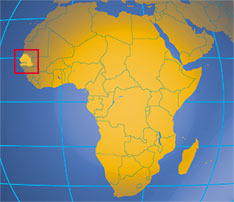
| Senegal | UK | |
| Population | 12 million | 60 million |
| GDP per capita | $1,800 | $31,400 |
| Annual oil consumption per capita | 0.9 barrels | 10 barrels |
| Proportion of oil imported | 100% | ~0% and rising |
| Annual electricity generation per capita | 192 kWh | 6600 kWh |
| Electricity generation fuel mix | 76% oil, 13% hydro, 11% comb. Renew & waste | 37% coal, 39% gas, 18% nuclear |
| Vehicles per 1000 inhabitants | 20.6 | ~500 |
Senegal is a poor country with all per capita metrics of conventional wealth far lower than western standards however the many Senegalese I met seemed, outwardly at least to be very happy people. There are certainly more smiles on the street in Dakar than in London. This does raise the question of whether conventional economic metrics tell the whole story, clearly they don’t but in absence of any standard “wellbeing” or “happiness” index they are all we have.
Oil consumption is extremely low at 0.9 barrels per capita per year. This is some 10 times less than the UK. Not only is the absolute usage significantly less but also the distribution of usage is different. Oil is almost exclusively used for transport in the UK, there being little alternative, most other potential uses of oil have been substituted.
In Senegal 37% of the nation's oil supply is used in electricity generation which in turn represents approximately 76% of the nations electricity supply. As noted above, all of Senegal's oil is imported. IEA energy statistics available here.

Oil storage tanks at Dakar.
This is a critical vulnerability, a vulnerability that was realised last year with price rises and frequent blackouts. The New York Times ran this story in October 2006:
Senegal has increased the price of electricity by 15 percent, infuriating consumers already angry with President Abdoulaye Wade's government after months of chronic power cuts. Regular blackouts, lasting days in some areas, have disrupted the economy and fueled public anger against Mr. Wade's government. The power cuts are largely due to problems purchasing increasingly expensive fuel to run oil-fired generating plants. Residents deprived of fans and refrigerators during the hottest part of the year, when daily temperatures rise above 90 degrees, were shocked by an unannounced price increase on their latest electricity bills. "I thought it was a mistake," said Tidiane Tairou, who runs a small hairdressing boutique equipped with two electric razors. "Sometimes they cut from morning to night, and at the end of the month you still get a bill even though you haven't been able to work."It is likely that it won’t take very much of a price hike for other countries to out bid the Senegalese on the international crude market. The situation could arise where the price of oil doubles with relatively little impact in the West as such a small proportion of total income is actually spent on oil but with massive impact in Senegal. The UK alone will be importing many times Senegal's total imports of ~30,000 barrels per day in just a few years time. Imports, at the expense of poorer countries, that could be avoided with relatively minor changes to UK usage. The lights could go out across large parts of Africa as a direct result of oil scarcity whilst the West continues to drive inefficient cars and frequently fly.
Why does Senegal generate electricity from oil, a practice all but abandoned in the West? In fact a 2004 UK report from The Royal Academy of Engineering titled The Costs of Generating Electricity (pdf available) concluded:
...it is clear that under the Government’s existing fiscal policy, fuel oil cannot compete with other types of fossil fuel used to generate electricity. It is our view, therefore, that the scope for future fuel oil-fired generation is very limited, other than for use as a back-up fuel in plants which have the capability to burn more than one type of fuel.As we know, since then the price of oil has risen still further.
Generating electricity from oil is an expensive business. For example a barrel of oil contains approximately 1,680 kWh (37MJ/L) and costs $60. Generating electricity at 40% efficiency results in a fuel cost of 9 cent per kWh. In reality it will be a little more as this does not include the refining costs to produce the fuel oil from the crude. The fuel component of generating costs may represent as much as 70% of the total cost suggesting a total cost of approximately 14 cent per kWh.
The IEA calculate electricity generation costs resulting from a survey of 130 power plants (pdf available) with a 5% capital discount rate as:
- Nuclear: 2.1-3.1 cent per kWh
- Coal: 2.5-5.0 cent per kWh
- Gas: 3.7-6.0 cent per kWh
- Wind: 3.5-9.5 cent per kWh
- Solar: 15 cent per kWh for high activity factors
Having highlighted this vulnerability to oil supply here’s one thing the Senegalese do exceptionally well. The cars especially the taxis were triumphs of repair with vehicles the West would have given up on perhaps a decade earlier still struggling on. Sure they were in bad shape, many with no electrics, mirrors, lights, handles, glass cracked, every body panel dented but they continued to work. The majority of the vehicles were Toyotas or French Peugeots or Renaults.
Whilst driving through the country I passed through a few villages which seemed solely based around keeping the cars going, shops selling used car components lined the road and I spotted a horse drawn trailer carrying all the components of a dismantled engine. This degree of reuse and repair is unheard of in today’s developed economies.
This observation is backed up by the vehicle age data from the Ministry of Transport:
| Age in yrs | Less than 5 | >5 and <10 | >10 and <15 | >15 and <20 | >20 |
| Senegal | 8.9% | 8.1% | 22.4% | 30.4% | 30.3% |
| Dakar | 10.5% | 9.4% | 23.2% | 29.0% | 27.9% |
| Rest of the country | 2.8% | 4.8% | 22.3% | 32.6% | 37.4% |
Source: Performance and Impact Indicators for Transport in Senegal (pdf available)
The statistics reveal that around 60% of motor vehicles are at least 15 years old, however it possible that a significant proportion of the vehicles, especially those over 20 years old are no longer in circulation.

Is this car counted in the statistics?
Conclusion
The sorry truth of the situation is that poor countries with little or no fossil fuel resources of their own often rely on imported oil for electricity generation. If peak oil results in substantial and prolonged price hikes, demand destruction from these poor countries is the obvious result. However this won’t only result in the reduced transportation services we typically associate with oil shortages but more critically will result in reduced electricity availability effecting communications, refrigeration, lighting etc. services that are perhaps more important than internal combustion engine transportation, especially in a country with only 0.02 cars per capita anyway.Here is a video I shot from the taxi driving through the centre of Dakar.
And here is my Flickr photo album from the trip: Senegal Photos
Personnel
Editors
Contributors
Peak Oil Primers
Archives
- November 2010 (3)
- October 2010 (6)
- September 2010 (4)
- August 2010 (7)
- July 2010 (6)
- June 2010 (7)
- May 2010 (2)
- April 2010 (8)
- March 2010 (4)
- February 2010 (6)
- January 2010 (3)
- December 2009 (5)
- November 2009 (8)
- October 2009 (12)
- September 2009 (6)
- August 2009 (5)
- July 2009 (11)
- June 2009 (8)
- May 2009 (16)
- April 2009 (10)
- March 2009 (7)
- February 2009 (10)
- January 2009 (15)
- December 2008 (9)
- November 2008 (9)
- October 2008 (9)
- September 2008 (13)
- August 2008 (10)
- July 2008 (14)
- June 2008 (23)
- May 2008 (16)
- April 2008 (12)
- March 2008 (16)
- February 2008 (9)
- January 2008 (13)
- December 2007 (13)
- November 2007 (16)
- October 2007 (22)
- September 2007 (8)
- August 2007 (9)
- July 2007 (16)
- June 2007 (8)
- May 2007 (7)
- April 2007 (7)
- March 2007 (10)
- February 2007 (10)
- January 2007 (12)
- December 2006 (9)
- November 2006 (15)
- October 2006 (4)
- September 2006 (5)
- August 2006 (5)
- July 2006 (9)
- June 2006 (5)
- May 2006 (10)
- April 2006 (9)
- March 2006 (13)
Vital Trivia
License

This work is licensed under a Creative Commons Attribution-Share Alike 3.0 United States License.
I just read your article and saw the video, DISMAL is the best i can say about the place. The place is a pure squalor! Our cattle and horses is the USA have better living conditions! This video deserves to be on Main stream media! CNN, Fox, Rosie O'Donnell,(haha had to throw in her, since so many sheeple watch her) etc. Mogadishu, Somalia, from the movie Black Hawk Down ring a bell here?
I see similarities.
The contrast of western civilization versus Dakar is 180 degree's from the west. Even some of the slums of Jersey and New York City as well as Los Angeles seem like sunny resorts compared to Dakar. Sad, to say the least!
I'll be the first to say, I have no idea where to even start to correct this gaggle. It's soooo overwhelming. But if I were King for a Day! I'd start with bringing business to Dakar. But it would be a slow process for the money to trickle into rebuilding the infrastructure and buildings. Every building I saw needed serious repair. That could be years, many years from now. By then, due to peak oil, it will have been to late. And since Peak oil is here and just getting started, I am afraid it might be too late for Dakar. I would imagine a revolt from the people to correct the corruption is all thats left. It's going to get very ugly!
At least the French had the guts to stand up against the King and Queen on Bastille Day! I'm not sure I can say this for those in Dakar!
Just mindboggling sad!
I'm always fascinated by what people do or don't know about the world outside their own country.
Mind, I've seen shanty towns on the Texan border that looked little better.
Seriously, people live like this in parts of rural China, which is a fast progressing country.
The US has a GDP per head of $40k. I would think the richest African nations have GDP/head of around $2k, and the poorest around $100.
So how would you expect people to live?
Sorry if the above seems sarcastic-- too early in the morning when I typed it!
I am just surprised when people think life in these places is like it is. Anyone ever read Charles Dickens? Dickens' London of the 1850s is much like any sprawling supercity of the Third World today (Maputo, Rio de Janeiro, Cairo etc.).
Senegal is Islamic. In my experience, Islamic cities are a little better, due to a Koranic emphasis on personal hygiene, and the relative absence of alcohol.
I think everyone is missing the boat on this one.
Thanks to the music, this brought back happy memories of my trip across africa 30 years ago; though there were far less vehicles then. Everywhere I went people were happy, smiling, and willing, even eager to share. People were far happier, far more content than here in America.
I now live in an old mining town in Arizona, where many miner shacks have changed little in three generations, and where newcomers (rich speculators) think the only thing to do is tear them down and build a modern stucco monstrosity.
Americans think the only way to live is to live in a huge house, with all the comforts, where you never have to leave the front door and encounter neighbors, living lives of loneliness and isolation.
I can assure you that doesn't happen in Africa.
Relatively speaking that's not bad. Take a look at the West Point slums in Monrovia, Liberia.
Indeed, relatively speaking Senegal is doing pretty well. It's described as one of the most stable democracies in Africa. The economy has seen real growth in GDP averaging over 5% during the last decade and inflation of just 2%.
Military spending is less than 2% of GDP (which I’m counting as positively low).
Perhaps the biggest concern going into a resource constrained world is demographics though. The median age is 19.1, 41% of the population are aged 0-14 and the fertility rate is 4.4 children per woman.
Click to enlarge.
This also leads to high unemployment (48%, urban youth 40% (2001 est.)) and a large degree of attempted migration amongst young males. I say attempted as there is a horrific casualty rates amongst those attempting to reach the Spanish Canary Islands by boat.
Yes but there have been some remarkable decelerations in birth rate.
Most noticeably in China, but also India, and apparently even Morocco (not sure about Tunisia and Algeria).
Africa is trickier. Many countries are split between moslem and Christian, and religious leaders on both sides encourage more babies, as a way to increase the relative size of their community.
So where is the "pure squalor" in the video?
I have never been to Senegal, but it is a popular tourist destination - especially to the French and to gays.
Anyone who has been to West Africa for a while will appreciate that the ex-French colonies are much pleasanter than the ex-British colonies. The people are much more friendly and civilized. The French like to claim that it was due to their benevolent (ahem) policies and the British like to say that the French grabbed the places with nicer tribes. Perhaps the slave trade (by the British) brought out the worst in the peoples who they traded with - let us not forget that it was the coastal tribes that enslaved the populations of the interior before selling them on.
The pictures show a place that is a good deal better off and safer than is most of Lagos (the commercial capital of Nigeria) - probably because Senegal has no oil. Indeed, I am sure it is much pleasanter than slums in a lot of other places such as Mexico City and Rio de Janeiro. They do not have the gun and drugs culture that is so prevalent in the Americas.
The article misses out on the two main problems in the Senegal - population-growth and desertification (which is linked to oil consumption).
The population of Senegal has increased by a factor of 3 over the past 40 years. If the US's population had increased at a similar rate, it would now be around 600 million. In fact, the US's population, if immigration is removed, has barely changed over this period.
How wealthy would the average American be today if the US's population were 600 million? So much investment would have needed to go into schools, hospitals and infrastructure that there would have been little left over to go towards technology, research and higher education.
On this website, and elsewhere, I have repeatedly seen the assumption that when people are hungry, they rebel and revolt. Not true. If you read carefully books by the famous French historian Fernand Braudel, you will see that the French revolution had somewhat more complex causes. To take an American example, the revolt against the British was not caused because the British in America (the colonisers) could not afford to pay the tax on tea from India. Quite the opposite.
Hunger causes weakness and apathy. Just try going on a serious diet for a while and you will see for yourself. Indeed, dictators like Stalin and Kim Jong-II use hunger to control entire populations - something that you cannot do as easily by force. Hence the reluctance of North Korea to make deals that include food in exchange for disarmament.
Personally, I think that places like Senegal are going to go through a severe form of "population destruction" rather than "demand destruction" - through hunger. Their populations drift to the cities because the urban population control the politics and are able to grab resources from the rural hinterland - for example, by having a grossly inflated currency, taxing food exports and subsidising imports. This will eventually come to an end and people will have to go back to the land. They will have to relearn all the tricks needed to keep the desert at bay.
Sadly, I think that their population will eventually stabilize at around one third of its current number.
I was born on the other side of Africa and love the place and its peoples so this makes me really sad.
Hi Alfred, and appreciation to Chris,
Interesting comments, thank you.
Bring business to Dakar? Business has gotten to Dakar. That's why the local economy has been trashed there and in much of Africa. The technology/culture/terms of "business" is a big part of what's sucking Africa empty.
cfm in Gray, ME
Huh? It looks like an ordinary third world city... better than many. The cars looked recent and in good condition in many cases.
You think you can fix things easily and that the whole thing will look like suburbia in a few years just by bringing business to Senegal? Why don't you dig into some details. Go to Senegal and try and start a business. You will see that developing economies are enormous gordian knots of inter-related and sometimes very politically incorrect problems that you probably never expected. You'll also see that in warm countries, as long as people get enough to eat, they get by for the most part and don't suffer greatly by not having pretty fixed up buildings and brand new clothes.
There is a whole field devoted to studying the problems of developing countries. If you're interested in a business oriented take I'd suggest "The Mystery of Capital" by Hernando De Soto.
the ancien Regime, the old French Monarchy may have been corrupt, but what followed it, during the Revolution, was far far worse.
Read up on Danton, Robespierre and the Terror. Or see the movie Danton with Gerard Depardieu. Or the TV series The Scarlet Pimpernel with Richard E. Grant.
The Committee for Public Safety and its Terror was the model for Lenin, Stalin and the Bolsheviks in 1917 Russia.
Honestly? Squalor? My reaction to the YouTube video was 180 degrees away from yours. I saw healthy looking people walking along a bright, lively street. Commerce, pervasive reuse and recycling, women walking safely unescorted with or without full Islamic covering, children playing outdoor games, people engaging in honest manual labor, etc.
You want to see a pit of desperation? Visit my neighborhood of greater Boston. It's one of the few places near the specialized technology work that I do in which a family can rent instead of buy, and we have staunchly refused to get suckered by the modern-day equivalent of tulip mania by taking on a creative mortgage time bomb.
So where can a well-educated, young, single-income family afford to live in Boston without adding credit card debt to our hefty educational loans? I should post some photographs of our neighborhood (hint: they don't call it Slumerville for nothing). As seen from street level, the primary business activities appear to be selling lottery scratch tickets, waiting tables at the local stuffyourfaceteria, and writing parking tickets.
When the house we occupy was built 100 years ago, it was a nice, comfortable single family house in a thriving, walkable community like the one seen in the footage from Senegal. Now it is subdivided into five separate apartments housing a dozen renters who don't care one whit about this place as it rots and falls apart around us. The slum lord who collects our rent doesn't either. There was a tram rail down the center of the main street two blocks away which has since been paved over. I've never seen children playing double dutch here. The streets are filled with trash and potholes and the sidewalks are cracked and shifted like tectonic plates. A family of squirrels have bored into and taken up residence inside the structure of the house across the street, which is now three different shades of peeling paint where it has been subdivided. The side wall bulges out in a slow-motion structural failure. The house around the corner that caught fire in the fall is still boarded up. Graffiti abounds, as does chain link fence.
To be fair, there are also libraries, numerous well-appointed parks, and high-end products and services for the well-to-do or deep-in-debt. For the right price, we have year-round access to fresh organic vegetables, which is a lavish luxury by world standards. We walk to the farmers' market to buy local produce in season. The public transportation is Dickensian and irregular but pervasive. We have easy access to several cinemas playing excellent independent and foreign films that are unavailable to most of the U.S. We have access to a top-notch automotive recycler for used car parts to keep our old car running. We have many high-quality lessons and activities for children in affluent parts of Cambridge. So we make it work, but the fact remains that large swaths of Boston have degraded into places not worth caring about (in the parlance of J.H. Kunstler).
Compared to the deplorable condition of U.S. cities, I'm extremely impressed that Dakar is thriving on a tiny fraction of the energy we use in our squalor. It gives me hope that in the wake of peak oil, we can reconfigure our neighborhoods in ways that will make them better than they are now, in which neighbors communicate in ways other than hand gestures and horn blasts exchanged across traffic lanes choked with pollution from SUVs. From the looks of the U.S. today, we need (little 'd') democratic revolution more than Senegal.
Great video. I went to Google Earth immediately after to get a sense of the lay of the land.
Dear Chris,
Thank you for your report on Senegal. I think the visuals were a good idea, a little "real world" in our lives instead of the models and data, we all love so much on TOD.
One can be overwhelmed by the conditions in the third world if one isn't prepared for them. Many years ago I knew a very beautiful, gentle, kind and sensitive "hippy princess" from a very comfortable family, who took of for India, what she saw in Calcutta really shook her to her core. When she finally came home she looked like a ghost and was definitely no the same girl anymore. All told it took about five years for her to recover, regain weight, her smile and a positive outlook on life. She ended up marrying an investment banker.
Seen in a slightly longer historical perspective, the poor in countries like Senegal are actually getting poorer as we get richer. Our paths are diverging and have been for decades. Roughly, the living standard of the average peasant in rural europe at the start of the nineteenth century was about three times that of the average african. Some economic historians would argue that the differences were only marginal, at least if one compares the ammount of food consumed. During the last two centuries the gap in living standards has exploded as our consumption of resources has skyrocketed. Not only that, during the last fifty or so years the rate of increase in our consumption of raw materials and wealth has speeded up considerably.
Dropping economics and history, there's also the question of fairness and morality, which so concerned my ex-girlfriend, the one who went to India. Morally, how can we justify our vastly different standards of living? Can we really defend our staggeringly high consumption of the world's resources, at the same time that so many people are living in conditions of abject poverty? It's not just poverty, they are sick and they are dying, whilst we live like kings, eat like gluttons and party on like there is no tomorrow. The fact that we choose not to share our wealth with the poor and raise their living standards, so they at the very least aren't dying in their millions, must reflect on our "moral standards" and our level of "civilization" surely? What does this say about our humanity that we allow so many to suffer so much? Surely the most elementary concepts of justice and decent behaviour are trampeled underfoot if we just turn our heads away?
And yet...
Chris, would you say that the folk on the streets of Dakar spent more of their time smiling, talking with their their friends, making music, dancing than counterparts in the rich world?
The "atmosphere" on the street was certainly happier (at least to the casual observer that I was) than London. Indeed as we drove along the coast road just to the north of Dakar at dusk we saw several hundred people dancing on the beach. Also in the roadside cafes we ate at the conversation was lively, enthusiastic, energetic and above all accompanied by lots of laughing - again far more than a similar cafe in London.
British social life is propelled by alcohol. You see people kicking back and having fun in London, but they are typically well on the way to blotto...
We Brits have become the worst boozers in Europe, rivaling or exceeding the Scandinavians. If you go to a lot of Eastern European capitals, that are at the other end of cheap Ryanair and Easyjet flights, they have come to hate us for our 'booze cruise' weekend mentality.
One of the good and bad things about developing countries is that the government is not very organized. That means you can go to the beach and have a massive outdoor party without a permit or anything and nobody will really care. There can be all kinds of hole in the wall informal mom and pop shops that are very convenient, etc. People have to rely much more on social ties then the legal system or rules and regulations. People don't travel far from their homes so they are much more familiar with the local community.
This may be farther off topic, but I feel compelled to toss in a supporting viewpoint. I have noticed in my travels that the less developed a place is, the more civilized it is. It's as if we in the U.S. have the luxury, because of our machines and stuff, to ignore our fellow dwellers. In poorer countries, a tight-knit and socially healthy community is more essential to survival and success, so it is nurtured by everyone. Strangers are assisted in their travels, sought out to be asked about the oddest topics, if not invited inside for tea.
I can't count the number of Americans I know who actively fear to go outside the U.S. and Canada and it is painfully difficult to explain to them how very mistaken they are about how open and welcoming cultures can be in "underdeveloped" places.
Yes, the population growth in these places indicates an impending crisis, but these places are accustomed to getting by on very little. We in the U.S. are in for a colder more upsetting bath if we have to change even a fraction of how we live. I can't help but think the Amish are going to look like amazingly prescient folks, having pinned their culture to a point just before oil started to change things, so when it goes away again they'll just shrug and move along as always.
Depends where.
Some parts of the Americas are very bad: drugs, guns & gangs.
Ditto some 'failed states' in west and east Africa.
Iraq is obviously completely unsafe.
Some places (Uzbekistan) the fear of the government is very palpable and real: people are 'disappeared' and found, tortured to death.
In general I have found people in the Middle East to be very friendly, and very low levels of 'violent street crime' compared to the West. Unfortunately as a westerner, I am now a target in many of those countries, and I would circumscribe what I would do in Karachi or Cairo or Damascus or Amman.
Asia seems pretty safe, but crime is rising with modernisation. India is lovely, but again faces rising crime, and there is much communal violence.
Africa I don't know so well, but South Africa is hell for street crime.
Writerman
Since you bring up morality, I will go ahead and write something I have been noticing for a while here. It seems quite popular to 'religion bash' here when the topic comes up. Many people here like to support evolution, to say we are nothing more than cells and chemicals that climb out of a pool of 'gooh'.
The way I see it, people have to make a decision. There is a God who gives absolutes and sets morality, or there is not and we are all just nothing more than a bunch of chemicals.
If we choose that we are nothing more than chemicals evolved out of some pool millions of years ago, why should we care about if we use more resources than someone else. Hey, eat drink and be merry, we have it better than everyone else! Too bad for them if they can't survive! Suvival of the fittest, remember? So what if PO is about to happen, as long as we can take over the oil, or build a survival bunker and live, who cares about the other guy. If our emotions or thoughts are nothing more than neurotransmittors, then you are being completely irrational by worrying about us using more than our share of the resources.
Writerman
Thats a straw man arguement reguarding the moral practices of atheists and agnostics. I suggest you do a little reading, a good place to start would be Richard Dawkins new book"The God Delusion" or "Misquoting Jesus", I forget the author.
The main reason that the Scientific Method became more accepted by the intellegensia is the insanity, intolerance and brutality associated with religion. The craziness in Iraq, and the hatred in modern America spewed out by various competing and contradictory revelations really give me pause.
I think we need to set our beliefs aside on this blog. Its at best a distraction from Peak Oil and really puts off potential participants.
sorry Writerman, its shawnott I intended to address with my plea to keep it secular
Oilmanbob,
Just a few words. Much of this "debate" appears to hinge on the concept of "God". When we use the word what do we mean? There's surely a paradox here somewhere? What I mean to imply is this; if by "God" we mean an "all knowing" and "all powerful" entity who has created the universe, in essence; time, space, energy and life, then we are talking about a Very, Very... Great Power. How can we, who compared to God are not all knowing and all powerful, "second guess" the nature and wishes of power which has literally created the universe? Surely God is as far above us, as we are to the average ant? God would appear to be infinitely different from us. We cannot understand God. Is God even human as we suppose? Surely God is beyond human, beyond time and space, beyond our understanding? So perhaps God is everthing, or all, or no thing, because God not only outside the physical universe, but outside our ability to even imagine what God might posssibly "be" or "is"? Here endeth the Sunday sermon!
OIlman,
please elaborate on how you view the "scientific method" takes only an agnostic viewpoint. There are many scientific undertakings that follow that method, but has someone once told Einstein. "quit telling God what to do". Religion is not spirituality, and a belief in a Supreme being has nothing to do with the scientific method. If so how do you explain Creation with the scientific method. Once you do that, get back to me.
http://www.dvhardware.net/article14548.html
the "earbud" is a road
ever seen this. Funny how nature works sometimes. Accident of "time" or was it more.
Quid Clarius Astris
Ubi Bene ibi patria
oilmanbob
I generally do not post much, though I read here everyday. And I never try to initiate a religous conversation, only respond to something I see. I even tried to keep it high level by saying God though I believe in the God of the Bible.
I can understand your plea to keep it secular, but in fairness that should also include a plea to writerman to not speak about morals and what is right or wrong.
My only point was , out of frustration, to mention something I see here that people like to talk about what we 'should' do or what is 'right' to do, but at the same time profess we are nothing more than evolutionary apes. I say you can't have both. Other wise one persons morals of selfishness and greed are no worse than someone elses morals.
I'll be quite now. :)
You said it Shawnott. Spirituality is not "religion". Take Native American spirituality, it is something most white people know nothing about. In fact are surprised when they hear what the "concept" they live their lives as, what they "know" and understand.
People go to "church" and build bigger churches to prove they are moral. Not all. But as a wise man once taught me,..
Turtle, if man has his hand in it, its F'd up, its not perfect, it has flaws, such is his nature.
I don't bring this stuff here because its not part of the subject. Though I would say, if you listen to what the Native Americans are saying about the future right now. Plus the Mayan spiritual leaders, and many other ancient civilizations, go ask them. YOu may be very surprised to hear and understand their viewpoints on life and the "universe'> Listening to STuart and others and noticing what is happening. Taking steps now is not a guarantee, but is still wise. However my view of those steps is more than just money, food, and other. material matters.
edited to add
Squalor etc. Been to a reservation in the US. Shameful what this country has and is doing.
Walk in Peace PO brothers.
and yes
Creator is Chief.
Quid Clarius Astris
Ubi Bene ibi patria
Shawnott,
Thank you for your comment. I'm not sure either, about a lot of things, especially about "God"! I've written a tiny reply to Oilmanbob, which might or might not interest you.
I'm not sure if I'm guilty or not of "dissing" religion on TOD. Sometimes when one is confronted with the psuedo-religious views of some people one overreacts.
Personally, I think finde this whole concept of "God" difficult. If we accept that God is all powerful and all knowing and God created the uninverse, time and space; this has profound consequences for our attempts to concieve and perceive "God".
At the same time as God is all powerful and all knowing, God also apparently gave us free will; or if one prefers the right or ability to makes mistakes and fool ourselves that we "understand" creation. If God gave us any part of "himself" than "free will" is probably the most important of "his" gifts. This, of course, implies that we have an independent conciousness apart from God.
God doesn't mind us getting confused about ourselves, the universe or even the "nature of God", this is perhaps part of our learning curve.
On the other hand, perhaps God has created an environment for us which serves a purpose we do not, as yet, understand. Learning to understand, or attempting to understand probably has an important function. Let's accept that God created the universe as a gift and challange for us. Maybe God did this in order to create consciouness out of nothing, just to see if it would arise of itself without his intervention.
Perhaps even God's most violent critics, even those who become famous by denying his very existance, are part of God's plan. God is trying to give us a gift, which we may not be able or ready to accept or fully understand.
God isn't worried about our theories or our puny science. God wants us to try to understand what we don't and can't. God may have an ironic sense of humour. The more we think we know, the more we deny the existence of God, the happier God is, at least this shows we're making progress, after all God doesn't need us or our aknowledgement. God just is, has been, and always will be, long before and after our planet and sun have vanished from the universe.
But none of this means that we should just cynically turn our backs on the poor or their suffering. This is an absurd concept. We have to do what we think is right, not because we think this is what God wants, but because it's right in itself. God enjoys these subtle differences. The fact that we can think and debate and question morality, is perhaps what God was aiming for when he created the conditions that eventually produced us. Perhaps God wants us to look at Senegal and the people who live there and the children playing in the dirt, and maybe he hopes we won't forget them and let them suffer needlessly, and at some stage we'll understand that God is Love.
On a very simple level it's hard to imagine God being afraid or irritated by anything we do or say, becaue God is way ahead of us in time. God knows more than we do and God is waiting for us to catch up!
God isn't afraid of "evolution" or Charles Darwin's ideas, after all he "created them" and knew they were coming, after all God is all knowing.
God doesn't mind when we screw up or make total fools of ourselves. God isn't vindictive or petty. God doesn't advocate ethnic cleansing or genocicde or stealing someone else's land. This is a profound misunderstanding on our part. We may try, but it's in the very nature of things that we must fail to understand God.
Writerman
Thank you for the reply. My apologies, I did not intend to say you directly has 'dissed' religion here. I was just making a more general comment about how the topic is viewed here.
To change the subject back to where we both agree, and this was lost in my hastiness to reply, I do agree with your original views. I have traveled many parts of the world and do know there is a world outside our borders. I do think it is sad that we use so many resources at the expense of others, that I have to watch how many calories I eat each day so I don't get fat while someone else just worries if they will have any calories to consume.
To Chris: Thank you for the post and the video clip (with the music added). I do find it fascinating to see and understand other parts of the world.
http://www.lightinfo.org/maitreya/bswalkam.htm
this basic story has been told for centuries, handed down verbally across many campfires.
Show of hands of people that knew this.
Beuler, beuler.
Quid Clarius Astris
Ubi Bene ibi patria
Writerman,Shawnott and others,
I have no answers regarding God , nor was I asked to supply any, but I have a few ideas about the 'searching' part that I would like to share, after many many years of searching myself, first through enforced church attendance,then a great falling away, then over time returning to the 'fold, then after many years seeing the outright corruption ,ego and strife within organized religion , finally pitching it all far away and beginning to search on my own.
My path finally seemed to work for me. I would suggest that this method, if one surely wishes to discover anything, might yield a few worthy results.
Ok...First understand that Christ did NOT come for us. He came for the 'lost sheep of the tribe of Israel'. Christ never wrote ANYTHING down. He told his disciples to NOT go to the gentiles. Christ NEVER left the bounds of Israel(meaning Judea as well and never went to the lands of the GENTILES).
Ok. Got that off my chest to put it in perspective.
God..chose the Jews. He created man but chose the Jews,who knows why but it appears he said this over and over.After all ,all the books of the bible are pretty much written by Jews.
Therefore if one might wish to understand something about God and his workings one might like to read the Torah. The messages he gave to Moses to give to the Jews. The first five books. Forget the greek nonsense and the names. Thats what we the gentiles did to it. The real names are not the same. I mean the names of the books. Genesis,Exodus,,etc.
And in the New Testament you run into all the greek nonsense once more. Its get very confusing. I therefore stick mostly to just the Torah.The important stuff, so to speak.
Jews have been studying the Torah(and the rest of the old testament) far far longer than any blowdried yahoo bigmouth preacher Televangalist.
I suggest a book titled 'The Five Books of Moses'by Robert Alter. Read his bio first and his credentials before you buy the book. Its somewhat hard to find except in very large bookstores. Be prepared to have much of what you might have been taught proven wrong. For instance there is NO satanic involvement with the serpent in the garden. None whatsoever as the Hebrew is translated. The serpent is NOT the devil. Not as per the Hebrew. Its just convenient for the christian dogma to say it is. Not a shred of evidence. None.
Nor does the woman 'booting' the head of the serpent foretell of the future coming of Jesus Christ. Not in the least. Not in the translation. Again just Christian dogma.
One last. God never never never promised eternal life in the old testament. Never did. Not once. He never laid it on the table and since it was a BIGGIE you would have thought that like Christ he would have pounded it home over and over. He never spoke of it really. Maybe a very few off the should things here and there.
Likewise the Jews never believed in a life hereafter. They did believe in Ruach(wind,spirit) but that is not the same as SOUL.
There is a tad of room for disagreement in some of the above but taken truthfully and fully .,,its not there.
I suggest you learn enough Hebrew to read in the original and that the above book is a means to enable one to take on this task. Only then will you see how much the Christian dogma markedly differs from what the Hebrew says. Far far far different. Many errors and outright mistakes and very bad intrepertations exist. Only by reading the original or very very closely translated texts will you begin to understand the whole picture of God,his relation to man, and his workings.
The first time someone says "God is this, God is that, God wants this and so on...that is the very moment when they have placed boundaries upon God the unknowable, and illimitable. They do so simply so they can 'Market' God.
The wish to make certain you know that God is MALE. They wish to know that what THEY say about God is what the truth is. They are once more placing labels and bounds.
No one knows the mind of God or if God even has a mind.
IMO only thru 'spirituality' can one BY himself/herself after much meditation and seeking even began to have some personal revelation.
Next.. would be that one begins to study the most religious of the Jews and that would be the Orthodox. The Men In Black. The ones always at the old WALL. The ones who wears shaws. They spend their whole lives seeking.
Next I would began to search for REALITY. I would study particles physics. Read some of the latest literature on cosmology and quantum mechanics.
You will then discover that are best scientist have no real clue about REALITY. They can't explain the ability of subatomic particles that are 'entangled' to be able to communicate instantly across the reaches of the universe and negate the speed of light. This has been proven by experiments. There is a vast amount of literature on the subject. Science means the unknown. The inexplicable.
And Einsten did say "God doesn't play dice with the universe." as he referred to his rejection of 'spooky action at a distance'.
After all the above you may or may not be able start to come to grips with your humanity, the reality, God and the human spirit. Or you just may decide to sit in a pew and let some yahoo come down out of the hills with no education or theology tell YOU how to run YOUR life.
I preferred to not listen to the yahoos and that includes the Bishop of Rome,the Pope of the Roman Catholic Church who claims direct power from Peter claiming that God gave Peter than power and hence to the Pope.
Only when you yourself stop listening to charlatans and start to seek yourself IMO will you began to find the path you wish to follow.
Or maybe not but thats where I have been for a long long time and if you listen and watch very very diligently you may get a few clues along the way. Or again maybe not.
Myself I only travel this way for I could find no other way. Everyone else lead me far astray.
Listening to bullshit flung out of the pulpit is mostly a wasted exercise and can test your faith severely.
One last statement. In my study while beginning I spent three months just on the first several verses of Genesis. Three months of 4 or 5 verses.
Example then. The first verse says GODS(plural) created the heavens and the earth. To investigate this simple verse took me into the battleground of Hebrew and translations.
You may have a very simple(to you) explanation for his seemingly not understandable verse with the implications of multiple Gods. I would be certain that your explanation is worthless in most cases. I try this first on many preachers and of course they dogmatically reply "ahhh the Triune Godhead". Not to Jews who this was given to it doesn't say that.
And so on....
Not to get down off any pulpit I may have attempted to mount. For I fully believe that one must GO IT ALONE. You go and you don't take any baggage. Its a solidarity thing.
Some have shed a bit of light along the pathways. You might find a ray or two but its still all alone you will be. The way you came in and the way you will go out.
Airdale- down into that cold cold ground
Airdale,
Since you are interested in the original Hebrew and the Torah I posted this link a few days ago.
http://www.meru.org/
I wish the tapes were still on google, but you can watch the freeview which cuts in and out of the tapes.
If you are not familiar, I think you would find this research extremely interesting.
Quid Clarius Astris
Ubi Bene ibi patria
Hi Airdale,
I wanted to say how touched I was by what you wrote here; it addressed my need for honesty, when we deal with "user names" and sometimes fear, yet this speaks directly of things that matter a great deal to you.
And it may have been painful at times, such as when you describe the conversations you had. And, with no one to turn to for validation, perhaps...(I don't know; I'm just guessing.) Yet, still, I hear a need for the truth - a hunger, it seems, almost.
Perhaps we humans are together in our aloneness.
One thing I can tell you is that the reason that poorer countries are often more religious is that organized religion is one of the few institutions that truly sincerely cares about the poor unconditionally.
A key factor in understanding the rise of Islamic political parties like Hizbollah in Lebanon and Hamas in Palestine.
These are the only parties in those areas genuinely devoted to social welfare and helping the poor, and which are not corrupt.
Socialism (Ba'athism) has failed, so has nationalism, so the people turn to the only remained organised civil force, Islam.
Hello,
this is my first post here. Thanks for your work, and excuses for my bad english. I´m spanish, from Canary Islands, and our community have a strong relation with Senegal. We´ve created a Association to speak about peak oil and its consequences on our islands. You can imagine! What will happen with the english tourism in the near future?
See more in: www.canariasantelacrisisenergetica.org
Well, I write to you to thanks your post. It´s so clear than our tourist economy is no longer available if we want a minimun equality in our world!
I´d like to have your permission to make a translation of your post to spread it in the spanish languaje.
Thanks again!
Juan Jesús
Certainly you can translate and redistribute.
Could you email me at chris@vitaltrivia.co.uk.
Hi Juan Jesús - I'm familiar with your webpage and the main Spanish ASPO site at www.crisisenergetica.org. The situation in the Canary Islands will indeed be interesting/challenging in a post peak oil world. As far as I know the Canary Islands depend on imports for practically everything, and the whole economy is based on tourism as you say. As PO starts to hit, future "visitors" to the islands will change from being temporary money-spending holiday makers to permanent refugees from places like Senegal and Mauritania etc. I think a large part of the power generating capacity in the Canary Islands is also based on petroleum products, isn’t it? At least until the regasification terminals get built in Tenerife and Gran Canaria (which will of course mean switching to a dependence on gas instead of oil…)
But on the brighter side I see that the Canary Islands are advancing well in terms of promoting renewables and peak oil awareness. On the one hand there is a plan for the electricity grid of the smaller island of El Hierro to become 100% renewables based, and also I heard recently that the Cabildo (local government authority) of the Island of La Palma has just approved an energy planning document in which the peak oil issue is recognised unanimously by all of the island’s political parties.
Anyway, this is getting a bit off topic. Just thought I’d reply to your post to say hello! (o mejor dicho, para mandarte un saludo desde aquí en Madrid!)
I think your highlighting one of the major problems with peak oil. Once electricity is no longer available in Senegal I assume their will be war. And eventually this war will spread.
Since its a wide spread problem we will probably see flare ups and problems explode in the poorest countries and spread up the economic ladder striking the slightly wealthier at each stage.
Not to mention the potential for devastation of the environment as people attempt to make it without oil. Although they use little oil what is used for transport and refrigeration is critical for the food supply.
If WestTexas is correct and the bidding war is now between developed nations then many countries may find themselves cut off from oil at the same time.
These countries are already only half a step above where they were 100 years ago before oil. Why would you assume that taking that step back will result in war? Who would they fight and for what purpose? It's not like they have the wherewithal to take Nigeria to control the remainder of the oil being produced there.
Refrigeration is not critical for their food supply as precious little is refrigerated (ever been to a West African market? I have). This is a silly projection of the situation in the highly developed West on to an undeveloped nation.
Why do you think wars function is to “benefit a nation” in material sense.
Wars are “good” as population check, and according to CIA fact book they have strong population growth. I don't want anyone to experience wars but in this case i don't see how it could be avoided. Oilco wrote here that they are so little advanced that it wont make a difference for them when oil stop coming. What about all the people “produced” in last century, its very important not to forget population increase and here is little something from CIA to help explain my point.
“High unemployment, however, continues to prompt illegal migrants to flee Senegal in search of better job opportunities in Europe. Senegal was also beset by an energy crisis that caused widespread blackouts in 2006. Senegal still relies heavily upon outside donor assistance. Under the IMF's Highly Indebted Poor Countries (HIPC) debt relief program, Senegal will benefit from eradication of two-thirds of its bilateral, multilateral, and private-sector debt. “
In other words when help stops coming there are going to be some very bad times.
You asked for my opinion, so here goes. Please bare with my rather simple English.
That seems likely, but in my opinion, it's not the only possible scenario. The Senegalese people are generally very peaceful, and their history as a nation proves this, too. Also, they have relatively warm relationships with their neighboring countries.
This leads to a question. If there's going to be a resource war in the poor countries such as Senegal, whom they're going to fight with? Who is their enemy? Is there even one? And why would they start a war with their even poorer neighbours?
A civil war is more probable, but I can't see how it would benefit Senegal's situation either. What's the point in war if you can't gain anything no matter if you win or lose? Oil won't get any cheaper anyway, so why bother?
In conclusion, Senegal (and other poor African countries) certainly have a severe problem. And what makes it worse, is that they don't have any real means to fix it. They can just see what the rest of the world does and try to cope. In my opinion, African countries' best chance is to unite and make survival plans. If they start fighting with each other it will just deepen the crisis.
I had to register only to answer you... When have being a war that benefited someone out of the few people on command?
And those few people on command may want anything, like more power, not just oil.
War in a postpeak environment will be subject to pre-oil age constraints. Power projection requires energy reserves and food reserves.... both of which are greatly diminished without oil inputs.
The path down may be more war like... as some areas retain energy reserves while others lose them.... but the absolute level of violence may ultimately (in the famous "long run") be lower due to premodern constraints on the movement of military force on land and sea, and the need to feed armies, and so on.
The problem is resources this changes the equation. Generally I agree with you but you have escalation ability as needed to protect/control resources.
As a former habitant of Senegal, I want to thank you for the article. Things have indeed changed there as oil prices have got higher. I remember that the first noteable electricity shortages started to occur as early as late 1990's. Sometimes they lasted a few days. But usually there was enough electricity. In 2004, when I had my last trip there, things were worse, but still not that awful really.
I haven't been there for a while, but it's hard to imagine how $60 oil has affected Senegal. And as more people are abandoning the countryside and moving to Dakar, it's just getting worse every year. Also, many are unemployed and desperately trying to get to Europe through Canary islands.
However, the video looks just like the Senegal where I lived, so I'd like to think that things aren't completely awful yet. Even if the people look poor, cars are old etc, Senegal has been like that as long as I can remember. It's unfair to even compare it to some American city, I bet most of the Senegalese people are completely happy with their 20 year old cars and rusted trucks. :) More important is to have water, food and people around you. All the rest is unnecessary and doesn't bring much extra happiness.
Well, my comment probably didn't contribute much to the discussion but I just wanted to leave a comment, as Senegal is so close to my heart. This is also my first post in TOD. I've been lurking here since mid 2006. (and probably will in the future as well). :)
Have a nice day.
Can you comment on my post about losing electricity leading eventually to war? I'd love to hear your insight.
If someone could capture a power generation plant, or something that they could create more electricity with, war might make sense, but other than this, I don't see how going to war will create any more oil or electricity.
Also, as geewiz said in the first post above: "I would imagine a revolt from the people to correct the corruption is all thats left. It's going to get very ugly!"
How would changing the government change anything in Senegal. Peak Oil is happening now, for countries like Senegal at least. With limited and declining resources, no government of any form, even one free of corruption could do squat to address these conditions, not even if one were King of Senegal with the authority of the Egyptian Pharaoh. The scale of the problem, or more likely the scale of numerous intertangled problems is simply too vast.
This is Collapse, just waiting to happen.
Antoinetta III
'This is Collapse, just waiting to happen.'
No, this is life, just going on. With all its problems, flaws, cruelty, pain, joy, satisfaction, struggles, and pleasures.
And if you think that a place like Senegal is collapse, try to look at something which real collapse is like - Germany or Poland or western Russia after WWII comes to mind, or North Korea today. Most of Africa looks pretty much like it has for centuries, and lives much the same way - people being plundered of natural wealth - though it has been a couple of centuries since most Africans have been concerned about slavers, so I guess things are looking up a bit compared to 1700.
As for war - generally, Africans have been far too smart to adopt Western military solutions to their problems. Though various Western governments have been very skilled in assuring that corrupt leaders have gone on shopping sprees at all the best arms markets - protection rackets take on many forms.
"Most of Africa looks pretty much like it has for centuries, and lives much the same way..."
Not true, expat. Africa has rapidly urbanized in recent decades.
That is an excellent point - and one I am kicking myself for not noting, as it is very relevant to the discussion at hand.
What was intended to say was that Africans have been coping with life as it is for a long time, and that hasn't changed much over centuries.
But you absolutely right that urbanization, especially the version practiced since the end of colonialism, is something new in African experience.
Quite honestly, most of the Africans I have ever known grew up in the countryside - but they were mostly born before 1970, and obviously, they were also people who had left the countryside.
Anecdotal evidence should always be scrutinized, especially when it is your own.
Don't forget the effects of the green revolution, made possible by fossil fuels, which has brought cheap food and an enormous increase in the population of developing countries since the 1960s.
Maybe - but one of the Africans I knew best easily accepted the idea that a third of a village would die during a drought - this from the early 1980s, when she was in her 20s. (I should add she was neither a drought nor war refugee, like the Ethiopians, Eritreans, or Somalians that could be found in DC in the 1980s.)
The scale might be different, but I am not sure that it matters - without dismissing the idea that quantity has its own quality.
the Green Revolution failed in Africa, though.
The Green Revolution worked in places where you can grow rice and wheat, where irrigation water is plentiful.
None of these things is true in Africa: a much tougher ecology and environment.
I wonder if part of the electricity shortage is actually *economic growth*?
In a lot of places in Africa, the economy is growing as fast as it has since the 1970s (for example South Africa) and energy production cannot keep pace.
Higher oil prices are painful in Africa, but of course much is wasted:
- roads are poor, so car mileage is bad
- infrastructure like trains are bad, so everything goes by road (or worse, flying)
- people keep backup generators because the power grid is so unreliable
The worst 'energy crisis' in many African countries, I feel, is actually the shortage of fuel for cooking. If we could give those people better, more fuel efficient stoves, and possibly solar cooking facilities, we would reduce the damage on the ecosystem and improve the wellbeing of the average person.
It's worth knowing that Kenya is one of the fastest growing markets for solar cells. A solar powered cellphone charger is a very great thing for an African village, it allows them to stay in contact with the world.
If you look at the spread of mobile phones in Africa (from something like 2 million phone subscribers in 1995, to 100 million now) you realise that change is possible in Africa.
My partner travels extensively in Africa on business. She has been to Eritrea, Kenya, Nigeria, she has worked with people from Zimbabwe, Zambia, Botswana, Ghana, Senegal. I have never come away from encounters with Africans, east and west, without a feeling of the tremendous energy, entrepreneurship, resilience in the face of disaster, and great humanity of its people.
Truly in the continent that gave birth to homo sapiens, the home of the human race, the energy of the human spirit burns very brightly.
Although I fear very greatly for the future of Africa in a world of global warming, I believe above all in the transcendant power of the human spirit, and Africa has that in abundance. You only have to walk by the African church in my neighbourhood and hear the singing, to know that.
The 21st century may belong to Africa and its people in ways we in the West cannot even begin to imagine.
It could well be. Senegal's electricity supply has risen dramatically, achieving such a rise is sure to be a bumpy process.
Click to enlarge
Indeed, which is why my company is investing so aggressively in countries like Senegal - 100% year on year growth in not unusual.
A BEAUTIFUL TREASURE
I had never given much thought to Senegal, and now am ashamed to admit that. It has always just seemed to blur into that somewhat vague concept we call "West Africa", and well, us Americans have a tendency to generalize rather than think or investigate, until we are given some "push" to look into something. TOD Europe provided that push for me this morning, and thankfully so, as it provided me with a bit of a beautiful little treasure!
Below is linked a weblog. I seldom beg anyone to read something (I do not bow to that even for my own writing) but in this case, I implore anyone reading this to click on the link below and read through the absolutely beautiful, moving and touching story of several young female students who had the opportunity to go and live in Senegal for some half a year approximately. The women are very talanted in their writing and descriptive talants, and the weblog makes for a compelling and touching portrayal of an interesting and compelling place:
http://www.livingroutes.org/weblogs/weblogs/senegal/2006_spring/senegal_...
The three main contributors are:
Mari Dumbaugh
Julia Augustus
Sarah Klinkenberg
Julia Augustus is quite moving, entertaining, and informative in her writing and is to be commended as a young woman of exceptional talant and sensitivity, but all three of the young women give a portrayal of Senegal that breaks down stereotypical images. I had never wanted to go there until after reading these descriptions. Now, I am beginning to feel the desire to see the place! For those who can easily accept only the darker view of a nation, it may give pause to see Senegal through the young and bright eyes and minds of these student visitors.
After reading the accounts of the young students who spent time with the people of Senegal, and their portrayal of a people as kind and generous to them, a people for the most part bright and giving in spirit, I now want only the best for these people and pray only the best for their future.
For background of the Living Routes Program
http://www.livingroutes.org/index.html
EcoYoff, in a suburb of Dakar, Senegal, and how it came to be:
http://www.livingroutes.org/programs/e_ecoyoff.htm
The Living Routes Program, sponsered by University of Mass., Amhurst, deserves much more attention as well
In another story:
Senegal-permaculture?
http://www.newfarm.org/depts/op_ed/2006/1006/amadougates_print.shtml
And while Senegal may not yet be a "hotspot" for the monied jetset, just off the coast of Senegal:
Buy property just 450 kilometers off the coast of Senegal....why is this viewed as so “investment grade” while Senegal is viewed through a darker lens?
http://www.internationalpropertyestates.com/buyers-guide/cape-verde
Roger Conner Jr.
Remember, we are only one cubic mile from freedom
Let's put this in simple terms: Senegal pays about $550 million per annum for Fuel Oil (using %50 per barrel as Fuel Oil trades at a discount to crude).
Of this, $420 million goes to electricity production, most of the rest to transport I assume.
Electricity consumption is 2.30 billion KwH per annum, equivalent to 263 MW running at baseload, of which 76% is oil-fired (200 MW).
So, Senegal is paying $2.10 million PER ANNUM per MW capacity of baseload oil-fired generation, or $2.1 per watt.
Renewable electricity from wind, solar (concentrators) and biomass are all easily financially viable at these prices and would show very favourable returns. Availability of finance is the key, and the main deterrents here are sovereign and credit risk.
We are talking about multi-million dollar investment requirements and an investor will want to know that this investment is secured. Senegal lacks the ability to guarantee future payments for power produced at a given price. An investor would also be concerned about the "nationalisation" risk - if I build a wind or solar farm in Senegal, what guarantee do I have that the government will not simply take this asset from me once it is built?
I think these are the main reasons that Senegal and other African countries are unable to diversify away from their reliance on oil. On a personal level I would be prepared to invest a lot of money in energy schemes in Africa if I could overcome these risks, so any answers would be most welcome....
Coincidentally $550 million was the amount the World Bank paid initially to bribe Chinese CFC manufacturers not to produce what should have been an illegal product
http://www.china.org.cn/english/6467.htm
Maybe the World Bank could find the money to replace half Senegal's oil fired generation with renewables, then do the same for other poor African countries. It's a start at least.
My assertion that 76% of oil requirements go to power generation is incorrect, as I extrapolated that figure from the fact that 76% of electricity is oil-fired.
Using 35% thermal efficiency and 5.825 million BTUs per barrel of fuel oil, 1 barrel of Fuel Oil provides approximately 600 KWh of electricity.
Power generated by oil represents 76% of total usage, therefore 1,751,040,000 KWh per year. At 600 KWh per barrel, this means about 2.92 million barrels per year, or 8,000 barrels per day (27% of total oil demand).
At $50 per barrel, this represents a cost of $146 million per annum, or $730,000 per MW of installed oil-fire capacity (substantially different from my original calculation). This equates to a cost of 8.33 cents per KWh.
Wind power costs per MW of installed capacity are currently in the region of $1.60 million. Assuming average “capacity factor” of 30% for wind turbines, 1 MW of wind would generate 2,628,000 KWh per year, which would generate approximately $200,000 of annual revenue at 8.33 cents per KWh.
Thus the payback period (not including financing of capital costs or profit margin) would be 7.25 years for wind installations.
Alternatively, $220,000 annual revenue represents 13.75% of the capital outlay. Given the sovereign and credit risks implied in investing in Africa, I would say that this is not a sufficiently attractive return on equity for an investor.
However if an intermediary such as the World Bank would be prepared to guarantee the revenue stream, that would make the proposition far more attractive (though probably still marginal).
I would imagine that philanthropic investors (eg the Gates Foundation) would and should be interested in this sort of investment.
Lastly, since current power requirements are supplied mostly by oil-fired generation, the intermittency of wind should not prove overly problematic, as oil-fired generation can ramp up and down very quickly in response to rise and fall in wind levels.
I am not sure of the financials of solar-based generation (thinking more of solar collectors here than PV), but clearly the predictability of sunshine in Senegal would be beneficial to the economics….
Wind is a demanding technology though.
Someone has to keep those generators running. The techniques for keeping oil fired turbines are well understood, the spare parts are widespread and easy to source, local people can be trained to do routine maintenance.
A wind farm is out in the country, there can be problems with theft of power cables. The spares aren't widespread. One nutter or criminal gang with a Kalashnikov, and you are out.
Intermittency is particularly difficult to handle in the case of a grid which is itself unreliable and unstable.
I agree much could be done, probably your first step is to make sure their oil fired generation is as modern and well maintained as possible.
PV could be a good technology for Africa, if somewhat cheaper. A household could run on a 12v DC system, with lead acid batteries, using the technology developed for US recreational vehicles.
I was thinking much the same myself with regards to wind farms onshore (and also of large-scale solar farms). My thought re wind was to place the turbines near or just offshore where the wind is more stable and the cabling and facilities are easier to protect
I think small scale distributed PV is an absolute must for Africa in general, allowing for electrical pumping of bore-hole water, small-scale irrigation, etc.
Notwithstanding, I think it is imperative that Africa gets away from reliance on oil for electricity. If the "consensus" of opinion on this website is anywhere near right on the timing of peak oil, Africa will be priced out of the equation alomst immediately. Africa needs alternatives even sooner than the rest of us.
It's almost criminal when you think about this - the USA has now thrown away about $500 billion invading Iraq. Imagine if just 1/10 that amount had been donated to Africa, used exclusively for building wind farms. For that matter, if nothing had been donated to Africa but if the USA instead used that money just to build renewables for domestic use, it would still benefit Africa since it would make so much more oil available to the poor, rather than being squandered by the rich.
The waste that rich countries so casually throw away would be a goldmine if it was instead spent on Third World development. Just look at what the Senegalese do with old cars that would be scrap metal in the West. We certainly live in an unfair world.
- Robert
Giving money away is not within American (politicians) interests. British learned this the hard way after second world war and had to mortgage themselves to US.
Besides, it's good business to bankrupt nations by giving them loans, using that loan to buy American utility service construction work, kill the economy, change the leadership and make the country a debt slave.
All those who don't know how this works, can read "Confessions of an Economic Hit Man" or "A Game as Old as Empire: The Secret World of Economic Hit Men and the Web of Global Corruption".
Besides, if you want the oil (cheaply), it's much better if the country doesn't work like a free market. African oil nations are a good example of this.
Once oil is found in them, down they go in almost any imaginable welfare index. Stiglitz, Sachs and Humpreys just came out a book about it "Escaping the Resource Curse".
So, all in all. That $500 bil is not thrown away.
It's an indirect investment in the American lifestyle which is non-negotiable.
I will go with Zbigniew Brzezinksi, former National Security Counsellor to President Carter, in his testimony before Congress:
'Iraq is the greatest American foreign policy disaster since World War Two'.
It's quite something if you can top Vietnam, Bay of Pigs, Hungary 1956, Lebanon 1982, Cambodia, the Korean War....
The answer is cheap cheap cheap distributed power generation.
This way the government cannot control the source of power.
The costs of a individual unit are very low so a micro payment scheme and a village level power company can be created.
Once stabilized the means of production can be installed locally. ( Teach a man to fish )
The answer to Africa is distributed cheap solutions that cannot be controlled by the rich and powerful.
Hi m,
re: "...distributed cheap solutions that cannot be controlled by the rich and powerful."
How about for elsewhere, as well? What do you see as the fuel source?
"This does raise the question of whether conventional economic metrics tell the whole story, clearly they don’t but in absence of any standard “wellbeing” or “happiness” index they are all we have."
There is the new economics foundation's Happy Planet Index, which is well worth checking out. Having taken a quick look it appears that Senegal and Britain come out roughly equal on their scale, with Senegal slightly in the lead.
Last year died 952 Senegal people during its travels by little ships, called "cayucos", tryng to arrive Canary Islands. Perhaps they´ve arraived peak oil, and this are the consequences...
The new in spanish: http://www.eldia.es/2007-04-13/vivir/vivir2.htm
I just did a little research, Googling "Senegal, Geology" and the results were pretty interesting. Apparently Senegal has a lot of oil-one field contains somewhere between 500,000,000 bbls and 1,000,000,000 bbls of heavy, high sulfur crude-but the economics are slim, because the field is offshore. There has been very little exploration in the country, or in Gambia.
The costs of developing their resources are going to be pretty fantastic. But in the peak oil climate, I'm sure it will happen
"It's unfair to even compare it to some American city, I bet most of the Senegalese people are completely happy with their 20 year old cars and rusted trucks. :) More important is to have water, food and people around you. All the rest is unnecessary and doesn't bring much extra happiness."
Most Americans can't even conceive about this type of happy. No, we project our war mentality on situations of material simplicity. "Water, food and people around you."
We may get to find out how important that is. If we are lucky, we will get to dance on the beach too.
Stating the obvious is something we like to do here on TOD.
Until Senegal can control their population expansion; nothing much can be done. Any renewable installations would be quickly consumed by additional population growth.
It’s sad, but I don’t see a solution until everyone in the world wakes up to this.
Hello ic,
Some interesting features on the legal rights of women in Senegal and elsewhere - I wonder if there's more recent news.
http://matrix.msu.edu/iwdo/participants.php
Cause and effect run the other way.
Nations that get richer, and healthier, experience falls in birthrate.
The birthrate in India is half what it was in the 1960s.
(the measure is Total Fertility Ratio or TFR-- number of births per woman in her lifetime. Your population will keep rising even if your TFR is falling)
The birthrate in Japan is something like 1/5th of what it was in 1946.
The reason is that as the market economy permeats the whole society, children become more of a cost, because women could be out earning money. So couples act to have fewer children.
If we can find a way to tackle AIDS, and make Africa richer, then it's population growth rate will start to fall.
Hi Valuethinker,
Thanks for your comment and for turning your attention to this crucial part of "the problem" (i.e., the convergence of population growth, consumption growth, limited resources).
Not to take issue with "cause and effect", as I'm not so well-informed, in a sense. I do wonder about how "causation v. correlation" comes into it, though.
Perhaps I'm trying to get at something just a little bit different, which I would need to research to put into a framework that would work here.
If I may just posit (indulge myself) for a moment...the "goods" of women's legal rights from what I might call the "collective anecdotal" point of view (i.e., experience and observation)...I would say, "Why yes, this FF-powered wealth has given us (humans) the opportunity to discover and experience ways to identify and act to alleviate forms of suffering that were all-but-invisible to our forbears and ancestors. Examples, racism, sexism, the abuse of children...under the radar, one might argue.
Can we take these discoveries, which result in social change (backed up by legal change) and build upon them, without the "ladder" of wealth that gave rise to them?"
As I tried (though these are, as I tried to say before- difficult subjects to talk about without "groundrules") - to say, the individual (and aggregate) difference to women in general with the advent of the concept of women's legal rights, and the human rights of both men and women (particularly women for purposes of my discussion here), and the legal and human rights of children...this cannot be understated, nor under-estimated (IMHO).
Although it is perhaps invisible in the lives of many TOD posters, the ubiquitous and never-ending trauma of child abuse, which then leads similar, repeated victimization (and suffering) in adults, (again, to take females, for my purposes here), and the deeply ingrained inequality and maltreatment that results has what we might call a "side effect" of increasing births.
It is like overlapping ripples from many stones.
It is "under the radar", in the sense that one has to see up close, the work, for example of www.laslibres.org (just to use one example that particularly struck me, as I met one of the founders of this organization, and I was so moved by her courage).
So that, for example, just on a technical note, I would question how much of the decision (on a world-wide basis, in particular) is actually "...couples act to have fewer children." And, OTOH, how many children are born as a direct result of a lack of power (on the part of women in general), a lack and imbalance of means of both "making decisions" and equality in the control of resources, regardless of the measure and amount of those resources.
I appreciate the opportunity to try to express this.
re: "If we can find a way to tackle AIDS, and make Africa richer..."
Yes, definitely. (And, perhaps, the "tackling" also directly tied to what I'm trying to say.)
This is the WSJ article that I frequently post. The author pointed out that it is not the poorest in Africa who were most heavily impacted by higher oil prices, nor the very richest, but it was those who were just beginning to use fossil fuels who were most impacted.
I do think that it is a mistake to assume that what is happening in Africa holds no lessons for developed countries. In Africa, we are simply witnessing the effect of Forced Energy Conservation starting at the bottom of the food chain. As oil production--and especially oil exports--decline, forced energy conservation moves up the food chain.
http://www.energybulletin.net/22775.html
Published on 18 Nov 2006 by Wall St Journal. Archived on 23 Nov 2006.
As Fuel Prices Soar, A Country Unravels
by Chip Cummins
Conakry, Guinea
I don't know if this thread is dead or not, but if you want to make a difference, and like the idea of microfinance, then please, please look at http://www.kiva.org
It works.
I like the music to the video but wonder why choose something from Mozambique when Senegalese music is so rich?
Baaba Mal and his griot, Mansour Diop, are Senegals ambassadors and have worked long and hard to illuminate their country to the West. Oh, you're engineers here, I guess I should explain that Baaba Mal is an international pop superstar. They are wise men and worth listening to.
If you are constrained by English only listen instead to the Nigerians, Fela and Femi. Last names not needed for them, ask your DJ if you don't know. Again, much effort put into creating a body of work for European ears, and to be instructional.
The oldhippie is getting old. I meant of course Mansour Seck.
Did anyone else notice that everyone out on the streets was trim and fit. Whereas, in the US, an amazing amount of the McPeople are super sized?
I manage medical offices for a living and am exposed on a daily basis to how crippled by obesity the US is. If our society suddenly changed and someone had to walk a mile or two to get essentials, a sizable amount of the population (and, no, I am not talking about the elderly) would be physically incapable of doing such.
Later,
Mike
It's really striking, everyone looks to be in great shape, with very few overweight people. The women especially are striking in their almost regal looking clothes. I'm sure there are lots of other problems associated with the relative lack of health care and indigenous risks like malaria but obesity isn't a problem.
This contrast was particularly apparent at a rural hotel we visited about three hours South of Dakar in the nature reserve. The hotel catered mainly for overweight, middle-aged, sunburnt French tourists in shorts and T-shirts. The staff were immaculately dressed, looked in really great shape. I wonder what they made of the overweight lobsters.
You get the same reactions in China. People will go out of their way to tell you Americans are 'fat'.
Brits are the second most obese developed nation, btw. The worst countries are actually Polynesian.
Obesity isn't a problem because food is expensive, and the ordinary person has to *walk* and *carry* things. So you burn calories.
Americans lead sedentary, car centred lifestyles. Their cities (and British suburbs and cities) no longer allow widespread walking, public transport, bicycling. Lots of suburbs don't even have sidewalks.
If you eat 3,000 calories a day (so say 2 McDonalds' Happy Eater meals) and have a sedentary lifestyle, you will gain weight, as an ordinary adult male. Consistenly gain weight.
The amount of animal fat is also a serious problem. Move a Japanese to an American diet, and he will show American levels of cholesterol and diabetes.
Interestingly the fastest growing problem with obesity and diabetes outside the West is India. There is a hypothesis about a 'monsoon gene' ie that every 7 years or so, the monsoon and the crops fail in India. So Indians are genetically adapted over thousands of years to be 'calorie greedy' to survive that regular famine.