


DrumBeat: August 23, 2007
Posted by Leanan on August 23, 2007 - 9:01am
Fuel price policy explodes in Myanmar
Public protests have broken out across Myanmar's old capital Yangon after the military government unexpectedly removed fuel-price subsidies, resulting in a 500% spike in rationed fuel prices.The shock policy is part of the government's emerging economic and financial reform program and notably coincided with a high-level mission to the country of International Monetary Fund (IMF) and World Bank officials, who have long pressed the junta to reduce or abolish a range of price subsidies.
Change in hottest year fuels global warming skeptics
A tweak to NASA’s record shows that 4 of the 10 warmest years in the USoccurred during in the 1930s, not more recently. Climate change deniers say this points out that concern over global warming is unfounded.
South African state may demand first pick of uranium
South Africa may compel local miners to first offer uranium to the state to feed the country's expanding nuclear energy programme, a senior official said on Wednesday.The government announced this month it would ramp up use of nuclear energy as it moves to meet fast-growing demand for power, using the country's large resources of uranium.
Blackout threat looms over Tokyo as Japan turns up the air-con
The Tokyo Electric Power Company (Tepco) was forced to take emergency power-cutting measures yesterday to prevent the Japanese capital plunging into blackout amid a nuclear energy shortage and a record heat wave.
China Courts Turkmens As Russian Gas Sputters
China is hedging against a slow-going Russian gas deal by aggressively pushing for imports from Turkmenistan, which could force Moscow to accept Beijing's price demands or watch its Asian strategy unravel.
The Oil of Gazprom to Spread Throughout Asia
In an effort to conquer retail markets of CIS, Gazprom Neft has incorporated subsidiaries in Kazakhstan and Tadjikistan. In the long term, the company intends to promote the chains of fuel stations there, though its today’s business is limited to wholesale trading in crude oil. The analysts say this move of Gazprom Neft is well-timed; the low-octane gasoline that Gazprom Neft will supply to Central Asia is becoming less popular in Russia.
Analysis: Kurd oil law drives Iraq oil
Iraq’s Kurdistan Regional Government will not wait for a federal oil law before it starts signing more contracts to explore what is thought to be sizeable reserves in its territory. The KRG has already signed a handful of contracts with small oil companies and, now that it has passed a regional law governing any underground oil and natural gas, it will not put development on hold while Baghdad implodes.
Western oil major’s bid marks breakthrough for troubled Iraqi industry
The prospects for Kurdish oil were given a boost yesterday when DNO, a Norwegian explorer, said that a big oil company had offered $700 million (£351 million) for its licence in Kurdistan.
Jordan to resume importing Iraqi oil
Jordan's energy minister said Thursday his country expects to resume Iraqi oil imports in the coming days, ending a four-year hiatus sparked by the U.S.-led war that toppled Saddam Hussein, the official Petra news agency reported.Khaled al-Shraydeh said the supply would eventually cover Jordan's daily need of 100,000 barrels and would be trucked across Jordan's desert border from northern oil fields in Kirkuk accompanied by Iraqi security.
Saudi Arabia is top oil supplier to China
Saudi Arabia was the top supplier of crude oil to China in July, beating Angola, Oman and Russia as the Middle Eastern country increased exports to gain from demand in the world's fastest-growing major economy.
There are vast reserves of oil trapped within Alberta's rockbed - the trick is getting it out.
Research boom in Arctic village as oil reserves draw big powers
Norway is convinced the sea around Svalbard also harbours reserves of oil and gas. And as the frozen cover of ice that once protected the ocean from drill ships retreats further north - this year looks set for a record low - nations are jostling for position to exploit them. Several oil companies already sponsor research in the region.
Natural Gas Imported To US For Electricity Generation May Be Environmentally Worse Than Coal
A team of Carnegie Mellon University researchers report that the choices U.S. officials make today could limit how the nation's future energy needs are met and could cost consumers billions in idle power plants and associated infrastructure systems.In the upcoming Sept. 1 edition of the journal Environmental Science and Technology, Carnegie Mellon researchers Paulina Jaramillo, W. Michael Griffin and H. Scott Matthews show that liquefied natural gas (LNG) imported from foreign countries and used for electricity generation could have 35 percent higher lifecycle greenhouse gas emissions than coal used in advanced power plant technologies.
Renewable power hits your wallet
If a bill that recently passed the House of Representatives becomes law, soon every American would have to pay a little extra for renewable power each month in their utility bill.The house bill would require most utilities to get 15 percent of their power from renewable resources by 2020.
Voluntary “Carbon Offsetting” As Strategy For Privatizing America’s Public Lands
There is a new twist to the carbon offsetting policy that is particularly insidious in that it is linked with the loss of public ownership of America’s public domain. On July 25, 2007, the U.S. Forest Service announced a “Carbon Capital Fund” that would allow one to “offset” personal CO2 emissions by purchasing vouchers, the cash then being applied to tree planting in national forests. The Service has a website at which a well-intentioned citizen can determine one’s annual “carbon footprint”, which the Service reports to be, on average, 10.73 metric tons. At $6 per ton, that would indicate an annual individual “investment” in the Fund of $64.38. In other words, the U.S. Forest Service is seeking voluntary donations from citizens for “management” that for generations has been paid for by taxes.
At the 21st century's start, few would have predicted that by 2007, a second race for the moon would be under way. Yet the signs are that this is now the case. Furthermore, in today's moon race, unlike the one that took place between the United States and the U.S.S.R. in the 1960s, a full roster of 21st-century global powers, including China and India, are competing.Even more surprising is that one reason for much of the interest appears to be plans to mine helium-3--purportedly an ideal fuel for fusion reactors but almost unavailable on Earth--from the moon's surface.
Fertiliser rise blamed on biofuel
The global rush to grow biofuels has raised fertiliser prices for Kiwi farmers by up to 80 per cent in the past two months.
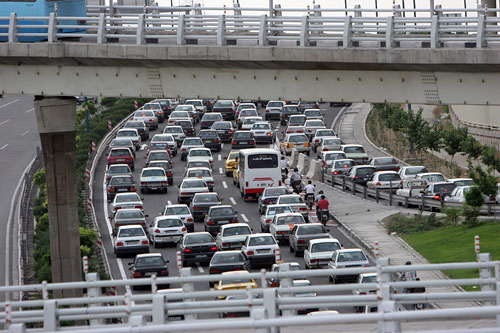
Vacationing families put a dent in their gas rations, raising fears of chaos when the initial six-month allotments are depleted.
Analysis: Iranian gas policy attacked
Iran's influential Research Centre of Parliament has said that potential gas exports ‘are 10 years away’, while a former oil minister claims that the current policy will lead to a ‘catastrophe’, in a weekend of unusually candid challenges to government policies.
Nigeria: African giant continues to stagger
Households have proved especially vulnerable. This summer, for instance, the ubiquitous fuel shortage was exacerbated by a general strike. Families were forced to seek gasoline for their generators on the black market, an action best done during the middle of the night and in out-of-the-way locations. The time and energy this required made it as impractical as it was dangerous.Worse, costs soared. A single family, were it fortunate to own a generator and be able to locate a steady stream of fuel to operate it 24 hours a day for a year, would spend upwards of $7,200 -- that's 10 times Nigeria's per capita annual income.
No wonder Nigerians do without power most of the time.
Oman offers gas in exchange for coal
Gas-starved India has received an offer from the government of Oman that should be hard to say no to: gas, in exchange for coal.
Caspian Sea States to Hold October Talks in Tehran
Leaders of the five states bordering the energy-rich Caspian Sea will meet for a summit in Tehran in October to discuss long-running disputes over maritime rights, Iranian President Mahmoud Ahmadinejad said.
Energy crisis costs Dominican taxpayers US$2B, solutions still sought
Electricity superintendent Francisco Méndez said yesterday the electrical sector’s crisis is such a political and economic burden that in the last three years has cost the Dominican taxpayers US$2.0 billion in subsidies. He said that’s the reason the Government continues to seek a definitive solution to its financial difficulties.
Pollution Fight Pits Illinois vs. BP, Indiana
WHITING, Ind. -- A proposal to allow BP to greatly increase the amount of pollutants it discharges into Lake Michigan from its refinery here has prompted a bitter war of words between officials in Illinois and Indiana....At issue is a plan by BP to upgrade its oil refinery in northwest Indiana to increase the amount of heavy crude oil from the Canadian province of Alberta that it can refine at its Whiting plant. To help, state regulators have granted the company a permit allowing it to dump 50 percent more ammonia and 35 percent more suspended solids into Lake Michigan.
Ethanol nation: Brazil finds energy freedom with sugar-based fuel
Many see Brazil as a model for America's transition from an economy dependent on foreign oil to one based on several alternative fuels, including ethanol. But while Brazil is a laboratory for U.S. automakers and a case study for policymakers, its embrace of ethanol is the result of very different historic, political and agricultural realities.
Ghana may have had a debilitating "energy crisis" this year, but portends in the energy sector are getting ever more bright.Barely a month ago, substantial oil deposits were discovered in the country's territorial waters, and even before the excitement associated with that find has died down, another find is being announced.
OLDER South Australians cannot afford a healthy diet and are reluctant to use their electric and gas heating because of the cost, a parliamentary inquiry has heard....Carers SA, in its submission to the inquiry, says rising energy costs are a key concern.
Electricity price increases had led to "desperate measures", including cutting back on heating and cooling and showering less, the organisation says.
Jeremy Leggett: Summoning the will to tap our solar brilliance
What are hot, good-looking, born in Australia and about to make a lot of people very rich in China? Answer: many of the solar cells in production today. The solar photovoltaics business is one of the fastest-growing global industries. Over the past two years many billions of investment dollars have flowed into it.
Netherlands: Car sharing slowly gaining popularity
High monthly costs and parking problems are increasing the popularity of car sharing, especially in the Randstad, the densely populated western part of the Netherlands. While car sharing used to be something for idealists and counterculturalists, today also businessmen and lawyers get into a car that they don't own exclusively.
Does the future of energy lie in fuel cells? You might think so, based on what chemists have cooked up for this week’s annual meeting of the American Chemical Society. One team has come out with a pellet system that could open the way for safe and easy hydrogen-based fuel, while another has developed a battery-scale fuel-cell system that capitalizes on, um, the microbes in a cow’s guts. Such technologies could provide less smelly alternatives to the poop-fueled systems that are already belching out power today.
E-Flex Electric Vehicle System
The vehicles using this technology will be all electricity-driven. But the beauty of the E-flex systems lies in the fact that electricity will not only be produced from regenerative braking and other mechanical means, but through the use of different types of fuels. These fuels would be used to generate electricity which would charge a Lithium battery pack that would help run the car on electricity.
British Airways guilty on conspiracy charges
Representatives of British Airways pleaded guilty to two counts of conspiracy for colluding with rival Virgin Atlantic over fuel surcharges on international flights. The pleas are likely to bring a $300 million fine.
Peak Moment: The Social Effects of Peak Oil
How will rising oil prices affect low- and middle-class lives? Sociologist and professor Rowan Wolf sees at-risk populations growing while government services and class divides are increasingly strained. A member of the Portland Peak Oil Task Force, she discusses relocalizing our economies, to counter globalization based on an unsupportable grow-or-die economic model.
The OneWorldTV Richard Heinberg Interview
The catastrophic effects of declining oil supplies: journalist and author Richard Heinberg discusses the true consequences of 'peak oil'. In this interview, filmed by our friends at Spanner Films (McLibel, Drowned Out, Baked Alaska), Heinberg makes clear the fundamental nature of oil as the bedrock of modern civilisation and the devastating impact our dependency upon it will have as global supplies start to dwindle.
Dale Allen Pfeiffer: A Closer Look at Escape From Suburbia
I was asked to review Escape from Suburbia, the latest effort by the team that made The End of Suburbia. Now, I could have offered up a bit of saccharine dripping prose and let it go at that. It would have pleased everyone connected with the film without making waves. But it would not be honest. It is too late in the game to simply go on pleasing people. It is time to be honest, even if it hurts.
The X Factor: Economic Recession Is the IT Innovator's Ally
If you believe that we are right now at or near global peak oil production, then we are in for a humungous economic shock. It is hard to say how big, but in January 2007 dollars, oil peaked at over $100 per barrel in December 1979, and the current oil price is hovering around $72 a barrel as I write this, after hitting $78 a barrel at the end of July, when the mortgage nonsense first started dominating the news. We still have a ways to go before oil is as expensive as it was in 1979, which is good. But if a recession starts because inflation jumps, the stock markets crash, oil prices spike because of conflicts in the Middle East, or more hurricanes hit the Gulf of Mexico, then we can probably expect a phase change in IT to our list of predictions on the coming years.
A colleague of mine once suggested that I write a book called “Stuff that Stinks.” It’s not because I’m an olfactory snob, but because I find it hard to smell the rosy side of what most people call “progress.” I find international energy to be particularly malodorous business.
Eni Says Evaluating Kazakh Govt Environmental Complaint
Italy's Eni SpA (E) Wednesday said that the consortium that it leads to operate the giant Kashagan offshore oil field has been notified by the Kazakh Environment Ministry of alleged environmental violations by the consortium there. Eni is evaluating the complaint, the company added.Press reports Tuesday said the Kashagan project, which has already faced several delays and cost overruns, might be halted due to the alleged environmental violations.
Midwest, move over: Ga. joins the ethanol gold rush
Looking out at a mound of tree tops, limbs and leaves just discarded from a harvest of 45-foot high pines, Devon Dartnell sees fuel, lots of it, to run Georgia's 8 million vehicles."See this?" he asks, pointing to rotted trees and scattered underbrush on a 300-acre tree farm. "This is very usable for biofuels."
Dropping your load to reduce your carbon footprint
Demonstrating their serious concern about climate change, Americans have largely embraced the conservation ethic as a means of reducing their personal "carbon footprint" or greenhouse-gas pollution. It is not enough, however, just to conserve scarce resources such as electricity. When the electricity is used is equally important as how much is used, in order to avoid blackouts and minimize the need to bring more power plants on line.
Dave Cohen: Immunize Yourself Against Future Hype
It almost goes without saying that a genius for technology is a large part of human nature. Everyday life offers the proof. We have automobiles, the internet, gene splicing, cell phones—you name it! When ExxonMobil tells us that oil production shows no sign of a peak because miraculous new technologies will step in to save the day, most people have no trouble believing it.Moreover, new technologies — such as multidimensional mapping tools and advanced drilling techniques — have improved our ability to recover oil from previously discovered fields. Because of such technology gains, estimates of how much recoverable oil remains have consistently increased over time. Oil production and production capacity have increased, too. So there is a lot of oil yet to be tapped. And we are getting better — technically and environmentally — at tapping it everyday.Does ExxonMobil's argument hold water? Answering that question requires examining the pace and nature of technological change both inside and outside the oil & gas industry.
Angola to stay free of OPEC output constraints
OPEC's newest member Angola is likely to stay free of the group's output constraints so long as oil prices remain strong, giving the country scope for its plans to launch several oilfields in coming months.
Oversupply still hurting oil producers in Rockies
Rocky Mountain oil producers are still smarting from an 18-month supply glut that has left their petroleum priced well below national averages.Rising imports of oil from Canadian tar sands, increased domestic production and a series of refinery shutdowns have left the Rockies awash in crude.
Shrinking supply of Venezuelan oil to the US
Venezuela provided the United States with an average of 1.31 million bpd of crude oil and byproducts in June, a drop of 202,000 bpd, or 13.2 percent, compared with May, reported the Energy Information Administration (EIA), the statistical arm of the US Department of Energy.
Oil shortfall hits rebuilding in South Sudan
Lower than expected oil exports this year have left the government of South Sudan struggling to find cash for urgently needed infrastructure development following years of conflict, officials said....A World Bank-led report obtained by Reuters blamed the sharp fall in exports in part on problems finding a market for Sudan's new acidic Dar blend crude, which was discounted early in 2007.
Minister: Colombia Self-Sufficient Thru 2014
Colombia will be able to supply itself with oil through 2014, three years longer than previously forecast, mining and energy minister Hernan Martinez Torres said.The country extended its oil self-sufficiency from 2011 by increasing proven reserves 9%. Production averaged 527,000b/d in 2006 and 520,800b/d in the first half of 2007.
As Oil Revenues Boom, Islamic Banking Goes Global
Caribou Coffee, the second-largest U.S. java seller, seems at first blush like a fairly ordinary American company. The chain was founded in 1992 in the small town of Edina, Minn., the brainchild of idealistic newlyweds, and has since expanded to over 400 coffeehouses in 18 states. Caribou's menu is muffins and lattes -- not an Arabic coffee in sight. It may come as a surprise, then, to know that Caribou Coffee is "Shariah compliant," one of the largest American businesses to run its operations in accordance with Islamic law.
Biofuels criticism ignores wider picture
...Any debate over the merits of biofuels versus reforestation or any other land use must take into account a lot more than the straight carbon impact – even when climate change is the major concern. There are a host of social and other environmental considerations that just can’t be separated out, just a few of which are outlined below. We also take issue with the cursory treatment in some media reporting of the study that seems to take its findings as invalidating all production of biofuels.
No Mexican oil damage reported from Dean
Hurricane Dean flooded a major Mexican oil city Wednesday, but there was no known damage to any of the country's production facilities on shore or in the Gulf of Mexico, the state-owned company said.
The Peak Oil Crisis: Hurricanes and Meltdowns
Earlier this week Hurricane Dean slammed into the Yucatan peninsula and crossed over into the Bay of Campeche where some 1.5 million of the 10 million barrels the U.S. imports every day are produced. While it is too early for a full damage assessment, at best a few days of production will be lost and possibly quite a bit more if any of the production platforms, pipeline systems and nitrogen injection facilities have been damaged.This suggests that U.S. imports will be less than normal over the next few weeks. While some of these imports might be made up by increased shipments from other countries, the tight overall oil market suggests that this will be difficult.
Uganda, Congo Presidents to Hold Talks Over Border Dispute
The presidents of Congo and Uganda will hold talks in early September to resolve the border dispute over the Lake Albert valley where extensive oil exploration is taking place, the chief executive officer of the state-run Uganda Media Centre told Dow Jones Newswires Wednesday.
Chad agrees to oil revenue transparency
The government of Chad said Thursday it will adhere to a program designed to put pressure on countries to be open about revenues from exports of oil, natural gas and minerals.
Oil Workers Call Off Indefinite Strike at State-Run Oil Companies
Officers of public sector oil companies in India have called off their indefinite strike pressing for higher wages and there will therefore be no disruption in the operations of state-run oil companies.
Global warming to decimate China's harvests
Global warming is set to cut China's annual grain harvest by up to 10 percent by 2030, placing extra burden on its shrinking farmland, state press reported Thursday.
GM cuts production at pickup and SUV plants
General Motors Corp (GM.N) has cut production at six plants that make large pickup trucks and sport utility vehicles as a weak housing market, higher gasoline prices and tough competition have hurt sales, a spokesman said on Wednesday.
South Korea sets up greenhouse gas fund
South Korea said Thursday it has set up a 200-billion-won (212 million dollar) fund to cut greehouse gas emissions blamed for global warming.The fund will finance projects to reduce carbon dioxide emissions such as solar energy and waste heat recovery projects, said Cho Seok, head of the energy and resources policy bureau at the energy ministry.
Sea Rise Seen Outpacing Forecasts Due To Antarctica
A thaw of Antarctic ice is outpacing predictions by the UN climate panel and could in the worst case drive up world sea levels by 2 metres (6 ft) by 2100, a leading expert said on Wednesday.Millions of people, from Bangladesh to Florida and some Pacific island states, live less than a metre above sea level. Most of the world's major cities, from Shanghai to Buenos Aires, are by the sea.
Chris Rapley, the outgoing head of the British Antarctic Survey, said there were worrying signs of accelerating flows of ice towards the ocean from both Antarctica and Greenland with little sign of more snow falling inland to compensate.
Contact
- Content: editors at theoildrum dot com
- Tech support: support at theoildrum dot com
License

This work is licensed under a Creative Commons Attribution-Share Alike 3.0 United States License.
Graphics Help Needed
Ed Tennyson and I have developed a list of all viable Urban Rail Projects in the Washington DC Metro area. The list below is transcribed from his hand written notes and is awaiting correction.
I would like to show three slides from this at ASPO-Houston and elsewhere; A blank map of DC, current DC Metro lines and a map with these new lines.
I could do it myself, but I estimate that it would take me 40 hours (I am NOT skilled) to do this (I did a comparable map of New Orleans). I do not have that much time ATM and am looking for a volunteer. My email is in my profile.
Knowledge of the DC area would be helpful.
1) Dulles Metro Silver Line to Leesburg - 29 miles $5.6 billion (up from 23 miles $5 billion
2) Purple Light Rail Bethesda to New Carrollton - 15 miles $1.5 billion
3) Columbia Pike - Crystal City-Skyline-Tyson’s Corner – 5+ miles $200+ million
4) Capital Cities Light Rail - Shady Grove to Fredrick - 30 miles $1 billion
5) Centreville Light Rail - Vienna, Manassas, Dulles - 20 miles $800 million
6) Richmond Hwy Light Rail - Huntington-Metro-Ft. Belvoir-Springfield Metro- 15 miles $500 million
7) VA Beltway Light Rail - Springfield-Tyson's Corner - 12 miles $450 million
8) Anacostia Light Rail - Bollin Field to Minnesota Ave Metro Station - 9 miles $300 million
9) H Street DC Light Rail - Minnesota Ave to New Jersey & Florida Avenues
10) Georgetown Subway - Bethesda-Georgetown @ Wisconsin (reroute Red Line for 2 stations and use 2 current Red Line stations in new subway)-P Street-Union Station -7.5 ? miles - $1.8 billion (a new line developed by Ed (80%) & I (20%))
11) Red Light Rail in Baltimore - Charles Center to Social Security (?) - 8 miles $350 million
12) Electrify Railroad - Union Station & Landow(?) to Richmond - 120 miles $750 million
13) Extend Baltimore Light Rail Cromwell to Harundle(?) & Marley - $90 million
14) Wilson Bridge Light Rail - Alexandria to B? Ave Metro Rail Station $500 million
15) Charles Gunty Light Rail - Branch Avenue to La Plata MD - $800 million
Ed also had a list of four projects to avoid, so this is not a "kitchen sink" plan with every possible option included, but one assembled with mature judgment. Raise gas to $9/gallon and those 4 projects might require further scrutiny.
Do the above and what will DC Metro VMT decline to ? Especially in an oil scarce era.
And apply to same approach across the nation.
Best Hopes for fewer VMT,
Alan
Funny postscript - Laurence Aurbach (TOD poster & TOD (Transit Orientated Development) expert) was familiar with the unit of measurement "tennyson" but though this was named for some long dead 19th Century scientist. He was floored to find that Ed is alive and kicking and that I talk with him :-)
I was just confused, that's all. Thinking of Alfred Lord Tennyson.
Not in vain the distance beacons. Forward, forward let us range
Let the great world spin for ever down the ringing grooves of change.
-- Tennyson, Locksley Hall, 1842
As a DC area resident (from memory) what do you think of the specific list ?
The Georgetown subway is de nova in it's entirety and would create a new corridor for density along P street (and to a lesser extent along Wisconsin Avenue).
Any additions, extensions or subtractions ?
Thanks,
Alan
The Columbia Pike project (3) runs from the Pentagon to Skyline, replacing a heavily used bus corridor.
http://www.piketransit.com/
It is the Dulles rail project (1) that has proposed stops in Tysons Corner. This is a split off the Orange line.
http://www.dullesmetro.com/
According to Ed, the Columbia Pike Light Rail Line should be extended past Skyline to Tyson's Corner (also served by the Metro Silver Line and Virginia Beltway Light Rail Line).
From my memory, he said that Fairfax County had not yet bought into the extension from Skyline to Tyson's Corner.
However, having two strong anchors on either end of the line (Tyson's Corner & Pentagon/Crystal City) with Metro connections at each terminus would guarantee strong ridership and high density (i.e cheap $/pax-mile).
It is part of creating a strong inter-connected web of Urban Rail.
Best Hopes for fewer VMT,
Alan
It would be nice to connect a lot of these density centers, I agree. But, I thought this was a list of likely projects in the next, say 25 years. Skyline is poorly designed but actually has quite a lot of office, residential and retail and the whole Baily's Crossroads area will redevelop as a dense node before Tyson's gets connected to this line (is my bet). Ridership will not be an issue on the Pike. The line would be replacing probably the most heavily used bus corridor in the system.
There is still unmet demand for public transport in many places. For example, the owners of much of Skyline (Vornado) runs private shuttles (although anyone can get on) on 20 minute headways from Ballston to Skyline all day due to the demand.
Also, I'll say Tysons has a long way to go before it can be a successful transit-served area. You could put the line in, but the design of the place does not support arriving by transit. You can't walk anywhere easily or comfortably. People say transit to Tyson's because the traffic is such a mess, they think that will help. But the traffic is a mess because of the
1)culture of driving,
2) large amounts of free parking
3) Everything is so spread out
4) roads have been widened making hostile walking enviro.
5) Uses are not integrated
6)... there are more variations on these themes
In short, good luck.
Although I have only been in Tyson's Corner once, I agree with your points. IMHO, Tyson's Corner would be comfortable in Phoenix. It was developed in the age of the automobile served by sprawl.
Three inter-connected transit lines will form a basis for a TOD redevelopment of the complex.
And I would hope to have all lines on the list open by 2018 to 2020. We will be deep into post-Peak Oil when the last line on this list opens, regardless of how fast we build them.
I would hope that this transit web with associated TOD would allow many the option of living w/o a car or with a single low use auto for a couple.
Best Hopes for Lower VMT,
Alan
I'm not familiar with all those areas, but I would classify into 3 tiers.
A. In DC and inner suburbs, routes that currently have enough bus ridership and population density to make rail instantly successful. In other words, the routes that are ready to go right now. Some of them have a lot of political and grassroots support and only await funding. Others face an uphill NIMBY and political battle. Ironically, some in DC might be the hardest-fought, like Wisconsin Ave.
B. Routes in outer suburbs but still in the urbanized area (here's a map of urbanized area). These would require regulatory changes and walkable TOD redevelopment to fully maximize ridership. But they could still serve as commuter stations with existing densities.
C. Routes outside the urbanized area. These are currently not viable for high ridership. They would require a political and social revolution to enable the conditions required for viability. Wholesale relocation and reconfiguration of of job centers and commercial areas to more compact, walkable patterns.
Here are my guesses about the routes with question marks:
11) Red Light Rail in Baltimore - Charles Center to Woodlawn/Security Blvd. - 8 miles $350 million
12) Electrify Railroad - Union Station & Landover to Richmond - 120 miles $750 million
13) Extend Baltimore Light Rail Cromwell to Harundale & Marley Station Mall.
There is an interesting article on the front page of today's WSJ.
Some quotes:
Some Downunder news; Danish wind turbine manufacturer Vestas will soon have closed both of its Australian factories due to lack of supportive government policies http://www.news.com.au/business/story/0,23636,22287257-31037,00.html.
The current Howard national government
thinks the 2% renewable energy target is plenty though as in the US several States may set their own targets.
The other Vestas plant that closed was taken over by a firm that makes mining machinery. I'd argue whether or not the machines are used in coal directly that demand for iron ore, nickel or whatever is essentially driven by coal. Once again nice guys finish last.
Is a shame about manufacture closing, high energy prices and slowing economy are most likely to effect large industries that employ lots of people, and they will close. Wind turbine manufacture has the possibility to employ lots of people, its scalable and modular. We can recycled all our useless copper coins into something useful
What about a crazy idea of a wind powered wind turbine manufacturing facility?
Many studies have shown that up to 20% wind power can be added without the need to expand storage capacity much. Possibly the future will rely on IGCC coal plants being able to operate in conjunction with wind power.
Are there any geothermal experts lurking on here? A guest ed on the subject would be very useful.
If oil production rates dont decline it will all be gone within 30 years!
where have you been? penny's have not been made of copper for over 2 decades. just a very thin copper coating.
Even better, it is a thin copper coating over a toxic metal. One post 1982 penny can potentially kill a small child if it dissolves in his stomach.
Global warming to decimate China's harvests
Not only China's harvests, but the world's. The true tragedy of the 21st century will be our inability to feed ourselves. I doubt China will have to wait until 2030 to see a 10% fall in agricultural output, more likely by the end of the decade.
As I sit here in France - where the rain has hardly stopped for two days - and read about the disastrous and unusual weather throughout the world. I cannot help but feel we've passed some kind of tipping point. Something fundamental seems to have changed, weather patterns have altered in both hemispheres and show similarity regardless of seasonal difference between the two.
Also, changes are happening much faster than any predictions I have seen. You can almost divide official predictions by 10 to bring them in line with what's actually happening. I think we are witnessing abrupt climate change and absolutely no one is prepared for it.
Triumvirate of collapse - Economy, Ecosystem, Energy
I agree, climate change is the scariest and most intractable problem. A lot of people think it's no big deal, we'll just be growing corn in Alaska instead of Iowa. That's not how it works. Our whole system is designed to grow crops where they are being grown. It's not just temperature. Daylight length, types of seeds, soil type, rainfall patterns, etc.
And it's going to be a long time before the new weather patterns (whatever they are) are stable. I think we can expect increasingly extreme and unpredictable weather. Unpredictable weather is a farmer's nightmare.
Leanan, don't know whether you've already caught the story in one of your Drumbeats, but it's certainly indicative of the speed of change:
Arctic Ice Coverage Will Shrink to 2050 Projections… This Summer
http://www.universetoday.com/2007/08/17/arctic-ice-coverage-will-shrink-...
Triumvirate of collapse - Economy, Ecosystem, Energy
The scary thing is how quickly temperatures can change once a tipping point has been reached. Read Winds of Change by Eugene Linden for some eye-opening data on historical abrupt changes.
Santa Claus has drowned.
Aug 22-Bloomberg.
The drought in Australia is not over.
``Parts of the wheat belt are in dire straits,'' said Frank McRae, technical specialist in charge of cereals at the Department of Primary Industries. ``If we went three weeks without rain, a lot of the western wheat crop would be in trouble,'' he said in an interview. Australia is the third- largest exporter of the grain.
``This will deepen concerns over global supplies following a production decline in Europe,'' Naoyuki Omoto, director of Andre Far East Inc. in Tokyo, said by phone today.
http://www.bloomberg.com/apps/news?pid=20601012&sid=a6C601LogqJw&refer=c...
Wheat at $7.44. Never before.
Australia is looking at back to back harvest of 10-14 million tons. Usual is 22-24.
Ouch.
I recently read Lovelocks' "Revenge of Gaia". As a well respected scientist he is pretty credible and what he predicts is absolutely mindblowing. He is convinced we have indeed passed several tipping points causing their own positive feedback loops. Extreme weather is becoming the norm. I don't know what I find scarier, PO or CC. When less and less particles pollute the atmosphere after PO( so when global dimming is reduced) I'm afraid Lovelock will prove right.
Until then I will try growing grapes, here at 53 degrees N.
"Gaia dances with Shiva" - Mike Davis, interpreting mineralogist Vernadsky.
I want to nominate that for top right rotating quotation.
cfm in Gray, ME
Or one might say, Gaia could manifest herself as Kali.
All I can say is that the oil based economy seems to have similar positive complex feedback loops and correlations as the Arctic. I would be surprised if we don't see catastrophic collapse in the coming years. Problems like this defy analysis with our current computation ability so when is hard to determine. But the events seem to have a half-life or double rate based on the intrinsic speed of the underlying processes.
The oil economy in general seems to work at a 3-6 month interval. Which gives collapse for sure within ten years but with a range from 2-10. I would be shocked if we are not living in a world undergoing massive economic depression and war ten years from now. I can only pray that its not sooner.
Memmel, what about your "pebble in the pond" model for predicting the future price of oil? What are you predicting for the near future?
Well everyone is predicting a spike later this fall this is generally unprecedented with prices dropping after summer and remaining fairly flat. This should encourage more oil for the OECD and assuming a mild winter the next pebble based spike would again be abnormal one in late winter when refineries go down for maintenance. Next summer would be the first time that WT bidding war could start between OECD countries so who knows what the price will go to. But anyway this will collapse then repeat. Its three spikes a year at for month intervals.
If I'm right then the late winter one will be particularly interesting since its normally the slowest time.
So the next spike should be Nov-Dec then again in March-April.
Then the summer spike. Basically whats happening is stock run a bit low and the rich countries have to bid up the price to out compete the poor. Then they back off for a bit.
As they get well supplied.
Price drops a bit supplies run low everyone starts bidding again.
The key though is that this summer its possible that the wealthy countries that will be fighting for oil for the first time against each other. After that its a tough call since economies will start to crumble. I think the cycle will persist regardless of price but external events because of the strain at this point could easily explode.
Needless to say from next summer on the world will be under energy strain so to speak. At some point it will break.
We will just have to see how things play out next fall/winter that when we know. Maybe economic slowdowns and impoverishment of Americans will be enough to keep oil at least reasonable. Then probably the Japanese go down then Europe then say Korea I don't know but all the major economies will be declining by 2010 at the latest.
Past next summer it really depends on how well various economies can maintain production in a 100 plus oil environment.
I think all this may influence the pattern for example say the Japanese stock market tanks in 2009 the crashing Japanese economy will pull a major importer off the market.
Leaving more for the rest. So its a bit of a game of Russian roulette in 2009. I think in America we will see a big wave of former middle class find themselves suddenly poor then we probably will muddle along till a bit later when we lose another segment to deep poverty. America is diverse enough that I think its economy will collapse in stages.
So anyway I don't think the pond model really works once economies start collapsing other factors take control.
In the use I think Real Estate Agents are the first wave :)
I bet the last guy with a job in America is a Lawyer however :(
lawyerin' is the second oldest profession, idenit ?
Works for me.
:)
ROFL
I agree, climate change is the scariest and most intractable problem.
I believe there is a scarier problem.
The Late, Great American Nation
http://www.informationclearinghouse.info/article17348.htm
http://www.lexrex.com/enlightened/AmericanIdeal/yardstick/pr5_quotes.html
http://www.americancenturion.com/
Another truth respecting the vigilance with which a free people should guard their liberty, that deserves to be carefully observed, is this--that a real tyranny may prevail in a state, while the forms of a free constitution remain.
Disagree. Climate change affects the whole world, not just one country or group of countries.
A United States that is a Fascist Dictatorship WILL affect the whole world. Imagine Nazi Germany with Nuclear Weapons. (Besides, I live here, and I like to speak my mind. One of the first freedoms lost, and I don't think I'll like torture.) Just the fact that it occurs to me that quoting James Madison may get my name on a list somewhere demonstrates how much things have changed.(Paranoia may be the first sign something's wrong.)
Another truth respecting the vigilance with which a free people should guard their liberty, that deserves to be carefully observed, is this--that a real tyranny may prevail in a state, while the forms of a free constitution remain.
Did you know that 51% of all American make up a majority?
My Fascist Asteroid can kick your Fascist Dictator's ass!
I like eggs.
Dude you should be careful about what you say these days.
And I'm only half joking.
I agree. The more America is a dictatorship, the better for those business interests who benefit from covering up peak oil and climate change. They want censorship, intimidation and the arrest of those who put out anti-consumption messages. Whether the corporations take over the government, or the government takes over the corporations, the interest in covering up the problems will merge with the power to do so.
Besides, how am I supposed to sacrifice now to save the world from global warming when I know it will be run by the particularly cruel, hypocritical, arrogant and petty tyrants who we now see moving into position? It sort of saps my will, you know?
Here's something I posted on TOD Europe on a thread about the MSM... It might bear repeating in case anyone is in the dark( :-) about what you are saying Sys390.
S390 said
those business interests who benefit from covering up peak oil and climate change. They want censorship, intimidation and the arrest of those who put out anti-consumption messages. Whether the corporations take over the government, or the government takes over the corporations, the interest in covering up the problems will merge with the power to do so.
Everyone, Remember that the next time General Electric or WestingHouse has a news story .... Ah Did I say GE/Westinghouse? I'm sorry I should have said MSNBC or CBS has a news story on YOUR nightly news program.
Want a quick dose of reality TV?
Hit this link before reading the article, to find out who owns your news source.
http://la.indymedia.org/news/2003/04/47530.php
<<< Here's a taste of the info...
Don;t love it, The Carlyle Group (Bush Sr is a director) has policy control over your news on CBS... What a great country or what?
What do you think the GE or Westinghouse corporate stance is on GLobalism?
How (for example) do you think Anti-Globalism demonstations would be portrayed in THEIR orgainzation's News (society's) Programming?
Here's a taste of how your opinion can be... er... controlled. At the Canadian US/Canada/Mexico SPP NAU summit.
Police accused of using provocateurs at summit
Aug 21, 2007 09:14 PM
Canadian Press
http://www.thestar.com/News/article/248608
This is a video they are talking about. You gotta watch it. It's SOO funny. This is something I call "Cowboys Dressing Up Like Indians"
Google 'Montebello police dressing like protesters'
http://www.youtube.com/watch?v=St1-WTc1kow
Now remember the above the next time you see MSNBC etc showing scenes of a demonstration somewhere...
I'm The Slime Lyrics (Frank Zappa)
[backing vocals Tina Turner & The Ikettes]
I am gross and perverted
I'm obsessed 'n deranged
I have existed for years
But very little has changed
I'm the tool of the Government
And industry too
For I am destined to rule
And regulate you
I may be vile and pernicious
But you can't look away
I make you think I'm delicious
With the stuff that I say
I'm the best you can get
Have you guessed me yet?
I'm the slime oozin' out
From your TV set
You will obey me while I lead you
And eat the garbage that I feed you
Until the day that we don't need you
Don't go for help . . . no one will heed you
Your mind is totally controlled
It has been stuffed into my mold
And you will do as you are told
Until the rights to you are sold
That's right, folks . . .
Don't touch that dial
Well, I am the slime from your video
Oozin' along on your livin' room floor
I am the slime from your video
Can't stop the slime, people, lookit me go
As an extra bonus, A Zappa Quote
The illusion of freedom [in America ] will continue as long as it's profitable to continue the illusion. At the point where the illusion becomes too expensive to maintain, they will just take down the scenery, they will pull back the curtains, they will move the tables and chairs out of the way and you will see the brick wall at the back of the theater." ~Frank Zappa
Thanks, Leanan,
By any chance do you know where the photos were taken?
The one of the houses overhanging the bank is from Minnesota. Those houses were there for decades, with a little "babbling brook" running in back of them. The brook turned into a monster and ate 60' of back yard.
The other photo is of Findlay, in northern Ohio.
By looking at the record of climate change in the climatological record much evidence is found for rapid climate change, little evidence is found for slow climate change. Of course there is much we do not understand about climate change and it is unfortunate we will gain knowledge by experience. After a great deal of research we still do not understand the 'tipping points' and 'triggers' that speed warming and cooling cycles, not to say we have not developed some theories. We are living an experiment.
As Sustainable Ballard, the organization, says, Climate Chaos. I like that term because it points to the Chaos of the whole system. We do not fully understand what all goes on in our world. We lie to ourselves on a daily basis about what we do understand and what is actually going on in the world. Just look at the newest discoveries of those centipedes that are living in mounds of Methane Hydrates at 1,800 feet on the ocean floor. Who is to say that the wroms aren't also in the ones in the ocean floor mud and we just can't or don't see them. WE have only been around and taking notes on what is going on in this world for what would be called a few short years compared to the age of the place we live.
WE are in for a bunch of big surprises. We have never had this many people living here. We have never had this many people changing things for this long ever before. All our paradigms are changing faster than most of us can count.
I write Science Fiction because I love thinking about what could be, if we only did it this way or that way. My first big project was called "Future Tech" (Also the heading to my blog) Because of all the things I saw that we could do different. 25 years ago I had all the buildings in my F.T. World covered in solar panels. Space Stations powered by Helium^3, and Solar Wind and Light collection. Sustainable homes, Everything we now(back then) throw away recycled in Plasma furnaces or by the standard methods.
A lot of us can think our way out of our problems, what I find is that doing the thinking and doing the doing are two different things. Alan Up-thread has been doing a lot of the doing, and thinking, it is good, we should have more people like him. I fear though we are running out of time.
25 years went by and I still see people suggesting putting solar panels on all the roofs in town. Now you see where my running for President might be coming from. Jimmy Carter had it right, just at the wrong time, Peak Oil and Climate Chaos might just do the trick this time. Even if we have to go back a few dozen steps in doing so.
Perhaps those ice worms are harboring methanogenic bacteria thereby being the source of hydrates.
My SWAG would be that they are living off of the methane, at those depths there is no sunlight. By them tunneling in the methane they could be like earthworms eating organic matter. Since they were just discovered recently we won't know for sure for a while. But like the organisms that have been found around Volcanic vents on the ocean floor the whole area around the methane hydrate beds (for lack of better term) might be full of different life forms that feed off the chemical mix.
What we don't know about the deep ocean is more than we know about the land above sea level I would wager.
Life on another planet seems all the more likely everytime someone comes back with reports from the Ocean's floor.
I don't know about France, but what I read from England is, well, extreme.
Here in Ontario Canada rainfall has been 1/2 of norm.
The only thing helping is the temperatures are COLD!
We're wearing sweaters and jackets in August - the month that it's not unusual to sleep on top of your bed with a fan moving some air.
Meanwhile on Vancouver Island where I have family it's been wet - and they usually only get a bit of rain in the winter.
I wish I would have started spinach, peas, beans a month ago to take advantage of this cold. The early crops were poor because of a heat shock.
You can get things to grow well if you control everything; but that's not the way it's done except for greenhouses.
You can get things to grow well if you control everything
Unfortunately, I think that's what we may have to do and agriculture will cease to exist as we now know it. We will all become horticulturists of one variety or another. I'm increasingly looking how to grow food in a protected environment organically to improve plant survivability. Not necessarily in greenhouses, as I want to minimise capital expenditure, but in ways that protect the produce from weather extremes, animals, slugs & insects, diseases, etc. All of which have conspired to destroyed almost everything I've grown this year.
For this year I've more-or-less given up and am just tidying up, improving the soil and putting infrastructure in place. I seeded a cleaned up bed with mustard on Friday, as a green manure. Amazingly, it is about an inch high today. Unfortunately, the weeds are also growing as fast.
Triumvirate of collapse - Economy, Ecosystem, Energy
Microclimates at the scale of a garden. And multiple varieties every year so some might do well while others do not.
Went to a melon tasting/seed selection/variety development workshop at UMaine Ag Ext a couple of days ago. Melons just coming in. Only 100 miles south in Durham, NH, melons are done. Identical test plots.
cfm in Gray, ME
If you don't use this method already, try beer to kill the slugs.
In a shallow dish like a pie dish pour beer, or non-alcoholic beer, set near your plants. The slugs and snails will die to get a drink.
Better than sprays and sustainable.
We had one idea - plant the seeds in the late spring - but then all seed varieties these days assume that they are planted at the correct time; not just scattered in the fall.
This came to mind because our best squash this year were the "volunteers" - random seeds that came from the compost. They grew early while we started plants indoors and sheltered them.
It's generally been a bad year because of pests too. Peas, beans, carrots, kale, spinach were all mowed down by small small insects. Our middle of the summer crop is much better of and neighbours are doing much better with Chinese green beans.
We were basically down to tomatoes (I scored with some excellent varieties from a friend on Vancouver Island - Italian plum and "boars heart" varities - the only issue being that the weight is too much for the stakes/cages I'm using and the lack of heat has slowed growth) and squash. But squash vine borers have gone from non-existant to destroying our crop by mid August. They kill the plants and then for good measure the fruit. Grrrrrrrrrrr.
I love squash - it lasts right thru the winter in storage and it's easy to turn into cookies, pies (minus the saturated or trans fat loaded crust) soups or cook and eat with some fruit. It's much easier to cook and more versatile than potatoes.
I want to grow more things; but am limited in space. The drive to build an eco-village with friends is strong; but I'd also like to have enough land to do some real gardening (note - not farming!!) but I'd also like to continue to keep bicycling to work ... ie I can't get everything I want.
The community garden gets good light; but has dreadful clay and rock soil. The home gardens have good soil but dreadful light (no south exposure) and the "square foot" garden requires daily watering in 30C or hotter heat or the tomatoes all get blossom end rot and everything else wilts.
Cabbage lopers have been fun this year too - lots of pick and squish to deal with them.
I'm still trying to find a place to squeeze one or two 325 gallon rain-water water tanks.
praetzel, sounds like you are having a time of it with the garden pests.
I don't know if this would help you but be sure to visit the ATTRA page on Squash Vine Borers. We grow and eat a lot of it too (primarily acorn and butternut) and value it for its storage characteristics.
With any garden pest, an understanding of the lifecycle is really important -- particularly if you are a low-spray/no-spray gardener like I am.
For caterpillars, you might try Bt, if you haven't done so. I usually apply it with a hand-sprayer with the first sign of trouble and it has been quite effective. When applied as a liquid, it has a relatively short life, so you will generally have to repeat applications.
Slugs are a bugger. We pick them. We trap them. They still do damage. My next trick is going to be a metal barrier of some sort -- hardware cloth, probably.
I would recommend, as a general reference Rodale's The Organic Gardener's Handbook of Natural Insect and Disease Control. I have an older copy that I picked up at a used book sale for a couple of bucks and it has been very helpful.
I agree about the squash - I grow butternut squash, and it grows like a weed and is prolific. Nothing around here (upstate NY) seems to much on it much (the dogs keep the deer away), and it is very yummy and hearty - more so than zuccini. I also grow hot peppers, which really grow surprisingly well here.
I also live in upstate NY. This year has been the worst for garden pests in recent memory. Slugs, Japanese beetles and grasshoppers eating everything. Spinach bolted, tomatoes got the rust, and all squash died do to bugs. I have saved my cabbage by picking off slugs twice a day. The only thing that is growing well is my cucumbers and potatoes. Corn did not pollinate well this year. Best hopes for next year.
I live in Rochester. The japanese beetles are really out in force and utterly destroyed my father-in-law's fruit trees. I see them in my garden, but they haven't done anything to the squash. I wonder if that has to do with my habit of not weeding? I just let the squash out-compete the grasses that grow around it - I even planted clover in the vegetable garden this year as an experiment, so it looks like an unmowed part of the lawn, but with the giant squash leaves.
Nothing around here has ever touched my hot pepper plants, which I have been growing as a hobby for 8 years now. I do have to weed around them so they can get a foothold though.
I've not seen any slugs, but then, I don't grow lettuce, and I gave up on tomatoes last year. Too much work to keep the things upright.
Fast Food Backyard Gardens. Squash-easier to cook than potatoes, but more versatile? Who gives a flip about nutrition.
Good luck with your borers. In the usual evolution of well tended gardens, weed problems are replaced by pests. Larger garden size will help, in that you can rotate the planting areas.
For those who think there might be some mystery to growing potatoes, here's an easy method, even for the suburban/urban gardener:
Get a few bales of old hay -- spoiled hay is great. Lay down a layer maybe 18 inches thick. Get some good quality seed potatoes (don't use grocery store potatoes) from your garden center or feed & seed. Cut them up into golf-ball sized pieces with an eye or two per piece and dry them in the open air over night. Lay the potato pieces on your hay pile and cover with another foot of hay. As the plants begin to emerge -- it will take maybe two to three weeks -- add more hay to force the plant to grow up and continue to add hay as the plant grows. As the hay decomposes, it will feed the potato plant. No other fertilization is necessary. In 75 days, you should be ready to harvest some new potatoes. You can carefully peel back the hay, feel around with your hands and pluck a few off, as needed.
You are supposed to be able to do this with fallen leaves but I have had much better success with hay. When I grew the potatoes in a mix of oak and maple leaves, the plants were stunted and showed classic symptoms of calcium deficiency -- malformed, hook-shaped leaves.
I urge anyone who has never grown potatoes, to give this a shot. You can easily grow a hundred pounds of spuds this way and once you do, you'll never eat another grocery store potato. Potatoes store well in a cool, dark place. Ideally, the should be stored at about 35 to 40 degrees, but I've kept Kennebecs at 55 for 4-5 months without signficant shrinkage or softening. Be sure to store them out of the light to keep them from greening up (solanine is somewhat toxic) and store only good, sound potatoes.
Edit: Oh, and DON'T wash them before putting them up. Just brush them off, air dry them and put them away.
The Oak and Maple leaves have to much acid in them. If you are going to use the leaves for anything the best is ground a bit and put in the compost heap with equal parts green plant waste, grass and such.
One year I gathered other people's leaves till my pile was 5 feet high even after compression. That section of my Parent's yard has a Shed planted on it. Lots of nice tools in there, they much have grown with all that old leaf compost. My dad has 4 sheds in my old garden patch. I will sooner or later trade Skills and some supplies for food, if the going gets that rough.
Thanks for the potato plug, POT. Tis a shame to think one might bypass spuds and their stellar nutritional status for a squash. Kennebecs are an excellent variety for a number of reasons. I love the taste and texture of russets, but they sure have their disease problems.
We've had no end of heat, comparatively, this year and it's sure helped produce a bunch of green string beans. Over 30 packed gallons put up so far from 120 row ft, and some are still flowering. Often cold nights will result in seedless pods, but not this year.
doug
I couldn't agree more regarding potatoes, do the calorie/square foot math and you'll see they're a no brainer. I've harvested and sold over 600 #s so far and have another 1200 #s in the ground. field mice like em too
The potato cuttings should air for 10 days to prevent rot before planting. Also, the mulch works great if you want new potatoes, but it creates a grass/weed seed issue. Storage is 40-50 degrees, lots of air, no light, high humidity. That combo is hard to arrange, but thems the breaks. Not that I should talk I just completed a thoroughly experimental potato planting BEFORE reading any instructions about how to do it. I figured the instructions would make tons more sense after I mucked it up once, and that turns out to be very true. I cut up and planted whatever sprouted from the supermarket. And I can tell you. Under equally clueless conditions between russet, red, and blue potatoes the blues reproduced like rabbits. Holy cow. This is a variety that does not care how little you care. I can't tell you how many potatoes I still digging up from just two little guys I cut up and planted during the spring thaw. They make beautiful deep fried chips too along with the radishes because they are blue all the way through like the radishes are red.
But as to the slugs. You CAN combat slugs. Two steps to this. Dichotomous Earth and cans of bad beer. Dichotomous earth may not look like much to you, but to the slugs it is as comfortable to crawl over as three feet of broken glass would be to you or I. Pour a barrier of DE around the area you want to protect to keep out new slugs. Take the beer can, empty it to about a quarter full and bury it just so the rim is at ground level. Better yet, do this with several cans. Slugs love beer. They crawl in, fall, and can't get back out. Your protected area is cleared of slugs and new ones can't get in. Renew the DE when it gets disturbed and make sure the leaves don't grow out of the zone and form a bridge. This is a real problem with most things you want to protect, they grow too much.
It's been a fantastic garden year in Syracuse, NY. I have no complaints, except perhaps too many blue potatoes... which is only a problem because I want to put in a fall salad crop in that spot. God I love tomatoes. Every year I think, this year, I will have so many I will get sick of them. Hasn't happened yet.
Best way to grow tomatoes I have found is to trench them.
Start with growing your seedlings till they get leggy and tall, several methods work for this. You can cut off all but the growing tip of the plant and sink the rootball and stem up to the tip in a 2-Quart wax milk carton, and grow the plant till it is leggy again, and then pinch off all the leaves but the tip 2, and then Lay the whole plant in the trench, extra rootball and all that bare stem, cover, mulch, protect stem from those pesty stem eaters with a collar. The tomato plant will root all along the buried stem, giving you a stronger healthier plant and it will take stress a lot better.
You can also plant the small seedlings at an angle and bury the stem as it grows for a foot or two then let it got vertical.
I like the first method better.
Remember to keep the moisture levels as even as you can during the growing season. don't let the plants go to long without watering and never water the plant from overhead where the sun will set on wet leaves, Rain does not count.
Best of luck.
weather extremes, animals, slugs & insects, diseases, etc. All of which have conspired to destroyed almost everything I've grown this year.
Be thankful you don't have monkeys!
http://news.bbc.co.uk/2/hi/africa/6959209.stm
Wow! Amazing. Thankfully that's one problem we don't have here :)
Although, this morning I noticed the deer have been nibbling the sweet corn, which I thought was safe. Oh well! At least they didn't hang around making explicit gestures at me :)
Triumvirate of collapse - Economy, Ecosystem, Energy
I am actually on the Isle of Wight - on the South Coast of England. Yes, it has rained a lot. So what!
English weather has always been fickle. Nothing new there. Personally, I forecast that we will have a very nice sunny September and October. This usually happens after a bad summer.
What I find much more scary is the ever-increasing deserts of this world. And this has been going on for thousands of years. The Ancient Egyptians hunted lions in the savannah that bordered the Nile. Now, even the bedouin have abandoned the desert - there is nothing there for their goats.
As for the Central Asia, it is just as bad.
So you see, there is a lot worse than wet summers to worry about.
It's the unpredictable swings of drought and deluge that ruin us. Economic efficiency requires holding variables under control so that we can establish routine practices. There might be a right crop for every climate, but we can't grow enough food when we don't know what to plant each year.
The article on Chinese grain harvests being decimated is actually using the term correctly. To decimate is to take the tenth, Julius Caesar's alleged practice of sentencing every tenth soldier to death after a military defeat.
These days, decimated has come to mean more like leaving a tenth. There are other terms available, and decimated is quite precise and almost never used correctly. A good candidate for the term would have been the stock market recently, but I guess the modern meaning sounds too drastic.
Good Lord... coworkers on the other side of my cube wall are having a "serious" discussion about how they're going to stick it to the oil companies by putting nitrogen in their tires to increase milage. This after they spent half an hour complaining about HOV lanes being a liberal conspiracy to make people live together.
Not rational; rationalizers. Sigh...
EngineerAU, ask them why they don't inflate their tires with Helium. That would allow them to simply float to work.
Why not make the entire car out of Upsidaisium?
Is that in the same periodic family as Unobtainium?
Does it come from Upsideheadide Ore?
You're part of the evil corporate Upsidaisium conspiracy. All concerned citizens know that only flubber can save us.
>EngineerAU, ask them why they don't inflate their tires with Helium. That would allow them to simply float to work.
Hydrogen would be more appropriate:
1. Helium is a precious, non-renewable resources that is absolutely vital to scientific research as well as many industrial processes.
2. Hydrogen is even lighter that helium and is renewable and very abundant.
3. There is Einstein's famous quote about hydrogen and stupidity. It seems fitting to put the two together so that the hydrogen can be used to reduce excessive stupidity.
I personal prefer to promote the stupidity powered economy where insanity powers our infrastucture and economy. Stupidity is proven to be abundant and completely renewable. Unlike the hydrogen economy or the ethanol economy, we don't need to wait for technological advances or adopt a new lifestyle to make it a reality. Its already here! With the Stupidity economy, we need not be concerned about EROEI, or other silly laws of physics that get in the way with other alternative energy solutions.
Don't miss the opportunity - tell them that although Nitrogen is good, Nitrogen Oxide will provide increased performance as well as increased mileage.
Its a laugh...
Okay, we all know this is absolutely idiotic, that putting nitrogen in their tires will not increase gas milage. But why would they think it would? How could otherwise intelligent people believe such a stupid thing? How did this silly myth get started? Anyone have any ideas?
The air in their tires is already about 80% nitrogen. Stick it to the oil companies by making the other 20% nitrogen as well. ;-) My lack of faith in the reasoning ability of the average human has never been challanged.
Ron Patterson
As we all know, the human reasoning faculty is highly overrated. It's main purpose is to justify (rationalize) what we have already decided by some emotional process.
A few, mostly those who hang out at TOD seem to believe it can be adapted to a predictive process which will allow better choices. This seems increasingly unlikely.
Are the folks on the other side of the cubicle engineers? Whatever could they be thinking?
No, they're not engineers (thank God!). They're middle management paper pushers with titles that tell you absolutely nothing about what they do (whatever it is). Expect lots of talk from them about "synergies" and related buzz words.
I don't know where they got their information from but they're convinced that it will give them an extra three MPG. In reality, it probably will. Not because of the slightly greater amount of nitrogen but because their tires will be properly inflated. I suspect you could pump neon or some other inert heavier than air into most tires and get a MPG increase just from the increased inflation.
I've taken to wearing my headphones most of the day to block out the stupidity.
You should have heard them gush and sing the praises of Jack 2 when it hit the papers. You'd think we had discovered the secret of cold fusion.
The "management" of my hospital is like that. Where do they get such people? I guess it speaks to the fact that there are too many universities, and too little work.
Peak Oil will fix that!
I understand your plight all too well. Engineers are like a fish out of the water in a Management arena.
This happened to me when a major aerospace firm bought out the small company I worked for. Flush with cash, the corporation brought in all sorts of suit-and-tie types, and made the engineers subordinate to them. It was hell trying to get everything approved, much less done.
Their idea of efficiency was to get us out of the lab and into cubicles! I felt like a surgeon trying to tell a tech how to do surgery via memo.
Once they dumped the engineers and our stuff, they sold what was left over to a major aircraft manufacturer.
MarketWatch just ran an article on how to survive in the Corporate environment. They list five blunders we make in the workplace. Do any of these sound familiar?
Following your personal agenda
Are you prone to hold the laws of physics above the laws of politics?
Voicing negative thoughts
Do you indicate the presence of bullshit when your engineering expertise recognizes it?
Complaining to HR
Do you try to find anyone who will listen to you when you have detected the corporation is committing scientific insanity?
Being too smart
Are you more knowledgeable on the physics of how things work than your superiors?
Not knowing when to jump
Are you one of those bulldogs which latch onto a problem and won't let loose until its solved? Or you of a type that drops anything and everything everytime someone offers you a juicytreat?
Highly paid top executives consider many things when organizing their corporation. There are other things besides corporate profitability - or even whether or not the corporations' products work - to consider.
There are very important things like how you cut your hair, your fashion style, whether the executive's wife likes your wife, or if you have lots of expensive toys that you can share with the corporate buddies ( having home spectrum analyzers, for instance, doesn't count as expensive toys).
I have lots of young people see me toying in the garage over absorption refrigeration and microcontroller power management circuits and wonder if engineering would be a good career choice, I tell them yes if they like to do what I am doing... unemployed. Its quite dangerous to have knowledge in a corporate setting, but quite useful if you need it for personal survival or working in a small company more intent on growing than trying to fulfill the ego of people paid twice what you are.
My observation was that only executives paid in the millions - whether or not the company turns a profit - will hire the legions of suit-guys.
Yes, I am still angry about it. The little company was a helluva lot of fun to work with. I am too old to do all this over again.
Steve
Damn! I too have been enjoying the small, effective, private company to huge multinational transition. What fun it is. The sheer enormity of the incompetence is overwhelming. I laugh every time I hear someone espousing the virtues of private industry.
People do not realize that our industries and corporations are hollow shells devoid of any capability. Part of it is a focus on extreme short term profit, and some of it is just that we've graduated, and companies have hired, a generation drooling, witless idiots (no sense sugar coating it). Because these people have no idea what the business is about, or what the products do or how the technology works, they see capabilities and resources as costs and overheads - and therefore bad things to be gotten rid of. And they have.
Inherent in the "technology will save us" mindset is the assumption that the once vaunted Corporate America will answer the bell when it counts - but the reality is that Corporate America mostly a memory.
I have no use for any company of over 100 people.
LOL, not at you guys, but at my old boses that thought the lie they told me the day they let me go in the "Lay Off" was believable.
I basically slipped out of tax payer status. But I did not have family, nor a mortgage, and had aging parents whose house is paid for. Skills to learn from my dad that can't be bought from tech schools very cheaply that I can get free for the asking.
All in the name of money the "Company" laid off about 300 workers in the course of 6 months.
Boy, where have I heard this before? When my dad, an aerospace and computer engineer, was struggling to find work during the eighties, he went to a "head-hunter" who told him that to improve his job prospects, he needed to "wear taller socks that didn't expose his leg."
Pop eventually gave up trying to find a place in "The New Corporate America."
You said it, Twilight. When you run off the guys who are focused on making things and bring in the guys who are focused on counting beans -- when they aren't golfing, that is -- there's only one way things can go.
I have a theory that all class systems start as meritocracies in a very brutal sense, and degenerate into absurd ritualization. In 600 AD, the Dark Ages, meritocracy meant being very good at riding a horse and cutting people's heads off. It's amazing the business opportunities that created for you. Yet a few centuries later, what were the descendants of those entrepreneurial murderers doing? Wearing silly hats and vertically-striped hose and listening to bards in filthy fortresses. Then a few centuries after that, they're down to living in apartments in Versailles, wearing the damnedest wigs and putting snuff up their noses. Thank God meritocracy made a comeback in the form of leading armed mobs to slaughter the armies of kings.
Why, I smell opportunity in the air right now!
NeverLNG
I agree that there are some here at TOD who habitually make predictions that merely reflect the internal models that they have created to satisfy emotional desires for the world to conform to the way they would like it to be. This happens everytime oil prices spike, hurricanes threaten, financial markets shudder or any other event occurs that threatens the status quo. It's not that people want bad things to happen, they just want their mental models to be confirmed by reality. They want to be right! The same goes for doomers and cornacopians alike.
Of course this is absolutely normal and natural and we all do the same thing, but I think there's a little too much forgetting about how many predictions have been wrong. And it's not that I think the premises are incorrect or that it's not possible for the predictions to turn out to be correct. But if a particular predicted scenario occurs, it won't be because of the reasons given by the predictor, it will be because the super complex world system of events has probablistically conspired to make that event occur for reasons that no one could have predicted or may not ever even be aware of.
Our mental models are just that, and the world doesn't give a crap about them, and that includes mathematics and chemistry and all the hard sciences. The world does not understand or follow the rules of calculus. We know that chemistry is inaccurate because quantum mechanics is incomplete. There is no description of reality that exactly fits the world.
I think it's important to bring this up because some predictions given here can scare the crap out of people and make them do things they wouldn't otherwise do.
So TOD readers beware.
-Don
And actions based on the conventional wisdom expectation of an infinite rate of increase in the consumption of a finite energy resource base will not have adverse consequences?
I have yet to find anyone who wishes that they had--on January 1, 2006-- bought a H2 Hummer and acquired a $500,000 suburban mortgage.
I have heard from lots of people who are glad they downsized based on the expectation that it might be difficult for us to have an infinite rate of increase in the consumption of a finite energy resource base.
Please don't misunderstand. I am not being critical of those who try to reason (I count myself among them.)
And I am not a "doomer" -- whatever that is, but I take it to mean someone who believes they can survive alone in a hostile universe, or possibly, that no survival is possible. I believe that the only way forward is the same as it has always been -- in a more-or-less loving community. That is how human beings evolved, and what they are good for. The whole abusively extractive wood-coal-petroleum sequence is a blip in the human record, and doesn't even figure in the overall evolution of the planet.
The doomer in me wants to respond. Wood had a very long history before we hit Coal, then Oil. Oil is less than 200 years old as a major source of energy. If you look at history it is not a pleasant carefree history. Kill or be killed is the grand scheme of things it seems with some periods of peace throw in to get the armies built back up again to start all over again. Humans are not at all as pleasing to live with as you might think.
The Doomer that I am, is based on the things I see in the world I have been living in all these 43 years. I have seen the use of Oil grow to the point that few people around me even know what it is like to ride a horse to go see someone. My Mother's father rode a horse to go see his soon to be second bride, my Mother's mother. There are a few people I deal with as a Chef, that understand where food comes from, but even some of those people I deal with seem to think it is a "Kind of magic". I know adults that don't even know how to cook. That is scary.
I see us getting so caught up on the idea that it has always been here so it can't run out, when talking about Oil, or even food for that matter. Like Richard Heinberg says in that video tagged above, we grew to 6.4 billion from 1 billion when Oil came on the scene. The doomer in me says that 5.4 billion is going to be a far way for humanity to fall in this next century. When the best source of energy starts to wane.
That is doom, and gloom. I don't think we will be back to the stone age, but we will suffer a lot more than most people are willing to think about. I am a Christian, I am not afraid to die, and I have suffered with a few illnesses so I am not afraid to suffer either. But I don't much like thinking about other people suffering for what amounts to my own actions. I use Oil and I drive a van, I can't walk everywhere in the way my country has been set up, and I can't grow all my own food in my yard. In a few years I will have a whole hoard of tools and skills to trade for food though.
I'll take you at your word on this one - history has not been carefree - in the sense of recorded history (e.g., civilization) What about the rest of human existence, the 150000 years prior to the recording of history? Or are you buying the facile notion of progress built in to western political thinking about pre-history being "nasty, brutish and short?" (If this is your take, you might want to be careful, because Hobbes didn't have a clue about the length of human existence on the planet. What he knew was Greek and Roman scholastic writings - and we all know how peaceful those cultures were - and the emergence of western Europe from the "dark ages").
What we were even 50 years ago does not matter as much as what we do from today onward. My mother is a worry wart. So is my father. I am not. But I was trained to be one and have been training myself to stop doing what my parent's taught me for years now.
It really does not matter how sedate the folks were around the camp fires and all night cave sit-ins. There were not 5.4 billion of them more than the land would support without Fossil Fuels. That is my point. If you can tell me that as you have gloom over the horizon you can get the rest of the 5.4 billion Overshoot population to be peaceful and sedate.
Then we can start working on figuring out how to get the Moon to Mars by Solar-Sail races going. The newest twist on the build the ship in the backyard NASCAR-NAS-SpaceShip Barbeques. We will all be able to party and get along with each other just fine then.
Ah, okay. So you get called on the history gloss so suddenly that's not what's important? Tell me why I should believe what follows after a stunt like that?
I don't particularly disagree with you. One thing that concerns me is that firearms are all to available and few people really know how to use them. But then. I guess that's not a concern about organized violence, but stupidity. Another turn of violence that concerns me is organized, and that's the use of military, para-military and police against ordinary people. But that's not really a concern of the breakdown of civil society.
The unfortunate reality is that we can find plenty of ways to kill each other without having to resort to arguments about war of all against all. Indeed, if you think about it at all, we do a far better job of killing when we are organized about it than when we just run amok.
So where'd you get your 1 billion carrying capacity?
The 1 billion figure is from Richard Heinberg, and several others. Just look at the timelines and when Liquid Oil come into use in the world. You will see that right after the Oil gets put into the system the population blooms straight up.
What does this comment mean?
Ah, okay. So you get called on the history gloss so suddenly that's not what's important? Tell me why I should believe what follows after a stunt like that?
...
I am confused.
A lot more people know how to use firearms than you might think. I don't own a gun. I do know how to shoot one, aiming and all that. I train with a pike though, not as good as a "ranger from Babylon 5" But good enough.
History is not important in this case. Who we are right now is the only thing that matters. We might or might not have a peace loving gene mixed in with all the rest. We have 6.6 billion people on the planet. We have weapons that can kill virtually everything else inculding us. It really does not matter if those humans 150,000 years ago, or those apes in the zoo were war like or peace loving. It matters that right now we have a problem. We have 6.6 billion humans living off of the Fossil fuels that we have only at most 100 years worth left, and these fuels have fueled our growth so far, but are coming to an end. What we do and how we deal with it, is our problem, not those that lived before us. That was my point in my earlier posts.
Ps. I did say that I did NOT think we lived a care free life. Ever try to live off the land? Not get food from the store? Knowing where your food is and how to get it will be a new norm, just like it was for those before we had stores to buy everything in, heck it is today for a lot of homeless americans.
Shaman, given that apes, monkeys, baboons and chimpanzees all fight group to group, and even within groups, I doubt that man was any different.
-
James Gervais
Hope was the last evil to escape Pandora's box.
I have evidence to the contrary.
They fight. How often do they kill?
No offense but it is amusing to me to consider a $500k mortgage as large. Here in the western SF Bay area, it is hard to find anything for twice that much. I can say that with some confidence as we just bought a house last December after looking at about 50.
I suggest that you change your TOD name to "Roadkill."
If I were to do a top 10 list of the ways to commit financial suicide in a post-peak environment, buying a million dollar plus home in San Francisco would be high on the list, not to mention the fact that you are sitting on one of the most active earthquake zones in the world.
Just my 2¢ worth.
Hello WT,
I think ELP is the better choice moving forward, but evidently some think otherwise:
http://biz.yahoo.com/cnnm/070823/082307_gross_homeowners.html?.v=1
-----------------------------
Gross: Bush needs to rescue homeowners
"This rescue, which admittedly might bail out speculators who deserve much worse, would support millions of hard-working Americans whose recent hours have become ones of frantic desperation," said Gross, a founder of the fixed-income investment firm PIMCO and a columnist for Fortune.
"Write some checks, bail 'em out, prevent a destructive housing deflation that (Fed Chairman) Ben Bernanke is unable to do. After all 'W', you're 'the Decider,' aren't you?" Gross wrote.
--------------------------------
A cheetah, if unable to quickly capture it prey during a sprint, quickly builds up a huge oxygen debt, thus delimiting further distance covered by its waning somatic strength.
Perhaps now, in combo with Peakoil, the debt industry is at the limits of its' exosomatic reach. Cheat-ahs never prosper if financial prey continually elude their grasp, or if, after exhaustive effort: the Peakoil Prey captured have a negative ERoEI.
Bill Gross' pleadings sound like a heavily winded, near starving cheetah begging for a free meal. Sorry, but Entropy doesn't care.
Bob Shaw in Phx,Az Are Humans Smarter than Yeast?
Heh, we do not need AC and barely any heat. We are right next to the most productive farming area (especially fruits and vegetables) in the world and Silicon Valley (definately a technology holdout). Who's afraid of a little shacking? We've got at least 40 years on this section of the fault. And it was a steal for 1.15m. You should have seen the house we got out of.
Now all you need to do is learn how to ride a horse and cut people's heads off, and
a. You won't have to worry about whoever picks up your mortgage post-collapse
b. Then you can start offering "protection" services to the peasants. Do you prefer the title "Baron" or "Marquis"?
But you must learn how to ride a horse and cut people's heads off! That's the important part!
I'll give you that the Bay Area will burn after Los Angles.
So you have a say five months tops over us. Hmm one million dollars 5 months... math churn you paid 200k a month to be shot stabbed or burned to death after LA, your a guy I think so rape is optional.
Sounds like a good deal in California.
I wouldn't be reading and responding to the threads on this site practically every day if the ideas didn't resonate. What I'm saying is that while it's great sport (both as participant and spectator), for some here to make specific predictions within specific time frames for what will happen when in the future, it needs to be pointed out that most are mostly wrong most of the time.
And even when and if somebody turns out to be mostly right, they shouldn't assume that it's because their mental model was so perfect that the world just had to conform.
-Don
Dar,
It may come from NASCAR. They always use N2 in their tires, because they say the pressure doesn't build in them as quickly as they heat up during a run. Nitrogen is indeed much drier than air, generally, giving it a lower heat capacity. But pressure buildup? Who knows; those NASCAR good ole boys are a superstitious lot.
Putting nitrogen in tires is actualy not a bad way to stick it to the oil companies. Nitrogen doesn't react as much as regular air to changes in temperature. Nitrogen also bleeds out of a tire much more slowly so consistent air pressure can be maintained for a lot longer. As most drivers rarely check their tire pressure, the impact on gas consumption would be significant if everyone used nitrogen in thier tires.
Nitrogen is also pump in completely dry. The lack of moisture and oxygen also saves wear on the tire and rim.
Perhaps you are correct but I really think you are exaggerating the effect. I really don't think you will be sticking anything to the oil companies.
Ron Patterson
My chemistry is rusty also, but Oxygen does not exist in a "pure"(i.e. Single Atom) atomic form in the atmosphere. It exists as an O2 molecule.
I'm guessing perhaps that Nitrogen also exists in a molecular relationship as well, and depending upon how many other atoms its binds with, it might make a larger, and thus a less escapable molecule? I'm a little tied up at work though to go hunting down Nitrogen's natural state in the air though.
Telumehtar I googled it and found that nitrogen exist as molecular nitrogen, (N2), therefore it may leak out a little slower. That's why I deleted the post you replied to. However tires lose about 1 pound per month when fully inflated. It would be a lot easier to just get a cigarette lighter pump and check your tires once a month. I don't know how you would get nitrogen in them but I would bet just checking them once a month and inflating them accordingly would be much cheaper and practical.
But the very idea that this would be "sticking it to the oil companies" is absolutely hilarious.
Ron Patterson
This silly idea keeps getting burped up again like a bad meal.
But here's the rub: even if the other constituents of air actually do bleed out of the tire faster than nitrogen (and you can't guess this on a molecular wt. basis alone), eventually--even if you just keep adding regular air--you will end up with completely nitrogen-filled tires. No extra charge.
Best hopes for socking it to the compressed nitrogen cartel.
My two bits: Nitrogen does not react to temperature changes as plain compressed air does, someone fill in the correct technical term here..., so what you get is tires that will be at a constant inflation longer.
3 mpg with Nitrogen? I doubt it. Unless they are supposed to get around 45+mpg, and proper tire pressure is supposed to be good for around 5%.
Used to service the nose strut on a Cessna 150 with air, we didn't need or have Nitrogen in the shop I worked. On cold mornings the strut was FLAT, so you either re-inflated it some more, or used softfield takeoff techniques, in warm weather it was OK.
pv=nRT for an "ideal" gas. or pv=znRT for a non ideal gas and for a non ideal gas at 3 or 4 atmospheres z is about 1. so for practical purposes nitrogen and air react the same to temperature changes. (p and T absolute).
Ranks right up there with the 'never fill your tank more than half full' email......
I'm a little tied up at work though to go hunting down Nitrogen's natural state in the air though.
N2 . A very stable molecule with the highest bond energy known among gaseous primary elements. Molecular weight is ~28. O2 has molecular weight of 32, and the average air molecular weight is ~29.
On this basis Nitrogen will escape more easily from tires than plain air. I don't see how it could improve gas mileage in any possible way... but I'm open minded to suggestions.
The selling hype around pure N2 in the tires is the wheels and rubber won't oxidize on the inside. There is also a claimed advantage from being moisture free. Consumer Reports says it's all hype and a waste of money.
It is not what nitrogen has, it is what it does not have; water vapor.
If filled with high temperature, high humidity air (see New Orleans today), the water will come out of vapor form and condense as ambient temperatures cool, creating a greater drop in air pressure than N2 or N2 + O2 together w/o water vapor.
Alan
In this case it would be a good idea to install condensers that treat the air of tire inflating devices. Can I patent this idea? :) But even then I suspect that the overall effect would be minuscule. The biggest drop of pressure is caused due to thermal expansion/contraction during the day/night cycle. I don't see how you can possibly prevent this - any gas will do it.
In the end, instead of making our lives more complex maybe we should simply to check our tire pressure more often... is written in every fuel-savers manual.
All gases will approximately obey the Gas Laws . Like Newtonian gravitation, its not exact, but close enough. (Einstein gets closer for gravitation, but even his derivations are in question as we consider physics at the intergalactic level or the subatomic level.)
The only thing I feel gives creedence to the notion that Nitrogen would give better mileage than air would be that 100% nitrogen would weigh less, therefore have lower rotational inertia. It would take the accuracy of a very precise laboratory setup to measure the savings.
I feel a similarity would be to determine if you get better mileage with or without having a penny in your pocket - as you account for the weight of the penny.
I betcha you would save more by peeing before you get in the car than you would by replacing the tire air with nitrogen - all other things constant.
Your tire inflation, acceleration/speed habits, and engine maintenance are by far the most influential moves you can make for mileage.
Steve
I think the O2 disappears from your tires becauses it's partially oxidizing the EPDM rubber. It's both heavier and bulkier than nitrogen, so its fugacity is lower.
Re - coworkers on the other side of the cube and N2-filled tires...
AU - Missed an opportunity to tell them to drive 55 mph or near that to get maximum mpg. Better than N2. Of course, here in the States, that'd get you run over on I95 and laughed at on the I405. (55 on the 405? In your dreams.)
I knew driving slower increases your gas mileage, but I never realized just how much until this week. My son got an old clunker 1987 Mercury Grand Marquis (a big monster with a 5 liter V8 engine) from his uncle. Hey, it was free and he doesn't drive much. We had to transport it 250 miles home, and followed it with my 2001 Chevy Prizm (a Corolla rebadged).
Since we weren't too sure of the old clunker's health, we kept the speed to 60 mph. The result was 24.6 mpg. I thought that was remarkable for a tank like that car. Then I filled up my Prizm. A full 45 miles per gallon! I had never gotten better than 42 mpg before, and the EPA highway mileage estimate was only 40 mpg for that car.
I guess you can beat the EPA numbers after all.
BTW, this trip included the Long Island Expressway and passage through the Bronx, so yes I did feel like I was standing still at some times as everyone else blew by.
The Allegory of the cave comes to mind
http://en.wikipedia.org/wiki/Allegory_of_the_cave
I saw this quote:
Forbes magazine recognized that this
"failure of the U.S. nuclear power program ranks as the largest managerial disaster in business history, a disaster of monumental scale."http://www.greenpeace.org/usa/campaigns/nuclear/no-new-nukes
And figured today's version of the discussion point:
Is the failure because of fission plants being a complex machine (thus not boding well for complex technofixes) or because of something else?
Well first lets consider the source of this article. Its Greenpeace which hardly has a balanced perspective on the issue, and is vehemently anti-nuke.
Secondly lets look at the contents of the article itself. It is filled with half baked figures with virtually no sources, and misleading statements.
Firstly, nuclear reactors that are being considered today are designed to withstand a direct attack from missiles, and or aircraft such as those flown into the World Trade Center.
Secondly, what abysmal safety record are they referring to? True there have been a few "close calls" but they all were controlled and dealt with as the systems were designed to do. To my knowledge no civilian casualties exist due to an American nuclear plant malfunction. Feel free to point out where I've missed any, but the fact that I can't think of any off the top of my head kind of makes me think this is a rare occurence and therefore a fairly safe industry.
Compare that to say Coal, natural gas, or oil electrical generation plants where the particulate matter causes horrible health issues with those who live near them, mining/drilling accidents claim the lives of fuel supplies workers almost weekly it seems, and on occasion we get fun stories where refineries, and such blow up, forcing the evacuation or mandatory curfew for all people living in an X mile radius not to mention the spectular flame and smoke plumes these things produce and the fire damage they cause. And trust me, I live in Houston, these explosions happen often enough to make anyone living in the greater Houston area for 2 or more years aware of them. In fact it was only a month or so ago, that Dallas had a Natural Gas explosion near a populated area.
Firstly, he lists no figures or citations to prove that these reactors are unsafe, uneconomic, and unnecessary, so basically as far as I can tell he is just pulling adjectives out of his back side.
And the Democrats want the taxpayer to foot the bill for nationalized healthcare. What's his point? Hell, Greenpeace wants the taxpayer to foot the bill for a variety of environmental causes. Alan wants the taxpayer to foot the bill for electrified transport. There are lots of folks wanting taxpayers to foot the bill on something. Fact of the matter is, when large projects come up like Space Exploration, major transportation infrastructure, Social Security, energy infrastructure, or even weather services as was discussed earlier this week, there will always be someone who wants the Taxpayer to foot the bill.
Does this make a project wrong for some reason? Cause if it does, then congratulations, you just became a fiscal conservative who believes in small government. And I highly doubt most Greenpeace members would classify themselves as Fiscal Conservatives(and no this does not = Republican), and small government proponents. Especially given all the whining they do about government inaction about certain industries. So what we have here is a plea to government to be a small government on those things counter to the author's beliefs, but be big government on those things he does believe on. Pure political BS from this view point... welcome to partisan politics. If you want big government then don't be ashamed and just fess up to it, but if you claim the government needs to stay out of things, then be consistent and keep them out of all things. Otherwise don't use big vs small government arguments. It makes the autthor look hypocritical.
Nice claim, source please?
Again we could apply the same logic to a host of other government projects including the EPA. I mean afterall, if there are enough people interested in Environmental Regulation shouldn't they be able to raise the funds needed to privately finance an organization and offload this burdensome department from the taxpayers.
What economic and safety meltdown? Sources please? And also how many of these economic meltdowns were caused by half baked legislation influenced by groups like Greenpeace that forced the nuclear industry to comply to more costly expenses for no to little true gain in safety or efficiency.
Source please? also are we comparing the same dollars to each other? i.e. was inflation and such accounted for?
Funny that he quotes a source that uses even more adjectives to describe this industry, but no hard facts or figures, nor does he provide the specific article that he is quoting from Forbes or the context that the quote is given in. For all we know, Forbes could've been quoting a Greenpeace activist in that article to counter balance an opposing view point. But with no citation provided from this author there is no way we can find that article easily to verify the context in which the quote exists.
Again a source please?
I've heard of no designs that are being considered that don't include containtment mechanisms capable of handling a direct attack from a missile or terrorist plane attack. This sounds to me, pure fabrication.
At any rate, I'm not saying I'm in favor of nuclear as an option, but I do keep an open mind to it, especially given the choices of more coal, natural gas, and oil. With Global Warming and air pollution becoming real problems, nuclear does provide a clean solution as far GHGs are concerned, and because of that it is something we have to seriously consider. Solar and Wind(as much as I'm excited about them) just isn't there yet, and probably won't be for another 20 to 30 years at least. In the meantime we have to figure out how to power this civilization given the technologies we know that work, and nuclear is one of those technologies... a technology which also won't add on to our growing problems with global warming and air pollution in general.
And as for the article... Its a shoddy essay with poor supporting arguments meant to get a rise from emotions without inducing/inciting critical thinking by what appears to be a clear effort to avoid citing facts. Aka its an opinion piece, and a poorly written opinion piece.
Telumehtar,
A great rebuttal, but I'm not sure it was worthed. I'm sure you put at least 10 times the effort to bring some rationality in the debate than the author of the original article did, writing it. Or, more likely copy/pasting it from old writings - the same crap has been fed to us for decades now.
Unfortunately this is exactly the goal of the Greenpeace and similar "ecological" organisations - they do not want solutions and rationality in the energy debate, what they want is NO energy at all. For this purpose is this endless arguing of senseless points, the continuous attacks and protraction. And you are playing in their game with it. They have that great delusion that this can continue until all of us collectively submit to the ecotopical preindustrial lifestyle they are daydreaming of. In the real world, in which the rest of us have the misfortune to live in, they are promoting coal, tar sands and oil shale. Alleluia.
Greenpeace uses oil-powered ships to do their work. I know they drink bottled water, and once went to a reception where they used plastic champagne glasses. They are definitely NOT no-energy people. Increasingly, for me, they lack credibility.
The question always resolves to "who decides how much energy who gets." This is a political and economic argument, not a technical one.
It is a fact that the technologists serve the politicians --not the other way around. When the politicians decide we need "peaceful" nuclear energy, it will happen. It did once before, and it may again. But there are a lot of considerations besides the purely technical one of whether it provides energy we can use to run toasters.
I agree that it is a great rebuttal and think it is especially worthy coming from someone who just wants open debate and is not a nuclear proponent. I do not agree that it is a waste of time. The anti nuclear activists have had the floor in the US for the last 30 years and much of the elite just reflexively accept and parrot their arguments. Every time we try to have a rational discussion about nuclear power we can expect to have opponents vehemently hurl arguments of the quality of the article in question. Someone has to stand up to them and take them to task.
There are plenty of fair minded people who think they understand the nuclear power issue but who have really only heard one side of it. Such efforts to promote informed debate might be frustrating but they are entirely necessary for the future of the planet, and they are having effect. Once the energy crisis is perceived as serious these flabby objections will not have the force they have now.
And the reason you can make this observation, of course, is that you have the correct answer. You make this clear when you suggest once fair minded people hear the other side of the argument they will fall in with you.
Sorry, but I find that utterly naive. You have completely misconstrued your own value set as the truth. Consider, that there are not just two sides to this issue. Like most issues here is is multifaceted and not something one is for or against.
NeverLNG in the post above you points out something you seem to have missed - there is more to using nuclear energy than just the technical questions.
Its better to have strong arguments than just strong emotions. ;-)
[A caution to those who may be more sensitive, blatant sexual reference ahead]
So, by your logic it is better to be right than to get laid?
Telumehtar,
A great rebuttal,
How is claiming "Funny that he quotes a source that uses even more adjectives to describe this industry, but no hard facts or figures, nor does he provide the specific article that he is quoting from Forbes or the context that the quote is given in." when one lists right above it:
The Department of Energy (DOE) compared nuclear construction cost estimates to the actual final costs for 75 reactors. The original cost estimate was $45 billion. The actual cost was $145 billion!
The DOE is listed as saying how the costs as stated VS the costs as spent were not in agreement, yet the 'rebuttal' is claiming 'no context'?
Looks like the context is rather clear - Based on money expected to be spent VS spent, fission was called "failure of the U.S. nuclear power program ranks as the largest managerial disaster in business history, a disaster of monumental scale."
Having a reality and claiming it does not exist is not "a great rebuttal".
This is not a citation and I would've been flame broiled in Highschool, College, and even at work here for providing a figure like this without providing the source.
With the ease of the internet to linking items of relavence, he couldn't be bothered to link to the report that came up with those figures? We just need to take his word that the DOE did this report, and furthermore that he correctly interpreted the report for all of us, and that we should just bow to his analysis of the report as being the right one. Seriously how hard would it have been for him to simply link to the report he cites, or at the very least put a marker in his essay with a bibliography at the bottom so that we could check his sources.
Furthermore your interpretation that the Forbes quote was made from someone who viewed the DOE report is a false leap in logic, and since the author of the Greenpeace didn't provide the sources he quoted from we have no way of verifying what the Forbes piece was referring to when that quote was made.
Sorry eric blair, but the Greenpeace piece is a shoddy article, full of knee jerk emotional appeals that does nothing to further serious discussion of our nuclear future.
Hell we've had more intelligent discussion in talking about the Greenpeace article here and the real nuclear problems in these series of threads than the original Greenpeace article itself.
Tele,
I would, given my druthers, rather move a little further up the beach or whatever as a result of Global Percolating than try to find an upwind location on a round Earth from a nuke plant. Humanity got by just fine without them for millions of years and Shakespeare wrote plays by candlelight. I agree with Greenpeace; it's a pisspoor concept of a future.
Humanity got by thousands of years without Internet, electricity and antibiotics. Would you please give them up too?
Gladly!
I hope you don't escape the irony of you posting this in the Internet from your electricity powered computer in your electricity conditioned home/office/whatever you have there.
Escape it? please. I'm rolling in it intentionally. One of the reasons I post on a board like this is to soften, if only a little, the dreadful mind-numbing inanity of the life required of us in this hollow caricature of a culture.
Mind you, technology is not the culprit. But if you have to also wind up with this, this..., if I use the term "Late Capitalism" do you know the reference? Well then, I'll take meaning in our social life over convenience any and every day of the week.
I would like to see a source for the above unlikely assertion. Everything I could find in google asserted the opposite, that reactors are not being designed to survive an impact from an airliner, let alone a missile. If a fuel filled airplane could bring down the World Trade Center, it seems most unlikely that a concrete dome would protect against major radiation releases from the reactor, fuel, piping systems, and stored nuclear wastes, after the catastrophic energy released by impact from 500 mph airplane filled with fuel.
Per current regulation, all nuclear power plants built in the US, and for that matter the world must comply with IAEA standards.
Per the IAEA's own published safety standards... Airplane crashes are dealt with in a document titled:
Safety Standards Series No. NS-G-3.1 (PDF Warning!)
This topic is also further covered in:
Safety Standards Series No. NS-G-1.5 (PDF Warning!)
Furthermore the FAS have this document (PDF Warning!) provided by the CRS to the US congress regarding the threats to Nuclear installations following the heightened security after 9/11.
In this document it goes to explaining the view points of both critics and Nuclear industry spokespersons about the likelyhood of a successful(as in dangerous levels of radiation are leaked) attack on a nuclear power plant.
Conveniently this argument is address in the CRS report:
Also the WTCs and a nuclear power plant are apples and oranges when you consider collapse design. Nuclear powerplants are designed to collapse in a manner that serves to re-enforce the containment mechanisms of the nuclear fuel. The WTCs were designed to collapse to protect as many surrounding buildings as possible, i.e. they pancaked.
Again I'm not suggesting we go for Nuclear full bore as the solution to our problems, but the Greenpeace article is emotional drivel, and does not bring anything worthwhile to the debate. Hell, your post counter to mine was more sensible in regards to a specific safety concern than the original Greenpeace article.
And I'll also state that while our safety record appears to be pretty good from where I'm sitting, I am in no advocating that we rest on our laurels. Improvements/risk analysis to containment methods, waste disposal, fuel acquisition and the actual operational procedures of the plant(s) need to be discussed and debated, and that was the focus of my rebuttal to the original Greenpeace article.
In otherwords I'm suggesting we have informed, data backed discussion about the pros and cons of nuclear power, while the Greenpeace drivel is pure propaganda with absolutely no interest in debating the merits upon fact.
[edited because I didn't get the "a href" tags right. Speaking of standards message boards really need to settle on some tagging standards. Swear I have to remember at least 4 different standards]
There is something very wrong with this statement. It equates an attack from an explosive missile with that of an aluminum plane. There is absolutely no comparison. A six foot thick, steel reinforced containment vessel could easiely withstand a direct hit from an aluminum Boeing 747. But it would in no way withstand a direct hit from a missle, provided it had enough explosive power.
And a concrete steel reinforced containment vessel is not to be compared with a glass and steel building. If the Twin Towers were coated with six feet of steel reinforced concrete they would still be standing today. The planes did not explode on impact. The fire brought down the buildings.
So if the terrorists have powerful explosive missles then they could wreck havock with a nuclear power plant. If they do not then a plane, any plane, would not penetrate the containment vessel.
Ron Patterson
If terrorists had bunker buster missiles like this their likely targets would be Capitolia, the Pentagon or some other very high-profile target. Several reasons:
First of all directly hitting a nuclear reactor several meters wide, hidden behind a containement building many size of it, has a very slim chance of success.
Second even if it hits it and manages to breach the vessel the radioactive material will be contained within the containment structure. The missile maybe able to breach it but nothing short of bombing will destroy it completely. In addition if a missile manages to breach a working reactor, the explosion would be much smaller than Chernobyl, because normally the reactor operates at much lower pressures.
Add to this that nuclear plants are usually far from major population centers and overall the chances of this turning into a disaster are very very slim.
Ok your response is throwing me. Are you countering my assertion that I have heard of no designs being considered that don't include appropriate safety precautions to Missile and Plane attacks, or are you countering tommyvee and his comparison of the WTCs and a nuclear power plant?
If you are countering me, then I would have to say, that from the research I've read the reinforced containment vessels would be sufficient for both a plane attack, and most conventional missiles as well as hurricanes, tornadoes, and other natural events. The missiles that could pierce such "armor" are far more expensive and difficult to deliver inside US air space.
Keep in mind, security is an odds game. There will never be a fullproof system to stop every conceivable attack. The trick is to succesfully counter any easily possible attacks, and then through other means prevent the remaining possible attack vectors. In the end however nobody can say with certainty that all possible attacks will be prevented. I mean, if it really came down to it, a terrorist could theoretically get his hands on of those monster nukes the Russians had/have that were designed to essentially dig out SAC under Cheyenne mountain. Blow one of those up next to a nuke plant, and you got all kinds of radioactive nastiness.
The real question though is whether the risk is worth the benefit, and further can the risk be minimized? Like I said previously, I'm not saying go full bore nuclear, and I'll be just critical towards a pro-nuke emotional drivel piece as well. But articles and knee jerk fear based reactions are not helpful for the debate.
Telumehtar:
I get extrememly tired of NIMBY people for whom no solution is good enough, the Greenpeace activistists are the same people who don't like Wind because they supposedly kill birds, don't like coal because of CO2 global warming, don't want CO2 storage because it might leak out in 5,000 years, don't want offshore drilling because a blowout might pollute, even though there has been no offshore blowout in the US since Santa Barbara in 1978, and don't like solar because its going to take up room in deserts. There is no solution good enough for them, its a passive agressive infantile stance, and they think that because they have a mouth their opinion matters more than anyone else's.
I'm also very tired of people who automaticially defend the exploitative actions of big corporations and therefore support any kind of terrible position like the conquest of foreign countries and torture and spying of other humans because they hate liberals. Companies who think its o.k. to destroy our republic with lies, bribes and corruption just so they can strip mine or not pay their fair share of taxes. that its somehow alright to move jobs to places where they can exploit labor and the corporate headquarters to places with "banking secrecy" so they can not pay their fair share.
In Houston, Texas genco, who owns the part of the Bay City Nuclear Power Plants has been taken private and sold twice by hedge fund groups where the "basis" on which out rates is set has quadrupled for the Public Utilities Commission. Reliant, the sales arm, has confessed to manipulating the California power market and has been severely underpaying the state for the gas that they used to steal from the Californians.
You really want me to trust any of them? They're not going to lie about nuclear safety. Right. Gotcha, i'll do what you say, boss... Bob Ebersole
Bob keep in mind I'm not defending the nuclear industry, I'm attacking the shoddy Greenpeace article. I'm not sure if you are taking me to task for defending the nuke companies, but I'm seriously not in that mode of thought at the moment.
What I'm tired of is shoddy debate opinions that try to get a rise out of emotionally laden arguments without any support evidence that pretend to cite figures when in fact the authors provide no means to the reader to check sources, and verify claims.
It is unhelpful to a debate to be fought in this fashion but the anti-nuke(and anti-energy) people employ this tactic repeatedly, and it causing harm to our ability to try and employ new technologies, not just nuclear in solving our energy problems.
At some point we have to trust someone Bob. You and I can't be everywhere at once making sure all the 'T's are crossed and the 'I's dotted. Not saying we trust only the industry, but they are a starting point. Seriously, if I'm going to gather info about a nuclear reactor, am I going to go to some Greenpeace radical protestor who probably has a degree in some Liberal Arts major, or am I going to go the Nuclear Engineer who works for these companies?
Also keep in mind that while I know a lot of folks like to distrust big bad business, there are some incentives to running a tight ship in this industry, not least of which is that those nuclear businessmen and their families have to live on the same planet as the rest of us and that includes dealing with nuclear fallout if one of these things goes up. Not to mention, nuclear Meltdowns are kind of bad for business. True there some people greedy enough to cut corners, but I find most folks to be decent people who are looking to make a decent living. Perhaps I'm too young and naive still, but I still put some faith in my fellow man.
>So if the terrorists have powerful explosive missles then they could wreck havock with a nuclear power plant. If they do not then a plane, any plane, would not penetrate the containment vessel.
Don't need to attack the reactor building. Crash the plane into the spent fuel rod containment building. Most Nuke plants have decades of spent rods in storage, and the spend rods are stored in unprotected buildings. There is far more materal stored that it would be a much worse disaster if a meltdown that caused a breach in the containment building. Some plants have so much waste, they are stored outside in sheet metal containers because they can't store in the spend fuel building.
>Firstly, nuclear reactors that are being considered today are designed to withstand a direct attack from missiles, and or aircraft such as those flown into the World Trade Center.
Except for the fact the most of the fuel (in the form of spent rods) is stored in flimsy sheet metal buildings. A lot of plants have decades of spend rods because we still haven't opened a storage or recycling faclity in the US. One crash into the spent fuel storage area would probably release enough radioactive material equal to several reactor meltdowns.
Finally I like to add that we have about a hundred aging reactors that will eventually need to be replaced (at least with new reactors). Before we can increase the total generation capacity we will probably need to construct between 35 and 40 new reactors (reactor cores not plants) just to replace aging reactors that are nearing their end of life. Before we think about building new plants we must address the existing spent fuel rods and the aging reactors.
The spent fuel is stored in water pools onsite. For the reasons of this --> ask your politicians and the self-perceived eco-organizations why Yucca Mountain will be decades late.
On the potential for attacking spent fuel pools - aside from the technical difficulty of actually hitting the correct place, any potential terrorists will probably be disappointed by the end effect. The fuel radioactivity is relatively low after several years of storage. Such a hit will not kill civilians outside the plant - as has been witnessed in Chernobyl. Of course there will be a panic and evacuation of the surrounding area... but hardly anything worse than that.
Potential targets that can cause huge damage and civilian life loss are chemical factories. For example release of chlorine gas commonly used in chemical factories has the potential of killing thousands of people in area many miles apart. Checkout for example the Bhopal Disaster. Another critical "soft target" of course is the sewer system. A missile bombing on Hoover Dam could kill thousands of people downstream. But we may go crazy and decide to abandon doing anything altogether if we decide to focus on what could happen here and there. Potential risks always exist... it's the question of how we approach and manage each of those risks. Prior experience and common logic shows that the risks of terrorist attacks to nuclear facilities are quite overstated.
http://www.resourceinvestor.com/pebble.asp?relid=34989
China Crude Imports Up 39% in July, LNG Imports Up Fivefold
By Interfax-China
22 Aug 2007 at 10:02 AM GMT-04:00
I assume that the reference to declining Russian oil exports in the following story refers to exports to China, but I couldn't get access to the full story.
Sinopec Seeks Middle East Oil as Russian Supplies Run Dry
The Moscow Times, Russia - Aug 8, 2007
I wonder if higher Russian oil export duties serve a twofold purpose: (1) To raise more money from recently declining oil exports and (2) To serve as an excuse for lower exports.
http://www.themoscowtimes.com/stories/2007/08/23/042.html
Rosneft Buys Local Crude Oil
The Moscow Times, Russia - 18 hours ago
http://www.marketwatch.com/news/story/lukoil-reportedly-cuts-oil-supplie...
For anyone like me--who believes that we have produced more than half of conventional crude oil reserves and who believes that net exports will decline much faster than overall world production--the impact on the auto/housing/finance industries was clear, a long term contraction.
The Dallas Morning News carried the story this morning about the work reductions in GM plants making SUV's and trucks, and they had an article about the ongoing rapid layoffs in the housing and finance industries. In other words, work reductions in auto/housing/finance.
If the Peak Oil "script" has been this right so far, what is the probability that it will be wrong in the future?
ELP Plan (April, 2007)
http://graphoilogy.blogspot.com/2007/04/elp-plan-economize-localize-prod...
Arkansawyer here:
The price of wheat reached a record last week. ''If we look at how far ahead exports are running, you wonder at some point where all the wheat is going to come from,'' said Jim Gerlach, president of A/C Trading in Fowler, Indiana. ''Even the most hardened bear has to look at the demand numbers.''
25% of our corn is exported. But this year ethanol will consume of corn produced.
With spot prices of corn soaring to record highs of nearly $4 a bushel last month, farmers are expected to plant some 85 million acres of corn this year, an increase of 8 percent over 2006 and what would be the largest corn-seeding in the country since 1985. Ethanol is predicted to consume 25% of the crop. By 2008 ethanol plants in Iowa will have a production capacity that surpasses the states annual production. In other words, Iowa will become a corn importer while selling very little to feed and corn syrup plants.
http://www.msnbc.msn.com/id/17537212/
And soy isn't looking too good either.
Are you by any chance living in Arkansas currently?
What I have not seen in a few years is talk of what they do with the rice hulls. A long time ago a local fellow was telling about a business he was getting on the ground floor of taking the hulls and composting them. Go to Google things.....
I wonder what all Iowa is going to say about the prices of food they will be paying in the next few years? I wonder if they will realize they had a hand in it?
You know they might just as well cut the corn green and suck the juices off and make ethanol that way. They can't grow sugar cane, but green corn stalks can get sweet too. I wonder if that would work better than letting all the water go to waste. You might even get 2 crops in a decent year that way. Anyone done any studies on that?
What the farmer gets as a percentage of what the consumer pays is quite small. It doesn't take a half bushel of wheat to make a single loaf of bread but what the farmer gets for that half bushel would only buy a single loaf of bread. Iowa grows more popcorn than any other state. $4 dollars a bushel is about 10 cents a pound but the retail price of popcorn is 15 to 20 times that. Going back to $2 corn would only lower the price the consumer pays by only a nickle a pound. What you ethanol enemies seem to be against is farmers making a decent living for a change.
Then tell the farmer to be a co-op or crop share farmer and have him work with as many locals as he can. HE farms and they pay him for his work by buying from him through the crop share programs. There are more than one way to live in this world than growing one single crop all your life expecting that you will live forever on the income.
The poli-ticks are selling the farmers loads of lies and trying to get votes for it. AS the world slowly runs toward empty in the fuel tanks, it will be the farmers that have joined Crop Share programs of which there are many different kinds, that will be the ones still with us, rather than the ones trying to squeeze ethanol out of plants by using FF to grow the plants.
If you want to make Ethanol at least look at the corn plant as a plant and not just a seed producer. ARE they chopping up whole plants that are just about to set ears? Or are they waiting for the corn to set ears and then chopping the ears up?
Corn being a GRass has a lot of stored energy right before seed production, my suggestion was to capture the energy at it's peak in the plant, then chop the whole plant up and replant the feilds, getting two crops per feild or maybe growing something else in the late season half of the year.
CEOJr1963, the short answer is that returning a large portion of the corn plant to the soil is essential to good soil husbandry -- the problem being that if you remove all the stover, there is little to protect the soil from rain and wind. This is particularly important on sandy and silty soils and on long, sloping fields.
Really I don't support ethanol. And prefer smaller farming than I do bigger farming. But we still need to feed the world and as of yet the numbers over at the world population clock is still ticking upwards. I guess it will be hard to figure out how to tick them backwards, and not scare everyone that reads it going in that direction.
Josh across the street has a small garden and just got through shredding the limbs he cut off his Red Oak to put in his compost pile and as a mulch. Knowing where to put the yard waste is half the problem of feeding your lawn or garden, let alone your farm fields.
I buy popcorn at the local fresh market for 90 cents a pound. Don't know what the farmer gets paid for it, but it is probably more than 10 cents a pound. Compare that to microwave popcorn bags which contain 3 oz of popcorn and cost over a dollar each.
Lesson: Localize, economize, and avoid highly processed foods. I pay more for meats and some other foods than I would at Walmart, but the farmers who supply it probably get a larger cut of the price. Much of the produce is tagged as to the farm that supplies it. Produce from some farms seems to command a higher price than others. These are small family farms BTW.
Popcorn was a poor product choice, he should have compared a box of grits, whatever that costs.
Thanks for the comment, but I doubt the last sentence holds. Still, it seems blasphemy for many to acknowledge that the ethanol folly has a silver lining.
And just as important, I haven't read anything that quantifies ethanol's contribution to the grain, or corn, price increase. What we have is a fairly unique, post WW2, point in time where worldwide drought or weather problems coincide with an end to world surplus grain, and ethanol coming on. Wheat on CBOT is 7.39 today, effectively double last year. That price, though ethanol can be argued to have a component via feed grain substitution, is largely independent of etoh.
The problem that people at this site have with corn is that American farmers, like everybody else in America, seem to use an enormous amount of gasoline, diesel, natural gas and coal to go about their business. The same rises in the price of those goods that are supposed to make ethanol competitive are having to be paid by that poor farmer to grow corn. We just don't want the guy to get stuck in a trap and ruined just in time for a global economic collapse - we'll need him growing food then!
Farm machinery use only a small fraction of the energy used on the farm. Anhydrous ammonia and irrigation are the big imputs. A combination of manure and agrichar can replace the ammonia. As for irrigation the problem seems to be farming in areas that really shouldn't be farmed because of lack of rain. Arizona and California's Central Valley come to mind as examples.
Post-Peak Oil Business Opportunity
http://www.inhabitat.com/2007/08/22/cyclean-bike-powered-washing-machine/
Best Hopes for Clean Clothes,
Alan
Bah, now THIS
http://www.staber.com/
Is the washing machine to use as a base.
340 watts max power (so a human could drive it) and uses a BIG pulley to drive the tub.
Here is the last time I mentioned 'em
http://www.theoildrum.com/comments/2006/12/11/8553/0128/144
And I believe Alan liked the drying cabinet they make.
http://www.staber.com/dryingcabinet
Some years ago I saw a no-electricity washing machine. You put the clothes in a spherical pressure vessel, used a hand pump to pressurize it, and then turned the vessel with a crank. The water was forced into the fibers by the pressure and agitation without detergents.
Anyone heard about this?
http://www.treehugger.com/files/2005/07/qa_electricity.php
Is that what you are looking for?
Googled, here..
http://www.google.com/search?hl=en&q=%22hand+crank%22%2B%22pressure%22%2...
I have seen them, never used them.
One pot, one fire, one big stick, one pile of clothes. Mom and Dad's old fashion method. Modern fabrics bite the dust with everything else later in the century would be my guess.
The wonderwash
http://www.laundry-alternative.com/washing.htm
The big energy use in clothes washing is the hot water. Cold or warm wash rather than hot is a big energy saver. If people want further savings, solar H20 rooftop heaters are the way to go first, the technology is mature and the cost is reasonable.
There are several non-electric washing machine alternatives for off-grid living. http://www.lehmans.com is one good source.
You can also buy from Lehman's an old-style wringer washer that is made in SAUDI ARABIA -- isn't THAT a hoot?!
apologies if this was up yesterday:
http://www.upstreamonline.com/live/article139222.ece#
"A major US refiner cut runs and other buyers expected to see supply delays after Mexico was forced to shut in 80% of crude production due to Hurricane Dean."
You must not have gotten the memo. We have plenty of oil in inventory.
The reality, in my opinion, is that the industry has gone to a "Just in time" inventory system, because of the SPR.
We used to routinely keep 28 to 30 days of supply of crude oil on hand. It's now in the low twenties. Measured as Days of Supply of imports, it's around 40% less than what it used to be. So, any material reduction in imports will quickly force us to dip into the SPR.
If we use 270 mb as the minimum crude oil operating level (MOL) for US refineries, we had 16.2 Days of Imports on hand, in August, 1990, versus 6.8 Days of Imports on hand now--in both cases in excess of MOL.
Basically, since 2005 emergency reserves have emerged as the new "swing producer."
Re: Dave Cohen's Future Hype: Immunize yourself
First, Dave, thanks for examining the hype around advanced oil recovery. This is my primary interest right now, I've got a prospect I'm assembling and getting ready to look for investors, but I've been following Tertiary development stuff since about 1985. You are exactly correct, there's a little refinement in details, but all of the ideas in Tertiary development are 30 or 40 years old.
Thermal-Chevron started the Kern River steam in the 1970's, Mobil had a fire flood at Saratoga in Hardin County that they started in the 1970's.
CO2 and Nitrogen-Oxy started a CO2 recovery prospects at a couple of Gaines County, Texas fields in about 1970, so the idea dates from at least 1960.
Microbiological Enhancement-that also started in the 1970's when they started using microbes to clean up oil spills.
3D and 4D seismic-these have ben dreams since at least the 1970's, but cheap computing power after the mid-1980's is what made this stuff possible
Horizontal wells, multi-lateral completions-these have always been dreams of engineers since at least the 1950's, but they had to wait on 3d seismic and coiled tubing to be practical
steerable downhole drilling and targeting wells to get more thorough drainage-this was pioneered in the 1940's when engineers tried to drill slant holes to minimise surface conflicts. They had to wait for GPS location so thst an engineer could locate his bottom hole better. Its a product of Cold War missle locating tech and computers, something that couldn't be developed until about 1990 because of secrecy around the fear of the Soviet Union, and cheap computing power
In the National Petroleum Council Report there was a graphic showing where our future petroleum resources were going to come. it showed that about 1/4th of our production after 2030 was going to come from the redevelopement of old fields with the hype that you've identified.
I'm a big believer in watching what people do, rather than listening to their hype. In the past 5 years Exxon/Mobil has sold three of its largest Gulf Coast onshore oil fields that were pretty much wholly owned-Raccoon Bend in Austin County, Hastings and Manvel in Brazoria County. All of them excellent candidates for tertiary development.
I haven't paid too much attention to Raccoon Bend, it was a Yegua (Eocene) field with two huge 2000 acre field ubits, but Hastings and Manvel were sold for approximtely $100 million to Venoco out of Denver and Denbury Resources, and they are planning a CO2 project in each, with a target of at least 50 million barrels of stranded oil maybe 75mbopd?
Why is Exxon selling these fields if they are such big believers in the technology ? Those two fields are making about 2500 barrels a day, still profitable though in decline.
My thought is the majors have become so laden with overhead that they can't make any money on any fields that aren't brand new elephants. And, because of the miserable way that they've handled their political machinations and coverups, the US has become too risky politicly. I'm talking Exxon Valdez in Alaska, finding the Bush family through the last 25 years in various elections, and of course their climate change theology and think tank fraud. They are seriously looking down the gunbarrel on the Windfall Profits Tax.
Their only real chance of making money onshore is the tar sands in Alberta. They can't pull off redeveloping fields onshore near a city, even in Texas, so they are possibly doing it through taking an interest through front companies.
The tar sands are another interesting deal, all the big oil companies are in it, but it isn't really economic until oil is at least $150 a barrel. Its going to cost as much as the US has spent on the war in Iraq to get them up to 5 million barrels per day of production like they are projecting, another $400 billion, and that will only replace about 1/3 of US imports at today's import levels.
But back to tertiary development. The DOE Fossil Fuels estimates that on fields that were developed before WWII, only 10% of the original oil in place was developed, leaving the rest to get it ato a 70% recovery rate as the target. That's a large part of where they keep getting the ridiculous reserve growth in the future. The big boys no longer own most of those fields, they sold them long ago or abandoned them onshore. they are either owned by the giant independents, like Apache or Anadarko, or totally abandoned and unleased like Humble Field , South Houston or Pierce Junction just for three inside the city of Houston. There are others, but those are the prospects I've been working on. They are all prime targets for redevelopment with modern seismic and drilling techniques, but they are almost like wildcats.
The peak of Texas discovery was 1930, before the invention of electric well logs or even seismic-the records are drillers formation record logs or torsion balance geophysical. I think the potential amounts of oil are huge, but they will never hit the flow rates of the original fields and as Steve Andrews said, its not the size of the tank, its the size of the tap.Stuart Staniford wrote a couple of years ago on TOD that the world could stand a decline in production of up to 11%, but after that it was canibals and anarchy, and he was basing this on the important scientific wild-ass guess, or swag. So I think its vitally important to do what we can to keep up production and even more important, conserve. I have no intention of being a cannibal's dinner guest.
OMB, A small technical correction
GPS is not used to locate the bottom hole location. Downhole motors and MWD systems using magnetometers and accelerometers are used. The MWD is used for surveying while drilling the hole and the steerable mud motor is oriented to provide the required toolface via mud pulse telemetry to adjust the well bore to comply with the well plan. These technologies were developed in the 80s. Newer systems are currently available using electromagnetic telemetry but still use basic accelerometer or magnetometer sensors. GPS requires radio signals which can't be detected reliably at any depth.
ej
Damn, I know I should have taken quite a bit less political science in favor of real science in college. I'm really not convince that its not black magic-but it sure works.
How are so sure that you will find enough oil to make it profitable? Have you done this before?
Korg, In the mid '80s I started doing work for and with an independent geologist in Houston who specializedin Piercement Salt Domes. He made a good living drawing up geology on prospects for independent promoters in the Houston/Southeast Texas area. He's retired now, in his late 80's if still alive.I picked up some overrides, made some money and decent production, and it mostly just all collapsed as prices went from $30 /bbl to $12/bbl overnight. I ended up out of the oil patch until the year before last, and this is an idea that I thought might be worthwhile since about 1980. I'd be happy to get more specific about any of this in any place other than an open thread, but I have quite a bit of back-up literatureand studies.
The Department of Energy thinks that we have a resource of 80 billion barrels left in old oil and gas fields that can be produced in the USA. If we can figure out how to produce even 10%, thats 8 billion barrels, about twice the world wide reserves of ExxonMobil, certainly a decent sized target. And its all at depths of less than 10,000 ft onshore. I mentioned above Humble, South Houston and Pierce Junction in the City limits of Houston. Humble produced about 160 million barrels of oil, Pierce Junction about 100 million and South Houston about 40 million a total of 300 million barrels inside the city limits, and there's more. If the DOE Fossil Fuel Department is correct, this was out of a total of about 3 billion barrels of oil originially in place, and if they had been discovered today at least 50% of that oil would be produceable, or about 1.5 billion barrels. That leaves a total of 1.2 billion barrels of reasonably produceable oil in depths of less than 8,000 ft onshore near refineries, and two of those fields have already been found suitable for CO2 by the DOE. check out this website: HTTP//www.enhancedoilrecovery.info/departmentofenergy.html
and look in the Gulf Coast section.
Very little of these fields are leased and producing-less than 10% of the productive area. And the City of Houston has a very favorable drilling ordinance, but it will still be terrible to put together in the middle of town, but easier than getting gas pipeline ROW's in people's back yards in Fort Worth, and a hell of a lot cheaper than Jack 2.
The real bottleneck is the people to put this kind of thing together. As WesTexas or Matt Simmons can easily confirm, there are darn few landmen with this type of experience or geologists that know how to use old drillers logs. 3D has never been run on them, and its basicly going to be like a wildcat prospect.
This is a result of the distortions caused by the price controls/windfall profits tax. The best place to look for oil is in an oilfield, a genius observation on my part (sarconal) but the windfall profits tax said that if an operator drilled a well in an old reservoir he could only sell the oil for the old oil price, which was about 1/3rd of the going world oil price. After that, everyone got spooked and started concentrating only on natural gas in new reservoirs. A couple of generations of landmen and geologists were trained only to look for natural gas. Look at the statistics-about 90% of the rigs drilling are looking for natural gas even today.
This does not mean I think the US can drill it way out of this mess. We have an unbelievably high useage-21 million barrels of grease a day. These shallow wells in old reservoirs with depleted pressure might make 30 or 50 barrels a day, but they cost about $300,000 to $1,000,000 a well to drill, equip and get on line, as opposed to the $100,000,000 just in dry hole costs on the Eocene trend offshore. But its a couple of silver BB's for the shotgun shell against the werewolves of doom if I'm right, and I've got a dozen areas identified where the drilling is a lot less expensive and hastle-ridden as drilling in the middle of Houston and a lot of basic research done. And everything I have is for sale cheap. I don't need or want it all, just a decent piece.
Remember that peak doesn't mean its all gone, about 1/2 is left, but the rest is going to be a lot slower and more expensive to get out of the ground. And we cannot let this distract us from changing to alternatives, it just makes the curve down a little less steep. We need Alan's electric rail as quickly as possible. We need those 100 MPG hybrids, and Wind and Solar so we can stop destroying the atmosphere.We have to help the rest of the world to get enough education that they will stop population growth and stop going to insane religion out of hopelessness and dispair.
Those are some interesting comments, Bob.
In my columns, I am attempting to debunk the myths that say the "peak oil" problem will just disappear. The "technology" argument is one of those.
Generally speaking, I think I need to kick the TOD habit now. Apparently I don't have the expertise of the doom forecasters on this blog, so I'll just go off and quietly keep debunking and worrying.
I don't know if the current plateau is the peak of world production, but if my calculations are correct — including both geological and aboveground factors — then it is not possible for the world to get much above the May, 2005 EIA peak of 85.277 million b/d. Right now, the 5-month average for 2007 is 84.171. So, we need to make up 1.106 just to get back to that level. If non-OPEC supply grows as I expect, and assuming OPEC does nothing, I think we can beat that peak in 2009 by about 0.5 million b/d. But it would definitely be all downhill after that for production outside of OPEC. This depends on the natural gas liquids production, which I am tracking. With OPEC, we can divide that organization into 3 parts.
Forget #2 — Iraq is doomed forever as far as we care. The "OPEC 6" looks like it can't grow much, with Algeria and Angola on the plus side, Venezuela and Indonesia on the minus side, and Nigeria blowing itself up all the time. Colonel Chavez is a disaster.
So that leaves #1, the Persian Gulf. Can they increase production? Will they increase production? I suspect that nothing much will happen until non-OPEC supply stops growing, which I anticipate, as I said, to be about 2009. At that point, any growth would have to come from the Persian Gulf. My non-OPEC supply forecast, which is 0.5 million b/d per year for this year and the next two, may be optimistic. We shall see.
As for other liquids, biofuels will disappoint unless there is a cellulosic ethanol breakthrough. Even if there were, it would take a lot of time to get that going. Also, I think the Canadian tar sands production will grow, but at a slower rate than operators there expect.
And I haven't even touched on the demand side, which is more risky than the supply side at this point. The price signal will not be strong enough.
With that, it is time for me to leave the prophecy business up to the "experts" here at TOD. I feel caught in the middle most of the time, between the "End of the World" people and the Cornucopians. I'm trying to do serious analysis, but I'm getting shot at, or at least not being taken seriously, by both sides. I believe all of this is a fair microcosm of the human condition, which is pretty miserable, as Kurt Vonnegut was fond of telling us.
best to you,
Dave
Dave,
I'm an expert in one tiny phase of a huge business and my expertice is in a very limited area-land titles in Texas, a geriatric oil province. But that doesn't stop me from having lots of opinions, and, I've tried to educate myself in some other areas.
In an open site on the internet we get all kinds of people, ther's no filter and anyone can participate here, contingent on a very low behaviour standard. There are some people who get a sadistic pleasure in terrifying others with predictions of doom, and there are also propogandists who are willing to tell any kind of lie to keep their scam going, the cornucopian propogandists. Then the are quite a few people like you or Alan or I hope myself, that are trying to focus on real solutions to change the problems and help us all out. I just gave away three excellent prospects for mitigation of some of the economic misery that I see our country and world getting in to, and my "secret' as to how to come up with them. Do a little research, those are all money makers. The reason I did it is I have some better ones for myself to persue, and I'm actually working hard on one, but I don't want my country and world to collapse because people are too scared to do things that work.
I'm terrible at prophecy as are most other people. but I do know a few principles; the world is most likely going to continue on the way its been going, and life is difficult and always has been for most of the world. I'd guess by your last name that you're jewish, and the events 70 years ago in Europe must have been like the end of the world for central European Jewry, as bad as any of the Doomer predictions. But still, an awfully large number of Jews made it through and prospered. It wasn't by God's saving grace or being a chosen people, it was because an awful lot of truly good and kind people worked to stop the problem and did the best they could to help the world, and that's the very best part of the Jewish, and Christian, and Moslem tradition along with the Communists and Atheists.
Every time has its own horrors and problems, and we all have a human obligation to work.I am under no illusion that a 50 barrel a day well that ends up making 20,000 barrels total is going to end up saving the internal combustion engine civilisation. But I know how to find a bunch of them, and its going to help the transition. Debunking the cornucopian lie that everything is going to be just fine through a mystical belief in technology with the implication that we all need to get to work and change is yours, and guys like Alan and Laurence Auerbach have come up with really good ways to get us to a new future. I have no real prediction to make except we are all going to work hard and eventually die, but I'm a realist.
I dispise both the pornmeisters of doom and the technocornucopians. They are all psychic vampires, thriving on exploiting people's hopes and fears. But Dave, I really value your work. Somebody needs to evaluate the techno cornucopians claims which are overoptimistic because the pirates on the boards of the big oil companies don't want people to see the real situation and change before they've extracted the maximum wealth.
I do want to caution everybody on this site to think before you accept any radical view of the future. Its utter BS that we are going to be able to keep adding people and pollution to the world, unlimited growth is a hallucination.And when evaluating end of the world claims, note that humans have been making them for at least 3,000 years. I guess sooner or later one of their predictions will be right, but probably not this evening or tomorrow. Don't let them have an orgasm because they talked someone else into terror and dispair. Bob Ebersole
Bob,
I just wanted to thank you for your continued thoughtful comments on oil and the human condition -- and specifically about your message to Dave Cohen.
I don't always understand the tech talk, though you do a darn good job of talking in a way the average person outside the industry can understand. I'm certainly hanging in here at TOD. It's the most consistently adult conversation I've seen go on in any blog.
BK
Dave,
I know you know this, but EIA "Oil Supply" peak occurred in July 2006 and was 85.392 mbd (table 1.4). The crude+condensate peak occurred in May 2005 and was 74.272 mbd (table 1.1d).
Sorry about that. It was July, 2006 for all liquids. May 2005 for C+C, just as you said. I wasn't thinking too clearly, which is due to being very discouraged right now.
Hi Dave,
Thanks and 2 cents:
re: "I'm trying to do serious analysis, but I'm getting shot at, or at least not being taken seriously, by both sides."
I'd like to hear what you have to say; I'm here to learn, for one thing. Sometimes I don't understand quite what you're getting at - like, above - are you saying that what Bob said was in the "technology will save us" camp?
Anyway, for example, I appreciate when you divide OPEC into three parts. This is clear, and would probably help people understand.
Also, a lot of people read and don't post.
Here's a suggestion, maybe you could ask for when/if you'd like acknowledgment on something specific?
Aniya,
I'm not in the technology will save us camp.
Really, read about the exponential growth in demand, while we have either peaked or reached what Robert Rapier calls "peak lite", the place where production can't expand to satisfy the demand for oil in the world. And, our importation of 68% of the oil we use is wrecking our country.
I am saying that there is enough oil in the old oil fields in shallow, inexpensive to drill reservoirs to really help cushion the change. Its not new technology, and we really need to get out and do it. The wells cost between $60K dryhole and $200K completed up to a $1,000,000 dollars completed and have maybe 20,000 to 50,000 barrels reserves.
Our use is out of control. We use 21 million barrels of oil a day, about 5 times the European use per person on a per capita basis. Climate change from CO2 is killing us, and we as responsible people have to conserve and look for better energy use. When we actually had energy independence in the US was before 1950, before I was born and our use was less than 10 million barrels of oil per day
The tertiary recovery techniques the tecnocornucopians keep touting are not new, as I documented above and Dave talked about. But the cornucopians are crazy if they think we are going add another 1/3rd to world production to get 120 million barrels a day. All we can do is slow the decline, and oil is going to cost a lot more in the future. But slowing the decline is really worth doing, and that's what I'm doing and also a lot of other professionals that come to this site and contribute. I'm saying technology exists that can help a lot, but the only thing that will save us is taking a cold, hard look at what we do and changing how we use energy We need electric rail, we need hybrid cars, we need non-polluting energy from Wind, Solar and Nuclear
Bob Ebersole
But first we need to save ourselves ...
from the madness of the mob.
The current score is as follows:
Mad Mob =98% of the population
Scientifically literate= 2%
Maybe you need to consider that it is the 2% who have created the problems we face?
Dave,
Avoid frustration. I've been keeping up with this site for over two years now and I, for one, have greatly enjoyed your contributions to the discussion.
The elimination of dissenting inferences drawn on the best existing data we have, whether doom, cornucopian, or somewhere in between simply makes the site less thought-provoking and interesting.
Dave, I agree with Patently oil; we need all the existing data on both technology and human response to bad news.
With a nod to "Hitchhiker's Guide to the Galaxy", I regard TOD as a human biocomputer with a bunch of well-educated parallel processessors (people). As PO, GW, and the debt mess are all human-induced, it takes humans to understand why these things happen and what if anything we can influence humans to do differently.
I'm sorry if people are not always as courteous and/or appreciative of thoughtful analysis as they should be, but I believe that TOD is the best existing mechanism for trying to distill the facts on "energy and our future".
PLAN, PLANt, PLANet
Errol in Miami
Can anyone make any sense of this?
Coventree Inc. Fails to Sell $399 Million in Maturing Notes
http://www.bloomberg.com/apps/news?pid=20601082&sid=ai_dI1IEyx94&refer=c...
I assume that they couldn't roll-over $399m of maturing notes and of the $5.5 billion notes that have matured since the correction began, they've been left holding $5 billion worth. Wow! Their cash-flow must really suck, left holding $5b of worthless stock, probably bought on margin (ie. with short term loans).
If my understanding of the above is correct then it really highlights the desperation of banks and companies for access to lines of credit. No wonder banks are using the central bankers discount window in their scrabble for cash.
Triumvirate of collapse - Economy, Ecosystem, Energy
These poor guys just went public a short time ago and they have lost 85% of their stock value in the past couple of weeks.
Countrywide raised $2B last night and all the talking heads are saying this may be the end of the subprime and asset backed commercial paper problem. Humbug!
Countrywide raised that measily $2B under the worst possible terms imaginable. They took terms normally reserved for much, much smaller and riskier businesses. Effectively, they took out a loan from Bank of America at 7.5% interest, backed up by preferred shares. If Countrywide can pull its but out of the fire BoA can convert its shares for 16% of the company at $18/share. That's a very high cost of capital for a once mighty company like Countrywide.
Countrywide has been making a lot of press the past week talking about how they are only going to take conservative mortgages that can be backed up by government institutions. I expect that BoA has made that a covenant. BoA looked at Countrywide back in January. Liked the asset, didn't like the business.
This subprime business is far, far from over. Coventry is probably toast.
Not just Coventree, even the big high street banks (UK in this case) have problems:
HSBC denies blame for forcing Barclays into the red over loan
http://business.timesonline.co.uk/tol/business/industry_sectors/banking_...
European Central Bank offered a special credit window of 46 billion euros yesterday and the CEO of of Germany's WestLB bank, said the problems in the U.S. housing market were making it difficult for German banks to get credit lines from their foreign partners. He also told reporters that German banks were in a "not uncritical situation."
Meanwhile in the UK several major banks are looking to the Bank of England for a bail-out:
BoE looks at Canada style deal to restart credit
http://news.independent.co.uk/business/news/article2886427.ece
Some really serious panicking being done behind the scenes. I doubt whether the Central Banks can hold the line and a major global banking crisis ensues (if we're not already in one). And I see little said about CDSs, whose owners have open ended agreements to cover losses on all kinds of debt. As the CDS market is huge, its doubtful that the overall obligations can even be covered by the combined capital of all the CDS purchasers together. I think what we are seeing is the fizzing of the fuse and the full scale system wrecking implosion has yet to occur.
Triumvirate of collapse - Economy, Ecosystem, Energy
Through all this credit crunch and discount windowing, I've wondered...what the heck is China thinking and doing about all this? They've been very quiet lately which makes me somewhat nervous.
It occurred to me last week that if all the speculators in America and Europe are selling their oil futures and gold to raise dollars to make margin calls - who would happen to have a trillion dollars on hand to sell?
Now what happens when all the oil futures, gold and other investments, sold at panic prices, appear in Asian hands in a world that has been pumped full of liquidity by central banks?
We need to figure out where the dollars are coming from - besides the direct bailouts of big banks by central banks.
PNM [New Mexico] electric integrated resource planning meeting Tuesday August 21, 2007.
PNM electric projection expert Steve Martin showed how more residential electricity is being consumed as a result of increased home size and refrigerated air conditioning.
The word "peak" made it on the agenda ... barely!
There is rumor on this blog that the Navy has agreed to fund the Brussard Fusion reactor, see below:
http://powerandcontrol.blogspot.com/2007/08/bussard-reactor-funded.html
God, let's hope this is true. This technology has enormous potential.
I did some quick reading - can some one explain Brussard Fusion reactor in laymen terms?
http://en.wikipedia.org/wiki/Polywell
Ahhhh....this has an outside chance of being something big, but it seems like a case of Desperate Optimism for now.
http://newenergyandfuel.com/http:/newenergyandfuel/com/2007/08/23/fundin...
Another article. This is such great news and a lot of respected scientist say it should work. Man i'd love to see the look on Kunstlers face after they get one of those bad boys up and running. He'll probably look like a kid who's ice cream cone just fell on the ground.
And yet, on limits that matter like water or Phosphorous, you got nothing.
Hardly. Cheap abundant energy could allow for desalination plants. Instead of using crops for ethanol, put them back on the fields after their used. you're very closed minded on solutions.
I knew I heard that name somewhere. Star Trek. The ship had a collector on the front of the warp nacelles that used the Bussard method of collecting free Hydrogen in space and used it in the one or two of the ships processes. Star Trek though fiction, used a lot of cutting edge science to propel the science of the story. But I also heard about him from my brother who is in Aerospace Engineering.
If he can get his ideas off the drawing board and into use is the big question. It is the same with helium^3. Good ideas, might not have the time to test them out.
I am all for finding a solution, I am not that much of a doomer. I just think that we are starting to reach some terminal limits here and it is going to hurt in the correction of those limits back to a steady state of being.
Hello Everyone,
I am a fairly new reader of TOD, but have known about and believed in PO since the late 70's. Here's a theoretical question for you: why is it that the peak comes when half of the oil is gone. Is that just a coincidence or does it follow from the mathematics of the curve? Would it have been possible to reach peak when only 30% was used, say if most of the oil was in hard to get places?
As I understand it there are many different types of oil in the ground, in some places it is mixed with many nasty things and other places it is of a lower quality, hence all the 'best' cheapest (highest EROEI) oil gets drilled first, then as the price rises more becomes available, this practice works with any other mineral resource. But since oil is so closely tied to the financial markets and is effectivly representative of the cost of energy and living, as the oil price rises so does the cost of the energy needed to extract it and the wages of all the people to look for it and drill it so in a nutshell the oil will never be cheap enough to buy. However since our markets are very strongly based on credit ( The UK's average consumer debt is now more than its GDP http://www.ft.com/cms/s/0/8665626c-5111-11dc-8e9d-0000779fd2ac.html This has all sorts of additional problems, and there is also the tiny matter of global warming to contend with :(
Bumpy ride is an understatement
Hello Alice Quirky,
Welcome to TOD! Hypotheticcally speaking: yes, we could have reached the peak at 30% if the FF-geologic endowment had been different. For example: assume we only found the easy FFs in Ghawar in Saudia Arabia, and the remaining 70% was just the oil shales in Colorado [no other oilfields or oilsands anywhere]. It would have been a very brief energy party on that first 30%, but the last 70% would be like having huge beer kegs but no way to tap into them.
Bob Shaw in Phx,Az Are Humans Smarter than Yeast?
I am guessing so don't quote me. But If all the oil left in the 70% was harder to get to than the first 30% was, then yes, the peak would be there at the 30-70 boundary. The 70% would be a long long tail trailing off into the future.
Welcome to the Oil Drum, though we can all be a bit mad and crazy sounding most of us are nice ordinary folks just trying to understand the world we live and get and give advice on how to make the next few years seem like nice retirement days.
I'm not an expert and could be wrong on this, but from what I remember (clearing out the cobwebs and dust in my mind)about statistical distributions, if it is a normal distribution (bell curve) then the peak would be right at 50%; if the curve is skewed to the left or right, then your peak may well be at less or more than 50%.
While you will occasionally see graphical representations of peak oil on this site that look like a normal distribution, reality is very unlikely to conform so neatly to smooth graphs. We already have had one very large discontinuity from a normal distribution curve in the 1970s; there will almost certainly be similar discontinuities on the down side as well. Furthermore (and here I feel like I'm on really thin ice, and could very easily need to be corrected), it does appear from the graphs I have seen of other commodities that the production curves typically do skew to the right. In other words, starting from zero production there is a quick rise toward peak, and then a long trailing tail as the resource depletes, but never quite completely exhausts. If the mean (50% depletion) is to the right of the median (peak) in such curves (and it is, IIRC), then it would indeed be correct to say that the peak oil could be hit prior to the point of 50% depletion.
If my thinking is correct, then this scenario would in fact seem to conform with what we are seeing. On the one hand, we see citations of estimates from CERA, et. al., of total potential (i.e., speculative) recoverable reserves of maybe 3-4X what has been extracted so far; on the other hand, we see good evidence that we have either just passed peak or are very close to it. It is quite possible for both assertions to be true, something that is perhaps not often enough acknowledged or explained. The fact that we are peaking before we have reached the 50% depletion point would hardly be cause for much comfort, though. The whole point about peak oil isn't about the size of the resource reservoir, it is about the size of the resource flow. Peak oil means we get less of it each year in the future.
I'm sure I'll stand corrected, but hope I haven't ended up too far off on this.
Hi Alice, that's a really good question, and no one, to my knowledge, has been able to come up with a satisfactory answer.
I have read some attempts by commentators (sorry no refs) to refer back to the central limit theorem from statistics, which basically says that when combining similar non-normal distributions under specific conditions, you end up with an approximately normal distribution for the combined population. If this argument could be sustained, this would provide a reason why oil should peak at approximately 50%. However, the specific conditions required to justify an application of the central limit theorem do not happen to apply in the case of oil production. I don't know enough about statistics to go into this further, but I believe that there is probably enough independance between oil production profiles in different regions to justify some limited application (or variant) of the central limit theorem. As I understand it, Hubbert used the logistic curve out of mathematical convenience, and I believe Stuart Staniford argued on this site that a normal curve fit the data better than a logistic...
In any case, I think Hubbert only argued for a peak at 50% in the weak sense, that is, that peak was extremely unlikely to be at the 10% mark or the 90% mark, and so we might presume the 50% mark until we have better data or theory. It seems to me that people take the 50% rule a little too seriously. That said, there was an interesting study by PFC energy from 2006 or 2005 which looked at many historic peaks and tried to estimate the average depletion rate at peak. This is very difficult to do because you don't really know for sure what the ultimate is for a region before production has wound up. However, I don't remember the data exactly, but I think PFC found that peak typically arrived at around 55% depletion. If my numbers are wrong I'm sure someone will jump in and correct them.
To put this in perspective for the world case, assuming an ultimate of approximately 2 trillion barrels, 1% of that is 20 billion barrels. We are using about 30 billion barrels each year, so that means we are depleting at about 1.5% per year. Therefore the difference between peaking at 50% or 55% is on the order of 3 years. In the scheme of things, I am sure political events have the potential to have a much larger effect on the production profile than natural production evolution over 3 years, so, the difference between a 'geological' forcing toward peak at 50% vs 55% is unlikely to make a material difference in the absolute peak. And in reality the absolute peak is of far less importance than the rate of decline on the far side anyway...
All this analysis rests on the somewhat tenuous caveats of 2 trillion barrels being an approximate estimate for ultimate etc, so it's all pretty random.
In the end, the concern you have raised is quite academic, particularly considering how the popularity of bottom-up forecasts has risen in recent years.
Hope that provides food for thought.
Hi Alice,
Welcome to the oil drum. Your answer is that it all depends on the basic assumptions-what do you call oil, and how quickly can it be brought on line. I personally think that oil comes out of the ground liquid or drops out of natural gas (condensate) and can be transported to a refinery in a pipeline or a tank of some kind, like a tanker or railcar. What the cornucopians call oil is anything that can be turned into oil with an industrial process, like the tar sands or oil shale.
The difference is the cost of extraction.
The cornucopians expect the tar sands in Alberta to be providing 5,000,000 barrels of oil a day in 20 years. But, using their own figures, it going to cost as much for the capital equipment for this as the US has spent on the war in Iraq so far, $400 billion, and that doesnt include processing costs of $40 to $60 a barrel or the environmental problems which are enormous.
If you accept the cornucopian definition and think that we are not going to grow our rate of production from now, then we've reached the peak at about 30% of the oil in the world. So, as i said, it all depends on your assumptions. I hope you continue to visit here and read about the problem, its the biggest problem the world faces except the really big one-there are just too many people and they are not volunteering to die or even limit population growth. None of the rest would be a problem if the world had the same number of people-2 billion-as it did when I was born in 1951.
Bob Ebersole
I'm not trying to be a wise guy.
That is basically what you are asking, a question that stands on a false assumption.
The oil will never "be gone".
And therefore there will never be a clear moment when half of it is "gone".
For example, if I have an old motor oil can under the rubble in my garage or basement and there is a drop of oil at the bottom of that can, and the can remains hidden, then all the oil in the world is never "gone". There is always some undiscovered minute drop of oil some place. And there is always half of that amount inside the whole of that undiscovered amount.
Knowledgeable people do not define "Peak Oil" as the moment when "half is gone". Instead, it is the day when humanity extracts more oil on that day from the Earth than on any other day in history. Even that is a murky definition because: 1. Who's keeping an accurate count? and 2. What is the definition of "oil"? (--as others ask here at TOD)
"Peak Oil" is more of a concept than a definitive mathematical point.
What really counts is the day the "markets" realize that: "Oh oh, the global rate of per annum oil extraction is no longer experiencing "growth" "--we could be there now.
Off topic --optical illusion:
It is a real thing.
You are being fooled by your lying eyes!
(Play the video at this site to see how it is possible.)
Step back,
That point moves too. There is an economicially recoverable "peak" at a certain price, and as the sales price of the oil rises or fall and the costs of extraction rises or falls, the real world peak moves around a lot.
We're not talking about a philosophical absolute peak, we're talking about an end to production when its not worth extracting any more oil.
That's a big place where the cornucopians fall down. The energy density of shale or deep tar resources will make about 3/4ths of the resources not worth while. Sure there's trillion of barrels of oil shale, but nobody is working on it because it is not likely to be economic. Bob Ebersole
In reading the Carolyn Baker article on "Escape from Suburbia." Next to last paragraph says;
Maybe it's just me, but this language about "people" and their "waking up" brought to mind the song "Sheep" on the Pink Floyd album "Animals."
What do you get for pretending the danger's not real.
Meek and obedient you follow the leader
Down well trodden corridors into the valley of steel.
What a surprise!
A look of terminal shock in your eyes.
Now things are really what they seem.
No, this is not a bad dream.
Have you heard the news?
The dogs are dead!
You better stay home
And do as you're told
Get out of the road if you want to grow old
It was an interesting article, but I am not sure that I agree with the conclusions about waking up and getting the attention of the masses. Why bother? or is it even desirable?
If you expect things to devolve into a violent and nasty world condition, it would seem to me to quietly make your own preparations, which may give you and your family or clan an advantage.
If you believe that we will defy human nature and collectively 7 billion of us will work together to move to lower energy lifestyle by joining hands and singing kumbahya, then certainly getting the message out will help us start singing sooner.
Personally, I am tired of trying to elucidate Peak Oil to folks, get scoffed at and watch them continue on their merry way of mindless consumption. This all could be a natural function of cleaning up our gene pool. But then I am just a doomer so what do you expect.
ej
jbunt
After the Oman huricane and huricane Dean, is it time to admit that the oil traders know more about what the damage will be than the combined wisdom of all of TOD's posters? No slight intended, but they have hundreds of millions of $'s on the line so they can pay for informed opinions - which is how many make their livelyhood (i.e., the specialists being paid for what they know).
An alternative hypothesis could be that there is a cultural and institutional bias operating in favor of optimism, and they just happened to be lucky these two times. They'll continue to get lucky. . . until they get unlucky. We just happen to know that the odds of their eventually getting unlucky are a lot higher than they seem to think they are.
I tried to explain why Hurricane Dean was going to be a non-issue when it came to Mexican oil production, but my thoughts seemed to fall on dead ears. Not only did the hurricane lose strength to the exact category I predicted, but it caused minimal long term disruptions as a whole.
I guess I just go lucky that the hurricane didn't defy the laws of physics and strengthen over land like they do in Doomer land.
You can be a "Doomer" without thinking every hurricane is bound to destroy oil infrastructure. I read your posts and agreed with you. And I also read the couple of others who did in fact voice the same opinion as you--on that basis should I conclude you all have the exact same motives, knowledge and psychological dispositions?) Assuredly, you don't need a lesson in deductive logic? Just because Jane wants something to happen, and Jones happens to be discussing it, does not mean that Jones wants that same thing to happen.
I didn't notice much of a difference. My read of the posts was that most here commented on the range of best to worst case scenarios without making outright predictions. If I recall correctly, some GOM companies initially made preparations to abandon rigs near Texas, but later changed course when the evidence suggested Dean was headed further south. The TOD comments followed a similar pattern.
Just passing along a little inside info I got today. I own a little retail shop in central Vermont. A customer of ours who lives in Washington DC and has a second home here was in today. She considers herself a DC insider - she's a debutant from down there. She came up to me and said buy gold now - there is going to be a worldwide depression by 2010. It's already started but by 2010 it will be worldwide. We can't keep living like this.
I said yes I know, we are at peak oil.
She said peak oil has come and gone. You need to keep doing what you are doing (farming). And buy gold kruggerrands. The price will be double by this time next year.
That's the word on the street from a DC insider.
Forgot to add: She also said ethanol is no solution. That's our food supply. Apparently the inside-the-beltway crowd is up on all this.
I consider myself a bit of a DC insider and know quite a few 'insiders' never heard anything remote to this. How many cats did this lady have under each arm?
How many cats did this lady have under each arm?
?????????
She wears a lot of jewelry and has a lot of money. Not your typical doom and gloom type, mr. antidoomer.
Hmmmmm. It's rumored that Dick Cheney likes to "dress up." (wink, wink)
She doesn't look like this does she?
If you read the Oil Drum you know more than 99% of D.C. insiders, and you know about the same as the other 1%.
Anadarko Pet. discovered oil on the Ghana shelf, supposidely in a "large" structure.
Guess that next summer the north pole might melt more, some Florida coastland property is in potential danger. Cat 5 hurricanes becoming more common. I think using renewable energy in 15% of the nation might cause massive deforestation if they use split wood for cooking and heating in the north and starvation in poorer nations due to 197 proof corn alcohol distilling taking away the grain harvest. Will the government open wilderness areas to logging? They cannot afford to put us on solar cell grids, the federal budget is off the balance beam as it is.
Wouldn't it be funny if she happened to be an avid oil drum reader, and, not knowing you are reading/posting here, was 'passing' on advice she gleamed from this site. Great stories have been written based just on such a premise.
"Sleepless in Foggy Bottom"
It has been observed here before that gold follows the stock market up and down, so the time to buy isn't when the equities are all flying high. To be sure, gold's a bargain now at $650, but there will likely be some major price excursions - both ways - as the markets shrivel.
Someone here once explained - quite credibly, IMO - that fund managers rebalance their portfolios by selling gold whenever stocks slide.
I remember gold before 2000 being under 400 an ounce. At the time I had hard coinage. Now I have a few gold plated Zinc pennies. Such is life.
SolarDude,
She doesn't happen by chance to be selling Kruegerands?
Lately the price of gold isn't so hot because the hedge fund guys are selling hard assets to cover their margin calls. But I guess my real question is if gold is so wonderful, how come you can always find people ready to take fiat money for it?
And my other note is you need to watch out for anyone who tells you how honest they are, how Christian or how conservative. Why aren't those things obvious to the rest of us without their being pointed out? I'd guess the same goes for someone who has to tell you what an insider they are, or claims to have had a debute in Washington while on vacation in Vermont. Bob Ebersole
Another Katrina-like migration:
Another factor to add to the mix of PO and the unsettled climate: severe "acts of god" such as earthquakes and tsunamis.
Hello BKhere,
Thxs for the tragic info. That is why I am concerned if the massive rainfall from Hurricane Dean on the huge mountain ranges of the Mexican Sierra may have the same effect. Recall my earlier post on the potential sewage problem in Mexico City being much worse than Katrina's effects on Nawlins. In short: imagine the Mexican equivalent of a simultaneously flooded Washington D.C, New York, and Los Angeles. I have been checking the news, but have found no dire reports of the big drain failing so far.
http://en.wikipedia.org/wiki/Mexico_City
------------------------------------------
Mexico City (in Spanish: Ciudad de México, México, D.F. or simply México) is the capital city of Mexico. It is the most important economic, industrial and cultural center in the country, and the most populous city with 8,720,916 inhabitants in 2005. However, Greater Mexico City (Zona Metropolitana del Valle de México) incorporates 58 adjacent municipalities of the State of Mexico and 1 municipality of the state of Hidalgo, according to the most recent definition agreed upon by the federal and state governments.[1] In 2005 Greater Mexico City had a population of 19.2 million, making it the largest metropolitan area in the western hemisphere and the second largest in the world.[2] In 2005, it ranked as the eighth richest urban agglomeration GDP in the world.[3]
----------------------------------------
Bob Shaw in Phx,Az Are Humans Smarter than Yeast?
Hi Totoneila,
Next week I'll be traveling to Mexico City and Morelos State (near Xoxikalko/Xochicalco) so I'll have the opportunity to get a first-hand look.
BK
Hello TODers,
More in my continuing posting series on NPK:
http://www.cbc.ca/money/story/2007/08/23/commodities.html
-------------------------------
Wheat, potash bright spots:
But the prospects for some commodities look rosy. Mohr forecasts that the price for No. 1 grade red spring wheat is on its way to new record highs later this year.
"A poor crop in the European Union and lower plantings in Western Canada last spring [as farmers shifted into higher-paying canola and barley] have dramatically tightened the global supply-demand balance for high-quality bread wheat," she noted.
The Canadian Wheat Board's asking price hit $291 a tonne in July and moved to $301 in early August.
"Potash prices are moving from record to record," Mohr said in the Scotiabank report. Her forecast calls for potash prices to rise from a record $202.50 US per tonne in July to $330 US by early October.
--------------------------------
The physics are real and unalterable when moving a ton of potash-bearing mined mineral rock miles underground, then up 3300 ft [1,000 m], then more miles as the rock is processed into its final form, then shipped by rail from Saskatoon to Vancouver [1700 km, or 1,056 miles], then by ship to distant ports [Vancouver to Rio via Cape Horn?], then finally by rail and/or truck again to the farmland for application.
The more FFs deplete: the faster the price of NPK will rise as farmers try to restore long-run topsoil fertility, and as ever more of us move to relocalized permaculture. Recall that there are NO SUBSTITUTES for the basic ELEMENTS required by plants.
My guess is that even with 60-75% of 300 million people fully converted to daily USA permaculture labor, massive numbers of guano shelters, composting everywhere of nearly everything, sensible crop rotation, and full-on Humanure Recycling, that we would still need massive multi-million ton amounts of synthetic fertilizers moved long distances.
Bob Shaw in Phx,Az Are Humans Smarter than Yeast?
Bob,
While some may consider your reiteration of this subject to be somewhat off topic, I applaud your persistence. We are totally dependent upon four inches of topsoil. Hang in there. Some people are learning something very important here.
That area of Saskatchewan has been exploited for such things as sodium sulphate since the twenties. It's probably the center of some ancient dry lake or landlocked sea. As such it's pretty rare and maybe unique. Lotsa wind power in the winter!
The idea of mining on the moon for Helium 3 keeps recurring. I wrote the statement of work for the study where this originally came up. The original idea was that space travel is so expensive, that it is extremely desirable to get your propellants for lunar and interplanetary travel from the moon.
A coworker took over the management of this study, but I sat in on the presentation. I was extremely shocked when the folks from the University of Wisconsin suggested mining Helium 3. The whole point of the study was that space travel is so energy intensive that transporting it should be avoided if possible.
I don't see how even fusion can get back the energy expended and the extraction would be very difficult. The Helium 3 is only on the surface, so a lot of surface needs to be processed for any useful amount. In addition, how can the Helium 3 be extracted without loosing it in the process?
The Bushes aren't buying up real estate in Huntsville, are they?
The whole "mining 3He on the Moon" thing sounds like lousy sci fi to me.
Can you even imagine lifting a whole mining operation to a kinetic-energy equivalent of seven miles per second? Be serious.
Since we're going to be building lots of nukes in the near future, what's wrong with just bombarding the heck out of lots of seawater-supplied deuterium? The tritium produced is one of the most valuable materials on Earth, and half of it decays to helium 3 every twelve years.
What does this news make you think about?
Russia cuts back oil exports to Germany - report
http://uk.biz.yahoo.com/24082007/323/russia-cuts-oil-exports-germany-rep...
In a french written report of this news, the spokesman of Transneft said it was Lukoil that doesn't send enough crude through the pipeline.
That's it:
Russia cuts oil to Germany amid LUKOIL trading row
http://asia.news.yahoo.com/070824/3/36w5y.html