
 | Solving Our Water Problems - Desalination Using Solar Thermal Power | The Oil Drum | James Howard Kunstler: Colbert Appearance and a Response to Critics |  |
DrumBeat: May 3, 2008
Posted by Leanan on May 3, 2008 - 9:15am
David Strahan: Oil is expensive because oil is scarce
The idea that oil companies are somehow 'to blame' for record oil prices and rising fuel costs is seductive but absurd. For all their power and profits, the international oil companies are in fact in trouble. They may still be swimming in cash, but no longer in oil. Despite vast investment in exploration and production, these days they generally fail to replace the oil they produce each year with fresh discoveries, or even to maintain current levels of output. Shell's oil production has been falling for six years, BP's seems to have peaked 2005, and this week even the mighty Exxon was forced to admit its output dropped 10% in the first quarter of the year.None of this should come as a surprise since all the evidence now suggests the world is rapidly approaching "peak oil", the point when global oil production goes into terminal decline for fundamental geological reasons. Annual discovery of oil has been falling for over forty years, and now for every barrel we find we consume three. Oil production is already shrinking in 60 of the world's 98 oil producing countries – including Britain, where output peaked in 1999 and has already plunged by more than half. When an individual country peaks it only matters for that country – Britain became a net importer of oil in 2006 – but when global supply starts to shrink the effects could be ruinous for everybody.
Former Cabinet Members Simulate Oil Crisis
BOSTON -- It's late December 2009.A simulated cable news network reports, "A brazen terrorist attack left dozens dead."
A global oil crisis is triggered in Turkey.
"Apprehension about the damage this will cause to international oil markets is rising rapidly," the news anchor reports.
Terrorists strike with an oil shockwave that sends gas prices up, and the market down.
Shell shuts more Nigerian oil after rebel attack
LAGOS (Reuters) - Royal Dutch Shell shut down more of its production in Nigeria after a fresh militant attack on Saturday on a flowstation in the restive Niger Delta, where local militants have stepped up a campaign of violence.
Big Oil's widening profit gap - Resentful public can't grasp tight refining margins
SAN FRANCISCO (MarketWatch) -- Chevron Corp. reported first-quarter earnings Friday, rounding out results from the top five oil companies operating in the United States. And the verdict is unanimous: They all posted sharply narrower refining margins as a result of skyrocketing crude-oil prices.This hurts. It means they aren't passing down the full cost of higher crude prices to the motoring public.
The Philippines: 'More oil price increases in coming months'
Expect more rounds of oil price increases in the coming weeks as crude cost in the world market has become "unpredictable" and is "rapidly" moving up, an oil giant spokesperson said Saturday."We don’t know about the amount, but it’s almost certain that there will be more increases," Virginia Ruivivar, Petron Corp. spokeswoman, told ANC television.
Bangladesh: High demand, fewer stations cause chaos
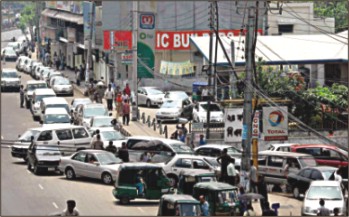
The CNG refuelling stations in the capital are struggling to cope with the ever-increasing demand for the fuel as conversion of petroleum-run vehicles continues at a very high pace.On average, about 2,000 vehicles are being converted into CNG-run ones every month, and about 92,135 vehicles were converted in 116 conversion workshops across the country until March this year.
The insufficient CNG stations, which face frequent disruption due to persisting power outage, result in long queues of vehicles, often impeding traffic flow on the surrounding roads.
POORER drivers could be forced off the roads next year as the price of filling up looks likely to cost 14 per cent of average salaries, a damning report has warned.This week the average cost of unleaded petrol hit a UK 20-year high, finally breaching the £5 per gallon mark.
But if motorists think things are bad now, they will be shocked by the gloomy forecast by independent price comparison website uSwitch.com.
With gas prices climbing, Texans fuel up at Pemex
Over the past year Pemex gas station attendant Juan Alvarado has seen a jump in the number of motorists with United States license plates crossing the border the fuel up.As of last year, he estimates that about 30 percent of his clients at the station, located on Calle Sexta in Matamoros, were from the United States. Today, he says that figure sits somewhere between 60 and 70 percent.
Qantas to strike, expect delays
"Our members feel an offer of 3 per cent isn't good enough when inflation is running at 4.2 per cent," said association federal president Paul Cousins.But Qantas CEO Geoff Dixon said: "At a time of record and escalating fuel prices and major disruptions in the industry, Qantas will not move from its stated 3 per cent pay increase and 1 per cent super."
Price of diesel hurting truckers - association
OTTAWA - Transport truck drivers in the region need relief from rising diesel costs, says the executive director of the Atlantic Provinces Trucking Association.Peter Nelson said his group is asking the provincial government to trim tax on diesel by at least a dime a litre.
Despite its limitations, the internal combustion engine won't be pushed aside so easily, but it can be made better.
The Coming War for Earth’s Resources
The subject of natural resources has been in the news for years. The media has long reported that the world’s supply of oil, minerals, fresh water, and lumber are in danger of running out. Yet few take this seriously.As earth’s resources are being depleted, nations are competing for what remains. This is leading to great conflicts. Eventually, the severity of the problem will cause nations to take drastic measures to ensure continued access. It will change the world in which we live!
Are we losing our food sovereignty? Where do we grow from here?
Following a year in which "locavore" was deemed the word of the year by the New Oxford American Dictionary and books about the 100-mile diet and local eating flooded store shelves, Puddicombe wonders if harkening back to the eating habits of old is too little, too late.
Oil Momentum Shaken as Dollar Link Questioned, Eye on Demand
"It's back to demand," said Mark Waggoner, president of Excel Futures in Huntington Beach, Calif. "One of the reasons the dollar is going up is (the belief that) the recession is limited, and if the recession is limited, then demand will stay up for reformulated gasoline."
Investors's Business Daily:
Hugo's all-too-predictable shortages
Economics: The blackout that engulfed most of Venezuela Monday was dismissed as just a technical glitch. But amid the state's takeover of the country's industries, it's not an aberration. It's a signature shortage of socialism.It happened suddenly in Caracas, and across the country at 3:59 p.m. A hydroelectric station somewhere blew out, and along with a failure of a backup system and a jungle fire, the entire electrical grid in the capital and other cities went down. It knocked out the Caracas subway, made cell phones unusable, cut traffic lights, forced hospitals to turn on emergency generators, trapped people for hours in high-rise elevators and left thousands stranded.
In Caracas, thousands waited in cars for hours. Thousands more had to trudge for hours to distant shantytowns up steep hillsides to make it home. In several cities, crime had a field day.
Americans cannot allow oil companies to continue to be fuelish with our future
Is this country ever going to find a scientific way to put efficient energy batteries in cars so we can get away from the dependence on gasoline? I simply cannot believe, given our past history, that it is not possible. History suggests we can meet almost any domestic challenge.
The Oil Conundrum - Excerpts from Gusher of Lies: The Dangerous Delusions of "Energy Independence"
From 1859, when Colonel Drake discovered oil in Pennsylvania, through 1973, the U.S. was the dominant player in the global energy business. For much of that time, America was both the dominant producer and dominant consumer of oil and gas on the planet.That dominance extended into technology, finance, transportation, and refining. When it came to developing oil reserves and getting those reserves into the marketplace, the U.S. had no serious rivals.
Gasoline-tax reprieve: an idea running on empty
The gas-tax break would do nothing about United States dependence on imported oil, or, for that matter, on a limited supply of domestic oil. Contrariwise, it would add to consumption and to global-warming emissions."We are the laughing stock of Europe because we keep [gasoline] taxes so cheap," notes Matthew Simmons, chairman of a Houston-based investment bank for the energy industry, Simmons & Co. International.
“This is something that we should be talking about a lot more,” Obama said. “We are going to be having a lot of conversations this summer about gas prices. And it is a perfect time to start talk about why we don’t’ have better rail service. We are the only advanced country in the world that doesn’t have high speed rail. We just don’t’ have it. And it works on the Northeast corridor. They would rather go from New York to Washington by train than they would by plane. It is a lot more reliable and it is a good way for us to start reducing how much gas we are using. It is a good story to tell.”
Chevron: Follow-Up Appraisal Well for Jack Later in 2008
Chevron Corp. (CVX) said Friday it plans to drill another appraisal well at its Jack and St. Malo prospects in the deepwaters of Gulf of Mexico latter in 2008."One follow-up well for Jack and St. Malo is underway right now...and another a little bit later in the year," said Steve Crowe, Chevron's vice president and chief financial officer, who was addressing analysts during a conference call. "A decision will be made following those evaluations whether or not Jack and St. Malo will be kept as separate projects or conceivably combined."
Car-obsessed America may be hurting from record petrol prices, but one group of backwoodsmen have never had it so good.On the hillsides above Oil City, where the petroleum business was born, small independent producers who could barely survive a few years ago, are rediscovering the meaning of "black gold".
Argentina Protests Oil Exploration in Falklands
The Argentine government presented an "energetic protest" to Britain for offering concessions to explore for oil and natural gas in the waters surrounding the contested Falkland Islands, the foreign ministry said here Thursday.Argentina's attempt to seize control of the British colony in the South Atlantic spurred a brief but bloody war in 1982.
Sri Lanka: Benefit of lower gas prices passed on to consumers
Gas prices in the world market have gone down in February and March 2008 and the Government has granted this relief on the evaluation of the pricing formula agreements aiming to provide gas at lower prices for consumers in May and June, said Trade, Marketing Development, Co-operative and Consumer Services Minister Bandula Gunawardana.
California's Energy Colonialism
Politicians, business titans, academics and environmental activists proudly point to four decades of environmentally conscious public policy – while maintaining a dynamic economy, arguably the eighth-largest on the planet, with a gross state product of more than $1.6 trillion.In truth, the state's energy leadership is a mirage. Decades of environmental policies have made it heavily dependent on other states for power; generated crippling costs; and left the state vulnerable to periodic electricity shortages. Its economic growth has occurred not because of, but despite, those policies.
Brazil, which is second in the region to Venezuela in terms of oil production, now holds 11.8 billion barrels in reserves, or about 1 percent of worldwide capacity. With new finds, Brazil could catapult into the eighth spot globally and give it the political and economic respect it has long sought. It may furthermore cast a shadow over the "peak oil theory" that says such supplies will soon reach a plateau and decline thereafter.
High petrol prices see Americans ditch SUVs
America's love affair with sports utility vehicles (SUVs) and pick-up trucks is finally over.The gas-guzzlers that ply the country's freeways and clog its city streets and parking lots are falling victim to ever-rising petrol prices, rather than concern about the country's oversized carbon footprint. The fall-off in sales is dramatic however.
Fuel busts school districts' budgets
Monroe-Woodbury School District's fuel budget went from $720,000 this year to a proposed $1.2 million next year after the projected cost of fuel went up from $2.40 to $4 a gallon.
PHESBs (Plug-In Hybrid Electric School Buses)
Okay, I am a big (BIG) fan of PHESBs: Plug-in Hybrid Electric School Buses. With all the (welcome) focus on PHECs (Plug-In Hybrid Electric Cars) like the Volt, Prius, and others, the real potential for some gamechanging through fleets of large fleets seem to be falling by the wayside. In fact, school buses offer some quite serious opportunities for breakthrough benefits and merit serious attention. Happily, we are seeing some serious news advancing the possibility of actually seizing these benefits.
Logical Conclusions (review of Kunstler's World Made By Hand)
His social criticism has influenced his fiction before, but never so much as in his latest novel, World Made By Hand, an almost point-by-point fictional translation of the ideas in The Long Emergency. Moving beyond the realm of hypothesis and abstraction, Kunstler here conveys his vision of a post-oil society through a richly descriptive narrative. It’s as if he wrote World Made By Hand in response to what must surely be a question commonly asked by readers of The Long Emergency: What then?
New Zealand: Green Party MP sounds climate change warning
Humanity will enter "a new dark age" if we continue to abuse the environment, Green Party MP Nandor Tanczos told Southland students yesterday.Mr Tanczos, who spoke to students at the Southern Institute of Technology, said climate change, peak oil, drying up metal deposits and reduced food security would see the end of the world as we know it.
Ethical bank offers wind of change for green consumers
You are keen to play your part in tackling climate change and have a bit of money to invest. You are distrustful of some of the big financial institutions but would like to earn a decent return on your cash if possible.If that sounds like you, then you may be interested to hear that Tuesday sees the launch of a public share issue aimed at raising £8.5m to invest in wind farms and other renewable energy projects across the country.
Controlling crops goes against the grain
To describe it as opportunistic doesn't do justice to the Thai Prime Minister's proposal: a rice cartel as food riots erupt over West Africa and the Philippines, another Asean nation, goes begging for supplies.Still, it is nothing new. Eight years ago a similar idea was floated and came to nothing.
Plans for cartels among commodity food producers are made and abandoned with regularity.
‘Perhaps 60% of today’s oil price is pure speculation’
The price of crude oil today is not made according to any traditional relation of supply to demand. It’s controlled by an elaborate financial market system as well as by the four major Anglo-American oil companies. As much as 60% of today’s crude oil price is pure speculation driven by large trader banks and hedge funds. It has nothing to do with the convenient myths of Peak Oil. It has to do with control of oil and its price.
Why Exxon Still Denies Peak Oil
One beauty of British mystery writers like Conan Doyle and early Le Carre is their use of deductive reasoning to relate odd facts and explain reality. Matt Simmons used the same powers to help us understand why major oil companies deny Peak Oil and why they finance groups like Cambridge Energy Research Associates that go around sewing doubt in the public’s mind about Peak Oil (although, as recently reported, their scheme has failed).
The cost of keeping the economy afloat on oil
A two-day stoppage gave Scotland a flavour of what might happen when North Sea supplies run out, and the effects are grave.
Gas prices slip for first time in weeks, may be near top
NEW YORK - Retail gas prices fell slightly Friday — the first time in 18 days they haven't risen to a new record — and analysts say pump prices may be peaking for the year. Oil futures, meanwhile, soared after Turkish airstrikes on Kurdish rebel bases in Iraq injected some supply concerns into the market and the Labor Department's employment report gave investors reason to be optimistic about the economy.
Shell, Repsol aim to leave Iran gas projec
MADRID (Reuters) - Royal Dutch Shell Plc and Spain's Repsol are negotiating with the Iranian government to pull out of a $10 billion natural gas project due in part to U.S. pressure, Spanish newspaper Expansion reported on Saturday.
Nigeria drops treason charges against rebel leader
LAGOS (AFP) - Nigeria has dropped treason charges against one of two accused rebel leaders in the country's main oil producing region, but a bid to have an open trial for the remaining suspect was rejected, their lawyer said.
Oman 2007 budget surplus hits $1.13bn
Oman said on Saturday it had made a budget surplus of RO434.3 million ($1.13 billion) in 2007, wiping out a projected deficit of RO400 million, thanks to windfall oil revenues.Net oil earnings rose by 12.5 per cent to 3.63 billion rials last year while gas income increased 32 per cent to RO811 million, according to the economy ministry's monthly report.
Kidnapped oilman's wife released in Nigeria
LAGOS (AFP) - Nigerian kidnappers on Saturday released the wife of a senior oil executive who was taken hostage in its oil capital of Port Harcourt last month, a company spokesman said.
Gulf cuts some key interest rates as Qatar signals tightening
DUBAI — Gulf Arab oil producers cut some interest rates on Thursday in line with a U.S. move, to ward off currency speculation, while Qatar signalled it could raise its benchmark lending rate as the region grapples with inflation.Dollar pegs in all Gulf states bar Kuwait compel their respective central banks to track the Federal Reserve to maintain the relative value of their currencies, even though inflation is spiralling and their economies are booming.
Oil firms can weather the price storm
Higher oil prices hurt, not just when you are filling up your car. They push up an enormous range of other prices, from chemicals to consumer staples. But the oil firms themselves seem one group that is well able to weather the storm.
Chevron joins other oil companies with gushing profits
San Ramon, Calif. - Astounding profits in the oil industry are becoming as routine as the anguished looks of motorists filling up their gas tanks.Chevron Corp. put yet another exclamation point on the oil patch's long run of prosperity Friday with a first-quarter profit of $5.17 billion, or $2.48 per share. That was up 10 percent from net income of $4.72 billion, or $2.18 per share, last year.
National Express suffers as fewer fly from Stansted
Fears for the state of the UK aviation industry deepened after National Express warned that fewer people are travelling to Stansted, hitherto London's fastest growing airport.
Union highlights aviation job loses
Unite, the biggest union for the UK's aviation industry representing over 70,000 staff, has warned that a significant number of jobs are at risk following a spate of redundancy consultations with airlines. The union said the cutbacks were a clear indication of widespread problems facing the industry.A spokesman for Unite said the recently implemented EU - US 'Open Skies' agreement, consolidation within the sector, competition from low-cost airlines and increasing fuel costs are just some of the factors that are currently putting aviation jobs at risk.
Japan, China to Use CO2 in Oil Extraction Project, Nikkei Says
(Bloomberg) -- Japan and China will cooperate on technology to extract crude oil by injecting carbon dioxide into wells, the Nikkei newspaper reported today.
European rainfall could decline by 20 per cent
Summer rainfall in northern Europe is likely to decline by between 5 and 20 per cent by the end of this century, scientists have said.The prediction by the Meteorological Office's Hadley Centre is the first to give a precise range of predicted rainfall which is expected to be used by insurance companies and flood defence experts.
Contact
- Content: editors at theoildrum dot com
- Tech support: support at theoildrum dot com
License

This work is licensed under a Creative Commons Attribution-Share Alike 3.0 United States License.
Because The AntiDoomer has not posted this solution to all our problems - Fly Maggots!
http://www.thebiopod.com/index.html
34% fat for bio-diesel! (and 40% protein for bug burgers!)
Sounds good (and oh so tasty!), but what's the EROEI? :-)
The bug burgers need the fat--otherwise they won't taste as good as the beef burgers they replace.
Yes - a lack of fat is why bug burgers won't be popular. Guess road kill eating bugs won't solve the Peak Oil problem - but a road killed kritter source of motor fuel does close the loop.
35% fat isn't enough? Good god, man, what is it that you do eat, bacon drippings?
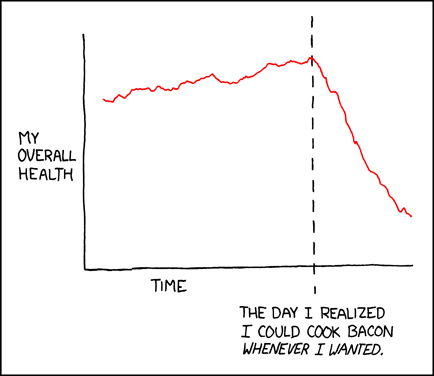
http://imgs.xkcd.com/comics/stove_ownership.png
(and this is what I had planned as as a response)
The impact on prices of oil speculators remains a mystery to me, but why, if these speculators have all this power, do they let the oil prices go down? Conspiracy theory logic would say that they let the prices go down to confuse us.
Speculators don't care whether oil prices go up or down. They can make money going both ways. In fact, they would make the most money by driving it up, and then driving it down. That way they could make money on the way up and then again on the way down.
The key thing to remember about speculators is that they don't buy oil. They buy oil futures. The last thing any speculator wants is to be the proud owner of 1,000 barrels of oil sitting in a tank in Cushing, OK. Somebody has to be willing to buy the actual oil at the actual price. If a speculator pays $120 for oil, and real consumers are only willing to pay $90, the speculator is going to lose a lot of money. This puts a limit on the effect speculators can have. In effect, their contracts get "marked to market" on expiration day. In addition, the "commercial interests" (i.e. non-speculators) dwarf the speculative interests in the number of outstanding oil futures contracts, further limiting the speculative effect.
Prices are ultimately set by supply & demand. Speculators have a limited effect on supply & demand, and what effect they have is opposite to the direction of their speculation (e.g. pushing prices down will tend to increase demand & reduce supply, which limits the downward movement of prices). If speculators could just push up prices at will, the Hunt brothers wouldn't have tried to corner the market in silver back in the 70s, they just would have "speculated" it up. They didn't, because cornering the market directly affects supply, which directly affects price. Speculation doesn't.
Speculation actually serves a number of useful purposes. Besides providing liquidity for commodities markets, it also helps contribute to a sort of cumulative wisdom effect. Everyone, both producers and consumers, needs to know what the future price of a commodity will be.
When a speculator thinks the current price is low relative to where it will be in the future, he goes long (e.g. he speculates that the price is going up). When he thinks the price is too high, he goes short. Each speculator makes that judgement himself, and the cumulative ratio of longs to shorts represents the cumulative wisdom of speculators.
The net effect of the speculation is to push in the direction they are already headed, but to get them there sooner rather than later. This sends an earlier price signal to both producers and consumers and allows them to plan accordingly. This early price signal helps prevent future supply problems. Of course, if the cumulative wisdom is wrong, the majority of speculators are going to get crushed.
Right now, anyone who is not drinking the government/MSM Cool-Aide knows oil prices are too low and should be "speculating" that they are going up. If enough people did this, it would signal to the world that we have a future supply problem, and that would perhaps force us to address it before it was too late. Speculators are a convenient scapegoat for people who don't believe in supply & demand or who are in denial about peak oil.
The key thing to remember about speculators is that they don't buy oil. They buy oil futures. The last thing any speculator wants is to be the proud owner of 1,000 barrels of oil sitting in a tank in Cushing, OK. Somebody has to be willing to buy the actual oil at the actual price.
A few speculators do take the physical delivery. The WSJ had an article a few months ago about Cushing - some traders and financial firms lease oil tanks or tankers.
http://online.wsj.com/article/SB119162309507450611.html?mod=googlenews_wsj
Moe Gamble wrote on tnis topic if speculators influence on price of oil...http://www.theoildrum.com/node/3909#comment-335695
Bottomline or conclusion was:
there is no correlation between numbers of speculator contracts or speculator "herding" or net spec longs and commodity prices
F. William Engdahl is scientific quack, who believes in abiogenic petroleum. He has also revealed his kook leanings in other writings. However, he serves a useful function--which is to provide cover for those who remain totally uninvested in legacy energy, and new energy. Thus, giving us who do invest more time. As always, I want to thank Mr. Engdahl and others like him.
Gregor
The odd thing is that he used to be a peak oiler.
Yes he once was a peak oil believer but that was before he figured out that the earth has a creamy nougat center of oil:
Obviously the man is a complete nut.
Ron Patterson
The abiotic oil theory is irrelevent anyway, since even if it is right the oil produced will not be relaced on a human timescale.
I am actually friendly to abiotic hypotheses. It has been noted, for example, that petroleum-like substances have been produced spontaneously upon the combination of volcanic emissions and oxygen in the air. It is fairly clear that coal comes from biotic material, plant matter, because you can see the imprints of fossilized leaves and so forth in the coal. However, his computations are not irrelevant, since if you compute the amount of plant matter it would take to make, for example, a 17ft coal seam, the conclusions are rather daunting.
There are hypotheses, for example, that some oil deposits have been created during catastrophic events, in which there are huge volcanic eruptions. In some cases, the volcanic gases combine with the air and petroleum falls from the sky, and perhaps sinks into the earth. Normally, this would evaporate or degrade quickly, but during these cataclysmic events, tidal waves wash over the area, putting down a layer of sediment and, ultimately, a layer of dried salt.
As for the coal deposits, there are cataclysmic explanations for these as well. Velikovsky (try Earth in Upheaval) did similar calculations regarding what would be necessary to deposit a sufficient number of tree or plant matter to generate observed coal seams, and then cover it with sediment so that it wouldn't decay by the usual processes. Basically, you need a tidal wave of huge proportions to do it. Although you can burn peat, or just downed wood for that matter, it is difficult to identify a single place in the world today where coal is being created.
Ultimately, however, the question of where it comes from is somewhat irrelevant.
Got any references for this fantasy?
It is certainly possible to make oil abiotically. The question is whether abiotic oil exists naturally in "economically interesting accumulations." The answer to that is no, at least on this planet.
A geologist explains how they know oil is biotic here.
I believe in abiotic helium. And could easily be convinced that comparable quantities of abiotic methane might be found in analogous situations -- which is to say, an extremely tiny fraction of our otherwise biotic reservoirs.
DIYer, all helium is abiotic! Helium is an element therefore there is no such thing as biotic helium. And of course there is abiotic methane. There are oceans of it on Titan and other moons and planets. Most methane on earth however is of biotic origin. Farts are methane and are definitely of biotic origin.
All this has nothing to do with long strings of hydrocarbons. Hydrocarbon strings are of biotic origin unless you can explain how they could be created deep in the earth. Heat breaks down long hydrocarbon strings, it does not build them.
Methane is not a "string" as it has only one carbon atom and four hydrogen atoms. Ethane is a string of two carbon atoms and six hydrogen atoms. The term "string" implies strings of carbon atoms.
Ron Patterson
Like I said, it would be plausible for abiotic methane to exist. In quantities comparable to helium, which is to say a microscopic fraction of otherwise organically grown natural gas.
I didn't recall mentioning polymers.
There are two relevant projections from Abiotic oil. One, is it sounds like we should wait for cataclysmic events to help replenish our our oil inventory. A massive volcano eruption anyone?
The second more germain point is it looks like the volumes produced and our ability to extract those deposits are minuscule in comparison to our exploitation of biotic oil. Abiotic may not even be the little sprinkles on the donut.
Therefore, whether one is right or not is immaterial in the face of the problem, and hence crisis. Thank God for time to edit - here's the long and short of it; Abiotic is a non-sequitur. That's it, move on.
If you find yourself in some remote area with a freakish easy access to some Abiotic oil reserve, more power to you. Now, is this what paid for Jed's "cement pond"??
Bullshit.
".....it is difficult to identify a single place in the world today where coal is being created."
you are mistaken, coal is being "created" in northwest wyoming, along the teton mntn range. and, i might add on an extremely long time scale, subsidence works that way.
now that wasnt so hard, was it ?
oh your behalf, i hope your post was tonge in cheek. otherwise, my recommendation is to keep your postings in a comic book fantacy world where all is cataclismic and conflagurations.
you dont happen to have a geologic theory about the big flood, now do you ?
Gee .. it's the first time I've seen Velikovsky being cited with a straight face for perhaps 30 years. Nice flashback!
Ron,
Anyhow one can 'black box' Engdahl's hypothesis by putting the American Question:
If his idea is so smart, how come he hasn't managed to convince Big Oil, or Small Oil, or Middle-Sized Oil, to invest in it?
For all we know, perhaps they are out there, drilling away ....
10 trillion barrels of oil discovered 10 000 000 leagues under the sea, BP claims ...
Until the enormity of it hit him.
On a similar note I find myself reading jr wakefields posts that contradict GW, praying there's some truth in them.
As devastating as PO will be it truly is nothing compared to Lovelocks assertions.
Lovelock's assertions are just that--assertions. You can try to predict climate change with models, intuition, or ESP--and the models aren't saying what Lovelock is saying. Furthermore, I don't think any period in the paleo record corresponds with the conditions Lovelock describes--even the Carboniferous.
And the data is not saying what the models are saying either. The data is uniformly worse than the IPCC's models. This has happened to every single IPCC report - the data within a year or two obsoletes the entire report.
There was an article in this weeks New Scientist warning against apocolyptic predictions of climate change, since they could damage the credability of the idea. They did say also that all predictions, including the IPCC's are basically guesswork. Far from the data bieng uniformly worse for the last decade the warming has been less than predicted. Infact since the millenium temperitures have been fairly stable.
From the NASA GISS temperature set:
Global Land+Ocean Surface Temperature Anomaly (C) (Base 1951-1980)
End of millenium
1999 0.33
2000 0.33
Most recent annual temperature
2007 0.57
Looks like quite a rapid rate of warming, and on this data is even more rapid than the trend of 0.2C per decade - unless you want to complain about cherry picking data points that is.
Jeremy
Really?
Some more on Global Warming / Cooling / Warming /Cooling /whatever.
http://www.telegraph.co.uk/opinion/main.jhtml?xml=/opinion/2008/05/04/do...
‘’A notable stories of recent months should have been the evidence pouring in from all sides to cast doubts on the idea that the world is inexorably heating up. The proponents of man-made global warming have become so rattled by how the forecasts of their computer models are being contradicted by the data that some are rushing to modify the thesis’’.
‘’The most dramatic evidence, however, emerged last week with an announcement by Nasa's Jet Propulsion Laboratory that an immense slow-cycling movement of water in the Pacific, known as the Pacific Decadal Oscillation (PDO), had unexpectedly shifted into its cool phase, something which only happens every 30 years or so, ultimately affecting climate all over the globe.
Discussion of this on the invaluable Watts Up With That website, run by the US meteorologist Anthony Watts, shows how the alternations of the PDO between warm and cool coincided with each of the major temperature shifts of the 20th century - warming after 1905, cooling after 1946, warming again after 1977 - and how the new shift to a cool phase could have repercussions for decades to come.
It is notable that the German computer predictions published last week by Nature forecast a decade of cooling due to deep-ocean movements in the Atlantic, without taking account of how this may now be reinforced by a similar, even greater movement in the Pacific.
Mr Watts points out that the West coast of the USA might already be experiencing these effects in the recent freezing temperatures that have devastated orchards and vineyards in California, prompting an appeal for disaster relief for growers who fear they may have lost this year's crops’’.
What is not said in your post is that these are regional variations that do not reduce the overall amount of energy being taken in by the planet. Not only that, but these variations are typically balanced. For example, when you have a La Nina (the cold pulse) there is warming in the Western Pacific in the areas of the coasts of China, Korea and Japan.
These shifts may mask the increasing heat for a time, but, just as we often see with oil production curves, a big disruption is usually balanced by a rapid re-balancing later as the "hidden" energy taken into the system presents in ways more obvious to us.
Attenuating all of this may well be the warming of the Arctic. With an 80% mass loss over recent decades and so much of the ice so thin, low minimums in the summer are almost a guarantee. A few winters of exceptional snowfall, a change in wind patterns, etc., may allow the ice to regrow, but it is not looking likely now. If there is another 10 or 20% loss this summer - predicted - it will likely ensure the trend of rapid loss continues to a point where the ice melts every summer. Long-term, the energy absorbed in the Arctic waters will put that energy into the overall system and make a "rebound" in global temps a virtual certainty.
Cheers
PS. Someone else was right above: overall, climate change is more dangerous than PO. I've no doubt we can create sustainable energy systems if properly motivated and with enough time. We have precious little chance of slowing climate change once a key tipping point occurs. (I hope to hell we haven't already...) And, climate change *can* happen in a single decade.
I dont agree.
I think PO can get us a lot harder and faster than GW - Man made or not. (we are still living in an Interglacial. Temperatures and Ice cover will vary)
You seem to have missed my saying, "Overall,..."
My post is accurate. The end of the oil age is not going to end humanity, but Climate Change might. The long-term risk of the latter is far and away greater than that of PO. I generally agree that PO is **probably** the greater short-term risk, but that assumption is a dangerous one. As I sated, and the geological record plainly shows, climate flips of 5C can occur over the period of a decade. Now, over the time span of relatively modern humans - say, 20,000 years - these have all been drops in temperature. The Older and Younger Dryases for example. What we are facing now is the possibility of rises in temperature of 5 or 6 degrees. (For us Americans, this is a LOT of F.) Now, 5 degrees doesn't sound like much, but that's an avg. The highs become some multiple or fraction of a multiple higher than that 5 degrees. (Think temperature tsunami.)
We are not currently designed to live well in temps of 110, 120, etc., degrees F. More importantly, our food plants aren't.
Cheers
Michael Tobis nicely summed this up the other day in his blog:
http://initforthegold.blogspot.com/2008/05/falsifiability-question.html
Thanks, that's a great link. Gotta bookmark that one.
Here is an interesting argue...which argues that even if there is abiotic oil...it doesn't matter.
http://www.fromthewilderness.com/free/ww3/100404_abiotic_oil.shtml
Driven to the Brink
Download the full study here.
That's interesting! Pretty much what one would expect.
While all of the goofy lending practices set the stage, what really upset the apple cart was the rise in gasoline prices and food prices. The cost increases were greatest for those with the longest commutes.
Doesn't the story go...
Rising oil prices cause mortgage defaults for those with the longest commuting distances.
Banks realise they shouldn't have lent these people money in the first place but have all ready sold on the debt as Structured Investment Vehicles (SIVs)on subprime mortgages.
Banks exposed to dodgy SIVs go bust forcing bailouts by the Fed and the UK Treasury.
The dollar (and the pound) slump in value. So the oil price goes up some more...
So there are more mortgage defaults by the people who were not quite as bad as 'subprime' and no doubt whose mortgages have also been parcelled up into 'not quite subprime, but certainly not prime' SIVs whose dodginess has not yet been exposed.
Will we see another wave of banks going down the pan?
I only read the executive summary. Sorry..
Gas prices (and food prices) may have been a contributing factor but the mortgage scams have been brewing since 2005 at least. In any case the upper 10% or more is not affected. The bubble was created/encouraged by some who could make money out of it, short term. Many did, if only for a while. Incorrectly rated debt, sold on, the new bonanza... It is generally accepted that the house owners were ‘pigeons’ (marks or dupes in English), though many made a profit too, the flippers, the savvy, some investors, etc.
Rising prices of property fed the debt bubble, ppl borrowed on the equity, the whole circuit - a kind of Ponzi scheme - went over the top and is slowly crashing in finger-nail biting waves, a sluggish tsunami. Now people look back and find causes here and there, neglecting the allowed corrupt financial practices, not much about that, and taking price of x or y commodity as a sort of ‘reason’. Families became strapped, by ARMs, as everyone knew they would, and who cared, nobody.. and that is it. The price paid for Mexican maids, Iphones, dentistry, operations, new cars (!), cable TV, Barbie dolls, gas, school books, cleaning products, corn meal and rice etc. sank or rose ...of course gas represents some consequent part of the budget.
"Gas prices (and food prices) may have been a contributing factor but the mortgage scams have been brewing since 2005 at least."
Again, PO happened May 05.
And we haven't even seen the first wave of bank failures yet.
Fannie/Freddie bailed out ($1.5 trillion) before Hannukah.
Fannie knowingly took liar loans from CFC.
I thought this observation from the report was intriguing:
In other words, house price declines happened before delinquencies and defaults among subprime borrowers began to shoot up. Here's a speech by Janet L. Yellen, president of the Federal Reserve Bank of San Francisco, in which she makes this point.
There were many factors leading to the decline of housing values -- notably a vastly overbuilt supply. But part of the problem was the location of that supply: In many parts of the country, it was extremely inconvenient distant exurbs that were most susceptible to rising gasoline prices.
yes
As Laurence notes below, the article wasn't about the cause, but about the collapse. The pattern of the problem spreading from the suburbs out to other areas of the industry supports this contention. So, no, PO didn't create the bubble, it helped pop it.
Cheers
The lumber mills were the precursor_
"Stimson Lumber has been on a long slow downhill path since at least 2005 – a steady stream of lay-offs, with excuses offered up by mill representatives that have been accepted de facto by the local media, without any apparent follow-up (or Journalism 101) questions. I see many unanswered questions, I see even more questions that haven’t even been asked, and I can’t understand how it isn’t getting done."
The future is here now. We're just not paying attention to it.
"
$395000 LESS THAN 1/2 PRICE - LUXURY SCOTTSDALE, AZ CONDO
A FORECLOSURE STEAL!!! $455,000 PRICE REDUCTION FROM ORIGINAL PURCHASE PRICE OF $850,000 IN 2006 FOR QUICK SALE! QUALITY UPSCALE, MODERN, 1 BEDROOM (1072 TSF) EXECUTIVE LOFT WITH 24-HOUR SECURITY, FULL-SERVICE CONCIERGE, UNDERGROUND/GATED PARKING AND MANY FINE AMENITIES
http://housingpanic.blogspot.com/
Laurence,
Thanks -- though you've spoilt my plans for the afternoon, since this engrossing study is worth reading from start to finish, twice over. Great graphics too -- the 'visual display of quantitative information' at its best. The maps are also of 'award-winning' design quality. A link like this is worth a thousand comments.
This sounds like South East Florida, South West Florida, perhaps most of FLorida. I believe the tri-county area of Miami-Dade, Broward, and Palm beach are number two by a hair in housing price declien percent (behind Las Vegas).
With the possible exception of Jacksonville and Tampa - mebbe Orlando - there isn't a proper central city to be found althogh even for them the publci transporation is abysmal.
I used to put 100-200 miles A DAY in a car as a technical computer sales support person in South East Florida. We coudl easly do call from South Miami to Boca Raton in the same day.
Now I tele-commute for at a different job.
Pete
there isn't a proper central city to be found
There is in Miami.
And a decent "Subway in the Sky" is under expansion.
http://www.miamidade.gov/citt//RailMap.htm
Blue open. Red under construction. Orange in advanced planning (delayed by GWB, could have started construction), and Green in preliminary planning. Light brown was going to be after 2014. Now after 2017 (see GWB). 90% of Dade County population within 2 miles of a station.
Alan
I suppose you are correct. Good thing the MetroRail is elevated for when the rising sea comes.
Personally I avoid Miami as much as possible.
FYI - here's a bit more recent on the light rail in Ft. Lauderdale.
http://www.sun-sentinel.com/news/columnists/sfl-flbmayocol0501sbmay01,0,...
On a somewhat unrelated note lots of fuel will be "saved" this weekend as the 13 year running Ft. Lauderdale Air and Sea Show sill NOT be held. It had been held during Fleet Week, this week, with the USN in at Port Everglades. McDonald's backed out after last year and no one else wanted to pony up $3.5M+ to play.
Pete
Personally, I would suggest (with limited local knowledge), extending the "Orange Line" north into Broward County on University (perhaps swing over to SW 72nd & SW 64th @ North Perry Airport) and then turning it East just south of I-595 (on Griffen, last major surface street before I-595) to the Ft. Lauderdale Airport, FEC RR ROW and the sea.
There loop south on FEC RR ROW to downtown Miami.
Then either feed this "U" with more Elevated Rapid Rail (North on FEC RR ROW near sea ?, East on Griffen ?), Light Rail, Streetcars and/or buses.
Stage I - just extend Miami MetroRail 2.x miles north on University to North Perry General Aviation airport. Shut down airport and redevelop as TOD. Ground floor shopping, upper floors residential or office.
Racehorse course at end of line in Dade County will be slammed by Ft. Lauderdale commuters (IMHO). Move that focal point 2.x miles into Broward County and use the traffic counts to justify further extension.
Urban Rail works best as systems, not isolated lines. Miami is well along to creating a system. It makes much more sense for Broward County to plug into a viable system than to re-invent the wheel and start from scratch just north of what can become a first class Urban Rail System.
Development will follow access to Non-Oil Transportation post-Peak Oil (it already does).
Best Hopes for Regional Co-operation,
Alan
As I mentioned in a response the other day...you know the area almost and in some ways better than I do - me being a REAL NATIVE (58 years old) of Miami but living about 50 miles NW in NW Broward County - not quite the exburbs, but close.
Here's the REAL rub: -> "Regional Co-operation,"
Thanks,
Pete
Yes, regional co-operation is a MAJOR issue. Miami has a 3/4 mile head start and they are "different" than Ft. Lauderdale/ Broward County. With Tri-Rail (commuter train) all three counties were more or less equal, but not with Metro-Rail.
None the less, IMHO, any independent start of Urban Rail in Broward will take an extremely long time to get up and running and it will never be more than Light Rail (slower, lower capacity, surface running).
OTOH, attaching an upside down "U" to the Miami system will add ridership both ways (Broward > Dade & Dade > Broward) as well as travel within Broward. And create a high speed, high capacity spine to which lower volume feeders can be added. And the volumes might justify (post-Peak Oil) further expansion of elevated Rapid Rail (say north along the coast on the FEC RR ROW).
IMHO, Stage 1 is a no-brainer. Even if all Broward builds after that 2.x mile Metro-Rail spur is Light Rail, it is better to have the northern terminus inside Broward County and, post-Peak Oil, there will be less need for general aviation airports. A 536 acre TOD development @ North Perry Airport, right next to Broward Community College.
BTW, I expect terrible traffic jams at the currently planned northern terminus at the racehorse track. Florida Turnpike exits plus University traffic plus ...
It is bad today without adding 4,000 or so Park & Riders (maybe 10,000 with gas @ $7/gallon).
A short northward extension would spread that Park & Ride load out considerably, and attract more riders. An 80 to 120 acre office park at North Perry Airport could attract commuters and businesses from Miami, so it would work both ways.
I have an "eye" for such things, and was looking closely when I visited the areas in 2004 to speak at APTA.
Best Hopes for Common Sense over Parochial Considerations,
Alan Drake
Related. Sorta. The other side.
Here is a map (the only one afaik) of all streets (roads) in the US. 26 million of them.
http://benfry.com/allstreets/
explanations about creation here:
http://benfry.com/writing/archives/54
I commuted from South Miami up Dixie Highway (U.S. 1) to work in North Miami in the early 70's. Traffic was hell even then.
I also live in the land of the Blue Hairs and Red Hats....So what's the problem? 25% of Fl will be under water within 20 years, the spread of the Chinese Hoof and Mouth Virus will get a great many, and the rest will be swept away from the Cat5 H that is rolling in. Housing will be back in a few short years so just wait and jump back in then..
I telecommute to Mars for work....Remember to always wear the Tin Foil.
BZ
Seems To Me,
That this study only affirms what James Kunstler and Westexas having been saying steadily for several years.
That being that the outlying suburbs will decline in popularity and eventually whither as the economic worth of mis-allocated resources approaches scrap value.
The days of the "Happy Motoring Lifestyle" do indeed appear numbered.
Airlines slow down in the skies to save millions
What I would like to know is how far airlines can extend this principle. One to two minutes is nothing, after all. Suppose they altered their schedules so as to slow their speeds down to two-thirds of what they are now, let's say (so that e.g. a flight that takes four hours now takes six instead). Is such a drastic speed reduction technically feasible? And if so, how much fuel would it save them?
I would certainly be thinking along these sorts of lines if I were an airline executive.
The wings are the determining factor. They are designed to operate efficiently within a a certain range.
Winglets are saving 3+% (despite extra weight). 6% in some cases.
Southwest would be well advised to start ordering larger 737-800s and reduce frequencies on busy routes. 737-800s h
ave better fuel economy per seat-mile than SW 737-700s. Also retire existing old 737-300s and -500s from fleet "ahead of schedule". Not as efficient as modern 737-700s (or 737-800s).
$42 million is a triviality in SW's multi-billion fuel bill. Good that they are taking that small step.
One little known fact is that Boeing wings are optimized for cruise (and fly faster & higher than Airbus wings) but pay a penalty in climb. Airbus has a hybrid wing, optimized for nothing, but with less of a climb penalty.
Going high (thin air) is more important that going slow in most cases. High, straight and slow is best. Improved Air Traffic Control could certainly help fuel economy. Allow aircraft to fly straight and high (and slow).
Alan
You beat me to it. It's in the wings mostly, and of course parasitic drag as well. Angle of attack is airspeed. At slow airspeeds, high angles of attack, the vast majority of your drag is going to be induced drag...that is, drag created by the creation of lift. At slow airspeeds the parasitic drag (what you normally consider drag) is going to be lower. At high airspeeds (cruise), you'll be at a lower angle of attack and the drag will shift from predominantly induced, to a majority coming from parasitic drag.
At the extreme end, there's something called "flying behind the power curve" whereby if you slow down enough (and it's usually not much), you wind up having to put in MORE power to maintain level flight than if you were flying FASTER. You wind up going slower AND burning more fuel.
So, there's a certain point where Induced Drag and Parasitic Drag intersect and that's where you'll find the most efficient cruise.
Wing aspect ratio (span/chord), loading, NACA profile, and planform come into play to determine the size and speed range of the drag bucket.
A number of years ago Boeing, along with Ilan Kroo came up with the concept of the Boeing C-wing, based upon a non-planar spanwise constrained efficiency model. It's been called the "Klingon Battlecruiser" because of it's strange look and the canard on the front. The C-wing is stable by itself, though, without the canard (the rear winglet-lets are downpush like the regular tail) so it doesn't need to use a reflexed airfoil like a normal flying wing (large induced drag penalty at high AoA) and approximates the spanwise efficiency of a box-plane.
Uh, your first paragraph is not correct, IMHO.
For level flight, Lift (L) is a constant, that is, L equals the total weight of the plane with passengers, fuel and baggage. The faster the plane is traveling, the less angle of attack is required to maintain the required lift at a particular altitude. The idea is to hit a "sweet spot" where the aircraft is operating with minimum drag, thus it's desirable to optimize the L/D curve for some specific cruise speed. That will minimize the induced drag. The parasitic drag for the entire craft is a function of density and airspeed, thus, flying higher at low density reduces that component. Flying much slower may shift the L/D away from the best value, but would also reduce that parasitic drag.
Another aspect is that the engines are also optimized for a specific cruise speed and altitude. Moving away from that design point would also result in less efficient engine operation.
E. Swanson
It's right, but admittedly poorly worded. I tried to stay away from the term "L/D" because it's a bit odd to people. Anywho, the best way of putting it I suppose is thinking of it in terms of a teeter-totter...on one side is the induced drag from the wings (higher during climb, slow speed (high AoA)) and on the other is parasitic drag which increases with speed. So considering the whole of the plane you're left wanting to increase the speed to reduce the induced drag, and decrease the speed to minimize parasitic drag. Somewhere in the middle is a sweet spot where reducing speed will increase fuel consumption, and increasing speed will increase fuel consumption.
Substrate, you seem to understand the issues. I had thought from my earlier days (I once took a fluid dynamics class) that there was some sort of absolute limit of lift/drag. Assuming you are at that limit, and you need enough lift to counteract gravity, your drag is then fixed, and baring headwind/tailwind drag implies needed power per mile. But modern airliners are in a flow regime that is referred to as "transonic", which doesn't mean that the plane is supersonic -but the airflow which is speeded up in some portions of the air surrounding the plane is effectively supersonic -and can presumably lose extra energy due to that. Is that correct? Perhaps that provides some scope for cutting drag via slowing down. How big an effect, if they try to reach optimum fuel consumption?
Later on, if the plane was redesigned for passenger miles per gallon, the plane wouldn't need be as strong, since it is designed for lower speeds, and the engine could be smaller as well. So the question is how much savings is possible?
There's pretty much a practical limit to L/D and I think that's exemplified by a sailplane called the "eta". It has a 101 foot wingspan, aspect ratio of 51, and a glide ratio (L/D) of 70 to 1. If you saw a picture of it, you'd realize how rediculous it was. A lot of glass sailplanes are in the 40:1 and something like the old Schweizer metal planes (non-laminar airfoils) can be from low 20's to low 30's. IIRC, the Gimli Glider, a 767-200 showed a glide ratio of about 12-15:1 (glide ratio and L/D are equivalent).
You're right about operating in transonic conditions, but unfortunately I haven't much of a clue about it. Because the freestream velocity is so near the speed of sound the flow over the wings can exceed the speed of sound and cause something called shock drag or wave drag and there are airfoils designed for those conditions and Reynolds numbers called "supercritical." It's probably also why most of those airliners use a Delta planform, or swept back wings. Most of these fancy foils are usually lower Clmax and climb performance can suffer - I'm not sure about the supercriticals. Most of what I know I gathered while working on designing an ultralight sailplane, so I kind of bypassed all of the high-speed hijinks and concentrated more on slow-speed, low min-sink, high L/D design specifics.
For some examples of interesting and efficient aircraft you should take a look at Strojnik's "Laminar Magic" and Rutan's original Quickie.
Which pretty much means that trans-continental or inter-continental flights are about the only ones that really make much sense and that we're likely to continue to have available for very much longer.
Perhaps. What sort of airline and infrastructure would that support? For anything less than continental, one needs to spend much time getting to the airline. And if the systems are good for that, then the airline is less and less necessary. Intercontinental might be a different story. I can imagine a whole pile of flag carriers eating the expenses to keep the tourist industries happy. For a while.
cfm in Gray, ME
Today, rail gets a small modal share for trips over 500 miles (800 km) even with the best high speed rail lines.
Overnight trains (with sleepers, lounge cars and diners) are less efficient than day trip trains.
I can see trips from New Orleans to Chicago (825 miles by air) having some taking a 110 mph train (figure 10 hours with stops and not straight-line) but most flying, even if the cost is greater. Many fewer traveling though.
Best Hopes for Efficiency,
'
Alan
What we're probably talking about here are a number of regional air hubs, but with rail constituting the spokes. Air travel would be from hub to hub only. It would also be possible to travel longer distances by rail, through a series of hops from hub to spoke to spoke to hub and so on; much slower, but maybe a bit less expensive and thus the option for those with more time than money.
Yes, that is what is developing in Europe and what I predicted in USA 2034.
However, large population centers will continue to get some air service, even if they are close to other hubs.
Philadelphia is close to NYC & DC, but will get some air service regardless.
Best Hopes for Regional Rail,
Alan
One-world offers an interactive map of world flights.
It's a little hard to use.
Note how the main departure + destination points are in a narrow ‘west’ world band, those who dominate and have constructed the infrastructure and can maintain it, and can afford to buy /make planes, buy jet fuel, because their customers will stump up.
http://www.oneworld.com/ow/flight-info/where-we-fly
Exactly. The initial climb is a small proportion of the total flight time on long-haul flights. And if short-haul traffic drops, long-haul flights won't have to spend much time circling at their destination either.
What I can see in the near term is some airlines changing to turbo-prop or even piston engines for regional trips. I've heard one airline here in Canada is already doing that. Buy stock in Bombardier!
Pretty far... Arguably, if Southwest had just held onto its oil hedges and kept its planes parked on the ground, it would have made a better profit.
(I may be wrong about this - does someone have the actual numbers to refute or confirm? Still, I recall wondering whether Southwest is, at this point, an airline which hedges fuel or a hedge fund with some airplanes.)
Simplistic calculations compare the fuel hedge profit vs. reported profits and if hedges are greater make such claims.
Untrue.
Reported profits are after income taxes. If there were no fuel hedges, lower profits would have reduced income taxes paid as well as after tax income.
AFAIK, SW would have been close to breaking even without fuel hedges. But since planes continue to depreciate regardless, gate rentals are due, etc., not flying would have meant massive losses.
SW has pricing power, and they can adjust fares (within reasonable ranges) to generate the profit level that they want.
Best Hopes for SouthWest,
Alan
More from the same article:
That meant flying at an average speed of 532 miles per hour, down from the usual 542 m.p.h.
Northwest normally uses huge planes for those flights, so let's guess 500 passengers, a 15% error wouldn't matter much. At 8 minutes each, they spent an extra 4000 minutes, or 67 hours, between them, "enjoying" the miserable conditions that prevail on that sort of flight. The airline "saved" $535, so by dividing we can estimate that the airline valued the passengers' time at $8 per hour. And that's a serious overestimate because I didn't deduct what the airline paid the flight crew and accrued in aircraft flight time and wear-and-tear for those 8 minutes. Had I done so, the "saving" may well have been zero or negative.
Not that it matters. In any case, now we know why air travel has become so miserable. The airlines have such awesome market power that they can charge you north of $150/hour for even the most cramped, awful seat, and yet they can get away with valuing your time at essentially zero. With all that market power in their hands, you've gotta wonder why they can't raise fares instead of constantly yammering for subsidies...
I have a question. I've been following TOD for a while, and so am pretty familiar with the PO issues and enjoy dealing with the various challenges that come up when discussing it. But one argument I don't have a quick reply for is the old story about the supposed patented designs that were bought up and/or locked up by the oil/auto company consortia. Everyone seems to know someone who had an uncle who drove a Chevy for a while that got fantastic mileage because it accidentally escaped into the wild with a special patented carburetor. Or some such thing. So the theory goes that if/when either internal financial or external government pressures forced these solutions into the marketplace, they would/will greatly alleviate our problem. The whole issue to me is a dead end anyway, but I would like some numbers or data to use in dismissing it, the same way that one can dismiss the ANWR reserves by showing how quickly they would be used up if we actually did access them.
I read here recently that a contemporary ICE is 20-30% efficient, and presumably most of the waste is in the form of heat. Any figures on what the efficiency would be with a theoretically perfect carburetor (or fuel injection)? Modern engines are better aspirated (more valves), but with theoretically perfect combustion, what would the efficiency be? Isn't the combustion itself already close to perfect? What about internal friction? And losses inherent to the reciprocating mass? How much loss due to unrecoverable combustion heat alone? Presumably the only practical way to release energy from oil is via combustion, and so the challenge is to burn completely and then completely harness the heat energy thus released.
But even with an ideal power plant (oil to mechanical energy converter) it looks like we would “only” quadruple our mileage and still run out of oil eventually. My own vision is for a combination of electric rail, electric cars and bikes, and old-fashioned biking and walking, with the electricity coming from renewables (hydro, wind, solar). I know; good luck ramping up with all that. But it's a direction to go in, and I do believe our energy solutions will of necessity trend toward smaller scale, more localized, and more optimized for specific needs and applications. Along with greater conservation and efficiency. Thanks in advance for any feedback, and special thanks to Leanan and to all the staff and regular contributors who make this an excellent forum.
Walt
Efficicency in an ic is related more to the temperature of the burnt gases at the beginning of the power stroke and the temperature at the end of that stroke. That is related more to the expansion or compression ratio than anything else.Hence diesels get better efficiencies than gasoline engines. The carnot cycle sets the theoretical upper limit. To be more "efficient" the waste heat needs to be used for something.
Back in the piston engine era of the US military services, the ultimate radial engine was the turbo compound Wright R-3360. It powered the Navy's old Douglas AD Skyraider. For efficiency it used exhaust gas turbines which were mechanically linked to the crankshaft thru a gearbox. I wonder why that hasn't been done in the automotive field?
I wonder why that hasn't been done in the automotive field?
1) You tax dollars do not pay for your car. Warbirds are cost +.
2) Cars do not have limited fuel then fall from sky. Anything that could expand warbirds capacity would be added.
3) Gas has been cheap, so why improve?
Walt, Randy is correct, the waste energy is lost in the form of heat. If gasoline is burned then you get heat and no carburetor can alter that fact no matter how good. The carburetor just mixes gas and air and the optimum mixture will only give you the best mileage, it can do nothing about the energy lost as heat.
But basically people who make these claims about carburetors who will get 100 mpg or cars that run on water instead of gasoline are idiots. These people should be ignored, not argued with.
Ron Patterson
But basically people who make these claims about carburetors who will get 100 mpg or cars that run on water instead of gasoline are idiots. These people should be ignored, not argued with.
So idiot postions should be allowed to stand VS challenged?
I'd much rather see the challenge. Management may, however, not agree.
Eric,
Sorry, but Darwinian is correct. Life is too short to waste on the tinfoil hat brigade -- the flat-earthers and perpetual motion wackos. The silent treatment is only effective method of dealing with them.
Of course there is a 'grey area' (ideas that sound wacko but just might contain some nugget of truth) , but the combustion engine conspiracy theorists certainly don't belong there.
And yet you were posting on Abiotic oil.
If you want to get more out of the fuel burned in an IC, you have to use the heat in the exhaust gas to produce more work. There's actually a lot there and the temperature is fairly high (like 600 C or more at the catalytic converter), so it's theoretically possible to convert most of it to work, but it could be expensive. Maybe a counter-flow heat exchanger and a steam turbine add-on to a make a 60% efficient combined-cycle car?
Maybe a counter-flow heat exchanger and a steam turbine add-on to a make a 60% efficient combined-cycle car?
Thus adding to the weight - a water tank for the steam.
The stirling engine or Thermocouple Power would seem to make more sense and has been suggested.
There have supposedly been some materials science breakthroughs that will allow better thermoelectric generators. You might be acquainted with thermoelectric generators (run in reverse for cooling) if you have one of those plug in car drink coolers. They claim these would be useful for just that application -generating electric power from automotive exhaust. I have never seen any numbers for what sort of efficiency they might be, but they could certainly give a good efficiency boost for most hybrid vehicles.
Walt - If there ever were any such "patented" inventions that then got bought up and put on the shelf: (1)patents are generally public and can be viewed; and (2) patent lives I believe are only for 17 years. So, unless the uncle with the Chevy just had it happen, the patent is now in the public domain. And, if the item was never patented, well then "anyone" who can come up with any such item would become overnight the richest person in the world (or richest corporation) by licensing the product for royalties. But, unfortunately, facts never sell, but patently stupid conspiracy theories thrive. Which tells you a lot about the human race as a whole.
Please can somebody explain to me, in simple layman's terms, how speculation can cause 60% of today's oil price?
http://www.globalresearch.ca/index.php?context=va&aid=8878
I don't understand this at all.
Surely, futures trading is pure gambling? Just because I back a horse to win doesn't mean it will win. Or is the speculation they talk about not futures trading?
In order for speculation to affect the price actually paid wouldn't the oil have to be delivered and the oil have to be stored above ground forever? ... and wouldn't this amount have to increase month after month and be a large percent of consumption?
What am I missing?
Xeroid, the man is either a fool or a liar, perhaps both because he states:
This is simply not true. According to the EIA's This Week in Petroleum US inventories are in the lower half of their five year range and about 15 million barrels below where they were at this date last year.
OECD inventories, according to IEA's Oil Market Report fell 48.9 million barrels in February but stand at about the same point as last December. Checking back through the archives I found that OECD inventory levels, though fluctuating up and down, have remained pretty steady for over a year, though dropping slightly.
To say that inventories are now higher than any time in the last eight years is just a flat out lie.
Ron Patterson
Thanks Ron,
We both know how to analyse the oil data, and I agree with you.
But are my basic assumptions correct with regards to rising oil prices and speculation?
Is it me (who thinks it is a 'free market' operating with limited supply) who doesn't understand or all these commentators saying the cause is speculation - or are we both wrong to some extent?
Xeroid, your basic assumptions are correct the rising price of oil was caused by an imbalance between supply and demand. This story about "speculators" and "hedge funds" have been around since 2004. Michale Lynch was one of the first to make this claim. He has been wrong with every oil price prediction he has made since then. He has been wrong because his predictions have been made on wrong assumptions.
But at least Jim Cramer gets it: Oil's Spike Starts in the Ground, Not in the Dollar
The rest of the article is behind a pay wall so no need to go there. But I can probably finish it. ...but they do not buy crude oil futures. Cramer is saying that even the Wall Street Journal has it wrong, speculators or hedge funds cannot possibly be the reason oil prices have been rising for over four years now.
Ron Patterson
What exactly are these speculators supposedly speculating about?
Should not the market price this in if "everyone knows" that speculators are hoarding oil and intend to sell it off. In which case all this should come into the market in some time and prices should fall and futures a couple of years out should reflect that. Do they?
Or they might be speculating that peak oil is here and oil prices might hit $200 in the next 2 years and it might be well worth holding on to $120 oil even if it means storing it somewhere.
My understanding is that futures have to be settled physically. I read a report of 2006 saying that hedge funds have about $100B invested in oil (in 2006) - at those prices that would be 1.6GB or more than twice the US SPR? where is all this stuff being stored? And there is the forex risk of the USD going down in that period as well.
Could someone here answer this? I am genuinely puzzled.
From CNBC
Oil goes up one day (supposedly) because the dollar goes down, then it goes down because inventory has gone up. 2 days later both oil and the USD go up because jobless claims are lower than expected. How are they able to find such accurate correlations so quickly? Or do they just indulge in verbal diarrhoea?
Srivathsa
Guys - Futures do not HAVE to be settled physically. However, if you buy a long position and hold it until contract expiration, then the corresponding "short" HAS to make physical delivery as per the contract terms, which are a standardized part of the contract. Normally, people just sell their positions prior to expiration. Howver (get a book), it is common for market participants to do Exchange of Futures for Physical (EFT's), which are also regulated, and allows for physical delivery as agreed between the long and short. Oil, by contract, is deliverable in Cushing Oklahoma (and the grade is specified by the contract). But, an EFT would allow parties to exchange, e.g., in Houston with a different grade, if they both agreed. Generally there would be an agreed upon $ difference for a grade differential and a location differential for the EFT.
Do speculators drive up the price a huge amount? Well that is like attributing to them the mentality of the tulip bulb traders, and assuming that they are all willing to risk their entire wealth against the chance that the music stops when they are long oil. Strangely, for 30 years, farmers wanted the agricultural commodity markets shut down on the theory that speculators were driving the price of their products down.
We are a capitalistic country and virtually no one understands supply and demand. If we were talking about a cartel of speculators trying to drive up the price of Picasso paintings - well that might be possible. But, a market trading hundreds of millions of barrels of oil daily worldwide. It would take a group of 1000 billionaires to illegally get together and decide to do it. And, even they would be at risk of a country like SA doubling its output - if anyone cares to believe that that is possible.
This is a myth. Holders of long or short positions at expiration are not required to either make or take delivery. Contracts can still be settled in cash even though the contract was not closed before expiration. This happens all the time and the open contracts are simply settled at the settling price unless the buyer specifically request delivery or the seller specifically request that delivery be made. Even then, if there are not enough buyers requesting to receive delivery as sellers wishing to make delivery, or vise versa, then those unmatched contracts are still settled in cash.
Think about it, your margin requirement for one contract of NYMEX crude is $9,788, less than ten percent the cost of the actual oil. It would be impossible to collect $115,000 for the actual oil from a speculator who has only put up a fraction of that to trade, or require him to take delivery if he has no tanks. And you sure as hell cannot require him to make delivery if he has no oil at all.
The same goes for pork bellies, live hogs, live cattle, wheat or whatever. By the way, I was a stock and commodities broker, for all of six months back in 86.
Ron Patterson
Wrong! Only a very tiny fraction of all contracts are ever settled for actual. On the NYMEX approximately half a million contracts are traded daily. Each contract is for one thousand barrels of oil. that means that each day, contracts are traded that equals 6 to 7 times all the oil produced in the world for that day. And that figure gets even more absurd when you consider that far less than 1% of all oil produced is actually traded out of the Cushing, Oklahoma Hub, the benchmark for the NYMEX contract.
Some exchanges, like the Tokyo Commodities Exchange (TOCOM) only settles in cash. That is, there is no such thing as actually making delivery or taking delivery for a TOCOM crude contract.
Ron Patterson
Thanks Ron.
OK, Peak Oil it is, panic over - and I am now very concerned, 'cos like Memmel I think we are more likey than not way past 50% depleted, implying a steep post peak decline - implying very steep post peak 'net export' decline.
The flows will slow because of the extraction techniques used since around 1980 and the fact that much of the 'new' oil being added to reserves is restatement of old finds (the new oil can't be produced until the original oil has been produced since it is below it) and the oil is increasingly worth more left in the ground than being produced now.
IMO, this means that the world's economy has no option but to continue to shrink (otherwise known as deflation!)- judging by the Japanese experience that means falling house prices (which means you can't borrow a high percentage of the house price long term) and zero interest rates for savers. Zero interest rates means savings don't grow, which means pensions don't work, and on and on!
I suspect that speculation (buying/selling for a hoped for short term trading gain) has a dominant effect on the shortest time scales -say hours and days, but probably has very little effect over times spans of a year or more. In Gold speculation can have a long term effect, because the commodity can be stored at very low cost. To physically hoard oil for later usage, you need a tank to store it in. I doubt that tanks can be built cheap enough to make this a viable means to make money.
The black Market will tell you.
a black market will deliver all you want at the world's
highest prevailing price.
If NYMEX was the world's black market price, NYMEX would
be flooded with oil.
Ex. You pay enough you can get Disney World in Baghdad.
Given that global prices are set at the margin in commodities markets -- markets that can only exist because there ARE speculators -- a case could be made that 100% of the price of oil is established by speculators -- and always has been.
Back in the commodities run of the 1970's, my 80 year old grandfather was delighted to showoff his cabinets full of 5 lb bags of sugar. He purchased 20 bags when the price was very cheap and just starting to rise. By the time the price had doubled, he was confident and correct that the price would double again, he bought 20 more bags. He kept buying more all the way up. I was amazed when he showed me several hundred bags in his cabinets. I knew him to be a man of wisdom, common sense and frugality, but I witnessed a man smitten by a "gold bug".
What an interesting situation this made for sugar producers. At some point, they became aware that millions of people were hoarding sugar at prices way above the cost of production. When the grocery stores put a limit of two bags per customer, my grandfather had one of his sons drive him to two stores every day to buy 8 more bags (my uncle went along with buying 2 bags at each store for him).
The sugar producers knew a crash was coming, but they also knew that until it came, millions of "speculators" would buy more every day at the speculation induced price. Producers cut out new capital projects, but they completed capital spending on projects that had been started earlier. In other words, total production continued to climb but not enough to satisfy all the "speculators", the price continued to rise. The market was tight long after total production increased beyond the amount of sugar that was actually being consumed.
In the past year or so, billions of new oil and equivalents have been discovered (or rediscovered). Fields like the Bakken have been resurveyed. The "official" recoverable reserves have been increased 2500%. Still, the official reserves are now only 3.4 billion barrels out of 200 to 500 billion barrels in place. Of course, if the price stays at the current level or goes even higher, billions of dollars will be spent to find the technology to profitably recover billions more of these known "reserves". The 3.4 billion barrels are "officially" recoverable with current technology.
The huge new discoveries in places such as Brazil, India and the Gulf of Mexico will also cost billions to develop but the oil is there. Please note that oil producers invest for the long-term whereas speculators generally invest for the short-term. Producers are very aware of the trillions of dollars (yes, trillions is spelled with a T) of spending and planned spending on substitutes.
The current rate of technological advance in a number disciplines is incredible. Not a day goes by without an announcement of a significant improvement in one or more alternative fuel sources. A good example is the announcement from Tel Aviv University last week. The researchers there believe they have found a way to reduce the cost of solar panels by a factor of 100 times; they believe they can produce an abundance of solar electricity at a total cost of 7.5 cents per KW!
We all know that many of these announcements include an element of hype but sizable sums are being spent on numerous industrial scale demonstration plants of many types. New bio-fuel technologies look very promising. As a result of the potential of plenty, oil producers must avoid over expansion such as happened in the mid 1980's. Many an oil company went out of business when the price collapsed. Many years of high production at high prices are required to produce good investment returns on "deep water" oil. The fear of plenty has reduced the total amount of investments going into oil projects but, even so, counties such as Canada have quadrupled annual spending over the past 5 years or so.
As a result of significant recent discoveries, the drilling platform situation has been turned on its head from just a few years ago, when rig manufacturers could not make rigs fast enough. Today, there are suddenly a number of massive $300,000 per day drilling ships sitting idle. A $300,000 per day lease works out to about $109,000,000 per year. Who wants to invest that kind of money, plus tremendous other costs to discover deep and expensive to extract oil when there are a few million very smart people on various paths to cheaper alternatives?
The geneticist who claim they will be able to increase the speed of microbial digestion of coal, heavy oil and even corn stalks by 1,000 or even 10,000 times must be taken seriously. These microbes naturally produce clean burning methane. Any investor must think twice before committing $109,000,000 plus top dollar labor rates on a project that even if "successful" might prove to be a poor investment.
Like the sugar "bubble" of the 1970's, it makes no sense to spend billions to increase future production when there are clear signs of a slow down in the actual rate of consumption. For example, in the USA, the consumption of gasoline is about the same in 2008 as it was in 2005. In 2005 there were few compact, sub compact and hybrid vehicles available for purchase. It appears that 2008 will be the first year in more than a decade when more cars than "light" (hehe) trucks will be purchased in the USA. The substitution of one sub compact for one light truck is as much as a 330% decrease in fuel demand.
As you surely appreciate, as soon as the price of sugar dropped more than just a little, my grandfather decided not to buy another 8 bags. Pretty soon, he decided to give sugar to his children and neighbors. It was four years before he bought more sugar.
In economic terms, the supply and demand curves of commodities seldom reach equilibrium. These supply and demand curves trace out a cobweb design. When the price of corn goes up a lot, farmers grow a lot more just when ranchers cut the size of their herds or go out of business. Commodity prices are notorious for going through boom and bust cycles. Ironically, real commodity prices have gone down over the centuries. The cost to make a flint arrowhead was many times the cost of the best quality steel knives. The best knives are now being replaced by laser beams of light, the cost of which has been falling like a stone. The steel knives can cut in ways that the flint knives could not and the laser knives can cut in ways and places where steel knives cannot.
The rational behind excluding the price of food and energy from the CPI is that these prices are extremely volatile. In the short run commodity prices make huge runs in either direction, but commodities are "dis-inflationary" in the long run.
Again, in economic terms, it is the supply and demand for the last unit that sets the price for all units. In the current situation, Canada is increasing the production of tar sand oil as quickly as it can because it has billions of barrels of recoverable reserves at $35 to $55 per barrel. At Bakken, producers are drilling 4 mile long horizontal wells and spending large sums to fracture miles of rock every so many yards because the total revenues expected will exceed the total costs by wide margins. By the laws of economics, investments in these and other projects will continue until the cost of the last barrel of oil produced is equal to the market price. There will be zero profit on that last barrel, but there are billions of barrels currently available at a cost well below the current market price.
As long as there is one speculator willing to pay a higher price, the price will go higher, however, once there is one extra barrel available below the price the last speculator is willing to pay, speculators will find themselves in the same position my grandfather was in at the end of the sugar run (holding a large quantity of a commodity that is falling in price). Under these circumstances, speculators switch from buyers to steady sellers. The downward move in price will be a sight to remember. By the way, the speculators included the millions of people who top off their tanks every time they see gas available at a "good price". These folks will let their tanks run low if they believe the price is going lower.
In the 15th century, there was a tulip bulb bubble. By the peak, speculators paid the equivalent of more than a million dollars per tulip bulb in order to be the owner of a unique multi-colored bulb. At the end of the bubble, wagon loads of bulbs that had been valued in the millions of dollars were worthless. The time will come when multi-billion barrel pools of oil are not worth the cost of drilling. In the same way that walls are no longer made out of wood and water pipes are no longer made of copper, fuel will no longer be made out of oil (as we know it). The earth will never run out of oil is a long term truth, but we are speculating about the short-term. The "low cost" way to propel a car today is by gasoline and this way will continue until the relative cost of substitutes is lower than the cost of gasoline.
By the way, the best indicator that production capacity exceeds demand is the amount of excess capacity. Though the data is imperfect, the indications are that excess capacity hit a low of about 500,000 barrels per day in 2004. By year end, excess capacity appears to be headed to around 3 million barrels per day. Of course, no one can predict the future. There are many possible futures. Based the estimates of experts, there will be new production of about 7 million barrels per day by the end of 2008 and almost as much additional new production by the end of 2009. Based on postings on TOD, the depletion rates will be about 3.5 million barrels per day in 2008 and 2009. The net liquid production which is currently around 87 million barrels per day, should hit 93 or 94 million barrels per day in two years.
In regard to supply and demand, there is only one possible scenario. Supply will equal demand at a price. Only the wisdom of the market will tell us what that price will be. I am willing to bet real dollars that the price will be lower one year from today.
"The rational behind excluding the price of food and energy from the CPI is that these prices are extremely volatile."
Yeah. You forgot that they go mostly in one direction? Which one? Yep. Inflation measurements are freaking scams: they did not account for housing, they did not account for food and energy.
I am sure that China textiles are included though.
Yes, in the long run they go in one direction. History is clear on this one, no arguments to be made. Real commodity prices have gone down, century after century.
Not crude oil, whale oil, caviar or truffles.
Crude oil bottomed out in the 1930s at one silver dime per barrel (said dime worth about $1.40 today). Up trend for 75 years since then.
Alan
I wonder what else went up in value since the great depression? My grandfather worked for 6 cents per day during 1930. A fellow working 8 hours at $25 per hour today makes 3,333 times as much as my grandfather made. $115 per barrel divided by .10 per barrel is only 1,150 times. By this measure, the price of labor went up 289% more than the price of oil.
In 1965 a barrel sold for $2.90, which sounds incredibly cheap, but the compounded increase since that low point is less than 8.5%. An average investor who made 11%, saw his $2.90 increase to $321, 2.8 times the price of oil.
The proper way to measure a price is from economic peak to economic peak or from bottom to bottom. The price today is about the same real price as it was at the peak in 1980. Over the long term, commodity prices fall in real terms. In the old days, salt was a high priced and precious commodity and the average man could not afford soap, under clothes or a weekly bath. The real price of a street light in 1900 was very high because a lamplighter had to physically light the lamp. The total price of a street light today, in real terms, is about 1/10,000th of the cost of 1900.
Today, trillions of electronic messages substitute for all sorts of expensive actions. My wife routinely sends me an instant message as a substitute for walking a few steps to my office. The energy savings are huge. How many cell phone calls per day substitute for a second trip to the grocery store?
Eisenstein was on the right track when he said the most difficult thing to understand is the power of compounded interest. It is inflation which is the least understood economic term. If a person buys 10 gallons of gasoline this week at $3 per gallon, and, in the same week next year, he buys 3 gallons at $10 per gallon, his total fuel expense did not go up; he spent $30 each week. Maybe the higher nominal price paid for free bus tickets, I don't know exactly what happened, but the fact is that he paid $30 for fuel in each year. Inflation is not defined as the price of X went up by Y%. Inflation is the monetary phenomenon in which too much money chases too few goods.
Thank you for the conversation.
Jack
My grandfather worked for 6 cents per day during 1930
My grandfather paid 50 to 75 cents/day (plus hearty food) to work tobacco during the Depression (1936 to 1940 for him). Over $1/day to harvest.
You use returns that have a risk component, In 75 years one is quite likely to have zero $ because of a large loss. So that rate of return is quite false.
Inflation (or alternatively T-Bill rates or gold & silver prices) are the proper way to support your statement that commodity prices have fallen over time.
That statement is false for crude oil (street lights et al are meaningless in this context).
The fact is that oil has been flat or up for 75 years now, with more increases to come. Adjusted for inflation (or T-Bill rates).
Would buying 1,000 barrels of oil for 3 ounces of gold and storing it till today have been the best possible investment during the Great Depression ? No, but it would not have been a bad one.
But "price" and "investment returns" are quite different concepts.
Best Hopes,
Alan
Jack, I find this astounding! I had no idea. Nevertheless I would like a source for this bit of information. However you are correct that there was a tremendous demand for drill ships only one and two years ago. BP set to pay record price for drillship
Okay, so we went from a scarcity to a glut in one year. (But I still need the source of your info.) But that is not all that I find astounding. You said: "Who wants to invest that kind of money, plus tremendous other costs to discover deep and expensive to extract oil when there are a few million very smart people on various paths to cheaper alternatives?" Well now, what cheaper alternatives are going to replace oil? And you suggest that oil executives are shaking in their boots, not even looking for expensive oil anymore, because they know cheaper alternatives are coming down the pike? What and how soon Jack. We are desperately waiting for an answer.
By the way, when making dramatic statements and giving alarming statistics, it is customary on TOD to state your source. Otherwise folks may think you are just bullshitting.
Ron Patterson
One place where the day rates and utilization percentages are posted is at http://www.rigzone.com/data/dayrates/
The fact that oil producers are spending billions to develop known fields is well documented. Examples include, at least one billion being spent on Thunder Horse, 9 billion each being spent on single large projects in Kuwait and in Saudi Arabia and 15 billion being spent on Alberta Tar Sands. It is my understanding that TOD has been the driving force behind the Wikipedia Megaprojects pages. The list shown is not complete but it is a long list of OPEC and non-OPEC projects with dates of expected completion.
The big oil companies are not about to ring a bell or to place full page ads announcing an exploration slowdown to their competitors. Just as an Iowa corn farmer is not likely to give a straight answer to his neighbor as to how much corn he will plant next year. Energy consultants collect millions annually for providing information and estimates to big oil. Never-the-less, I remember that one of the largest big ship rig leasing companies went bankrupt in the mid 1980's when that bubble popped. As is often the case, it is wise to observe actions to verify talk.
Besides, the richest and the smartest oil companies, leased or purchased rigs after the collapse of the day rates in the mid 1980's. They drilled thousands of discovery wells while rig rates were extremely cheap; well after well was drilled, evaluated and capped. This preparatory work, done during the times of excess, was the reason production was able to soar so rapidly in the early days of this "crisis" (the destruction of hurricanes clouded the picture somewhat).
As far as when and which technology will eventually be the low cost energy source, no one knows. For years, although the efficiency of solar cells was increased by only about 5% per year on average, the compounded effect of 5% improvements per year strongly suggests that solar will one day be much cheaper than oil. Moreover, in the past several years, there have been many announced efficiency "jumps" or cost reductions of 25% or more. The number of methods used range from nanotechnology to genetically engineered panels to thin film panels to heating liquids that drive steam turbines.
The story, in regard to bio-fuel, is perhaps even more exciting. Hundreds of innovative announcements have been made over the past few years. In one instance, scientist discovered methane producing microbes in the Chesapeake Bay, in another, scientist have tested thousands of anaerobic cells in order to select the most powerful. In another case, scientist have literally substituted DNA in various microbes. GM has made substantial investments in two separate companies that use very different processes to convert everything from tires, to trees to cornstalks into clean fuel.
It is amazing that the above various methane producing bugs can live in extreme cold, extreme heat, extreme saltiness, extreme acidity..., one reputable scientist estimates that there are 5x10^30 of these little "bugs" on this great planet of ours (sorry, but I don't remember the name or the source, but I know there are volumes of information about these cells on Wikipedia.
Ron, I thank you very much for your response. It seems that there are many folk who think they understand the "problem" without seeming to appreciate the scale of the problem. As I recall, about half of our electricity is produced from coal. Burning trillions of tons of dirty coal while mandating that corn oil be put into cars has been an immoral response. Unknown number of people have died from breathing dirty air and probably thousands of others, who cannot afford the jacked up price of grains, have starved while rich corn farmers have been paid to spin wheels. Freedom has been trampled by the participants in a political game.
Thanks again,
Jack
Ron,
I did not mean to imply that there are fewer rigs in use today that a few years ago. The number of rigs has gone up dramatically over the past 5 years and the total of exploration expenditures has also increased dramatically.
The thing that struck my interest about the drilling rigs is that there are deep water rigs now sitting idle. I have a couple of rent houses sitting empty. It may be that I need to lower my price. It may be that there are too many houses on the market and too many rigs on the market.
Jack
Jack, I do not follow the rig or drill ship rental business. So I will not argue that point one way or the other. However I do follow the oil/alternatives business very closely. I do not find it credible that oil companies are not drilling in deep water because they fear alternatives will soon be produced cheaper and make deep water oil uneconomical.
That being said, I think that a few very deep water wells with even deeper reservoirs, like the one off Brazil, may, or may not, prove economical. But that is only one field. Gulf of Mexico wells are not nearly so difficult or expensive. But oil companies, when deciding whether to drill in deep water or not to do so, will not even consider the effect so called alternatives will have on the price of oil.
What I am saying is that I do not believe so called alternatives are even considered when making decisions as to how deep to drill. In fact there are no alternatives to oil except other fossil fuels.
Ron Patterson
Sorry Jack your figures are obsolete. The Thunderhorse platform was stated as costing 5 billion dollars in 2005:
http://www.rigzone.com/news/article.asp?a_id=20662
A tar sands mine that will produce less than 150,000 barrels a day initially, has estimated costs of over 14 billion dollars.
Thank you for the up to date info. In order to avoid overstating my argument, I low balled my guesstimates. The point is all the more valid with your corrections. Thank again,
Jack
One of my points is that even the big oil companies that have shown little interest in alternative fuels, make strategic plans. To maximize profits, decisions must be made where to drill, when to drill and if to drill. As Warren Buffet has so powerfully demonstrated, it is sometimes best to never invest another nickel into a dying business.
I do not argue that any oil company has stopped drilling because it sees the pending doom of an oil glut. I have simply said that the huge number and dollar value of projects that have already started is certainly enough to make an oil strategic manager take notice. My suggestion was that, on the margin, some drilling may have been stretched out or put off to a future time in order to let the smoke clear in regard to all the new "discoveries". Deep water leases generally have a lot of time latitude.
In the old days, managers of all sorts of businesses were given bonuses based on increases in sales. As a result, many a company increased its sales while seeing its profits decline. The managers of Exxon and Warren Buffet are of one mind. Exxon has not been willing to build a new refinery or drill an extra well just to hit a sales target. The company became the largest cap company, by keeping its eye on the profit ball; the company has drilled when it has made economic sense to drill. Warren milked Berkshire Hathaway dry while he put the cash flow into high growth and high profit businesses.
I truly believe that Exxon would gradually let itself expire rather than grow an unprofitable business. If the Israeli solar power method combined with a new super battery were to make motor fuel non-competitive, Exxon would drill no more. Fat chance any time soon!
I still see a lot of oil production over the next 30 year to 50 years or more. I believe even Colorado Green River Shale Oil can be mined profitably at substantially less than $115 per barrel. So many of the alternatives that appear to be close to cost competitive now will not look good at all if crude prices fall back to $55 or so. Green River will not start up until it is clear that prices will never again fall back to $55. Such a price is very possible in the next few years because abundant tar sand oil and fractured oil can be produced at that price. As far as Brazil goes, I believe both the Tupi Field and the new Carioco field will be very profitable at $55 or more per barrel.
My bottom line is that group think has taken over in the near term. A large group of people believe in pending doom. I am old enough to remember the pending doom of global cooling that was prevalent in 1970.
It is truly amazing how much effort is being poured into alternative energy. Still, it is going to take powerful science to reduce the cost of "manufacturing" alternatives to below the cost of discovery and recovery of a rich commodity already manufactured by nature. It will happen but, at first, only because of huge subsidies. My favorite long term solution is the creation of hyperactive methanogens that turn tons of coal and heavy oil into methane. I can imagine pumping a slurry down an old well or coal mine and watching the methane start bubbling out.
We are both right in that big single minded oil companies have little to fear from alternatives in the short run. This assumes the avoidance of crazy legislation.
Jack
One of my points is that even the big oil companies that have shown little interest in alternative fuels
While not a 'fuel' - BP Solar, Shell Solar exist. Texaco has a good hunk of Ovonics - holder of patents on H2 storage and a maker of PV.
So to say 'little' interest - its not like they can ATM come into a market that is new. Bio-fuels look to be Cargill, ADM, and Monsanto's playground. Oil multinationals VS Ag multinationals is a fight neither wants.
Jack, just to be sure, are you suggesting that deep water drilling rigs/ships are being idled and that we are beginning to see a slow down in deep water exploration and production activity? If so I think you are mistaken. The latest data on the continued increase in day rates for deep water drilling vessels and the increasing term (length) of the contracts is pretty compelling.
So, you think supply will exceed demand at today's prices in a year's time - caused by a worldwide recession no doubt - I'm not going to take your bet. :-)
This is the essence of peak oil, as you say supply always equals demand, post peak (when it finally comes) the volumes will be lower but who knows what the price will be - it will almost certainly be deflationary for the world economy with dire consequences, it isn't BAU.
Learn from Robert Rapier's bet, he escaped by the skin of his teeth last year.
Also remember the internationally traded oil is the marginal stuff - this is the 'net exports' and you can expect people to hoard rather than export excessively if the oil in the ground is appreciating in value faster than returns (especially massive excess returns) on assets provided by exports.
Seriously unbalanced trade is unsustainable.
The last sentence is the Lemming killer. You have just followed the crowd off the cliff.
For how many years in a row could Bill Gates buy 120 million dollars worth of goods? If he live 10,000 years, he could give 2% of his income away and not hardly notice.
The USA budget deficit (different from the trade deficit)is something like 2% of our income and a teeny tiny portion (maybe 2 tenths of one percent)of our net worth. (American households have a combined net worth of about $58 Trillion Dollars.)
The question that is never asked; How much more money does the US make off its foreign investments than foreigners make off their US investments? The fact is that the US could run both trade and budget deficits in perpetuity.
Please allow me to suggest that you make the Cafe Hayek and Carpe Diem web sites daily reads. One of the things you should come to understand is that a trade deficit is not a bad thing but only the flip side of a capital surplus. I am pleased that Americans are in the same position as Bill Gates in that we can afford to buy all the goods we need (and then some).
Think about US dollars as checks drawn upon "The US Bank". When we issue these "checks" to the Chinese, we trade inexpensively manufactured paper for real goods and services. The Chinese are the ones stuck with a problem. They are left holding a none interest bearing piece of paper. Politicians like to stir the pot and suggest that the US will be ruined should the Chinese decide not to invest those dollars in the US. The reality is the same as if I wrote a pile of checks on my bank in exchange for goods and the recipients decided not to cash the checks. I would be tickled to death if none of my checks were ever cashed.
The other options the Chinese have always lead to the purchase of highly profitable US goods or the exchange of the non interest bearing paper for low rate interest bearing paper. So far, the Chinese have mostly chosen to trade for the low interest bearing paper.
The concern of the politicians and the listening public is silly. What if the Chinese refuse to reinvest the dollars in the USA? OK by us, we pay no interest on the dollars. But, what if they buy Euros with the dollars? That is fine too. The seller of Euros will be the ones stuck with the problem of what to do with this non interest bearing paper.
In essence what is happening is that the US is investing in equity in foreign businesses at high rates of return and the foreign countries are loaning us the money at low rates of return.
RECESSION NOT LIKELY
The classically defined recession is not likely to happen this year. Sure, economic growth has slowed. The housing and auto markets are in recession, but other sectors are holding their own or even booming. US capital goods exports are up 20% over last year. The US is a productive manufacturing machine. We keep making more stuff while using fewer workers. We also sell a ton of services.
The price of oil will not roll over primarily because of a weaker economy but because monstrous capital investments have been made which are increasing the supply and reducing the demand.
Are you Colbert?
The USA budget deficit (different from the trade deficit) ... a teeny tiny portion (maybe 2 tenths of one percent)of our net worth.
You are comparing a time period to an accumulated value.
The budget deficit for last week was a trivial fraction of our total debt (even including social security & accrued military pensions & benefits, like life time care for brain injured soldiers from last week in Iraq).
OTOH, the accumulated public debt and obligations since 1930 are a significant faction of our accumulated wealth (especially if one assigns a future value to Suburbia of a half trillion instead of today's 5 trillion).
Alan
The US is a productive manufacturing machine.
The Germans export more goods than we do (with a much smaller population).
I have heard (would like to confirm) that real manufacturing (excluding McDonald's "manufacturing" hamburgers) is a smaller % of GDP than imports.
And to think that we can sell $2 for every $3 we buy and balance by selling assets and debt "can be done forever" is ridiculous !
Alan
Yes, I shall classify the comments of Jackafuss as "out of touch with reality."
Here are some other people who have caused untold damage because of their, um, innovative theories:
"Natural resources are not finite." -- Julian Simon, Chapter 3, p. 1, "The Ultimate Resource II: People, Materials, and Environment"
“I tell you, as one who has studied the whole situation, I don't think Hitler is a fool - he is not going to challenge the British Empire,” David Lloyd George, British Prime Minister
It is this sort of misplaced thinking that has, in part, brought us to the point that the whole economic system depends on growth or it will come crashing down. Of course, is there any other possible conclusion when this game is being played on a finite planet?
Please don't take offense Jackafuss as the more clear-headed among us do our best to teach the world about limits and unstable systems.
-Andre'
I apologize if I misunderstand about the rigs, but a quick Google search came up with this story:
Oil&Gas Feature: Rig shortage a bottleneck
Were you referring to a type of specialized rig?
Edit: From the rigzone data it looks like about an average 76% use rate at the moment. Does the total fleet number include rigs under repair?
My comments were about the deep water ships. The ones that typically drill in water greater than 4,000 feet. The numbers have bounced back a bit. The utilization was running at 69% last month and is back to 75% this month. Of course, variations in utilization can come from numerous sources, such as season of the year, weather or the availability of workers.
There are something like 30 more of these ships under construction and, with modifications, they last for decades. Still, the owners certainly try to avoid letting these ships sit idle. Like I said, the annual lease rate comes to about $100 million each.
I think that those of us who do not work in the industry do not appreciate how much constant drilling there is. As I recall, some rigs in Saudi Arabia complete a well every 8 days on average. Under such conditions, oil "production" is much like a factory process. Drilling development wells is a very different game than drilling deep water exploratory wells.
Thanks for the clarification Jack.
Huge? How the hell do you define huge?
From today's WSJ , via google news:
Corn Ethanol Loses More Support
GOP Senators Ask EPA to Backtrack As Food Prices Rise
Unfortunately, the legislation is not expected to pass because of support for ethanol production by senators from farm states.
Corn Ethanol might use 40% of the nation's grain (corn + wheat) if grain ethanol caps are reached. It is estimated that the nation is currently using 20% of its grain (corn + wheat) in ethanol production. The national corn harvest was about 12 billion bushels/yr. and the wheat harvest was about 2 billion bushels/yr. Some statistics might confuse bushels of corn silage (on the cob) with bushels of whole grain corn.
In an article in Foreign Affairs, by the Council on Foreign Relations, it was written up to 50% of the nations grain (corn?) might be diverted to ethanol production according to current energy law:
How Biofuels Could Starve the Poor
This will put additional stress on Grain supplies.
"Leaf Rust Becoming Problem in Kansas Wheat"
http://www.agweb.com/get_article.aspx?pageid=142714
"The risk of significant yield loss in Kansas wheat fields due to leaf rust and other foliar diseases has increased dramatically this past week, according to Kansas State University Research and Extension."
From a USDA speech:
Soybeans: Increased biofuels production is also underlying the dramatic increase in soybean prices. The rapid rise in U.S. ethanol production boosted corn prices last year leading to an unprecedented shift in planted acres from soybeans to corn in 2007. This past spring, U.S producers reduced planted soybean area by 16 percent, or 11.9 million acres. In addition, the expanded use of biodiesel around the world, especially in Europe and the U.S., is having a dramatic impact on global vegetable oil markets. As a result, soybean and other vegetable oil prices have risen sharply.
Led by a 19 percent decrease in U.S. soybean production, global soybean production is projected to decline 6.5 percent in 2007/08. With the exception of the drought year in 2003/04, this is the first year-to-year decline in more than a decade. This decline will more than offset modest gains for rapeseed and peanuts. Soybean planted area in Brazil is estimated to have increased modestly as higher prices were partly offset by grower concerns about unfavorable exchange rates. Production for Brazil is projected record large based on higher planted area and trend yields. Argentine soybean area and production also is expected to decrease slightly as higher planted area is more than offset by lower yields. Soybean prices are expected to remain strong enough following harvest of the 2008 crop in North America to encourage additional South American acres in 2009.
Historic high petroleum prices and speculative demand for biodiesel production have driven vegetable oil prices much higher than stocks-to-use relationships suggest.
Some were yet proclaiming the victory of biofuels while in actuality biofuels are a prime source of food scarcity and the situation is scheduled to worsen.
Keep watching that Farm Bill.
A lot of toes being stepped on.
The MSM keeps saying it's almost done, but the Bill still isn't moving.
The hang up, IMHO, is that the bill must be passed, but extensions are no good for TPTB.
""My friends, I will have an energy policy that we will be talking about, which will eliminate our dependence on oil from the Middle East that will prevent us from having ever to send our young men and women into conflict again in the Middle East"
- John McCain, May 2008 h/t HousingPanic
Maybe someone below picked it up, but to spell it out plainly McCain has just said, in effect, that the reason 4000 US soldiers have died (won't count the incidental Iraqis) WAS for OIL!
Barack Obama is a big ethanol supporter. Change we can believe in? Just another slogan.
I yearn to help increase the pressure to phase out food based ethanol. It is a crime against humanity.
The article “ Why Exxon Still Denies Peak Oil” does not add up. He seems to argue that high prices push down reported production because of production sharing contracts (PSC), thus pushing down stock prices and management compensation. High oil prices push down stock prices??? What is he smoking? Anyone who has not been in a coma for the last five years would notice that along with oil, stock prices for most (all??) oil companies are up big, and compensation for execs is insane. Based on that alone, his argument falls down. While high prices do reduce reported production in PSC’s, the net $ benefit at high prices is greater than at lower prices.
So, why do they deny PO? I suspect because they fear nationalization a la Venezuela. Accepting peak oil would mean developing a completely different business strategy for an oil company….one that would almost certainly lead to uproar and government intervention. Companies with reserves in the ground would lose the incentive to maximize short run production via massive capital expenditures. If I expect oil prices to accelerate faster than my discount rate(say 12%) I actually maximize shareholder value by slowing down production. If I think $120 oil is an aberration, I may be willing to drill a lease from 160 acre spacing down to 40 or even 20’s to accelerate production. If I think it is going to $200, I am going to save all of that additional capital, and slowly drain the reservoir with as few wells as possible. Of course, this would decrease current near term production, increase prices, and ultimately infuriate the masses, leading to the end of the major oil companies in the US. On the plus side, it would decrease the slope of the decline in the long run, but don’t expect the masses to be appreciative
I had misgivings with his explanation too. As you point out, his reason just doesn't make sense.
He gives free markets and oil company executives way too much credit, as if these guys could declare Peak oil non-existant and the markets will respond in some predictable way. The notion is nonsensical. The truth is that oil company executives probably don't have a whole lot more control or understanding of the markets than you or me. Witness Chesapeake Energy's first quarter loss due to its hedging activities.
The arguement is that when a major oil company's production is seen by Wall Street analysts to be declining they downgrade the stock which causes it to decline - regardless of whether the profits may be rising. This is a fact. See what happened to XOM when they reported declining production last week - down $3 on the news. Thus when oil prices rise rapidly major IOC's lose production due to their contract terms, which causes a downgrade of their stock which tends to reduce the stock price or limit its rise over time.
It may be true that the IOC can actually make more profit on lower production levels given higher oil prices. But that does not necessarily translate into a higher stock price. In fact, the stock price is more sensitive to the multiples of earnings that analysts think it is worth than the earnings themselves. The multiple goes down when analysts believe production is declining for the company.
The fall last week was primarily related to the fall in oil prices and the strike in Nigeria. I will grant that the loss of production asserts a small downward force on the stock price....but this is more than overwhealmed by the strong upward force caused by high prices. Furthermore, any company with a diverse portfolio of assets will only have a portion of their production tied to a PSC, further diluting the effect. Regardless, over the past five years, most of the majors have struggled to grow production, yet most stocks are at or near all time highs, thanks to high oil prices and profits. Evidence clearly indicates that the PSC force we have described is the weaker force. Thus the assertion that oil companies deny PO to keep oil prices low is bunk.
XOM has not been driven by the oil price over the past 12 months. XOM has been up 15% vs. about 100% for oil. I agree there are multiple forces working on a stock. You can't attribute a rise or fall to just one thing, especially in the case of a giant like XOM. But I think if you compare the poor performance of XOM and other majors that have PSC's with independents that don't have PSC's you must conclude that the reduced production caused by the PSC's must have something to do with it - especially since analysts specifically point to production shortfalls and inability to replace reserves as the reason to for negativity toward XOM.
Re: Brazil's Potential
If Brazil's small find "catapult into the eighth spot globally" then this supports peak oil, not deminishes it.
The Russian pipeline from East Siberia to the south for transport to China previously scheduled for 2008 is due to be completed in 2009:
http://www.energytribune.com/articles.cfm?aid=860
A million barrel a day pipeline initially scheduled for transport of oil to the Pacific has not yet been approved due to the limited number of oil/condensate fields in East Siberia and the number of decades required to amortize the expense of a multibillion dollar pipeline.
Apologies if this link is a repeat.
U.S. gas: So cheap it hurts
It might have been posted, but McPuppet slipped up the other day and mentioned that the Iraq invasion was about grabbing the oil (big surprise).
He later "clarified" his comments and says he was talking about the first Iraq war. The current one was all about WMD.
Jay Leno has often said that he doesn't have to write comdedy - he just has to read what the politicians are saying.
"Looking at your waterlogged fields and wondering what your options are? You're not alone.
The cool, wet spring weather is keeping farmers out of the fields, maybe making soybeans a more viable option for those intended corn acres still unplanted after the normal mid-May deadline for planting. The battle for acres may not be over just yet."
http://www.agriculture.com/ag/story.jhtml?storyid=/templatedata/ag/story...
Old rule of thumb:
Floods don't hurt crops, droughts do.
The Oil Drum is now on Twitter: http://twitter.com/theoildrum
Give us a follow, you'll get a ping for new posts--and we have some other ideas that we are going to try on there as well.
Something about a tree branch falling in Ohio comes to mind, but I guess that was an isolated incident, above ground factor, bad apple, or some sort of geopolitical blowback.
Everything is overstretched everywhere.
cfm in Gray, ME
It's a signature shortage of socialism.
Yea, sure, whatever. Guess when the East coast was in a blackout a few years ago and suffered a shortage of electricity - that was socialism trying to get a foothold!
Good thing that was fought back as part of the War Against Communism!
There's probably a way to do this in one line using sed, but:
find . -type f -print | xargs file | grep -i text | cut -f1 -d: | while read file; dovi $file >/dev/null 2>&1 <<!
:%s,Commun,terror,g
:wq
!
done
*ducks as DIYer leaves a opening for the vi/vim/emacs debate... :P
Lithp ith thaid to be utheful for protheththing lithtth.
It's a signature shortage of socialism
Yes, Sweden was well known for their frequent blackouts during over 40 years of Social Democratic rule. And blackouts (or brownouts) are unknown in any deregulated electrical market, such as California.
Best Hopes for Ideological Purity above all else,
Alan
Quebec nationalized hydro resources in the 1960's and, ever since, electricity has been plentiful, reliable and cheap.
Hydro-Quebec
And on the subject of socialized medicine, my nephew's wife is a doctor who regularly travels to medical conferences in the U.S. So, I asked her a while ago what we could learn from the American system to make ours better. Her reply was that Americans have the world's stupidest medical system and that we have absolutely nothing to learn from it.
Most civilized countries have some degree of "socialism" and they are perfectly happy with it.
That tree branch must have fallen off of a communist tree. Good old red sapped capitalist trees don't do that sort of thing!
This was an interesting interview:
Consumption reform only way to curb oil price
exactly, that is because petroleum is now supply-side limited! coal, on the other hand is demand-side limited. (Give Chris V the credit for that argument.)
This is for poster "roysyl" in case he/she/them is/(are) around. Thanks for your email. When I attempted to reply, your provider disallowed it due to some kind of blocking thing. If you'd like a reply, could you please give me a way to respond?
Hello TODers,
I found an excellent Powerpoint presentation on sulphur and sulphuric acid:
http://www.ism.ws/files/Education/SulfuricAcid_RBoydChemGroup0208.ppt
-----------------------
Sulphuric acid--A Hot Market!
-----------------------
What I found interesting is their supply projections out to 2015: a large ramp up from lots more sour natgas and crude extraction. I am guessing this is based on the [wildly?] optimistic FF-expectations from CERA, or some other org like EIA, IEA, etc.
What if they are wrong; what if it becomes a plateau, or even a downramp? Their forecasting ability over the past two years was 'Drastically Wrong' as evidenced by the skyrocketing price of sulphur.
If they are wrong and the Peakers are correct: it could have drastic sulphur ramifications worldwide for I-NPK benefication, tapwater purity & amounts, metals mining & processing, biofuels, and a whole host of other industrial uses.
Recall my earlier link where sulfur is now being used for EOR in Canada, and may soon be used in other oilfields:
http://www.apachecorp.com/Explore/Arrows_Newsletter/Arrows_Article/?docd...
This reduces supply going forward for other uses, and sulphur from Canadian and Kazakhistan gasfields, among others, came in less than expected in 2007 [see chart in PPT]--will this double-whammy depletion of less natgas, thus less sulphur downtrend continue? Recall that some analysts still expect further sulphur price increases in 2008.
Furthermore, the shipping cost has really risen lately, which adds further difficulty and input cost for companies needing sulphur. Recall my links on some corps already being idled for lack of sulphuric acid.
Sulfur is truly a 'lifeblood' for our farms, cities, and corporations---have we started the Hubbert Downslope of 'bleeding out':
http://www.airphotona.com/image.asp?imageid=3875
Bob Shaw in Phx,Az Are Humans Smarter than Yeast?
Recall my earlier posting suggesting that Fool's Gold could be more valuable postPeak than the precious metal Gold. I wonder if this was an early attempt gone wrong at a small version of a 'Federal Reserve Bank of I-NPK':
http://www.semissourian.com/apps/pbcs.dll/article?AID=/20080503/NEWS01/9...
-------------------
...Iron pyrite, or fool's gold, is normally a stable material, said John Sachen of the Delta Fire Protection District, who provided hazardous materials analysis to the Scott City Fire Department. However, a chemical reaction resulted in a "slow, smoldering burn," he said. Fire officials have a "reasonable belief" that contamination by ammonium nitrate or another iron compound started the reaction.
--------------------
I found it interesting that "agents from the Federal Bureau of Alcohol, Tobacco and Firearms assisted with the response."
Again consider the monumental BigBuck$$$$ value of a sulphur stockpile--worth more than Ft Knox at $666/ton? Are the ATF and other govt agencies unknowingly protecting the dollar value of these corporate hoards? Consider the legal restrictions against the average J6P stockpiling I-NPK.
Have you hugged your bag of NPK today?
That pyrite fire was not so unusual, and pyrite is not "normally a stable material." So-called spontaneous combustion of pyrite in metal mines is well-known (e.g., the pyritic sulfide mine fire in the United Verde Mine, Jerome, Arizona about 100 years ago) and must be guarded against in mining. Slower, bacterially-mediated pyrite oxidation on moist mine dumps produces acid mine drainage. In moist-climate mineral collections, a pretty pyrite specimen can oxidize to a gelatinous mass of acid sulfates in a few weeks or less. Do you see a potential problem with stockpiling fool's gold as though it were real gold?
As you probably know, mining of pyrite for sulfuric acid was rather common in the past, before cheaper sulfur recovered from natural gas became available. And conventional smelting of metal sulfide ore concentrates produces sulfuric acid as an increasingly valuable by-product.
Here's an interesting story. Even if you don't read Spanish or want to bother with Google language tools, a picture is worth a thousand words:
El Ejército controla la venta de combustibles
Can someone who can translate post a summary of what that story is about?
http://translate.google.com/translate?hl=en&sl=es&u=http://www.elcomerci...
Hello Bitteroldcoot,
Thxs--I sure hope that if any shooting starts: that these soldiers do not fire any tracer rounds! Petrol, air, and sparks Chem-mix very rapidly.
Hello TODers,
Are a significant number of non-farmers becoming alarmed at food and NPK supplies? Even WIRED is now starting a ongoing fertilizer series:
http://blog.wired.com/wiredscience/2008/05/we-go-exploring.html
----------------------------
In Search of New Fertilizer Tech (No, Really)
Meet ammonia, the world's most underrated chemical, and just a single nitrogen molecule with three hydrogens attached. Learning how to make it from natural gas and air has changed the face of the earth as much as any technology, including the internal combustion engine, transistor, and antibiotics....
------------------------------------
Bob Shaw in Phx,Az Are Humans Smarter than Yeast?
Hello TODers,
Has the global I-NPK market reached the PostPeak point where Short-term, market-oriented Detritovores versus Long-term, future-oriented Biosolar Mission-Critical Investors need to stock-price battle it out?
http://www.mineweb.com/mineweb/view/mineweb/en/page39?oid=52086&sn=Detail
-----------------------------
POTASH WINNING STREAK IS SNAPPED
Market nerves towards potash pricing grow, decimating Uralkali's stock price
Acron reports big jump in complex fertilizer revenue, but Uralkali tanks on potash nerves.
...Akron's share price, along with that of Silvinit, Russia's second potash producer, have remained relatively stable at close to year-to-date highs throughout the past week of trading. But Uralkali, the leading potash producer, has seen its share price cut by 10% to 20% in the last two days. It is now at $10.45, having lost almost two billion dollars in market cap since the week began.
Market analysts are at a loss to explain why. Stewart, Alfa Bank's specialist on the sector, said "people are afraid that this is a bubble. They think that the price of potash may fall. They are simply fixing their profits, and selling out. The main evidence is that [potash pricing] did 1,000% for one year. So they suppose it is bubble, and that it can blow. Personally, I disagree with such opinions."
--------------------------------
Bob Shaw in Phx,Az Are Humans Smarter than Yeast?
ASPO Ireland's latest newsletter is out.
http://www.aspo-ireland.org/contentFiles/newsletterPDFs/newsletter89_200...
Oil production forecast has been revised again with lower levels of natural gas liquids and deep water oil. Peak date has been moved again, now 2007
Whoa, Nelly! That's a big change! Peak oil is now in the rear view mirror according to ASPO?
Looks like the newsletter is incomplete. Only the first story (China reserves) is there. The rest are missing.
http://www.aspo-ireland.org/index.cfm?page=viewNewsletterArticle&id=43
Thanks! There's a comment there on the revision:
In other words we're probably already in 'The Long Emergency' which Kunstler warned of in his book. It's called long because the peak like you say isn't some sharp point but a gradual slope yet pressures are already having the impact that Kunstler wrote about.
Below is an article link with Obama suggesting that a change in strategy may be needed for ethanol, because its more important for people to eat.
http://news.yahoo.com/s/ap/20080504/ap_on_el_pr/democrats_ethanol;_ylt=A...