


DrumBeat: September 16, 2006
Posted by threadbot on September 16, 2006 - 9:14am
Roberto has done some DrumBeat datamining: the number of posts per DrumBeat, number of posters, and how many posts has everyone contributed to DrumBeat.

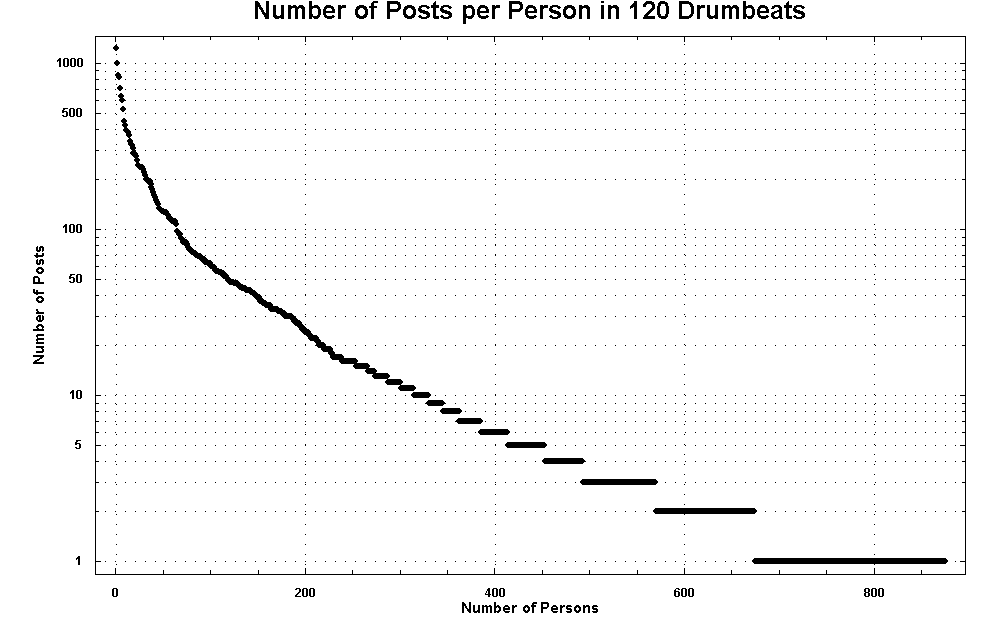
(Click for larger versions)
The number of posts and the number of posters are increasing. And I would guess, from the second graph, that the 80-20 rule applies: 80% of the posts come from 20% of the visitors (though of course, Roberto had no way of knowing how many lurkers there were).
As prices tumble, doomsayers hold fast to prophecy
OTTAWA -- It's been a tough week for peak-oil theorists -- those limits-to-growth doomsayers who argue the world's crude oil supply has begun an inexorable decline that will force prices ever higher.
Peak Oil Preparations: Money And Labor
Uh-oh, more bad news for peak-oil proponents: After a big Gulf of Mexico find that may top even Prudhoe Bay, a Saudi oilman says we're just beginning to tap the world's crude.
'Plundered Petroleum'? Someone's Stealing, But Not the U.S.
Get ready for price rationing, oil guru says
Groppe foresees new oil era of high prices, limited supply, new consumption patterns...What this means is that investors and consumers shouldn't read too much into the recent 17-per-cent drop in crude prices from their August peaks, a move he dismissed as a typical seasonal dip.
Chile to be independent of Argentine gas by 2008
Bolivia's hydrocarbons minister resigns
The minister leading Bolivia's efforts to nationalize Bolivia's oil and gas operations resigned Friday after his government backed down in a dispute with Brazil's state-run energy company, the industry's biggest investor.
China Has Sophisticated Energy Strategy for Africa
U.S. presses China on energy prices
Interior Near 2 New Pacts in Oil Leases
The Interior Department, struggling to prevent the government from losing billions of dollars in royalties for oil and gas produced in publicly owned waters, said Thursday that it was close to agreement with 2 of the 56 companies that hold lucrative drilling leases in the Gulf of Mexico.
Air Force to Try Out a New Kind of Jet Fuel
Conference touts alternatives to oil
BP under pressure to boost capital spending
[Update by Leanan on 09/16/06 at 9:20 AM EDT]
Peak Science? In the September issue of Discover, Paul Horgan argues that we are reaching the limits of knowledge.
The greatest barrier to future progress in science is its past success. Scientific discovery resembles the exploration of the Earth. The more we know about our planet, the less there is to explore. We have mapped out all the continents, oceans, mountain ranges, and rivers. Every now and then we stumble upon a new species of lemur in an obscure jungle or an exotic bacterium in a deep-sea vent, but at this point we are unlikely to discover something truly astonishing, like dinosaurs dwelling in a secluded cavern. In the same way, scientists are unlikely to discover anything surpassing the Big Bang, quantum mechanics, relativity, natural selection, or genetics.Just over a century ago, the American historian Henry Adams observed that science accelerates through a positive feedback effect: Knowledge begets more knowledge. This acceleration principle has an intriguing corollary. If science has limits, then it might be moving at maximum speed just before it hits the wall.
Contact
- Content: editors at theoildrum dot com
- Tech support: support at theoildrum dot com
License

This work is licensed under a Creative Commons Attribution-Share Alike 3.0 United States License.
We have, as a species, assembled a lot of "facts" about the universe, but there is a lot of work to do in putting them together in coherent, meaningful ways. What we call science is a collection of hypotheses that more or less hold together in The Standard Model.
The new science, however, will take more from Blake than from Newton or Einstein.
- Why did we get into the mess we're in
- and how do we get out of it?
If we can find out how to answer even just one of the two, we disprove his statement, for that would surely be the biggest discovery in the history of science.if we can't find out, which would indicate the end or limits to science, and prove him right, then all of us here at TOD, and many others, would be better off getting drunk and fornicating without limits, and starting right now.
We would be wasting our time trying any longer. And that, in turn, would be really stupid, hence the outcome of all science to date is stupidity.
NB: I'm very sceptical about the ultimate values of science and technology, a good case can be made to argue it has had more negative than positive impact on us and our world.
But still, to say "this is all there is to know" requires that you think you're really smart. Which contradicts the stupidity. Or are we all stupid except for Horgan?
http://nationalzoo.si.edu/Publications/ZooGoer/2001/2/intoxnewguineabirds.cfm
Here's a more recent find, along a highway, of all "nastier and nastier places to discover new organisms:"
http://www.620ktar.com/?nid=35&sid=223161
He dismisses the potential of the Human Genome project with a few recent examples of failure, but we have barely scratched the surface yet.
He mixes up facts, knowledge and understanding. There are clearly areas where knowledge is limited, but he manages to miss most of them.
Sorry, but this type of "analysis" is just tabloid drivel. It makes a catchy headline and sells books, no doubt.
He immediately dismisses Popper and Kuhn -- as if by doing so, he can declare them finally wrong and irrelevant -- and eliminate the obvious problem that all of science really is an elaborate paradigm that is made up of provisional hypotheses.
In his article, Horgan gets to write both the questions and the answers -- he is the author, after all. So he gets to control the frame, and therefore guarantees that he will win the argument.
Human imagination has not scratched the surface of its possibilities. We may have gone as far as we can with atoms -- for now anyway -- but perhaps it is time for art to take over from science.
The laws of physics have been pretty well laid out and well known, how many new and really important discoveries have there been in recnet history? Not many IMHO.
Sure, medical science has made big strides at figuring out how we as humans function and how to deal with fixing us when we dont function properly but how much has that added to our lifespans? The really important knowledge like anti-biotics and sanitation came long ago, same with many of the surgical techniques which save lives also happened long ago. Nowadays these techniques have just gotten better, not re-invented really.
Like almost everything else the low hanging easy fruit has already been picked, and that IS very much intuitive.
Despite all these advances man collectively still hasnt been able to learn and grasp one of the easiest lessons of all, the simple equation which describes exponential growth and what its implications are.
From what mountaintop you speak, I really don't know. Perhaps you would enlighten the rest of us?
If I remember correctly, many scientists were saying the same thing a century ago--just a few minor touches are left.
You realize, of course, that to assert this kind of knowledge you must know more than mankind does now. I am impressed.
As always,
Your humble servant and admirer
What Horgan is saying is that we have reached the point of diminishing returns. Even a critic acknowledges this:
We are seeing the same thing in the oil patch. More and more effort is going into finding less and less. What Horgan is saying is that most, if not all, really major discoveries have already been discovered. And virtually all new scientific discoveries comes from just filling in the blanks. DNA was discovered half a century ago. The human genome project is just an addition to that data bank. In fact about all the human genome project did was count the number of genes.
Horgan acknowleges that many mysteries remain to be solved. Yet these things are likely to remain unsolved. "Why is there something instead of nothing?" "What caused the big bang?" And I can think of at least a dozen more myself. And I like the Horgan's take on fusion.
Fifty years ago fusion energy was only twenty years away. Today, it is a lot further away than that.
What major new scientific discovery has happened in the last decade. Gamma Ray Burst? No, they were discovered a lot longer ago than that. In the last decade we have discovered that they come from deep space, not within our galaxy. We have simply filled in a blank.
I find it astonishing that people who argue that science still has many new and bright discoveries to reveal to us simply do not recognize the dramatic drop off in major scientific discoveries in the last two decades.
Ron Patterson
I find it astonishing to claim a "dramatic drop off in major scientific discoveries in the last two decades".
Exactly, and that makes him an obsolete preacher.
... of course the gurus will tell you not to look a the achievements, but some bizarre notion of averages or returns.
Second, both of these arguments rely on civilization-wide measures and averages of knowledge and progress.
I've never thought either one of those simplifications are appropriate. There are a great number of small, discrete, questions that mean a great deal to me. For instance:
(It's amusing that this question might lead to a contradiction. People who feel we are at the end of "science" will tell me what we'll learn about those oceans in the coming decades.)
To say that we are just filling in the blanks or that the rest of knowledge is just going to become increasingly and prohibitively expensive is to reveal a surprising lack of understanding of the theoretical underpinnings of science and the problems therein.
As for what new discoveries have occurred within the last decade....hmmm "dark energy"? Problems with the cosmological constant? Just to name a few "trivial conceptual problems." (Quotation marks for effect.) Does 1998 count as within the decade?
I am well aware of the history of science and its struggle to pull disparate facts together. I also am a daily reader of science, and I am amazed at the number of discoveries that occur almost daily, many of which challenge our conceptual framework. For example, the lowly vole has recently made it into the news with a genetic construct that possibly makes it an "evolutionary enigma." (That is a quotation.) (No expensive science here.)
Brian Appleyard, article in the Times a year ago:
http://www.timesonline.co.uk/article/0,,2099-1813695,00.html
Excerpt:
''Jonathan Huebner is an amiable, very polite and very correct physicist who works at the Pentagon's Naval Air Warfare Center in China Lake, California. He took the job in 1985, when he was 26. An older scientist told him how lucky he was. In the course of his career, he could expect to see huge scientific and technological advances. But by 1990, Huebner had begun to suspect the old man was wrong. "The number of advances wasn't increasing exponentially, I hadn't seen as many as I had expected -- not in any particular area, just generally."
Puzzled, he undertook some research of his own. He began to study the rate of significant innovations as catalogued in a standard work entitled The History of Science and Technology. After some elaborate mathematics, he came to a conclusion that raised serious questions about our continued ability to sustain progress. What he found was that the rate of innovation peaked in 1873 and has been declining ever since. In fact, our current rate of innovation -- which Huebner puts at seven important technological developments per billion people per year -- is about the same as it was in 1600. By 2024 it will have slumped to the same level as it was in the Dark Ages, the period between the end of the Roman empire and the start of the Middle Ages.
The calculations are based on innovations per person, so if we could keep growing the human population we could, in theory, keep up the absolute rate of innovation. But in practice, to do that, we'd have to swamp the world with billions more people almost at once. That being neither possible nor desirable, it seems we'll just have to accept that progress, at least on the scientific and technological front, is slowing very rapidly indeed.
Huebner offers two possible explanations: economics and the size of the human brain. Either it's just not worth pursuing certain innovations since they won't pay off -- one reason why space exploration has all but ground to a halt -- or we already know most of what we can know, and so discovering new things is becoming increasingly difficult. We have, for example, known for over 20 years how cancer works and what needs to be done to prevent or cure it. But in most cases, we still have no idea how to do it, and there is no likelihood that we will in the foreseeable future.
Huebner's insight has caused some outrage. The influential scientist Ray Kurzweil has criticised his sample of innovations as "arbitrary"; K Eric Drexler, prophet of nanotechnology, has argued that we should be measuring capabilities, not innovations. Thus we may travel faster or access more information at greater speeds without significant innovations as such.
Huebner has so far successfully responded to all these criticisms. Moreover, he is supported by the work of Ben Jones, a management professor at Northwestern University in Illinois. Jones has found that we are currently in a quandary comparable to that of the Red Queen in Through the Looking Glass: we have to run faster and faster just to stay in the same place. Basically, two centuries of economic growth in the industrialised world has been driven by scientific and technological innovation. We don't get richer unaided or simply by working harder: we get richer because smart people invent steam engines, antibiotics and the internet. What Jones has discovered is that we have to work harder and harder to sustain growth through innovation. More and more money has to be poured into research and development and we have to deploy more people in these areas just to keep up. "The result is," says Jones, "that the average individual innovator is having a smaller and smaller impact."
Like Huebner, he has two theories about why this is happening. The first is the "low-hanging fruit" theory: early innovators plucked the easiest-to-reach ideas, so later ones have to struggle to crack the harder problems. Or it may be that the massive accumulation of knowledge means that innovators have to stay in education longer to learn enough to invent something new and, as a result, less of their active life is spent innovating. "I've noticed that Nobel-prize winners are getting older," he says. "That's a sure sign it's taking longer to innovate." The other alternative is to specialise -- but that would mean innovators would simply be tweaking the latest edition of Windows rather than inventing the light bulb. The effect of their innovations would be marginal, a process of making what we already have work slightly better. This may make us think we're progressing, but it will be an illusion.
If Huebner and Jones are right, our problem goes way beyond Windows. For if innovation is the engine of economic progress -- and almost everybody agrees it is -- growth may be coming to an end. Since our entire financial order -- interest rates, pension funds, insurance, stock markets -- is predicated on growth, the social and economic consequences may be cataclysmic.
Is it really happening? Will progress grind to a halt? The long view of history gives conflicting evidence. Paul Ormerod, a London-based economist and author of the book Why Most Things Fail, is unsure. "I am in two minds about this. Biologists have abandoned the idea of progress -- we just are where we are. But humanity is so far in advance of anything that has gone before that it seems to be a qualitative leap."
I see this subject as a parallel problem to PO. The PO story is vitally important to humanity, yet only a small portion of the population recognizes it. There is other exceptional knowledge known today, but unrecognized by the vast majority of people. Some of it is caused by short-comings in our educational system, some of it because only capitalism-driven knowledge gets pursued, some of it from pure knowledge overload. The challenge is in recognizing the worthwhile science.
For my examples, I'll use the medical field. Scientific studies get funded and reported, proven and then debunked. Complexity of the system and knowledge overload is unargueably a problem today, as well as the need to run it as a business which is influenced by drug companies and medical equipment suppliers.
From my own reading, it is my humble belief that IV vitamin C could assist our immune systems in combatting viral diseases (yes, that would include bird flu), as well as accelerating recoveries dramatically post-surgically. There are a small percentage of physicians who know this and do it, but I cannot understand why all do not. It is cheap with practically no side effects. See a news item from this past week: Vitamin C Helps West Nile Victim
Another way to improve the immune system greatly is through diet. Read Food as Medicine by Dharma Singh Klalsa. I guess that's called preventive health care, something that most people just don't care about.
Globalization will, I am hopeful, be the best thing that ever happened to medicine at some future time. In our arrogance, western medicine has refuted age old techniques such as accupuncture because they could not explain it, but it is becoming mainstream.
Honoring the Medicine--The Essential Guide to Native American Healing by Ken Cohen is one of the first books which documents another type of medicine. When one starts to see the overlaps between indigenous cultures, one starts to realize that we have disregarded some important knowledge.
There are many people today who feel we are on the verge of a human consciousness evolution. This is not without scientific basis. We may underestimate its power. Maybe I'll learn something tomorrow when I hear the Dalai Lama speak in Denver on The Science of a Compassionate Life sponsored by the Mind and Life Institute
I'm looking forward to hearing this man who's hobby has been taking watches apart and putting them back together.
Parkins, here, seems to me like one of those tired old crusty guys you sometimes encounter, who has decided to plant at least one foot solipsistically and firmly in the grave. Indeed, much of the article carries the same baggage, although at the end, Horgan - strangely - still sees a point to encouraging young people to take up science.
As to fusion specifically, these days, $20 billion, or $13 billion, spread over a period of decades, is chickenfeed, not remotely comparable to spending over the same time even on something as trivial as lipstick. Large populations produce large numbers, duh. A favorite rhetorical trick, of course, is to aggregate spending over decades if one wants to say it is too much, but state the daily amount - or even the daily amount per capita - if one wants to say it is too little. Last time I looked, the U.S. was spending under $1 million a day on fusion. Or 0.3 American cents per capita. Hahahaha. It's immeasurably small chickenfeed that way too.
And, remember, as with anything else labelled "nuclear", much of that is spent not on researchers and equipment, but on: paperwork, accountants, plush-bottomed bureaucrats, fearfully hypercautious "safety officers", writers of managerial "reports", legislators angling for lucre for their own localities, and a wide variety of other such social parasites.
We're not yet running out of science, even though we've already discovered electricity and need not discover it again. We're merely suffering the side effects of "democracy" - paralysis induced in part by constant shameless political fearmongering designed to fetch the votes of the Great Shiftless Quivering Terrified Moron Mass. Somehow we just know it's all over, so we act to ensure artificially that it shall be all over. And besides, it's nuclear, sound the quivering dissonant quartile chord.
Faith-based self-limitation, I guess.
When we've faithfully self-limited ourselves into a sufficiently cramped and awful corner, I suppose we'll just have to give up on democracy and appoint a proconsul to sort out our mess. Or at least, that's the way it has always been done, over the millennia.
From the standpoint of human aspiration, it may be enough for a future scientist to find something interestint to work on. From his perspective that's enough.
Form the standpoint of energy consumers looking at a reductino in oil production ... we are converned with very specific things: the advancement of energy efficiencies and energy alternatives.
Does an average matter in either case? Not to the result, certainly. Only, perhaps, to those trying to prove something else entirely ...
Why do you find that strange? After all, many who believe in peak oil are still investing in oil and gas companies, or working for the oil industry.
I don't see it that way at all. Just as we will never actually run out of oil, we will continue to make scientific discoveries. It will just be harder and more expensive to find them, and convert them into useful form.
I don't see it as "why bother," but as a warning that we cannot depend on science to rescue is. It has in the past, but that does not mean it will continue to do so in the future.
Many Americans of the boomer generation expected to grow up to live a Jetsons-like existence. It hasn't happened. No flying cars. No colonizing other planets. No three-hour workday, or three-day workweek. Why not? IMO, the answer is declining marginal returns.
I've got a lot of academics in my family, and this is something they've noticed for years. It's becoming harder and harder to come up with a decent dissertation. So much is already known that it's difficult to come up with anything that's both original and significant. Instead, new dissertations are "islands of trivia in a sea of minutiae." Some are pushing for changing the traditional requirements for dissertations because of this.
What if you looked outside yourself, or these gurus of end-of-things, and polled scientists? Do we know how many of them have set an "end of knowledge" in the coming decades? Or what is the timeframe?
(I'd really like a position that is survey-based, rather than guru-based.)
Try exponentiality.
There were days when you actually had to "do thinking" to be a scientist. These days, all it takes is a few years of following programs set by others and getting a piece of paper that states you now think like them.
There's your diminishing returns.
I was talking about how "intuitive" Horgan's concept is to the average American, not crafting an argument to convince a TODer.
Americans, at least, are much less optimistic about technology today than they were 50 years ago. We no longer believe we'll be vacationing on Mars in a few years, or that our children will live forever thanks to the miracle of science.
Of course, this also means we are less willing to fund scientific research. Look at the reception Bush's "manned mission to Mars" plan has gotten.
I like the thought that Americans are less optimistic on tech, that would seem to be the first step in the acceptance of the downward slope.
Call it thread drift, then. It happens. ;-)
I was responding to Pedex's statement that Horgan's idea is counterintuitive, but basically sound. I think it's intuitive, and basically sound.
Given the nature of posts on this forum I really wasnt sure which way to word it, so I did what I normally would do, post what my first feeling was and let the chips fall where they may :)
Maybe in order to really get a handle on what the premise of this discussion is about it might be good to maybe form some sort of list of discoveries which have happened, and when they happened, and what kind of impacts they have had in our lives. Once that has been accomplished I think the picture becomes clearer, at least as clear as mud can be made :)
Sure it did. The argument was that automation would mean much less work for humans to do.
No, it isn't. People still bring it up, even here at TOD. Usually when we're arguing about the economy/capitalism.
Our middle-class lifestyle is supported by a lot of poor people. We tell ourselves this is okay, because one day, those poor people will be middle class or rich themselves (supported, in turn, by a lot more poor people). But what happens in the post-carbon age, when the economy can no longer grow? Will we all be poor then? Or will the poor be stuck being poor forever, still supporting the middle class, but with no chance of reaching it themselves? Someone always jumps in saying robots will do all the dirty work, so we can all make comfortable livings writing software or selling each other insurance.
Even without third world country examples, is the middle class really propping up minimum wage earners? Is a car dealer's contribution to society more valuable than that of a migrant worker picking vegetables? How about all those people who couldn't get our of New Orleans last year? Most of the ones I saw on TV had jobs. Were we propping them up financially?
The best way to visualize how rich and healthy the world actually is, is to go to the Gapminder website and view the flash presentation about World Development Trends 2005. This group takes UN data for all regions of the world and then puts it into Flash. It is an amazing way to see the trends, and the big trend is that capitalism works.
I don't think anyone claimed it didn't work. I would claim that capitalism works to some extent, but that it needs to be regulated. Corporations are highly effective, but their performance is evaluated on making a profit and nothing else. These are not entities you want controlling every aspect of society. I don't understand the mentality that claims that in a capitalist system, companies can't be bound by any rules.
Thanks for posting that great excerpt from Wealth and Democracy.
As I see it, NAFTA, EU, WTO and the Fed Res are all representative of a continuing (and deliberate) centralization of power that undermines representative govt and opportunities for communities to develop small, sustainable local economies.
This centralization of financial and political power is increasingly obvious as we witness endless mergers giving way to monopolies and oligopolies. Economist John Ralston Saul pointed out in his book, The Collapse of Globalism: And the Reinvention of the World, that the mindset of executives in the age of corporatism is an emphasis not on productivity and long term planning, but instead on short term profit taking and managing crises as they emerge (instead of preventing them).
You can see this mentality in our govt leadership. They tend to not spend political capital to work on long-term problems or general prevention, but instead focus on managing crises as they emerge (and not too well at that).
Regulation is always imperfect. Perhaps the philosophy is wrong in requiring regulation?
Looked at one way: capitalism is a guaranteed way of destroying this planet's ecology / climate.
Oh, and for some reason, the middle class doesn't seem to be particularly exercised by all this. In fact, in the interest of having someone else live life for them, they seem to be eager to shovel unlimited money at wealthy elite sports and entertainment "stars".
Where did your money come from?
Have you considered that your remarkably good prosperity (i.e. relative to the citizens of third world countries) has very little relation to your productivity and is, instead, dependent on a fortunate convergence of variables that favor industrialized countries and, in particular, the United States?
The strong buying power of the dollar is the outcome of:
(1) the political, economic, and military hegemony of the U.S. and its partners;
(2) a worldwide labor surplus that drives down wages in third world countries to levels unimaginable in the U.S.;
(3) the dollar's role as the main currency for oil sales;
(4) the willingness of the foreign countries to finance our exploding national debt (but for how much longer?)
(5) the historical (but now evaporating) role the U.S. had as a leading world manufacturer of unique and indispensible products
Because so many of the aforesaid advantages will begin to evaporate as oil depletion accelerates you may find your middle class buying power rapidly shrinking.
It's is an unseen wonder of modern life in the US that the US has managed to finance a enormous current account deficit in the $800 to $900 billion range for two years. Albeit the Fed had to raise interest rates many time to help facilitate this. (Don't believe what the Fed says about inflation. The second there is a hint of economic trouble, electronic money creation will return to full speed).
And yes, apparently many low income wage earners are spending well beyond their means. But that does not mean they are wealthy, just the US credit system allows the accumulation of great amounts of debt. This is seen by the negative savings rate. If those that are actually saving were excluded from government figures, those going into debt would be seen to be spending about 5 to 10% more per year than they earn per year - which is amazing.
There's a billion people surviving on a dollar a day now, and another billion between 1 and 2 dollars a day. They are part of the market economy too. If we disappear, the global economy collapses, and the corporations that own all the best land in Latin America (I hear they're buying up all the water too) would collapse. But we each consume far more resources than they do per person, and we in fact have to import most of those resources from their countries. So the post-us economy may or may not be able to reconstruct subsistence agriculture for all the poor - it probably can't without fertilizer. There are advocates of organic farming who imply that their methods can approach Green Revolution yields. I don't know. But I guess the people left unemployed would return to their old work as farmers, or they would return to their families in the countryside and learn from them how to be farmers.
If we, on the other hand, had to live with no imports, I think we'd all go insane. Besides, we've developed a bubble economy that assumes perpetual growth and an infinite supply of cheap foreign labor. The system collapsed in 1929 on much more trivial misunderstandings about growth. Food was being grown in vast amounts, and oil was dirt cheap, yet suddenly the economic flows that created income lurched to a stop. The poor now, in the form of illegal Mexicans, do all the physical labor in Houston that makes it run and grow. All of it. If they vanished no citizen would volunteer to do what they do at the illegal wages they are paid. The poor overseas make everything for far less money than Americans once were paid to make it. We can't rebuild the factories here because we've replaced them with subdivisions and we still don't have those Mexicans to do the construction.
Worst of all, how long would it take for us to learn how to be factory workers again? This website often carries warnings from oil field veterans that there's not enough petroleum engineers in America. How would we actually organize the process of converting salesmen, real estate agents, insurance agents, medical billing clerks, therapists, pet therapists, telemarketers, prison guards, lawyers and whores into manual laborers in fields and factories? Unlike the challenge in the prior scenario, we would all sit on our fat asses waiting around for someone else to do the dirty work because we're physically and mentally unsuited for it now.
Respected conservative Paul Volcker, the man who did Reagan's dirty work in eliminating inflation in the early 1980s, has recently said that "America cannot continue borrowing from the world's poor." Why, what is he talking about? Seems that in order for America to run a current accounts inbalance of up to $800 billion a year, surplus savings from foreign countries must be made available for loans and investments. The big savings is now coming from India and China. But it's not like the poor there have a choice in the matter. Their countries' finance ministers keep buying US Treasury bills to prevent the dollar from collapsing - which market theory says should be the consequence of Americans living beyond their means. So poor people put money in a bank in Shanghai assuming they will be repaid with interest, and their financial brain trust instead throws it at a country whose currency has been declining in value since 1971. The interest on the T-bills is wiped out by that decline, unless the lenders lock the value of their own currency to the dollar, as China has. But that causes Congress to scream that China has an unfair trade advantage and threaten sanctions. To me it looks a lot like the rest of the world is paying us a tax, or tribute, equal to the current accounts deficit multiplied by the average % decline in the value of the dollar in order to prop us up. We better hope that these suckers don't figure out that they're better off trading with each other instead of this fast-growing absurdity - which would obtain them the benefits of your almighty capitalism and your altruistic "support" with you written entirely out of their equation and still having to pay off your share of what we all owe them.
Just a guess...
But I guess in terms of my objection to Keithster's belief that he's the one who can pull an Atlas Shrugged on the world's poor instead of the poor doing it to him (Allah Shrugged?), then any replacement plans for labor concentration camps in the US will be for them to be filled by America's own minorities. If some of the post-collapse scenarios discussed at this site are valid, then the camps would need to hold tens of millions. How many death camp inmates would it take to keep Keithster from bankruptcy? Figure that we only enslave the ones old enough to do useful work, so between age 12 and 60. Maybe 60% of the current Hispanic and Black populations of 80 million combined. So 48 million. But in fact most of the really necessary physical labor in America is already done by those among that 48 million, so they have to be kept doing what they're doing.
While we struggled to implement this, all the paper value in the US would be collapsing, so I guess Keithster's pension, 401K, and Social Security would be vapor. The corporations that now employ the poor for non-essential labor would lose them to the camps, so they'd go broke and take the rest of the Dow with them. Since the companies that provide essential products and services would be alloted the camp labor, like in Nazi Germany, they'd make out like Halliburton. But we can't all work for Halliburton, can we?
More likely, the camps will be used to hold a few hundred thousand opponents of Bush, while the private prison industry will be turned loose on a final solution to minorities. Maybe Keithster and I will end up in guard uniforms pointing assault rifles at a sweatshop factory floor in East L.A., and he can argue that his hard work supports ten or twelve of those children chained to their drill presses in front of him. And the best part is, he will never, ever admit that anything has gone wrong with the system.
I get stuff at yard sales that someone bought at the shop in Italy and was never bold enough to wear. Or was too fat to wear. Only ever pay full or something related to full for Sidi bicycle shoes, which last forever.
Only top quality goods can afford US wages so what is left is good, and expensive.
They do get some styles from Italy, but I do not own any of those.
Allen Edmonds is doing Italian too. Theirs are pretty darn nice, if not really as good as American. Again, they get discounted.
I have a friend in the shoe business. Women's only, so the other half benefits, not me. He gets product made to his specs in California. Good price, exceptional quality, quick delivery. The determining factor is that the shoemakers are shoe/foot fetichists. Dedicated to their work. With a little motivation, no reason at all not to produce in America
My local cobbler at Garden District Shoes on Magazine Street is exceptional for repairs. I think he does mail order, if anyone wants quality repairs and to help our economy in New Orleans.
Contact me by eMail.
Artcraft still makes eyeglass frames in the US AFAIK. One of the essentials of life where we need to preserve a domestic source.
http://www.artcraftoptical.com/
As I stated, a critical manufacturer to preserve.
In Africa, I'm sure.
As for those Iraqis, they are surely rejoicing every day you drive somewhere, and buy something at a mall, you big hearted lug.
And all those semi-slave Chinese workers - they are just thrilled to be paid a few bucks a day, since without you buying all that plastic crap, they would be stuck in some stinking shack, laboring under a Communist regime. Oh wait - that is how they live today. I bet they are really thankful for your contribution to their well being.
What do you actually do to support them, apart from using yourself what they now can't?
American foreign policy since WWII has at it's root the intent of maintaining that disparity. The idea that America encourages countries to "develop" to our lifestyle - i.e. standard of energy consumption - is pablum to ease the conscience of the masses. "Developing countries" are in practive "Never-to-be developed countries beyond exports to developed countries."
Energy is the basis of economic value. As energy use and quality reverts to pre-carbon model, so will the economy, and the middle-class will disappear.
I adore this autopsy of our economic sysytem. Sorry it's a bit long, I don't know where to cut it, it's so good. This side of his work deserves much more attention than it has gotten.
Moreover, automation brought us one of the reasons "growth" is "required", as beautifully explained in an article linked here not long ago. More automation/mechanization means either unemployment or increased production and consumption, i.e., growth. The middle way, each worker working less (rather than some "fully" employed and some unemployed), is rejected in the US, for cultural, not technical, reasons.
Rat
One way to overturn a hypothesis, according to the scientific method, is to demonstrate just one exception. "So much" is known?
Great Unanswered questions of science:
(Some copied from and re-ordered from here (4th post down)
- What is Gravity? (Wave energy, particle, both?) Are there anti-gravitron particles and can we build Jetson flying cars using anti-gravitron particles?
- How big is the Universe? Do different Laws of Nature apply in different parts? Are there other dimensions?
- What is dark matter and dark energy ?
- Does sapient life exist elsewhere in the detectable universe?
- Fully characterize the human genome, describing the function every gene, every protein, and the chemical mechanism underlying each function.
- Can we build an artifical conciousness ?
- Can changes be made in the cell and genome to prevent or reverse aging (i.e chromosome repair, etc)? To grow, regenerate new limbs, regrow teeth? Synthesize working, useful artifical organs (hearts, kidneys, liver, eyes, etc).
- Discovery of safe drugs which significantly boost human intelligence and memory capabilities.
- Can we build a an artificial fully-functioning higher lifeform (e.g. a primate) from scratch, knowing the genetic code?
- Synthesize a economically feasable material capable of room-temperature superconductivity.
- Will mankind survive the next 100 years?
AND ....12. How much easily recoverable crude oil is left underground?
More here (125 questions
and here
and here (limits of google, ha ha)
and here (what is the right question?)
and here and here and here and here and ...
(BTW, Horgan covers this in his article. Lots of unanswered questions remain, but the "big" questions left are likely to remain unanswered, at least by science. Kinda like the hydrocarbons in oil shale are likely to remain in the ground...)
There is also the possibility that we will return to some of those tough problems in the future, with better tools. Look at how computation, and then computer visualization, changed things.
... insert a story about a field of problem-solving corn ;-)
Or maybe an answer is simply that American exceptionalism didn't ask for more leisure, it wanted bigger houses, and, manifestly, it got them.
Many of the French seem to be content with La Loi des Trente-Cinq (though some loopholes have been added lately.) Many, maybe most, Americans would consider such a 35-hour (well, more like 38 now) soft ceiling on the work week to be a terrible imposition on their right to hog overtime and garner as much money as they can.
In addition, few people who I know would be very content to live in France (or The Netherlands or Denmark.) Indeed, life even in New York City was described to me as an experience the person emphatically did not want to repeat. It was "too physical" in that, as in Europe, it was logistically difficult to use a car. Europe would have been even worse, since, there, it is also hideously expensive in terms of after-tax income to use a car.
Of course, Popular Science got way, way ahead of itself on that one. But IMO, small-minded cheapskatedness was the principal reason the US gave up on any sort of significant space program. That's a very long term proposition at best, which kind of rules it out for America regardless of its merits. No one should be under any illusions about big immediate returns - so it's way too soon to evaluate an allegation of "declining marginal returns". The current budget for the space program is an insignificant fraction (in constant dollars) of what it was at its peak, even though US GDP is far larger than it was. Again, people wanted bigger houses to the utter exclusion of all else, and that's what they got.
So glad I don't have your friends.
life even in New York City was described to me...
Careful, you wouldn't want to get closer than that. And we probably wouldn't want you to.
people wanted bigger houses....and that's what they got..
Well, some people did. The sociopaths.
"...how many new and really important discoveries have there been in recnet history?" We sequenced the human genome only 6 years ago. We just sequenced the first tree genome. We still have yet to understand the human mind, higher intelligence, the cause of multiple sclerosis, if life exists somewhere else in the universe, the beginning of the big bang and on and on.
And there are a huge number of questions we can't ask yet, because we don't even know what we don't know.
Sir Arthur Eddington
I guess it depends on whether or not God plays dice.
Hawking: God may play dice.
WorldNetDaily ^ | May 23, 2002 | By Mike Martin
Despite an aging Albert Einstein's famous comment, "God does not play dice with the universe," renowned cosmologist Stephen Hawking and his academic collaborator Thomas Hertog now suggest that God did roll the dice at least once - at the moment of creation
http://www.freerepublic.com/focus/news/688115/posts
If you want to understand the world we live in now, get ahold of (if you can) a story by Stanislaw Lem called "The Futurological Congress". His stuff is hard to get because he was Polish and thus a commie bastard, but it's worth it.
The rulers of a city decreed that the people would henceforth be sub-aquatic :that people didn't need air. They gradually raised the water level, so people could get used to it, then raised it over head height.
Of course, people couldn't really survive without breathing, so everyone had to keep coming up for air every few minutes. Everyone, necessarily, pretended not to notice as everyone, necessarily, got around the system.
Discovery just for the sake of doing so and pursuing knowledge just for knowledges sake is one issue, what's important is does it help us ? I still believe that the rate at which science makes new discoveries which impact our lives in meaningful ways is indeed decreasing.
One of the difficulties is quantifying the value or a particular discovery or set thereof. How do you put a value on an understanding of dark matter? Perhaps it will lead to something useful for society, and perhaps not. But the costs of doing experiments in that and all areas of science is tremendous.
Another problem is that scientific understanding has developed at a much faster rate than society can deal with it. When people don't like the answers, we get Intelligent Design, abiotic oil, CO2--"we call it life". And some of the technological developments based on new knowledge give rise to new headaches. There might be more benefit to improving the overall public's grasp of science than in pushing the frontier.
I agree but that is because we desire instant gratification. Take the human genome as an example, it was originally intended to take decades to finish, but then J. Craig Ventner at Celera said he wanted to do it in a few years and the race was on. The public human genome effort went back to their benefactors (US Congress, Wellcome Trust and others) to get more money. Society, in this case represented by Congress and the Trust, should have let the private sector do it and saved the money for other things.
I should add that this is an imperfect example because the return on investment for the human genome project is so positive that society wins in either scenario.
OTOH, the idea that voters are unwilling to sustain the cost of new knowledge, or of anything else that costs money, however little, is quite plausible. Look at the lousy quality of a lot of things these days. But I said upthread, that's not about a shortage of knowable things, it's a defect of democracy, and it will be painfully cured one way or another in good time.
Much depends on where you put the boundary between unwilling and unable. The former implies conciously choosing not to divert resources to learn more, whereas by the latter I mean that the knowledge gathering system is flawed. Substantially increasing reasearch budgets, while a good idea, is not going to yield a proportional increase in useful understanding.
What about exponential growth in computer power, genetics, nanotechnology, and understanding the human brain?
There you go. Science will be here forever. That's a question for theologians and philosophers and your own meditations, not science.
You are here to ask questions.
If you were not here, you would not be asking questions.
(p.s., your-so called "heart and soul" are mostly upstairs with the rest of your brain. Yes, you've got a couple of endocrine glands below, but most of it is upstairs in the attic. When they talk about the hearts and minds of the people, they are really talking about the irrational and rational parts of the human brain.)
I was feeling a little introspective this morning. 6 am in the garden 20 degrees. ouch. and who says Cali. is easy growing
keep up all the good work
I miss Dr. Carl. As a lifelong amateur astronomer, he was one of my personal heroes. I wonder if he would have spoken out about PO, I'll bet he would. He'd certainly be very vocal about Global Warming.
Regarding Peak Science, Stephen Hawking thinks we are approaching a full understanding of Physics. And as far as Physics goes, I doubt any living human has a greater understanding of the field than the great Mr. Hawking.
And of course whenever you create your own complexity the upward limits are harder to figure. Computer sceince was easy when there was one computer in the world, and one computer language (machine language). Since then we've had an n-dimensional explosion, one that simply would not have worked if the same number of brains had tried to manage it. We needed an ecosystem, with thousands of inhapbitants, with specialization, to get to the crazy state we have today.
(I've probably forgotten ten computer languages, but I keep moving on and learning new ones.)
Let us say that we froze all existing scientific knowledge at this very instant. I submit that even if we did that, we would still be making technological advances for several hundred years into the future (assuming we make it that far). Why? Because technology is essentially the art of applying scientific principles to create useful things and to provide the means for performing desireable functions.
One example comes to mind: the Xerox machine. Chester Carlson invented xerography all on his own in 1938, using a number of scientific findings that were already in existence, and which in fact had been discovered long before 1938. However, it wasn't until 1960 that the first commercial office copier hit the market. In between 1938 and 1960 was an incredible amount of development work and just plain struggle, as obstacle after obstacle had to be surmounted on the road from invention to marketable product.
Another important distinction is that science is largely divorced from economic considerations, whereas technology is inextricably intertwined with considerations of cost and cost-benefit.
http://en.wikipedia.org/wiki/Nicolas_L%C3%A9onard_Sadi_Carnot
Don't you remember your own work in the same field? http://en.wikipedia.org/wiki/James_Prescott_Joule And may I say how well you are looking for your age?
Another less direct example is the telescope - marketed by Hans Lippershey as an aid to marine navigation, until Galileo got his hands on one. And the first useable precision timepiece, H2 http://en.wikipedia.org/wiki/John_Harrison, was an engineering solution to the highly strategic longitude problem.
I could go on - the obvious connection between materia medica on the one hand, and biology and chemistry on the other, for example. Or what about the vast advances in our understanding of the nature of matter over the past century? A lot of that came from our efforts to perfect our technological ability to burn remote enemy cities at no risk to our own officer class (getting a bit political there).
You make some very good points!
In the same vein, I don't think it's all that much of a stretch to say that the steam engine has done more for the science of thermodynamics than the science of thermodynamics has done for the steam engine. In other words, some of the early developments in thermodynamics were a direct result of attempts to understand and improve the efficiency of steam engines, whereas steam engines were not (orginally) designed with any formal knowledge of thermo.
Harrison's development of the marine chronometer is a perfect example of a non-scientist being the one to come up with the solution to a very complex scientific problem. (Harrison is a particularly interesting example because he was a barely educated, self-taught mechanical genius who was looked down upon by those academics who were struggling to solve the longitude problem through complex and highly impractical astronomical methods.)
You are quite right to point out that technology doesn't always flow from discoveries in pure science; sometimes it goes in the other direction too.
I think it would have been wonderful to be an independently wealthy gentleman scientist in the late 1700s or early 1800s, when most fields of scientific inquiry were still fresh and ripe for discovery.
http://www.jamstec.go.jp/chikyu/eng/CHIKYU/special.html
The day rate on a drillship of that class is probably about $350k by now.
Nothing personal Joule, but that is a ridiculous assertion. Mother Nature does not divide herself into insular parts. It is we brain-limited humans who do. And that is why we can't step back and see the bigger pictures (or grok the ultimate groks). :-)
Maybe Mother Nature (speaking of ridiculous concepts) might not divide herself into insular parts, but we humans operate by making distinctions between things so that they can be analyzed and discussed using words. That is one of the things that separates us from slugs (or at least most of us).
What is so ridiculous about calling research in high-energy physics 'science', while calling the refinement of the automobile 'technology'?
I think the distinction has by now become deeply embedded in the English language as it is normally used, and I have no problem with making such a distinction for the purposes of certain discussion.
English teachers and Economists don't ruffle their narrow heads worrying about Geology.
To each according to his own speciality, and to all according to their cummulative ignorance --Karl Marx (what he should have said)
Rat
Peak Oil resolution in U.S. House of Representatives
--------------------------------------------------------------------------------
21 November 2005 Politics
In Brief: Expressing the sense of the House of Representatives that the United States, in collaboration with other international allies, should establish an energy project with the magnitude, creativity, and sense of urgency that was incorporated in the `Man on the Moon' project to address the inevitable challenges of `Peak Oil'.
A peak oil bill has been filed in the House of Representatives with the support of the newly formed Peak Oil Caucus, founded by Rep. Roscoe Bartlett (Rep, MD) and a number of co-sponsors. The members of the caucus are James McGovern, Vern Ehlers, Tom Udall, Mark Udall, Raul Grijalva, Wayne Gilchrest, Jim Moran, Dennis Moore.
Co-sponsors are Tom Udall, Virgil Goode, Raul Grijalva, Walter Jones, Tom Tancredo, Phil Gingrey, Randy Kuhl, Steve Israel, G.K. Butterfield, Mark Udall, Chris Van Hollen, Wayne Gilchrest, Al Wynn, John McHugh, Jim Moran, and Dennis Moore.
Expressing the sense of the House of Representatives that the United States, in collaboration with other international allies, should establish an energy project with the magnitude, creativity, and sense of urgency that was incorporated in the `Man on the Moon' project to address the inevitable challenges of `Peak Oil'.
IN THE HOUSE OF REPRESENTATIVES
October 24, 2005
Mr. BARTLETT of Maryland (for himself, Mr. UDALL of New Mexico, Mr. GOODE, Mr. GRIJALVA, Mr. JONES of North Carolina, Mr. TANCREDO, Mr. GINGREY, Mr. KUHL of New York, Mr. ISRAEL, Mr. BUTTERFIELD, Mr. UDALL of Colorado, Mr. VAN HOLLEN, Mr. GILCHREST, and Mr. WYNN) submitted the following resolution; which was referred to the Committee on Energy and Commerce
______________
RESOLUTION
Expressing the sense of the House of Representatives that the United States, in collaboration with other international allies, should establish an energy project with the magnitude, creativity, and sense of urgency that was incorporated in the `Man on the Moon' project to address the inevitable challenges of `Peak Oil'.
Whereas the United States has only 2 percent of the world's oil reserves; Whereas the United States produces 8 percent of the world's oil and consumes 25 percent of the world's oil, of which nearly 60 percent is imported from foreign countries;
Whereas developing countries around the world are increasing their demand for oil consumption at rapid rates; for example, the average consumption increase, by percentage, from 2003 to 2004 for the countries of Belarus, Kuwait, China, and Singapore was 15.9 percent;
Whereas the United States consumed more than 937,000,000 tonnes of oil in 2004, and that figure could rise in 2005 given previous projection trends;
Whereas, as fossil energy resources become depleted, new, highly efficient technologies will be required in order to sustainably tap replenishable resources;
Whereas the Shell Oil scientist M. King Hubbert accurately predicted that United States domestic production would peak in 1970, and a growing number of petroleum experts believe that the peak in the world's oil production (Peak Oil) is likely to occur in the next decade while demand continues to rise;
Whereas North American natural gas production has also peaked; Whereas the United States is now the world's largest importer of both petroleum and natural gas;
Whereas the population of the United States is increasing by nearly 30,000,000 persons every decade;
Whereas the energy density in one barrel of oil is the equivalent of eight people working full time for one year;
Whereas affordable supplies of petroleum and natural gas are critical to national security and energy prosperity; and Whereas the United States has approximately 250 years of coal at current consumption rates, but if that consumption rate is increased by 2 percent per year, coal reserves are reduced to 75 years:
Now, therefore, be it Resolved, That it is the sense of the House of Representatives that--
(1) in order to keep energy costs affordable, curb our environmental impact, and safeguard economic prosperity, including our trade deficit, the United States must move rapidly to increase the productivity with which it uses fossil fuel, and to accelerate the transition to renewable fuels and a sustainable, clean energy economy; and
(2) the United States, in collaboration with other international allies, should establish an energy project with the magnitude, creativity, and sense of urgency of the `Man on the Moon' project to develop a comprehensive plan to address the challenges presented by Peak Oil.
http://www.globalpublicmedia.com/articles/572
He wrote, in part:
Proving Roger's point, this quote from the Canada Free Press article Leanan linked to above, "Peak Oil" Or Lots More Oil?:
This is another perfect example of what I have previously described as 'The Deferred Term Paper Syndrome'.
Your professor unexpectedly announces a one-week extension of your term paper's due date. You are relieved and ecstatic because you haven't even started it yet. So what do you do? You go out and party to celebrate and then procede to goof off for another week, at the end of which you are in exactly the same state of panic that you were in a week ago.
We're doing the exact same thing with oil.
Neuroscientists are rapidly answering questions about the link between brain and behaviour - I'd like to write several stories on this when i get back to the states. Here is a graph from Harvard neuroscientist David Laibson who has tested peoples reactions to various time delayed decisions and has shown that the limbic (emotional) area of the brain dominates the 'thinking' area of the brain when it comes to short term decisions.
Very interesting .... and an interesting topic indeed! I look forward to hearing more from you on this subject.
I know squat about neurobiology, etc., but I am at least directly familiar with the reptilian brain. For about eight years we had an Iquana named Edgar, who grew to be over four feet long. We used to feed him a special salad once a day, made up of various veggies and fruits.
On those occassions where we'd go away for the weekend we'd prepared Edgar's normal daily salad bowl, plus an extra salad bowl to tide him over for the extra day. Well, evidently Edgar operated on a very high discount rate. For when we'd put the two salad bowls in his custom-built Iquana-rium, he gobble down the first one and then immediately start on the second one. He'd then be so stuffed that he couldn't even climb back up on his branch to sun himself. Naturally, by the time we got home, he'd be literally climbing the walls in search of something to eat.
It's been my observation that some people operate on a more reptilian level than others. I once had an acquaintance who was a firm believer in goal setting. Short-term goal: get drunk tonight. Long-term goal: get drunk tomorrow night. That was about it.
Our reptilian and limbic parts of the brain, coupled with my Deferred Term Paper Syndrome, do not bode well for the prospect of our embarking on a long-term solution to our energy mess. It's gonna be pulling an all-nighter at the last possible moment. It probably won't work.
By the way - if you feed a goldfish 1 weeks full of food if you go on vacation all at once, it will literally explode and die it would eat all of it.
Here is some more damn interesting stuff.
Craig Hatfield's pdf article at Hubbert Mines
According to a Fox Assman, we get seriously shortchanged by the Arabs, somehow especially Zawahari and Bin Laden, who try to steal their oil from us. Or is it our oil from themselves? Our money? Printing press?
Not that it matters much, we don't really need the stuff all that bad.
And even then, what's the fuss?
it's just that the world would be a much better place without Arabs, is all
http://homepage.mac.com/leperous/PhotoAlbum1.html
But if you click on it, be prepared to go on a LiSSt belonging to the MiniSStry of Home land SSecurity.
(or is that Heimat Sicherheit Deinst?)
Joe Bageant is pretty good too:
http://www.joebageant.com/
AlphaMaleProfitOfDoom:
If you are out there, it is nice to see you discovered Bageant (finally...)
BTW: There is about 1,8 billion Muslims out there that think Americans are the parasites. Add a whole load of South Americans to the list as well.
Note the uncritical use of the word, improved.
So who's the champion poster? Almost 2000 posts, it looks like.
1223 odograph
995 tate423
846 AlanfromBigEasy
821 Leanan
711 westexas
632 Don Sailorman
599 Oil CEO
525 step back
445 totoneila
425 Robert Rapier
Who's the number #1 in terms of most words on average per post? Most pictures (images) on average per post? Most replies on average per post?
Time to get a head start on category #2:


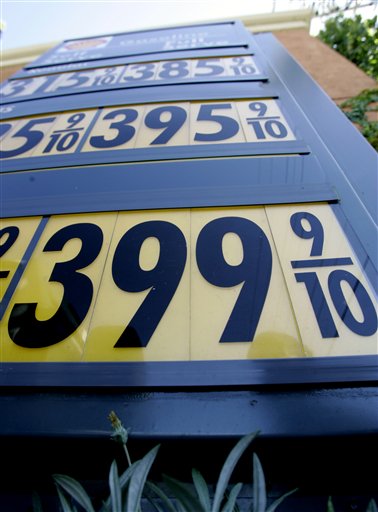


Interesting link that suggests that Mexico's Calderon won't be able to vastly increase Pemex's E & P ratio, but that funds will continue to be siphoned off by the Govt, and outside investment will be politically hampered. In short, the rapid decline of Cantarell might mean a rapid decline of Mexico.
Note to Westexas & Khebab: This link [reproduced below] projects Mexican oil production to increase, but gives no details--Propaganda or Truth?
----------------------------------------
México, City, september 14.- The head of Mexicos Energy Secretariat, Fernando Canales, said Thursday Mexico plans to return its production of crude oil to levels of 3.3 million barrels a day in the second quarter of next year, from the current 3.2 million daily.
The government official said Mexico's production levels dipped a bit because of a decline of output in the country's massive Cantarell field.
Canales said the new projects calls for production to return to recent average levels.
"We hope to recover the output in the second quarter of next year the level we had in 2005, which was 3.3 million barrels per day." he said. (Con información de Finsat)
-----------------------------------------
Bob Shaw in Phx,Az Are Humans Smarter than Yeast?
To ask the question is to know the answer.
BTW, despite discussions of lower oil consumption, Chinese oil imports are up 15.3% year to date versus same time period last year.
Food grains seem to be a commodity that will not experience falling prices. Here is a gloomy outlook from the International Grain Council:
-----------------------
And other industry bodies have been making similarly gloomy predictions, last month the Food and Agriculture Organisation (FAO) predicted that world wheat could decline by as much a 10m tonnes throughout the year.
In addition, the US Department of Agriculture cut its global wheat forecast to around 116m tonnes last week - its lowest level in 24 years.
------------------------
Malthusian economics has been around for over two hundred years, but I guess we are going to have to learn his lesson the hard way.
Bob Shaw in Phx,Az Are Humans Smarter than Yeast?
Yeah, be prepared for much more of this. It's out of people's line of vision, but that just means it'll hit harder when it does. Lester Brown of Plan 2.0 fame has been ringing that bell all summer. I like his reasoning too that Katrina gave us the first mass climate change refugee exodus.
There's one sentence in the article that's truly weird:
with the amount of chemicals Eastern EU is used to, you'd have to inject a question mark somewhere there
See also my post above:Monsanto, ethanol subsidies dictate US farmers' shift from wheat to corn, which the New York Times ran as "Crop Rotation in the Grain Belt".
What's in a name?
Thxs for responding. I always like to check on Zimbabwe news, as I believe it shows our likely response to Peakoil & Global Warming. Recall that not long ago this country was the breadkasket of Africa. Now they have the world's highest inflation rate and tremendous food shortages resulting in widespread malnutrion, governmental torturing of citizens, and worst of all: raw food is now a controlled substance that can only be sold to the military.
Bob Shaw in Phx,Az Are Humans Smarter than Yeast?
You may have more expertise in this than me because I just google away for answers. But consider these links:
AGWEB basically says we are in a short-term early harvest price dip, but long-term supplies will tighten. I seem to recall that El Nino can screw up harvest yields too in many areas.
Bloomberg: "China's Inflation Accelerates to 1.3% on Food Prices"
CEE-FoodIndustry.com "While grain prices usually experience an annual lull during this period with newly harvested crops replenishing supplies. Adverse weather conditions over the last year have dampened grain yields, with prices remaining on an upward trend as a result."
Nate, if you are correct about declining grain prices--that is really bad news! That means that less and less people are able to afford food, and prices therefore decline. The processing and distribution energy cost is higher than the cost of the raw foodstuff. That is why I say we need to relocalize to permaculture very fast with 60-75% of us doing field labor.
IF we don't relocalize: that is like the example of a cheetah burning more calories to catch a gazelle than he gets in return. We need to vastly reduce the dependency of 10 oz. of oil for every ounce of food consumed; the 1500 mile Caesar salad & the 10,000 mile banana, etc.
Bob Shaw in Phx,Az Are Humans Smarter than Yeast?
I decided to expand my example further. I can walk 50 feet from where I am sitting to pick some pink grapefruit off my tree [as soon as they ripen], or I can go to my grocer to buy an equivalent amount imported from Florida. Assume the total embedded non-nutritive energy of the florida import = 1 gallon/crude or 25,000 man-hours per barrel/42 gallons per barrel = 595 man-hours of 'energy-slave' labor.
Assuming FL & AZ energy costs are equal to grow pink grapefruit, I think it is safe to assume 90% of this 595 energy-slave hours goes to processing and distribution, or 535 hours of work. Let's call it 500.
Now I can work to buy 500 energy-slave hours and the Florida juice, but it is much more cost effective, energy efficient [and fun!], for me just to walk into my backyard and pick & peel the fruit myself because $65/barrel/25,000 slave-hours times 500 = $1.30 saved with no pollution or other hidden costs associated with the picking, inspection, packing, trucking, and refrigerated display costs of the florida import. If all the hidden ecosystem externalities were accounted for maybe I save $3-5 dollars eating local grapefruit every time vs the import. No wonder so many people are starving--they can't earn enough money to buy imported food, and local amounts are insufficient due to population overshoot. Giving them food only further depresses the local farming economy.
In short, eating local is like the cheetah chasing gazelles with 6-inch legs--very little Cheetah energy expended. Until 'energy-slave' costs equals human physical labor costs; where 25,000 man-hours of labor will be required to buy one barrel of oil--I see no solution to starvation at our vastly elevated current population levels.
Bob Shaw in Phx,Az Are Humans Smarter than Yeast?
I wonder if Pope Benedict's recent speech will translate into a 'fear premium' on energy prices next Monday. The protests and burning of churches must worry some traders. Imagine if Bush and other politicians started combining the words military and crusade in their future speeches--wouldn't that gradually add a $10/barrel premium to keep a floor on oil prices? I would think the IOCs & NOCs would be in favor of this to aid conservation, yet help promote 'infinite growth' to aid exploration for the last oilfields. IMO, this seems like a logical thing to do to promote Kissinger's recent speech on the New World Order and my feared "3 Days of the Condor" scenario.
Bob Shaw in Phx,Az Are Humans Smarter than Yeast?
Isn't it becoming obvious that if they are allowed to spout such utter trash and upheld by the MSM and apologized to profusely and this just further fuels the future swill?
When are we going to ever learn that one does not appease such stupidity?
Why do they(MSM et.al.) beat so harshly then upon Christians for daring even far less offensive(such as public prayer,creechs,etc) activity? No one gives a rat's ass in this country or the world about constantly offending the Christian but bends into a pretzel to do the Politically Correct apologies to the muslim world. At the same time we are locked into mortal combat with their policies of terrorism.
Why?
Christianity is not a violent religion. I submit that upon readings of the Quran that Islam has violence at its core.
(No references given,,read it yourself).
95% of Moslems are convinced that Islam is a peaceful religion, and they are heartily sick of it being mis-characterised by extremists on both sides. Ironically, it's precisely the Moslem extremists which profit from the outcry, and whip up a posse to burn a church.
But at the end of the day, who gives a f**k what the pope thinks anyway? The problem is, people have higher expectations of a pope these days. Ratzinger isn't a tenth of the statesman his predecessor was. JP2 was a tough act to follow.
The Pope even prefaced his remarks by commenting that this was a "robust view" (from memory).
One probably should quote Hitler when discussing Jewish persecution throughout history. Simply quoting him does NOT endorse him.
The Pope was discussing views towards jihad and that quote was appropriate in that context.
The Globe and Mail is Canada's largest newspaper. It doesn't like peak oil, and never paid attention. But when all the big US papers do it, whaddaya do?
So how does the new energy beat writer see the situation? He gives ample space to Deffeyes, though it's not clear if he in fact talked to him. Never mind, though, Deffeyes is long forgotten when the article closes with:
Translation: Peak Oil exists, but it is totally irrelevant today. You let them speak, and then debunk them. Not hard on a subject that readers know nothing about. How do you lead sheep?
Mr. Mc Carthy is a veteran business writer, which, transplated, means that he knows how to represent the view of business. And he's based in Ottawa, the seat of government,. not Toronto, like the paper, no coincidence.
Canada is on its way to become an energy empire, or so they think, and this move at the largest papaer signals that business means business. They'll deal with Peak Oil their way. Game on. And that is how this will be approached by large media. And that is why I thought the Bloomberg article stank. They're paying attention because they have a mission. And you're not the one paying their salaries.
Imagine if your bank refused to provide services to you. How long would you last? Would a Taco Bell employee exchange dinner for your family in trade for your lawnmower? Would a gas-station fillup your SUV in barter of your big-screen TV?
This is what Bush is proposing for Iran as he seeks to severely limit or cutoff their access to the international banking system in this NYTimes link.
Bob Shaw in Phx,Az Are Humans Smarter than Yeast?
We have been trying to find a reasonably high mileage car, that will seat four large adults comfortably, and has adquate power to go on local expressways. After looking at some smaller cars and the Honda Civic hybrid, we decided on the new 2007 Nissan Versa with Continuously Variable Transmission (CVT). Its official mileages is 30 city/ 36 highway, and what little actual mileage information I can find on the web suggests a real-world actual mileage of 34 mpg.
The car is new in the last couple of months, and is in somewhat short supply. The CVT transmission comes only on the SL model, which includes lots of "stuff" - air conditioning, remote keyless entry, 6 CD player, cruise control, etc. The list price, with destination charge, was a bit over $16,000. The four of us together weigh close to 1,000 pounds, but it seems to have both the space and the power for all of us.
Your money ahead to keep your old car and flog it for as many miles as possible until it falls apart from rust. How many miles does your car have now, it mechanical condition, and its mpg?
Bob Shaw in Phx,Az Are Humans Smarter than Yeast?
You are heading for safety problems and need to rethink this one from the top.
I have seen some posts mentioning saving gas by carpooling in high mileage cars. I wonder how feasable this really is, given the number of overweight folks needing rides. People will need to look at the loads the cars are rated for, and plan their loads accordingly.
Uh, are you a bunch of fatties? 1,000/4 = 250lbs per person...?
I would also steer clear of CVT's, they have so many little moving bits (to go wrong) it should keep you up at night. They're cool - you just stomp on the gas and the tach shoots up and stays up there while you're accelerating the whole time, but I question their reliability and they're not particulary efficient either.
I know the engineers on here are probably going to freak out, but you can ocassionaly exceed the weight specifications on cars by a reasonable amount. What it means is that you shouldn't be as rough with it, and if you do it frequently enough or way exceed the specs you could wind up causing fatigue and damage. But if you're overloaded and take it slow, avoided being rough with it, you should be fine.
I think the Honda Fit is a much better bet and would encourage you to consider it. It has a better, quieter engine than the Versa, is well finished, and is very cleverly designed inside - hard to believe a car that small has so much usable space.
Cars this size run best with a manual gearbox. If you do decide on a Versa and don't like the standard, you should try to avoid the Versa's constant velocity transmission. A four-speed automatic is said to be coming but I haven't seen one.
Even though I hated getting an SUV, I need to capacity to haul family, pets, and occasional hardware for odd jobs. The price is excellent (around $20,000 for a base model) and the 2006 model is a bit bigger and more comfortable than previous models.
Plus Toyota service is miles ahead of most others.
[AMLO]Lopez Obrador Hailed as Mexico's `Legitimate' Leader at Rally:
----------------------------------------
``The people will never accept Calderon as president,'' she said. ``Lopez Obrador was elected by the people.''
Lopez Obrador's decision to form an alternative government could hamper Calderon's ability to govern, said Juan Lindau, chair of the political science department at Colorado College in Colorado Springs.
``If Mexico faces any kind macroeconomic problem in the next few years, from falling oil prices to a slowdown in the U.S. economy that affects Mexico's exports, Lopez Obrador's movement could grow,'' he said in a telephone interview.
--------------------
[text-bolding of the sentence above by Bob S.]
As I mentioned before: I wonder if AMLO is ready to tell his supporters about Cantarell crashing; Mexican Peakoil? Perhaps he is just waiting for more declining production confirmation before breaking the news.
Bob Shaw in Phx,Az Are Humans Smarter than Yeast?
I am a member of Moderaterna, a liberal/conservative party and one of the four parties in the opposition alliance who has been working for two years with creating a common political policy and prepairing for taking office. Against us is is the large socialist party who has had the power for most of the 1900:s and the last 12 years and they are cooperating with the left party that still is fairly communist and the greens.
Peak oil has been part of the election campaign in a minor but still significant way. Our socialist had their oil free Sweden by 2020 goal that the oil comission found unattainable but biofuels, efficency and better infrastructure could cut oil use in half by 2020. The socialists had global warming, less CO2 release, as a secondary goal. The alliance energy policy is about keeping electricity costs down, less CO2 relese and prepairing for peak oil/expensive oil.
One big moment in the election campaign were for me when the alliance and the the red side in the last TV debate answered the question if a nuclear reactor should be closed during the next four years. The alliance said no and the red side yes. I am since our energy police where written deeply relieved that my side wont close any nuclear powerplants in the early peak oil years and we have one of the major anti nuclear parties with us, Centern. The debate in Sweden after the Forsmark incident have mostly been about electricity cost and not security issues, this is probably partly due to the very open inforamtion about the incident and the handling of it.
Centern is due to its country side and green roots the strongest alliance proponent for biofuels and the fairly large scale work with developing multiple fuels and building pilot plants ASAP will contine. The introduction of environmental cars will be subsidized by about 1400$ per car, not especialy right wing but I can live with it. The green certificates providing combined heat and power plants, wind powerplants and so on with a higher revenue will be kept to 2020. There wont be any new taxes on biofuels but the tax on gasolene will be lowered by an in comparision to peak oil insignificant two cents due to 1/6 of the population underwriting a petition(?) about petrol being too expensive.
One intresting detail is that municipiality politicians in the internal democary of the largest allaince party Moderaterna have a larger influence nowdays wich might partly explain the larger support for large scale rail investments. Its common knowledge that the long term outlook is build to become rail commutable to large cities or die for manny municipialities.
I am quite optimistical, the worst case would be a temporary fall in oil prices slowing down the post peak oil investments a bit but probably not affecting the long pro nuclear trend. If oil prices climb there seem to be a lot of thought and planning in how to invest to cope with it.
The last poll before the election indicated a 6.9% alliance lead wich is statistically significant and only 1/3 of that poll were done after the last two TV debates where the alliance showed their comprehensive consensus in policy and the three left parties bickered among themselves. Showing that you can hold office in a responsible way is important in Swedish politics, I think I will celebrate a victory this evening.
A victory is important for me since I want less socialism and we realy need to make our authoritis efficient again and get rid of some nepotism and get the corporate environment and labout market to work better. We must become lean, fast and good at creating jobs since the post peak oil times will create a very large pressure for change and if we cant create new businesses efficiently only the hurt with job loss and then worse will remain. I am fairly alone in this analysis, most people motivate this change by the competition brought with globalization but that is probably enough for motivating the changes.
I think I am lucky in living in a country where climate change and peak oil is election issues even if only minor ones and both sides try to overbid each other in fairly well reasoned and long term planning for handling these challanges. (Long term if 10-20 years can be regarded as long term.)
Good luck, well done, be good, blessed be